Categories
Breaking News

History News of the Week – A Cover-up of a Nazi Plot, a Ghost Species, and a Rethink on Australia

Churchill Tried to Cover-up Nazi Royal Plot Newly released papers from the UK’s National Archives have revealed that Winston Churchill wanted to “destroy all traces” of telegrams about a Nazi plot to reinstate the abdicated King Edward VIII to the throne in return for his support during the Second World War. According to the Guardian, the telegrams reveal a plan to kidnap the Duke of Windsor – as the abdicated monarch was then known, and his wife Wallis Simpson, in Portugal in 1940. The Cabinet Office papers released by the National Archives reveal a 1953 appeal from Churchill to US president Dwight D Eisenhower and the French government to prevent publication of the telegrams for at least “10 to 20 years”, the Guardian reports. Churchill believed the telegrams were likely to give the misleading impression that the duke was in regular touch with German agents, and open to ideas which were disloyal. The prime minister’s appeal was made after he’d learnt a microfilm of the documents had fallen into the hands of the US State Department, and were being considered for inclusion in the US’ official history of the war. Although Churchill succeeded, and publication of the telegrams was delayed by a few years, they still eventually came to light in 1957. “Ghost” Species Points to Interbreeding Between Humans and Other Hominins Through studying saliva, scientists have discovered clues to a “ghost” species of archaic humans that may have contributed genetic material to the ancestors of people living in Sub-Saharan Africa today. The new findings add to growing evidence that sexual relationships between different species of archaic humans might not have been unusual, and in fact the norm. Previous research has already concluded that the ancestors of modern humans interbred with other hominin species, such as Neanderthals and Denisovans, in Asia and Europe. The latest research, published in the journal Molecular Biology and Evolution, adds to other recent genetic analyses indicating ancient Africans also interbred with other early hominins. “It seems that interbreeding between different early hominin species is not the exception — it’s the norm,” said Omer Gokcumen, PhD, an assistant professor of biological sciences in the University at Buffalo College of Arts and Sciences. “Our research traced the evolution of an important mucin protein called MUC7 that is found in saliva,” he said. “When we looked at the history of the gene that codes for the protein, we see the signature of archaic admixture in modern day Sub-Saharan African populations.” The MUC7 protein gives spit its slimy consistency, as well as binding to microbes, which may help the body get rid of disease-causing bacteria. The team of scientists were researching the purpose and origins of the protein by examining the gene in more than 2,500 human genomes, when they discovered that one group from Sub-Saharan Africa had a significantly different version to that found in other humans. “Based on our analysis, the most plausible explanation for this extreme variation is archaic introgression – the introduction of genetic material from a ‘ghost’ species of ancient hominins,” Gokcumen says. “This unknown human relative could be a species that has been discovered, such as a subspecies of Homo erectus, or an undiscovered hominin. We call it a ‘ghost’ species because we don’t have the fossils.” The study was led by Gokcumen and Stefan Ruhl, DDS, PhD, a professor of oral biology in UB’s School of Dental Medicine. Humans May Have Arrived in Australia 10,000 Years Earlier than Thought Newly discovered artefacts suggest humans arrived in Australia 10,000 years earlier than previously believed. Exactly when Australia was first settled by humans has long been shrouded in ambiguity, with recent studies seemingly pushing the approximate date further and further back in time. A team of researchers led by the University of Queensland, and including scientists from the University of Washington, found and dated artefacts from Madjedbebe, Northern Australia that suggest humans arrived there 65,000 years ago. A paper detailing the artefacts and the dating method has been published in the journal Nature. The new findings could have a significant impact on theories about the emergence of early humans and how they coexisted with their environment. In particular, according to the researchers it throws serious doubt on the idea that humans caused the extinction of megafauna such as giant kangaroos, wombats and tortoises. “Previously it was thought that humans arrived and hunted them out or disturbed their habits, leading to extinction, but these dates confirm that people arrived so far before that they wouldn’t be the central cause of the death of megafauna,” co-author and UW associate professor of anthropology Ben Marwick said. “It shifts the idea of humans charging into the landscape and killing off the megafauna. It moves toward a vision of humans moving in and coexisting, which is quite a different view of human evolution.” Among the artefacts discovered were ochre crayons and other pigments, as well as objects believed to be the world’s oldest edge-ground hatchets, potential evidence that these ancient humans ground seeds and processed plants. The artefacts were dated using radiocarbon dating and optical stimulated luminescence (OSL) – a technique used on minerals that can reveal a variety of things, such as the last time a grain of sand was exposed to sunlight – useful for determining when an artefact was buried. Featured Image courtesy Bundesarchiv, Bild 183-14059-0005 / CC-BY-SA 3.0 [CC BY-SA 3.0 de (http://creativecommons.org/licenses/by-sa/3.0/de/deed.en)], via Wikimedia Commons ]]>

Categories
Breaking News

New Study Traces Aboriginal Ancestry Back 50,000 Years

Popular Archeology, adding, “This is unlike people anywhere else in the world and provides compelling support for the remarkable Aboriginal cultural connection to country. We’re hoping this project leads to a rewriting of Australia’s history texts to include detailed Aboriginal history and what it means to have been on their land for 50,000 years – that’s around 10 times as long as all of the European history we’re commonly taught.” This research is the first phase of a 10-year project intended to allow people to trace their Aboriginal heritage and regional ancestry in order to construct a family genealogical history. Additionally, it will also help with the return of Aboriginal artifacts. “Aboriginal people have always known that we have been on our land since the start of our time,” said Mr. Lewis O’Brien, a Kaurna Elder who was among the original hair donors and is a member of the study’s advisory group. “But it is important to have science show that to the rest of the world. This is an exciting project and we hope it will help assist those of our people from the Stolen Generation and others to reunite with their families.” The research will be further extended to study paternal Aboriginal lineages and obtain additional information in the nuclear genome. Team member Dr. Ray Tobler, a postdoctoral researcher who has an Aboriginal heritage from his father’s side, was granted an Australian Research Council (ARC) Indigenous Discovery Fellowship to continue the AHP research, and investigate how the longevity of the Aboriginal populations in various habitats in different regions of Australia has helped form the amazing physical diversity found in today’s Aboriginal Australians. The research findings have been published in the journal Nature. ]]>

Categories
Breaking News

Faeces Eating Fungus Shows Humans Sent Megafauna Extinct

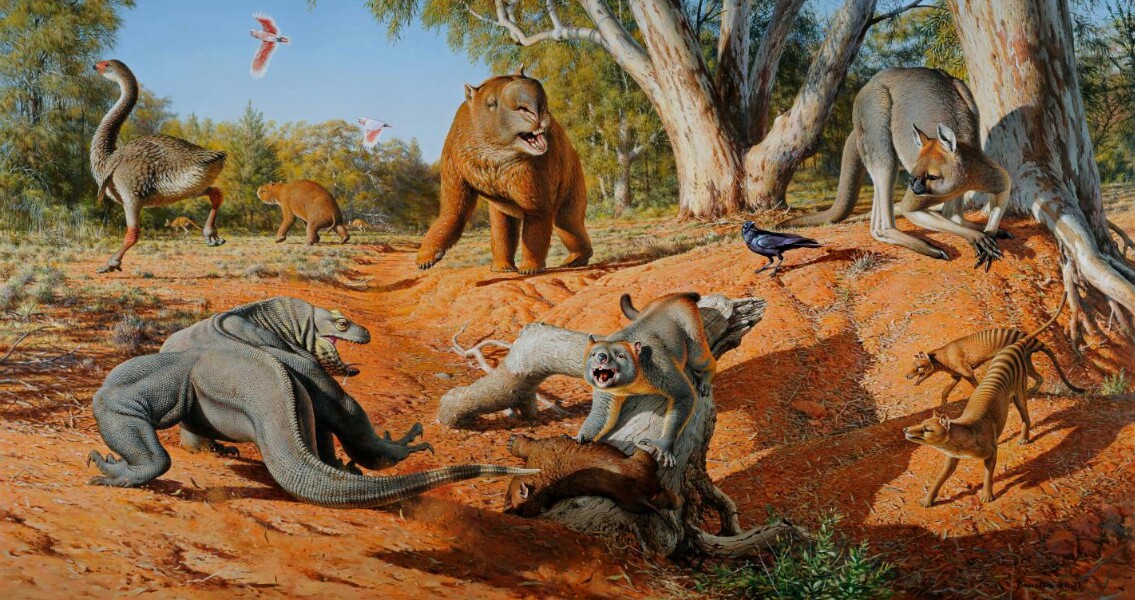
Nature Communications places the blame firmly on humans. Typically, explanations for the extinction of Australian megafauna have focused on either climate change or hunting by humans. The new study, led by scientists from Monash University in Victoria, Australia and the University of Colorado Boulder, has used the ancient faeces left behind by the megafauna to reach its conclusion. The team used a sediment core drilled from the Indian Ocean off the southwest coast of Australia to reconstruct past climate and ecosystems on the continent. The sediment core contains chronological layers of material blown into the ocean including ash, dust, pollen and spores from a fungus known as Sporormiella which thrived on the dung of plant eating mammals. Analysis of the sediment revealed that spores from Sporormiella were in abundance from 150,000 years ago, until plummeting around 45,000 years ago. “The abundance of these spores is good evidence for a lot of large mammals on the southwestern Australian landscape up until about 45,000 years ago,” said Professor Gifford Miller from CU Bolder’s Department of Geological Sciences, one of the study’s authors. “Then, in a window of time lasting just a few thousand years, the megafauna population collapsed.” According to Miller, the study results suggest that shortly after the arrival of humans 85 percent of Australia’s megafauna weighing over 100 pounds went extinct. Tellingly, the sediment core analysis also revealed that Australia’s southwest had dense forests 45,000 years ago, much like it does today. A hotbed of biodiversity, these forests make it unlikely that ecosystem change was behind the extinction of the megafauna. “It’s a region with some of the earliest evidence of humans on the continent, and where we would expect a lot of animals to have lived,” Miller explained. “Because of the density of trees and shrubs, it could have been one of their last holdouts some 45,000 years ago. There is no evidence of significant climate change during the time of the megafauna extinction.” Miller suggests that “imperceptible overkill” could have caused the extinction. A study published in 2006 claimed that even a small amount of megafauna hunting, at a rate as low as one juvenile mammal being killed per person per decade, could well have led to a species going extinct within a few hundred years. “The results of this study are of significant interest across the archaeological and Earth science communities and to the general public who remain fascinated by the menagerie of now extinct giant animals that roamed the planet – and the cause of their extinction – as our own species began its persistent colonization of Earth,” said study leader Sander van der Kaars of Monash University. The issue of the cause behind Australian megafauna extinction is likely to remain controversial, however. Just last week a study was published arguing that humans and certain megafauna coexisted for a least 17,000 years in Australia, highlighting just how complicated the extinction process might have been. Image courtesy of Peter Trusler, Monash University]]>

Categories
Breaking News

New Research Reveals Australian Megafauna Coexisted with People

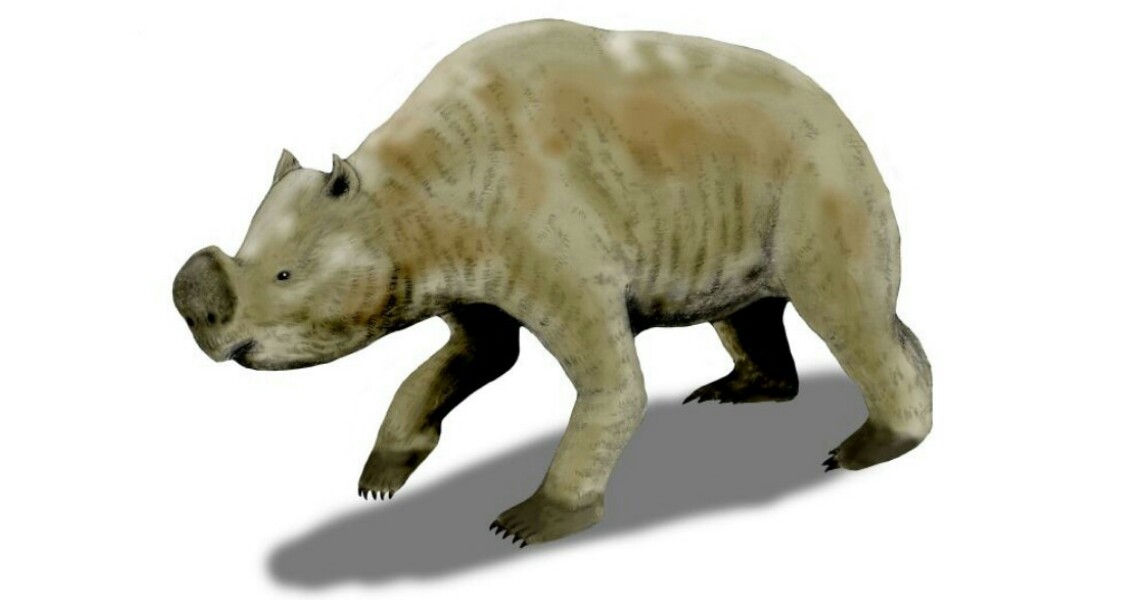
Zygomaturus trilobus, discovered several decades ago may have finally provided the answer. Large and lumbering with big flared cheek bones (zygomatics), Zygomaturus was a marsupial generally the size of a large bull. Little is known about its ecology, or why it went extinct. Excavated on two different occasions during the 1980s, the animal’s upper jaw was shipped to the Australian Museum in Sydney where it was stored still surrounded by the original sediments. The lower part of the jaw is on display at Mungo National Park. Optically stimulated luminescence dating (OSL) was used to test the sediment samples, while the fossils were tested directly using uranium series (U-series) dating. The tests show the specimen died approximately 33,000 years ago. Aborigines arrived in the region about 50,000 years ago. The Zygomaturus specimen indicates megafauna and people coexisted for 17,000 years at least. In fact, the species appears to have lived until the dramatic climate change referred to as the last glacial cycle prior to the Last Glacial Maximum. This date of 33,000 years does not necessarily represent the extinction of Zygomaturus. The deteriorating climatic conditions could have made Willandra Lakes a refuge for both people and megafauna as the surrounding plains became drier, bringing species like the Zygomaturus into increased contact with people. Regardless, the fossil has caused a shift in the debate over megafauna extinction. The research has been published in the Quaternary Science Reviews journal. ]]>

Categories
Breaking News

Bandicoot Fossils Show Marsupials were Ancient Survivors

Lemdubuoryctes aruensis however, the remarkably archaic new bandicoot fossil discovered by Alpin, didn’t live in a rainforest but on an expansive savannah plain stretching from Australia to New Guinea at the time of the last glacial maximum. “While retreating rainforests and spreading grasslands did provide a backdrop for ecosystem change 5-10 million years ago. The Australian fauna likely adapted via changing its distribution rather than undergoing wholesale extinction and replacement,” Michael Westerman, with La Trobe University in Australia, says in the article, adding, “This agrees with our results from DNA, which indicate that modern desert-living bandicoot groups pre-date the onset of aridity by as much as 40 million years.” These timeframes coincide with the proliferation of Eucalyptus woodlands in Australia’s interior. “Bandicoots, like other Australasian marsupials, probably occupied a range of different habitats over many millions of years. However, our study has further implications for future conservation. Arid zone bandicoots are amongst the most vulnerable mammals in Australasia today, with multiple species having gone extinct within the last 100 years. By demonstrating their profound evolutionary antiquity, we can thus serve to highlight how extremely urgent it is to protect these living fossils as part of Australia’s unique biodiversity”, Dr. Kear is quoted as saying in the Heritage Daily article. The study has been published in Scientific Reports. ]]>

Categories
Breaking News

Australia’s Oldest Bone Jewelry was Crafted 50,000 Years Ago

New Scientist: “I’ve met Indigenous Australians who remember their granddads wearing nose bones for special occasions,” adding, “In some groups, nose bones were only worn by elders, but in others, there were no restrictions, so all men and women could wear them to look more appealing.” The first humans to reach Australia would likely have brought the skills to craft bones from Africa where they were originally developed, and then adapted them to work with the bones of animals found in Australia. Kangaroo bones, which are strong, hard and easy to acquire, were easy replacements for ivory and horns. In Africa, humans have used bones as tools for more than a million years, however, the oldest recorded bone ornament on the continent is only around 15,000 years-old. It’s possible some of the bone artifacts which were older were mistakenly identified as tools as opposed to ornaments. This mistake in identification seems more probable than Australia being where bone jewelry was first developed. “Ancient bone technology discovered in Australia is important because it reshapes our understanding of the first inhabitants.” Langley says in New Scientist, “Findings of early bone tools and ornaments have been rare, leading to a long-held theory that Indigenous Australians initially lost the skills they brought from Africa.” “This shows that the first people in Australia were just as capable as those everywhere else of complex actions,” Ian Lilley from the University of Queensland is quoted as saying in the New Scientist article, “So whether this artefact was used as a nose bone or for sewing skins doesn’t really matter – it’s evidence of complicated behaviour.” To date, the oldest jewelry ever made by early humans are the 100,000-year-old shell beads discovered at sites in Africa as well as the Middle East, which look as if they had been strung together to create necklaces. Our cousins the Neanderthals appear to have beaten us to it, as they might have been creating jewelry around 80,000 years before early humans even made it to Europe. Eagle talons discovered at the Krapina Neanderthal site in modern-day Croatia date back 130,000 years and have features that suggest they may have been used in a bracelet or necklace. ]]>

Categories
Breaking News

Habitation of Inland Australia Dates to 49,000 Years Ago

Nature, can be found online here]]>

Categories
Breaking News

Research Shows Aboriginal Boomerang as Deadly as Metal Weapons

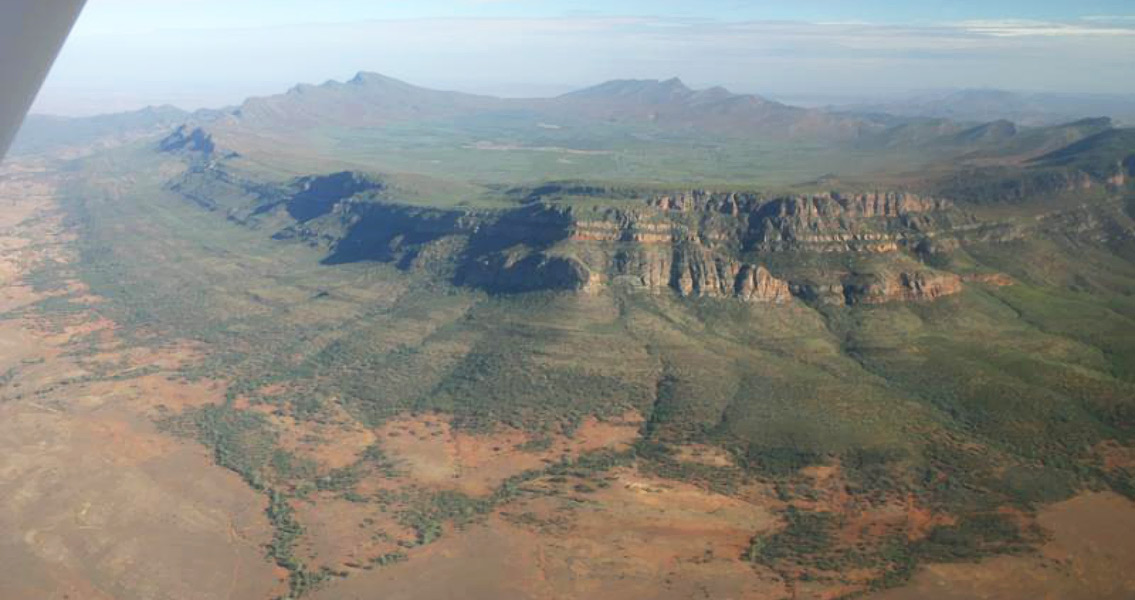
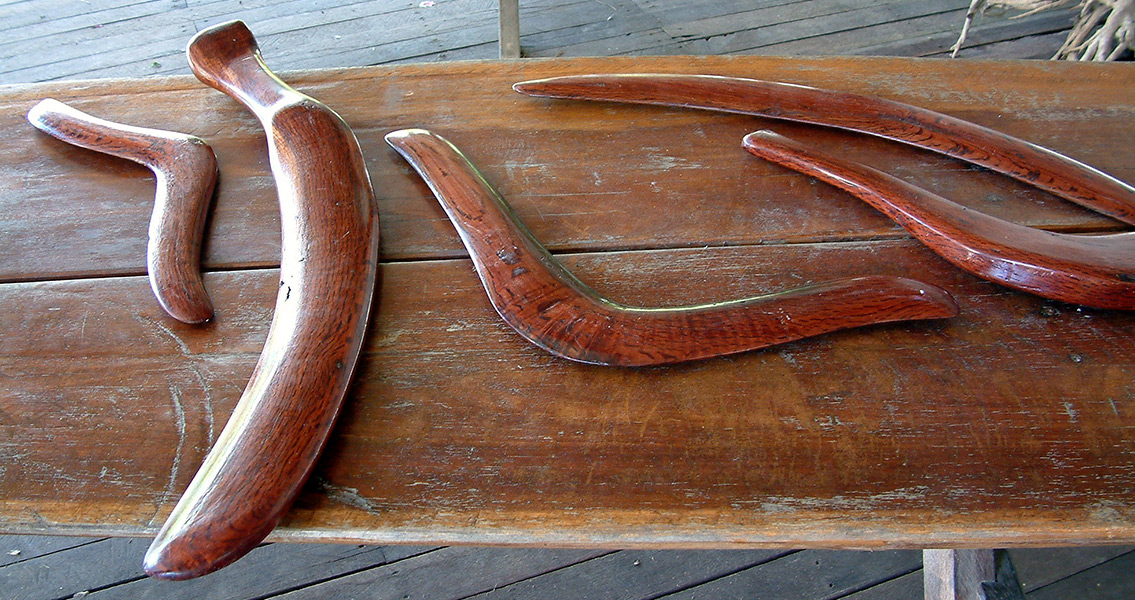
The Australian that his team’s two-year investigation unearthed evidence the indigenous communities had been using deadly clubs and boomerangs which could inflict damage equal to that caused by sharp metal weapons. “The investigation of Aboriginal skeletal remains is a very ­sensitive topic,” Dr. Westaway said in The Australian. “Griffith University was invited by the Kurnu Barkindji to undertake this research to try and help understand when, how and why this man was killed. The results ended up being a surprise to us all,” adding, “The nature and expression of trauma suggests that some edged weapons from traditional Aboriginal culture had the capacity to ­inflict injuries similar to those produced by edged metal weapons.” The position of Kaakutja’s remains when he was found indicated a proper burial and not the disposal of a murder victim. To get a better understanding of what could have produced the head wound, the researchers studied the rock art at the Gundabooka Ranges, in the same vicinity and dated to approximately the same time period as the skeleton. The rock art depicts warring tribes wielding parrying shields, wonnas, fighting clubs and lil-lis. The length of the wound and the lack of injuries on the forearms (typical in hand-to-hand combat) suggests a boomerang (lil-lil) was likely the weapon. A thrown boomerang would have traveled in an arced path toward the victim, allowing it to slip behind a shield if the victim had one. The study is published in the journal Antiquity. ]]>

Categories
Breaking News

Proof That Aboriginal Australians Were the First

Proceedings of the National Academy of Sciences, the authors of the study argue they have found conclusive evidence that Aboriginal people were the first to inhabit the continent. The findings refute a controversial study that claimed a now extinct group of modern humans had been the first to set foot on Australia. The earlier study recovered DNA lineages from the ‘oldest known Australian’, Mungo Man. It concluded that Mungo Man represented a human lineage which must have lived on the Australian continent before the arrival of Aboriginal people. By applying new DNA sequencing methods to re-analyse the same set of remains, the scientists from Griffith University’s Research Centre for Human Evolution (RCHE) claim that the original DNA study of Mungo Man drew incorrect conclusions about his lineage. Mungo Man (LM3) is one of three sets of remains discovered at the Lake Mungo site in New South Wales, Australia. First unearthed in February 1974, Mungo Man is believed to have been around fifty years old at the time of his death. It appears the early hunter-gatherer was buried with care, laid on his back with his hands crossed in his lap, and sprinkled in red ochre, in one of the earliest examples of such a ritual. His bones showed signs of severe arthritis, especially in the right elbow, suggesting he would not have been able to move his right arm in the time leading up to his death. Dated to around 42,000 years old, the remains caused a drastic rethink about the history of Australia’s population. Previously, it was assumed that the first humans had arrived on the continent around 20,000 years ago. Professor Lambert from RHCE highlighted the inconsistencies in the earlier study. “The sample from Mungo Man which we retested contained sequences from five different European people suggesting that these all represent contamination,” he said in a press release. “At the same time we re-analysed more than 20 of the other ancient people from Willandra (the reserve where Lake Mungo is located). We were successful in recovering the genomic sequence of one of the early inhabitants of Lake Mungo, a man buried very close to the location where Mungo Man was originally interred.” he went on to explain. “By going back and reanalysing the samples with more advanced technology, we have found compelling support for the argument that Aboriginal Australians were the first inhabitants of Australia.” Lambert and colleagues’ study shows that advanced technology is capable of extracting valuable data from Aboriginal Australian remains, offering potentially enlightening insights into the history of Australia’s first inhabitants. “We now know that meaningful genetic information can be recovered from ancient Aboriginal Australian remains,” he said. “This represents the first time researchers have recovered an ancient mitochondrial genome sequence from an Aboriginal person who lived before the arrival of the Europeans.” Image courtesy of Wikimedia Commons user James Maurice Bowler]]>

Categories
Breaking News

15 Million Year Old Remains of Bizarre Marsupial Found

Malleodectes mirabilis by the researchers behind the study published recently in the journal Scientific Reports. “Malleodectes mirabilis was a bizarre mammal, as strange in its own way as a koala or kangaroo,” said study lead author Professor Mike Archer, from UNSW. “Uniquely among mammals, it appears to have had an insatiable appetite for escargot–snails in the whole shell. Its most striking feature was a huge, extremely powerful, hammer-like premolar that would have been able to crack and then crush the strongest snail shells in the forest.” Archer and his team have been carrying out excavations at the Riversleigh World Heritage Fossil Site across four decades. Nothing remains of the cave except its limestone floor, which contains fossils of creatures who either fell into or lived in the cave throughout its history. Over the years the cave’s walls have worn away, but the fossil deposits there still cover the last 24 million years of Australian history. Teeth and other partial remains of Malleodectes had been found in the cave previously, but the discovery of a well preserved juvenille’s skull in a 15 million year old Middle Miocene cave deposit revealed just how strange the creature was. An acid bath allowed researchers to extract the remains from the limestone casing, and commence analysis involving techniques such as micro-computed tomography. UNSW Professor Suzanne Hand, a member of the team involved in the research, offered an explanation as to how the young animal may have died. “The juvenile malleodectid could have been clinging to the back of its mother while she was hunting for snails in the rocks around the cave’s entrance, and may have fallen in and then been unable to climb back out,” she said in the UNSW press release. At the time of its death the creature was teething, with its adult teeth embedded in its jaw and on the verge of erupting. The unusual creature, which went extinct millions of years ago, is believed to have been a distant relative of modern Tasmanian Devils. “Although it is very different from the others, it appears to have been related to the dasyures – marsupial carnivores such as Tasmanian Devils and the extinct Tasmanian Tigers that are unique to Australia and New Guinea.” Professor Archer said. Since they started forty years ago, UNSW’s annual expeditions to the Riversleigh site have yielded a host of remarkable, extinct creatures, including leopard like, potentially tree dwelling crocodiles known as drop crocs; and Dromornis, one of the largest birds to have ever existed, which is occasionally referred to as the ‘Duck of Doom’. Like many of the other strange, wonderful and occasionally terrifying creatures unearthed in Riversleigh’s rocks, it’s believed Malleodectes mirabilis went extinct as the result of a period of severe climate change that started around fifteen million years ago. “This climate change-driven transformation in Australia’s wildlife over the last 15 million years is a timely reminder of the probable outcome of the next cycle of climate change, one we appear to have triggered ourselves,” remarked Archer. Image courtesy of Karen Black and Suzanne Hand/UNSW]]>