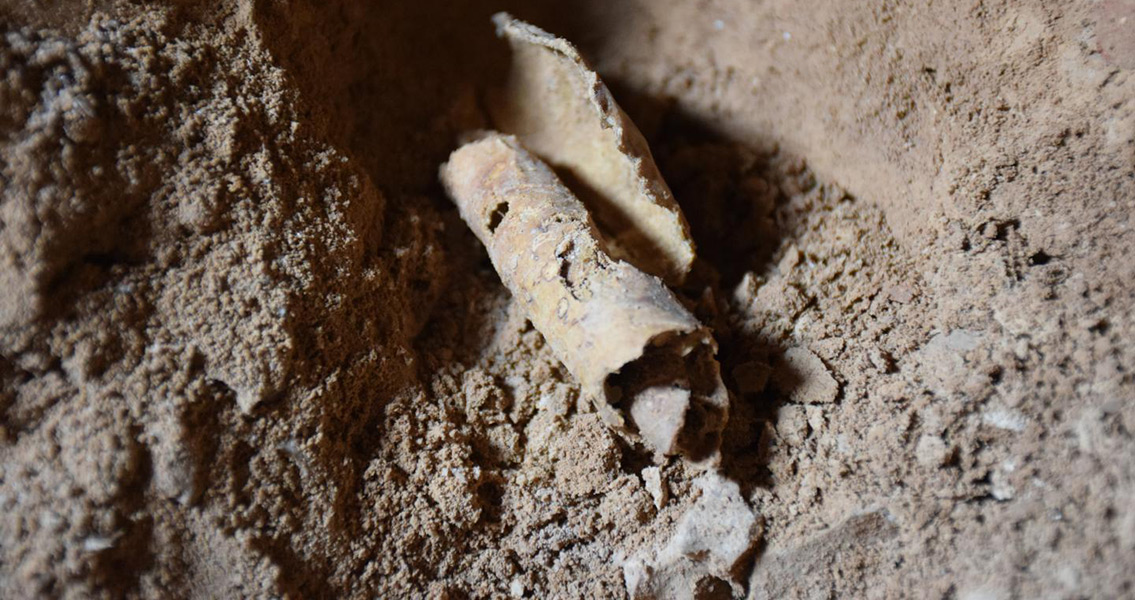
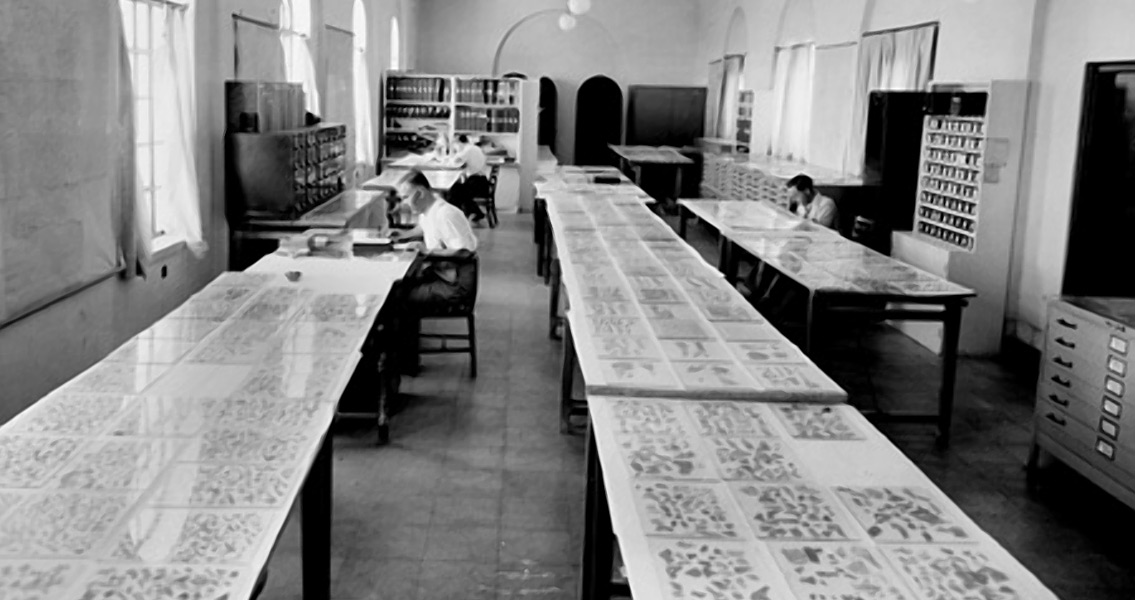
Dead Sea Scrolls has been published, providing a priceless look into the state of the Hebrew Bible nearly 2,000 years in the past. According to a recent story in Live Science, archaeologists have announced the publication of two books containing the fragments. Within these excerpts, researchers uncovered some of the promised rewards for the Hebrews that abided by the rules God put down for them so famously in the Book of Leviticus in the form of the Ten Commandments, among countless others. These fragments, discovered on the West Bank within caves at the archaeological site of Qumran, come from a wide array of books of the Torah, the Hebrew Bible – known as the Old Testament to those of the Christian faith. In addition to the books of Genesis, Exodus, and Leviticus, as many as 15 other books of the Torah are represented in these scroll fragments, including the books of Deuteronomy, Samuel, Ruth, Kings, Micah, Nehemiah, Jeremiah, Joel, Joshua, Judges, Proverbs, Numbers, Psalms, Ezekiel and Jonah. One of the two books, published by The Schøyen Collection, international collectors of landmark cultural manuscripts, includes newly-translated passages from the Book of Leviticus that delineate God’s promises of reward to the Hebrews. For observing the Sabbath and following the rest of the Ten Commandments, the fragment promises the faithful that their fields will be fertile and without drought, and that they will be blessed with peace: “I will look with favor upon you, and make you fertile and multiply you,” the fragment concludes. These scroll fragments are among the most ancient biblical manuscripts ever to be discovered by archaeologists. Originally placed within the caves of Qumran to safeguard them against vengeful Roman armies sent to quell revolution in Judea during the Second Temple period, the scrolls themselves have been radiocarbon dated to dates as ancient as 200 BCE. A combination of radiography and paleographic dating techniques has resulted in an age range of 385 BCE to 82 CE. Nearly 900 manuscripts were uncovered in Qumran during archaeological study ranging from 1947 to 1956. Who wrote the Dead Sea Scrolls is largely unknown. Many point to the Essenes as the scribes of these manuscripts, a sect of devout Jews that lived under Roman rule in Judea. Research and investigation is still underway on these fragments to ensure that they are not forgeries. Once questions of authenticity are answered fully, these fragments are likely to be incorporated into existing museum exhibits both in Israel and around the world. While the arid conditions of the Judean desert helped to preserve these scroll fragments for nearly two millennia, exposing them to handling and study has led to an increased risk of deterioration. Digital imaging techniques developed by tech giant Google have contributed to the distribution of virtual copies of these fragments around the world to aid in their study. Providing digital versions of these scrolls has enabled Israeli archaeological officials to preserve the physical fragments while still subjecting them to rigorous academic study. ]]>

New York Times, Seales has been working for the past 13 years on imaging techniques to digitally restore ancient scrolls too damaged to be read. Inspired by the charred scrolls found in Herculaneum, one of the locations destroyed by the eruption of Mount Vesuvius in 79 CE, the computer scientist was unsatisfied with traditional computer tomography (CT) scans as this technique would reveal only a jumbled mass of ink within a scroll. The solution that Seales devised was to reconstruct the writing surface of the scroll digitally before placing the inked letters back on it, resulting in an almost miraculously clear and legible image. The text of the scroll has been verified by Biblical experts to be the first two chapters of Leviticus from the Hebrew Bible. While the En-Gedi manuscript is not the first instance of this version of the text to be discovered by archaeologists, it is the very first time a severely damaged scroll thought to be impossible to read has been unrolled and then identified using non-invasive techniques. Additionally, the version of Leviticus recorded in the scrolls was found to be identical to the Masoretic text, making it the earliest instance of the use of such a text considering the document has been dated to between 50 and 100 CE. The Masoretic text is considered the authoritative version of the Hebrew Bible, and is one of the texts most often used for Protestant translations of the Old Testament. The revelation that the Masoretic text was in use as far back as nearly 2,000 years ago has prompted some paleography experts to suggest the En-Gedi text should be officially categorized as a Dead Sea scroll, especially if the age of the scroll is indeed accurate. Researchers have responded with enthusiasm to the news, proclaiming that Seales’ new technique could be the key to unlocking the secrets of any number of scrolls too damaged to open without risking permanent damage to the texts concealed within. The suite of software tools the computer scientist developed will be made available under an open source license once his current government grant period expires. The new research study, published recently in the journal Science Advances, can be found online here]]>