
Wenwu in 2015. This same article has now been translated into English and published in the journal Chinese Cultural Relics. In the journal article, the archaeologists also discuss the other tombs they found in the cemetery, noting that they excavated 69 tombs in total. The research team included members from the Shanxi Provincial Institute of Archaeology, the Shanxi University’s School of History and Culture, the Agency of Cultural Relics and Tourism of Jinyuan District, Taiyuan city, and the Taiyuan Municipal Institute of Cultural Relics and Archaeology. ]]>


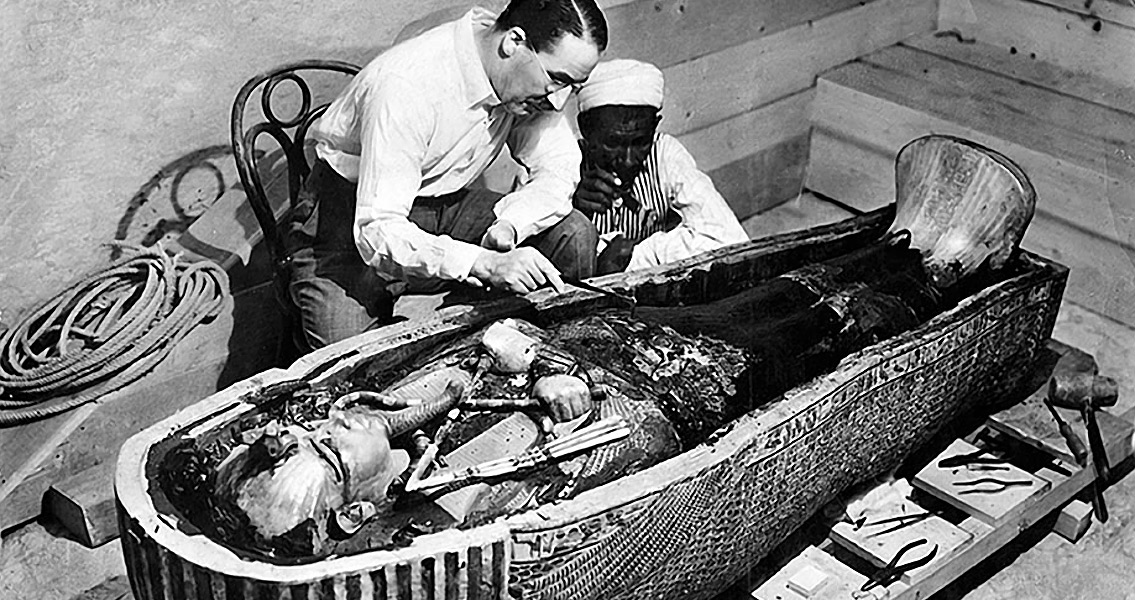
here. Controversy Surrounding King Tut’s Tomb One of the most bizarre stories of the year took place over a few months of the spring, and concerned the constantly fascinating tomb of Tutankhamun. In March, Egypt’s Antiquities Minister, Mamdouh Eldamaty, announced at a press conference that cutting edge radar scans had revealed the presence of hidden chambers in King Tutankhamun’s burial chamber. It was a revelation which sparked intrigue across the globe, as anyone with even the slightest interest in Egyptology began to speculate about what could still be hidden in the tomb of Ancient Egypt’s most famous Pharaoh. A few weeks later, doubts started to appear about the Egyptian Antiquities Ministry’s claims. Radar experts unconnected to the project started to question the findings, while others called for more evidence to be released to back up the claims and allow peer review. In May, the results of another series of scans were released, commissioned by National Geographic to verify the possibility of the existence of a hidden chamber. Announced at the Second Annual Tutankhamun Grand Egyptian Museum Conference in Cairo, the results of the second investigation suggested there was in fact no hidden chamber, directly contradicting the earlier study. The Egyptian Antiquities Authority is now carrying out additional scans in the hope of finding out once and for all if there are any more secrets to King Tut’s tomb. Just How Smart Were the Neanderthals? It’s a question that has been asked many times: just how similar are we to our closest extinct evolutionary cousins, the Neanderthals? For a long time the Neanderthals were considered to be primitive and unintelligent when compared to modern humans. Findings from 2016 however, brought that idea into question like never before. A study published in September added new fire to the long running debate over whether the Neanderthals were capable of creating jewellery. Almost since the moment they were discovered in central France half a century ago, a collection of prehistoric tiny, centimeter-long necklaces created from ivory, shells and animal teeth have been a source of contention among scientists who debate if the Neanderthals could have made the items. Using new research methods relying upon ancient proteins to date and identify bone fragments found at the site, researchers concluded that Neanderthals had lived there, supporting the idea they created the jewellery. Another study published in September carried out an in depth comparison between Neanderthal and modern human ears. The results of the pioneering research challenged the idea that Neanderthals would have only spoken in primitive grunts and groans, suggesting the possibility that Neanderthals had been capable of speech like modern humans. In December, a study from the University of Southampton revealed that Neanderthals had kept returning to the same coastal site on Jersey for a period of over 140,000 years. Through analysing stone tools, the study authors concluded that Neanderthals had kept making regular journeys back to the site for generations. The study raises interesting questions, firstly about what motivated the Neanderthals to keep returning to the site, but also about the extent to which they understood the geography around them – perhaps even some early form of mapping – to keep finding their way back there. What We Know, and What We Don’t About the History of Disease 2016 witnessed a series of shocking revelations and radical theories about the history of disease. In April, a startling study suggested that humans could have played a part in the extinction of Neanderthals by passing on a host of diseases, such as tapeworm, tuberculosis, stomach ulcers and types of herpes. The authors of the study argue that as humans left Africa, they exposed the Neanderthals to new diseases which their immune systems had not built any resistance to. Weakening the hunter-gatherer species, it would have made it harder for them to collect food, in turn causing communities to collapse. A study published in December made the shocking claim that smallpox is nowhere ear as ancient as often thought. Previously, it was believed that smallpox could be traced at least as far back as Ancient Egypt. However, a team of geneticists reconstructed the smallpox genome, based on DNA taken from the remains of victims in a crypt in Lithuania. They found that all strains of the disease had an ancestor from no further back than 1580. If true, the findings would cause a dramatic rewriting of history. Smallpox has been used by historians to explain millions of deaths and tragedies through the centuries, yet if it’s not as ancient as typically thought, such ideas will have to be rethought. Most significantly, the date of 1580 precludes the idea that the European colonisation of the Americas in the fifteenth century saw the devastating introduction of smallpox to the continent; resulting in millions of deaths for the indigenous populations. It was only in 2013 that scientists unequivocally proved that the bacteria Y.pestis played a role in both plague pandemics of the Middle Ages – the Plague of Justinian between the sixth and eighth centuries, and the second pandemic between the fourteenth and seventeenth centuries that peaked with the Black Death. A study published in January 2016 revealed that a single genotype of Y.pestis had persisted in Europe from the fourteenth to the seventeenth centuries. The findings suggest that the plague survived in Europe for three hundred years in as yet unidentified reservoir. In September, a new study reconstructed the bacterial genome responsible for the Plague of Justinian. The study found that the strain of Y.pestis responsible was far more diverse than previously thought, and also infected people far beyond the region historically documented. With plague reemerging in certain parts of the world, such studies have relevance beyond history. The greater our understanding of historical plague outbreaks, the better chance we have of combating it in the present. ]]>

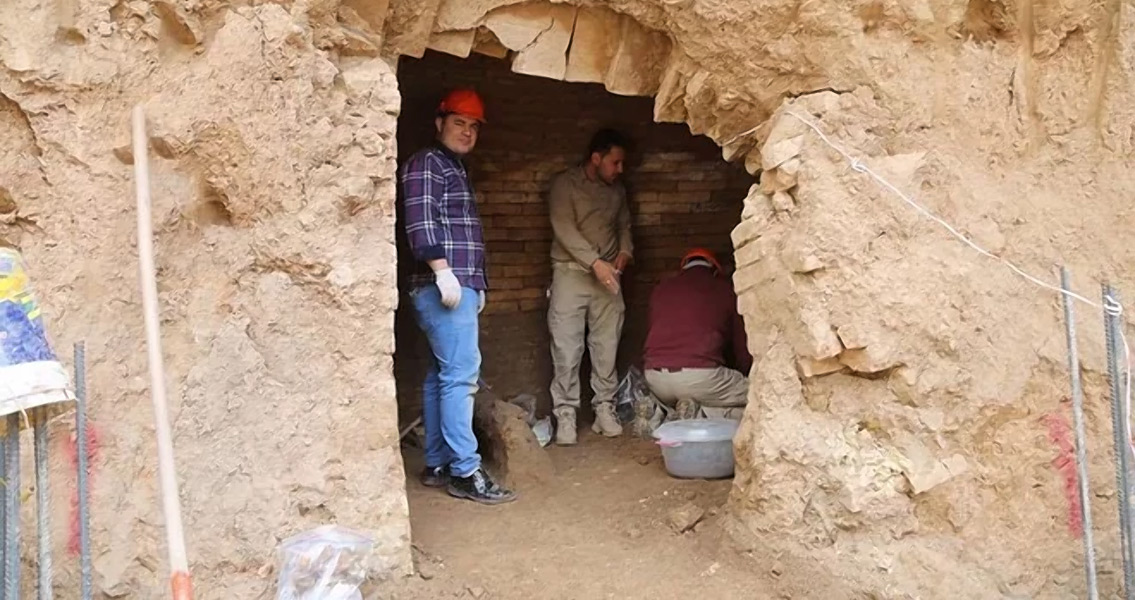
Egypt Independent that the stone wall was dated using the pottery fragments that were embedded in the mortar used to build the wall. Among the fragments were pieces of carinated bowls, fashioned in a style that was typical of the Sixth Dynasty (2278-2184 BCE) reign of King Pepi II. The Old Kingdom is generally regarded as the time period between the Third Dynasty and Sixth Dynasty (2686–2181 BCE) in the third millennium BCE, when Egypt achieved its first ongoing peak of civilization. The three ostensible “Kingdom” periods: the Old, the Middle, and the New Kingdoms, indicate the peaks of civilization within the lower Nile Valley. The Old Kingdom is notable for being a dynamic time for Egyptian art. During this period, sculptors created the earliest known individual portraits as well as the first life-size statues in copper, wood, and stone. Masons and architects mastered the building techniques that were necessary in the construction of monumental stone structures. Additionally, the art of carving precisely detailed reliefs was perfected. Egypt’s Middle Kingdom (also referred to as The Period of Reunification) is the time period between 2050 BCE and 1800 BCE, covering the twelfth and thirteenth dynasties. The New Kingdom, also known as the Egyptian Empire, between the sixteenth century BCE and the eleventh century BCE, covers the eighteenth, nineteenth, and twentieth dynasties. Qubbet el-Hawa is the site of a cemetery containing Rock-cut tombs, located on the west bank of the Nile river, across from the Egyptian city of Aswan. The elite tombs discovered there date primarily to the Old Kingdom and include the well-known tomb of Harkhuf. A member of the research team, Carl Graves is quoted by the Egypt Independent as saying: “The findings are dramatically altering our understanding of the funerary landscape in this area during the Old Kingdom and First Intermediate Period in 2278-2184BC. I don’t think anyone yet knows who the tombs might have belonged to.” The discovery was made as part of the project’s first field season. ]]>
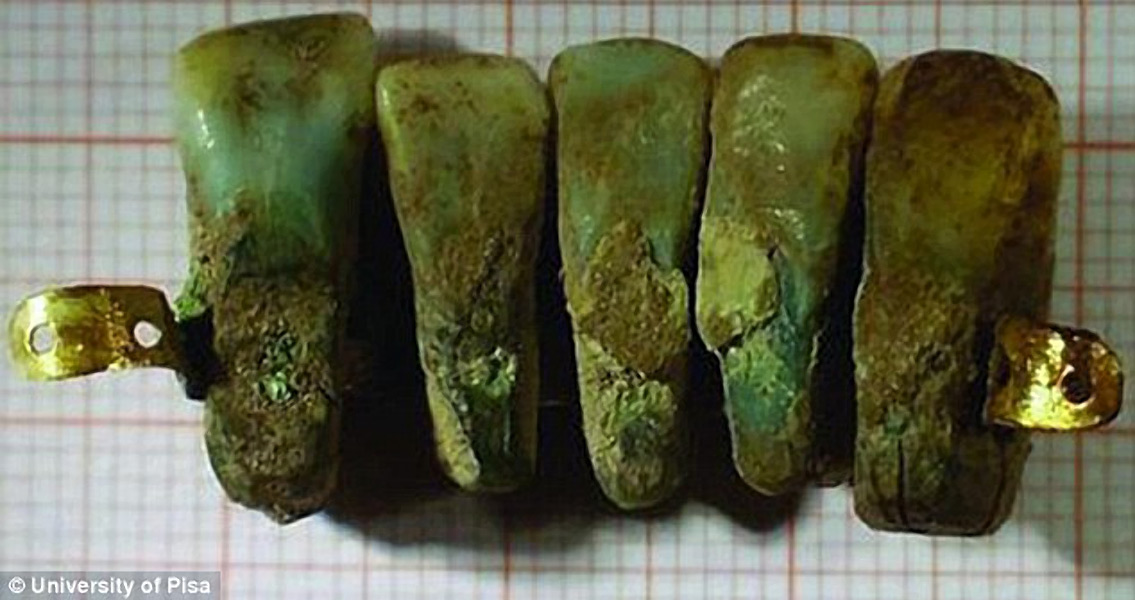

Chinese Cultural Relics. Based on the tomb’s design and the artifacts recovered from inside, researchers were able to determine that the woman lived around 1,500 years ago; just a few decades prior to the end of the Northern Wei dynasty, which controlled that region of northern China from 386 until 534. The historical records indicate that Datong City, where the tomb was found, served as the capital of the dynasty until 494. The earrings recovered from the tomb were made from gold and bear the images of a human face and dragons. The researchers described the designs in Chinese Cultural Relics: “The human figure has curly hair, deep-set eyes and a high nose; wears a pendant with a sequin-bead pattern on its neck; and has inverted lotus flowers carved under its shoulders”. Adding: “In recent years, many gold earrings have been unearthed from Northern Wei dynasty tombs, but the earrings unearthed from this tomb are surely some of the most exquisite.” Additionally, the earrings are decorated with gold, teardrop-shaped designs inlaid with gemstones; with amethysts and gold chains which would have hung down on each side of Farong’s face. Similar designs have been found on earrings discovered in northern Afghanistan, indicating that the Northern Wei dynasty maintained cultural ties with the people in central Asia. The thread which held together the necklace Farong was wearing when she was buried had long since decomposed. However, because the beads remained relatively concentrated and unmoved when this occurred, researchers were able to successfully reconstruct it. The article states: “The small beads are the size of millet grains, some black and some green, and all are oblate, each with a perforation in the middle.” The Northern Wei dynasty was founded by the Tuoba clan of the Xianbei, and ruled northern China during the era of Southern and Northern Dynasties. Considered a period of political turbulence and intense cultural and social change, the Northern Wei dynasty is notable for the unification of northern China and the introduction of foreign ideas, including Buddhism. Images of the jewelry can be found at LiveScience Image courtesy of Wikimedia Commons user: Nicor ]]>

Sci-Tech Today that this belief was shared by other pre-Hispanic people as well; like those who lived at Teotihuacan near Mexico City, where a water tunnel was also found. Sanchez Nava cited the allegorical meaning that water had for these cultures, as the cycle of life beginning and ending
Excavations began in 2012, when researchers using geo-radar detected underground anomalies in the area directly in front of the pyramid. Fearing a geological fault or hole that might cause the pyramid to settle or even collapse, they excavated the area and unearthed three layers of stone which had been carefully fitted to cover the top of the tunnel.
Arnoldo Gonzalez, an archaeologist at the site, told Sci-Tech Today that the same type of layered stone covering had been discovered in the floor of Pakal’s tomb inside the pyramid, adding that there doesn’t appear to be a connection between the tunnel and the tomb, although the conduit hasn’t been thoroughly explored because it’s too small for a person to crawl through. Most of the tunnel has been viewed using a robotic camera.
The Temple of Inscriptions was built as the funerary monument of Hanab-Pakal, the most famous ruler of Palenque. The temple is home to a glyphic text, the second longest from the Maya world, and records the city’s history from the fourth through the twelfth K’atun, a period of around 180 years.
In his 1968 book ‘Chariots of the Gods?’, author Erich von Daniken suggested that Pakal’s stance, as engraved on the lid of the stone sarcophagus lid, resembled the position astronauts take. Von Daniken also claimed that it looked like the ruler was seated in a contraption that had flames shooting out of it. Experts, however, say that the “flames” are actually depictions of the Maya’s “Tree of Life” or “World Tree” which, the Maya believed, had roots that reached into the underworld.
The Maya city of Palenque was at its peak during the seventh century. The Palenque ruins have been dated from 226 BCE to 799 CE. After it declined, the city was enveloped by the jungle of cedar, sapodilla, and mahogany trees. It has since been unearthed and restored, becoming a popular archaeological site that attracts thousands of visitors annually.
]]>