Categories
Breaking News

Radar Scans of Tut’s Tomb Raising Questions

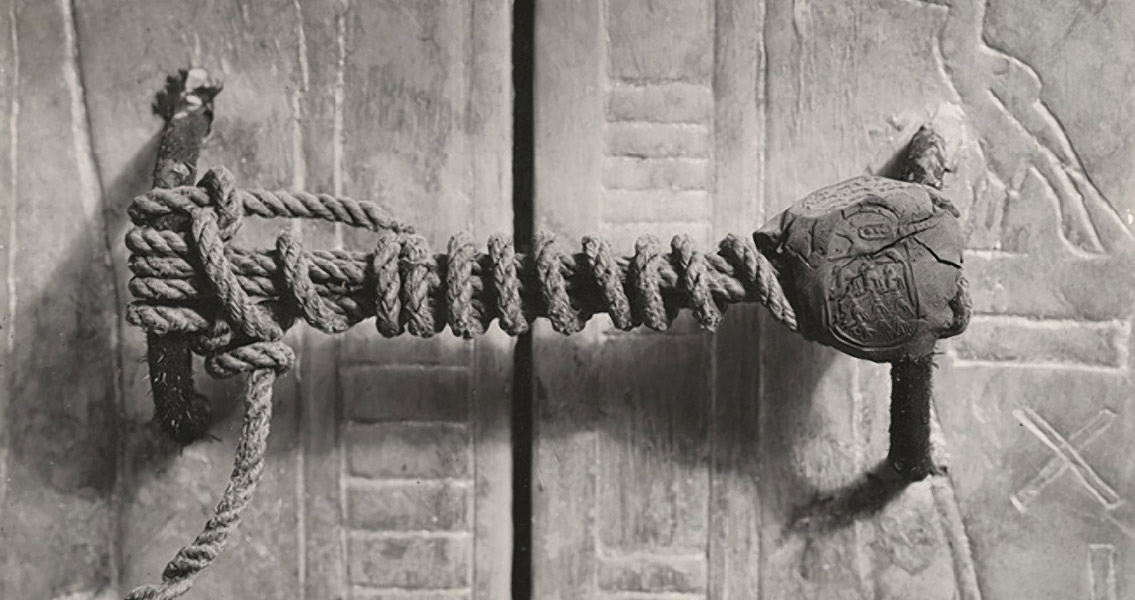
presented radar data at a news conference in March which they claimed showed evidence of two empty spaces, or hidden cavities, behind the North and West walls of the chamber. According to officials the scans also suggested that organic and metallic substances were present within the voids. Nicholas Reeves, Egyptologist and Director of the Amarna Royal Tombs Project, has posited that the cavities could contain the burial of Tutankhamun’s stepmom, Queen Nefertiti. These radar scans were conducted in part to either confirm or negate these theories. It’s been noted by experts that in the Valley of the Kings region, the geology contains a lot of natural voids which radar has difficulty differentiating from archaeological features. “It does not appear that these GPR [ground-penetrating radar] data have been processed, or that any of the so-called anomalies are visible in the raw data that are provided,” Lawrence Conyers, an anthropology professor with the University of Denver, told Live Science. Conyers wrote the book, literally, on the archeological use of ground-penetrating radar (GPR). According to Live Science, Conyers suggests that the researchers make raw data available to outside GPR experts for peer review prior to allowing the Antiquities Ministry to release statements discussing all the treasure supposedly hidden behind these walls. The consensus of scientists following the peer review process would reduce the criticism and speculation which has been zipping around the internet since the announcement. Michele Pipan, a professor of geoscience with the University of Trieste (Italy) was reported in Live Science as saying that while the radar images the Antiquities Ministry released do show some interesting features, they also lack things which would have facilitated an accurate interpretation, for example vertical and horizontal scales, details related to the inversion/interpretation procedure, and information regarding to radar velocity. Additional radar surveys are scheduled to be conducted within a few days, and the Egyptian Antiquities Ministry will hold a news conference following that work in Luxor in early April. Coincidentally, tourism numbers in Egypt have fallen dramatically since the revolution in 2011 which forced Hosni Mubarak (President at the time) from office, other experts told Live Science. The country has been the target of terrorist attacks by the Islamic State and Egyptologists were hopeful the discovery of Nefertiti’s tomb behind the wall of Tutankhamun’s burial chamber would bring tourists back, thus boosting the suffering economy. Reeves himself was recently quoted in the The New York Times as saying, “For anyone interested in Egyptian history, this is the time to plan a trip, because you’re not going to get jostled by others the way you would have pre-revolution. And, it’s also a more affordable destination because prices have dropped.” ]]>

Categories
News

History News of 2015

Homo naledi In September 2015, it was reported that fossils of a new species of hominin, designated Homo naledi, had been discovered in South Africa. In many ways it was one of the biggest stories of the year, sparking new research and remaining a major theme in the mainstream media. The remains unearthed at the Rising Star Cave constituted close to a complete skeleton, a rarity when it comes to ancient hominins. Exactly where H.naledi fits into the timeline of evolution is still being studied, but it could be one of the oldest members of the Homo genus. Met with controversy in some areas, particularly in South Africa, researchers have already started to reach some conclusions about H.naledi. studies of the anatomy of the creature’s hands and feet revealed areas of similarities with humans, but also marked differences. It seems that the creature was just as adept at climbing trees as it was at walking, or even running, on the ground. Meanwhile, a comparative analysis of H.naledi‘s skull alongside that of other members of the Homo genus, suggested that H.naledi lived around 2 million years ago. Although exactly where H.naledi fits into the homo evolutionary tree remains unclear, the discovery of the new species has the potential to greatly improve our understanding of human evolution. Shipwrecks Old and New 2015 saw a host of significant shipwrecks discovered, and new exploration of some which have been known about for a lot longer. In July, a shipwreck found off the coast of Japan in 2014 was confirmed to be part of a massive fleet which had attempted to invade the Japanese mainland in the thirteenth century. The remains, measuring twelve metres long and three metres across, were part of one of the Kublai Khan led attempted Mongolian invasions of Japan. The campaigns have since entered Japanese folklore, having been stopped by massive typhoons referred to as the ‘Kamikaze’. The dating is based on twenty examples of Chinese ceramic wares unearthed from the shipwreck. In August, marine archaeologists recovered a figurehead that stood on the ship of a Danish king, from the Baltic sea. Exactly what the unusual figurehead is meant to depict remains unclear, but the bizarre, dragon-like creature has a person in its mouth. Coming from the Gribshunden, the flagship of the fifteenth century Danish king Hans, the object has the potential to add to the understanding of medieval ship construction. An underwater survey of the seafloor near the Greek archipelago of Fourni unearthed 22 previously undocumented shipwrecks in the space of just 13 days. The ships discovered range in origin from 700 BCE to the sixteenth century CE. The survey has so far only covered 5% of the Fourni coastline, meaning countless other ships could be hidden there. Further studies are expected this year, to unearth what could prove to be a treasure trove of information. Finally, in June, Greece’s Central Archaeological Council approved plans for five years of new excavations at the site of the Antikythera shipwreck. The site of the discovery of the mysterious Antikythera Mechanism, the wreck and surrounding areas will now be analysed with new ‘exosuit’ technology, hopefully answering questions about one of the most significant archaeological sites in the world. Stonehenge One of the most famous sites in England, Stonehenge, was shrouded in controversy and intrigue for much of 2015. A study of pottery and animal bones found close to the site of the Neolithic monument allowed one group of researchers to conclude that the builders of Stonehenge subsisted on a diet of meat, milk and other dairy produce. The work gives a greater insight into the lives of the people of pre-historic England. In March, art critic Julian Spalding had a book published arguing that most interpretations of the monument have failed to understand its use, as they view it from the wrong perspective. He argues that the stones were once the foundations of a large wooden platform, or raised altar, made to accommodate hundreds of people as they prayed to their gods. Spalding’s theory has received heavy criticism in some circles of the archaeological community, while others have argued that all theories about the monument’s use have to be considered. In December, a team of Welsh scientists argued that the smaller bluestones used in the construction of Stonehenge were transported to the site in Wiltshire by glacial action rather than pagan ancestors. As is so often the case when discussing Stonehenge, the study has caused a great deal of controversy.]]>

Categories
Editorial

May History News Round-up

The Americas Researchers from New York Queens College have found that the Ancient Maya city Nixtun-Ch’ich, in Northern Guatamala, was built with a grid pattern design, something not seen in other cities from that time and region. Thought to have thrived between 600 and 300 BCE, the city featured a ceremonial route lined with up to 15 flat top pyramids which were each up to 100 feet tall. Running from west to east, the route only had a 3-degree variation from true east. Other Maya cities tended to be much more ‘relaxed’ in design and the researchers, led by Timothy Pugh from Queens College, have suggested that Nixtun-Ch’ich’s strict design may have given a sense of being constantly controlled for the people living there. A study by Jack Williams and Samuel Munoz has looked at the largest pre-colonial settlement north of Mexico, the city of Cahokia, located on the flood plain of the Mississippi River. By studying 2000 years old sediment cores from the flood plain, Munoz and Williams have shown that major flood events could have been linked to the rise and fall of the city. Correlating the history of the city with the record of floods, it was found that the rise of Cahokia took place between 600 and 1200 CE, a relatively flood free period. A major flood hit the area after 1200 CE, around the same time that the city entered a period of decline culminating in its complete abandonment in 1400 CE. The study could be hugely important for other studies of early agricultural societies as it has highlighted the importance of flood as a possible cause of decline, as well as shedding new light on a rarely studied period of North American history. Human Origins and Development Several studies published in May about our prehistoric origins have the potential to cause a major rethink about our distant past. Grasping the connectivity of such developments can be difficult. Below, several of the most important news stories from this month are presented in chronological order of the periods of which they relate to. An international team of scientists has just announced the discovery of a new human ancestor species which they have called Australopithecus deyiremeda. The scientists believe that this species inhabited the Afar region of Ethiopia around 3.3 million to 3.5 million years ago. This is hugely significant as it means Australopithecus deyiremeda lived in the region at the same time as Australopithecus afarensis (whose most famous representative is Lucy). The study has the potential to question the hitherto dominant theory that only one human ancestor species inhabited the earth at any time during the Pliocene period. Jumping forward three million years, a study from the Wellcome Trust Sanger Institute and the University of Cambridge used genetic sequencing to understand the path of human migration through Africa. Based on a study of the DNA of 100 Egyptians and 125 Ethiopians, the team observed that the DNA of the Egyptians was closer to that of Eurasians. From this, they concluded that the divergence from Egyptians to Eurasians occurred around 10,000 years later than that from Ethiopians to Eurasians. Based on these conclusions, the team believes that the bulk of the human migration from Africa went through Egypt rather than Ethiopia. Other studies have looked at the development of early culture and societies. Genevieve von Petzinger, an anthropologist from the University of Victoria, has looked at the origins of written communication. It is generally believed that the use of written symbols as a source of communication first emerged in Sumer around 3,000 BCE. After examining 52 caves around Europe where ancient humans had lived, von Petzinger believes that written symbols were intentionally used as a way to convey information over 40,000 years ago. These written symbols are clearly not as sophisticated as a modern written language, but if von Petzinger is correct, they would suggest that human cultural development actually started much earlier than previously thought – possibly before the migration out of Africa. Finally, a study by Pontus Skoglund from Harvard Medical School and the Broad Institute, and Love Dalén from the Swedish Museum of Natural History, has suggested that the relationship between humans and dogs may have formed much earlier than previously thought. Scientists generally argue that the domestication of dogs occurred around 16,000 years ago, but this new study argues it actually took place as far back as 35,000 years ago. The conclusions are based on research into the dates that modern dogs diverged from wolves in Siberia (Scientists consider the divergence between dogs and wolves to have been a consequence of human domestication of the animals). ]]>

Categories
Book Reviews

Homer’s Odyssey: A Tale of Twists and Turns

th or 8th century B.C.E, he was revered as one of the formative influences of Greek culture, and he was blind. It has been suggested that the Odyssey may have been a compilation of work from a group of writers rather just Homer, another mystery that adds to the poems intrigue. The setting is the twelfth century B.C.E. in Mycenaean Greece. This dates it to the bronze age chronologically, although Ancient Greeks thought of it as more of a golden age, a time when Gods and heroes of great strength wandered the earth and engaged with humanity. This explains the story’s fantastical elements, Gods intervening in human affairs and supernatural beings wandering the earth. Whereas the Iliad focuses on the epic clash of two civilisations, the Odyssey is about human experience. It is the tale of one family. The trials and tribulations of a father’s journey home from war, and the struggles of his wife and son in his absence. The tale abandons a chronological narrative for an ambitious structure that starts midway through the action and uses flashbacks and recollections to unfold the complex plot. More than just a supernatural adventure story, the epic engages with complex themes and ambiguous morality. Odysseus means ‘trouble’, referring to both the hardships the protagonist encounters, but also the trouble he himself creates. This is a tale of cause and consequence rather than a man at the mercy of the Gods. The events of the decade long journey home are triggered by the Lesser Ajax raping a Trojan priestess, incurring the wrath of Athena. Odysseus and his men succumb to temptation on several occasions, and each time they suffer inevitable consequences. Similarly, the suitors of Penelope, Odysseus’ wife, receive an inevitable grim punishment upon his return. Another recurring motif throughout is the triumph of cunning over brute strength, an idea first engaged with in the Iliad’s Trojan Horse but continued and developed here. Homer’s version of Odysseus epic tale is just one recording of a story that has existed for thousands of year in various forms. The characters, from the Cyclops to the Sirens have become so ubiquitous that it’s easy to forget where they were first recorded. Reading Homer’s version of the story is a reminder of the crucial ground it broke for western literature. It also serves to highlight a sophisticated plot with complex, multifaceted characters that are intriguing even to a modern audience.

Related Books


Eight Books of Homers Odyssey With Introduction, Commentary, and Vocabulary book

Eight Books of Homers Odyssey With Introduction, Commentary, and Vocabulary
For the Use of Schools by Homer Perrin

[gap height=”20″]  ]]>

Categories
Book Reviews

Henry Mayhew – London Labour and the London Poor

Related Books London Labour and the London Poor Book London Labour and the London Poor A Cyclopædia of the Condition and Earnings of Those That Will Work, Those That Cannot Work, and Those That Will Not Work, Vol. 1 by Henry Mayhew PIBN: 1000254030 [gap height=”20″]]]>