Categories
Breaking News

Australia’s Oldest Bone Jewelry was Crafted 50,000 Years Ago

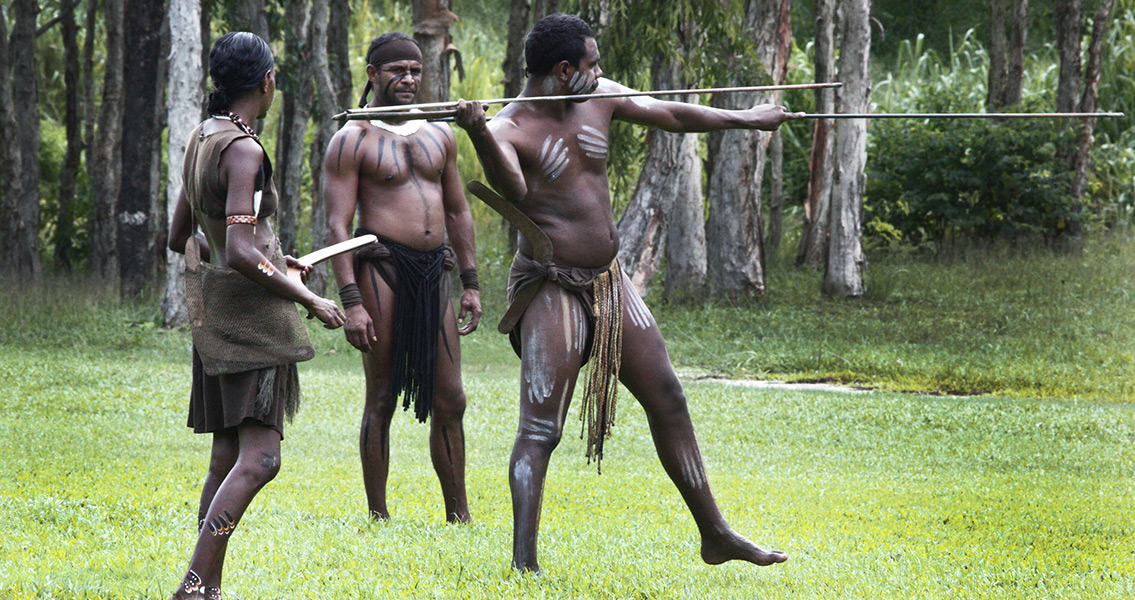
New Scientist: “I’ve met Indigenous Australians who remember their granddads wearing nose bones for special occasions,” adding, “In some groups, nose bones were only worn by elders, but in others, there were no restrictions, so all men and women could wear them to look more appealing.” The first humans to reach Australia would likely have brought the skills to craft bones from Africa where they were originally developed, and then adapted them to work with the bones of animals found in Australia. Kangaroo bones, which are strong, hard and easy to acquire, were easy replacements for ivory and horns. In Africa, humans have used bones as tools for more than a million years, however, the oldest recorded bone ornament on the continent is only around 15,000 years-old. It’s possible some of the bone artifacts which were older were mistakenly identified as tools as opposed to ornaments. This mistake in identification seems more probable than Australia being where bone jewelry was first developed. “Ancient bone technology discovered in Australia is important because it reshapes our understanding of the first inhabitants.” Langley says in New Scientist, “Findings of early bone tools and ornaments have been rare, leading to a long-held theory that Indigenous Australians initially lost the skills they brought from Africa.” “This shows that the first people in Australia were just as capable as those everywhere else of complex actions,” Ian Lilley from the University of Queensland is quoted as saying in the New Scientist article, “So whether this artefact was used as a nose bone or for sewing skins doesn’t really matter – it’s evidence of complicated behaviour.” To date, the oldest jewelry ever made by early humans are the 100,000-year-old shell beads discovered at sites in Africa as well as the Middle East, which look as if they had been strung together to create necklaces. Our cousins the Neanderthals appear to have beaten us to it, as they might have been creating jewelry around 80,000 years before early humans even made it to Europe. Eagle talons discovered at the Krapina Neanderthal site in modern-day Croatia date back 130,000 years and have features that suggest they may have been used in a bracelet or necklace. ]]>
Categories
Breaking News

New Research Says Neanderthals Were Jewelry-Makers

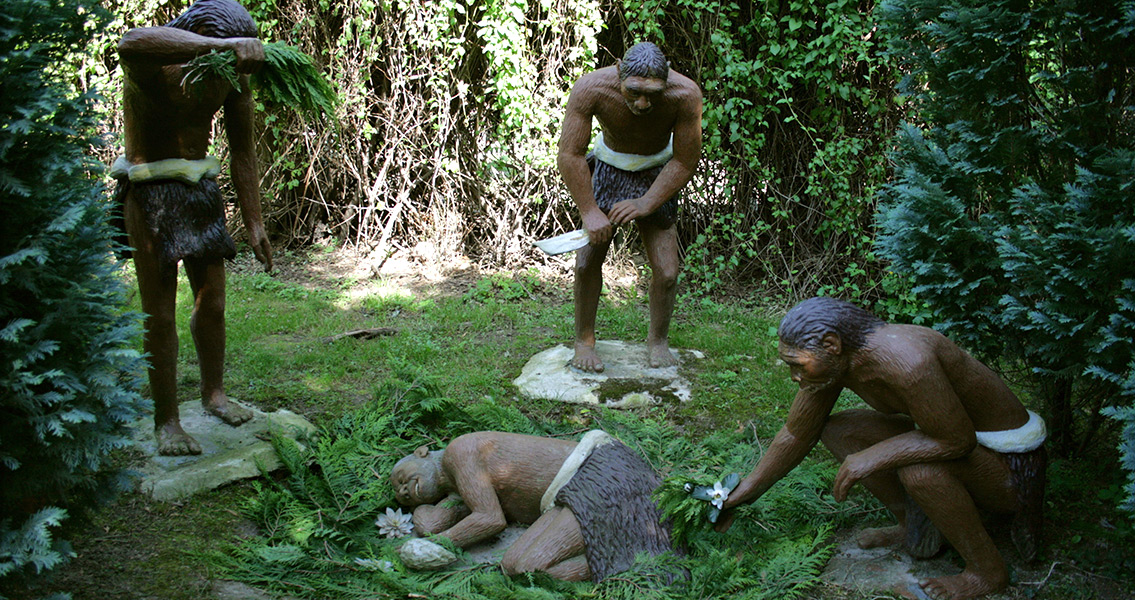
Science, other scientists have been touting the new research as “a landmark study” proving that Neanderthals had enough intelligence to make these cognitive symbolic leaps. Much of the controversy stems from the date of the artifacts, as they were made around 42,000 years in the past – a time when Neanderthals were well in decline while modern humans were spreading across Europe and replacing them. However, after University of York bioarchaeologist Matthew Collins examined some of the unidentified bones discovered at the dig site and found them too small to use more traditional DNA identification methods on, he and his colleagues made the decision to use the new ancient protein analysis method instead. Analysis proved conclusively that the bone fragments were human, but it was still unclear if they had once belonged to a modern human or an archaic species such as a Neanderthal. To further pinpoint the identity, Collins and his colleagues conducted a comparison of the collagen within the fragments to those produced by modern humans and those produced by archaic humans. Collagen in Neanderthals contained high levels of an amino acid known as aparagine, as evidenced from previously-sequenced Neanderthal DNA; modern humans do not produce aparagine but instead have aspartic acid in their collagen. The researchers found evidence of aparagine amino acid, pointing to the bone fragments being of Neanderthal origin. Additionally, the type of collagen within the bone is only present in types of bone that are still growing, which combined with the presence of nitrogen isotopes associated with breast-fed children has led the scientists to believe that at least a portion of the bone fragments were from a Neanderthal infant. The findings have fanned the flames of debate when it comes to claiming that Neanderthals were incapable of creating symbolic jewelry of the type found on the site. It may be, according to some scientists, that Neanderthals living on site learned of the tools and techniques used for creating such jewelry from modern humans migrating to the area. The new data points towards renewed evidence that our archaic human cousins created these pieces of art themselves. Collins and his research team’s new study, published in the Proceedings of the National Academy of Sciences, can be found online here]]>

Categories
Breaking News

Evidence of Bronze Age Palace Found in Murcia