Categories
Breaking News

Neanderthals Made Patterns on Raven Bones

PLOS ONE. If the notches on the raven bone were indeed made intentionally by a Neanderthal, it would suggest a much higher level of cognitive ability among our closest extinct evolutionary cousins than is typically assumed. Majkic and her team carried out a range of tests to determine whether two extra notches on the ZSK raven bone had been made by Neanderthals with the intention of making the final series of notches appear evenly spaced. Interestingly, these tests involved using modern day volunteers as a means of assessing the aesthetic intention behind the notches. The researchers carried out a multi-phase experiment involving turkey bones of a similar size to the raven bone unearthed in Crimea. Participants were asked to create evenly spaced notches in the bones, and these bones were then subjected to morphometric analysis. The analyses revealed that the equal spacing of the notches in the modern day test were comparable to those in the ZSK raven bone, even when they were adjusted for errors in human perception. For the researchers, this similarity is deeply significant. As they write in the abstract to their study: “This suggests that even if the production of the notches may have had a utilitarian reason the notches were made with the goal of producing a visually consistent pattern. This object represents the first instance of a bird bone from a Neanderthal site bearing modifications that cannot be explained as the result of butchery activities and for which a symbolic argument can be built on direct rather than circumstantial evidence.” Popular culture tends to portray Neanderthals as primitive when compared to modern humans. The reality however, is far more complicated. The idea of the brutish, uncultured Neanderthal is increasingly being challenged as new discoveries fuel debate over their cognition. Some scientists go as far as claiming Neanderthal cognition would have been comparable, perhaps even equal, to modern humans’. Others say that factors such as differences in cranial morphology and evidence of behaviour suggest vast differences between human and Neanderthal cognitive levels. Recent discoveries of altered bones at Neanderthal sites have been described by some as proof that Neanderthals had a taste for personal ornamentation. Earlier this year, a study claimed to have found evidence that Neanderthals used plant based medicine, pointing to a high level of intellectual development and awareness of their surroundings. Perhaps most unusually, a strange looking piece of limestone found at a site in Croatia was taken as an example of Neanderthals’ sense for aesthetics. The researchers who discovered the rock believe it could have served no practical function, and therefore may have been kept by a Neanderthal purely for the way it looked. Image courtesy of Francesco d’Errico]]>

Categories
Breaking News

Australia’s Oldest Bone Jewelry was Crafted 50,000 Years Ago

New Scientist: “I’ve met Indigenous Australians who remember their granddads wearing nose bones for special occasions,” adding, “In some groups, nose bones were only worn by elders, but in others, there were no restrictions, so all men and women could wear them to look more appealing.” The first humans to reach Australia would likely have brought the skills to craft bones from Africa where they were originally developed, and then adapted them to work with the bones of animals found in Australia. Kangaroo bones, which are strong, hard and easy to acquire, were easy replacements for ivory and horns. In Africa, humans have used bones as tools for more than a million years, however, the oldest recorded bone ornament on the continent is only around 15,000 years-old. It’s possible some of the bone artifacts which were older were mistakenly identified as tools as opposed to ornaments. This mistake in identification seems more probable than Australia being where bone jewelry was first developed. “Ancient bone technology discovered in Australia is important because it reshapes our understanding of the first inhabitants.” Langley says in New Scientist, “Findings of early bone tools and ornaments have been rare, leading to a long-held theory that Indigenous Australians initially lost the skills they brought from Africa.” “This shows that the first people in Australia were just as capable as those everywhere else of complex actions,” Ian Lilley from the University of Queensland is quoted as saying in the New Scientist article, “So whether this artefact was used as a nose bone or for sewing skins doesn’t really matter – it’s evidence of complicated behaviour.” To date, the oldest jewelry ever made by early humans are the 100,000-year-old shell beads discovered at sites in Africa as well as the Middle East, which look as if they had been strung together to create necklaces. Our cousins the Neanderthals appear to have beaten us to it, as they might have been creating jewelry around 80,000 years before early humans even made it to Europe. Eagle talons discovered at the Krapina Neanderthal site in modern-day Croatia date back 130,000 years and have features that suggest they may have been used in a bracelet or necklace. ]]>

Categories
Breaking News

Fossil of 12-Million-Year-Old Canine Discovered in Maryland

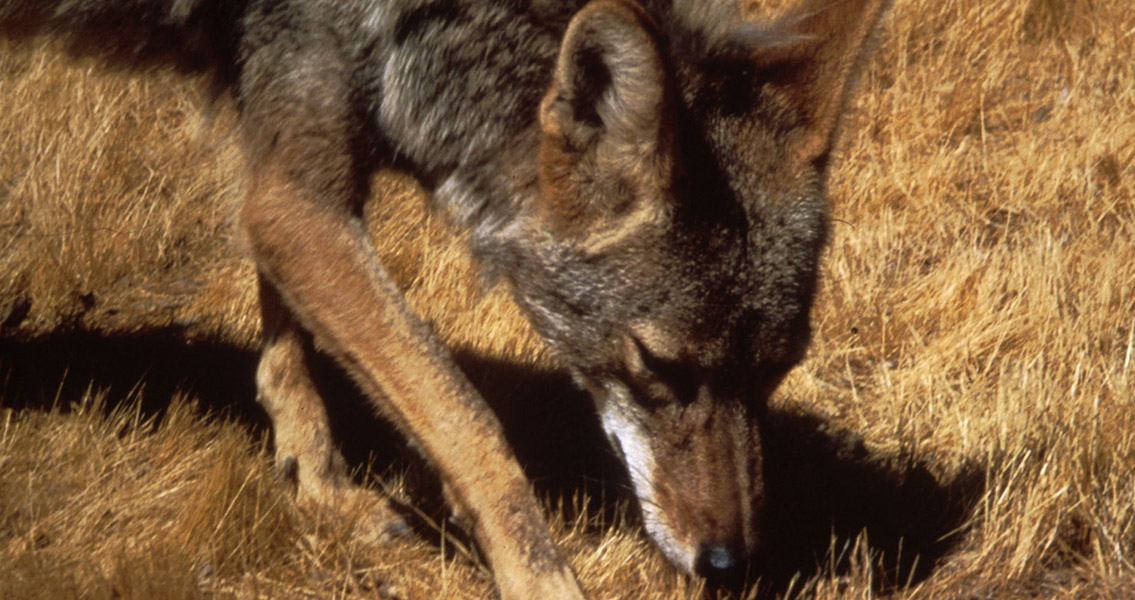
Cynarctus wangi – lived 12-million years ago and is described in a recent study in the Journal of Paleontology. The animal is described as being around the size of a modern coyote, and the specimen is a fossilized tooth, specifically an upper right second molar recovered at the Choptank Formation, part of Maryland’s Calvert Cliffs. Cynarctus wangi was part of the Borophagine canids that roamed eastern North America during the middle Miocene era. Borophagine canids are part of a line of carnivorans that includes wolves, domestic dogs, foxes, dingoes and jackals as well as a variety of other existing and extinct dog-like animals. Referred to as bone crushers, (they are known for their strong jaws and oversized teeth) the Borophagine canids lived across North America from 10 to 30 million years ago. Researchers believe the species probably went extinct because it was unable to compete with other canids. Regardless of the fierce nickname, scientists don’t believe C. wangi was wholly carnivorous. The fossil led them to the conclusion that around two-thirds of its meals were non-meat — the animal was surviving on insects and plants, more like a bear than a dog. Steven E. Jasinski, a University of Pennsylvania doctoral student and the study’s lead author, wrote in the study that what’s especially significant about the find is its location –the discovery of land animal fossils in the Choptank Formation is extremely rare and therefore can provide important information about North America as it was between 12 and 13 million years ago. The Miocene period (extending from 23 million to 5 million years ago) was the first geological epoch in the Neogene Period. The word Miocene means ‘less recent’ and the ‘Epoch’ gained its name due to having 18% fewer modern sea creatures than the epoch which followed it, the Pliocene. The planet moved through the Oligocene, then the Miocene which was followed in turn by the Pliocene, cooling as it did with a succession of ice ages. The Miocene Epoch’s time boundaries aren’t distinguished by any single global event as many time periods are, but by the regional boundaries that occurred between the warmer Oligocene Epoch and the colder Pliocene Epoch. When tasked with identifying the Choptank Formation fossil, researchers considered two different, yet distinctly possible scenarios. First, the geographic and stratigraphic provenance of the specimen could have indicated that it belonged to Cynarctus marylandica, another type of canine whose fossils have been found at the site. The second, and most plausible possibility according to experts, is that the Cynarctus wangi fossils at the site are from a younger strata than the C.marylandica specimen. Either way, this new fossil increases the scant record of the groups that lived in this region of North America and our knowledge of the terrestrial taxa that resided there. ]]>

Categories
Breaking News

Researchers Look for Corn and Find Bison Bones Instead

Categories
Breaking News

Viral DNA Found in Second World War-Era Skeletal Remains

Categories
Breaking News

Bone Could Link Transition From Fish to Tetrapods

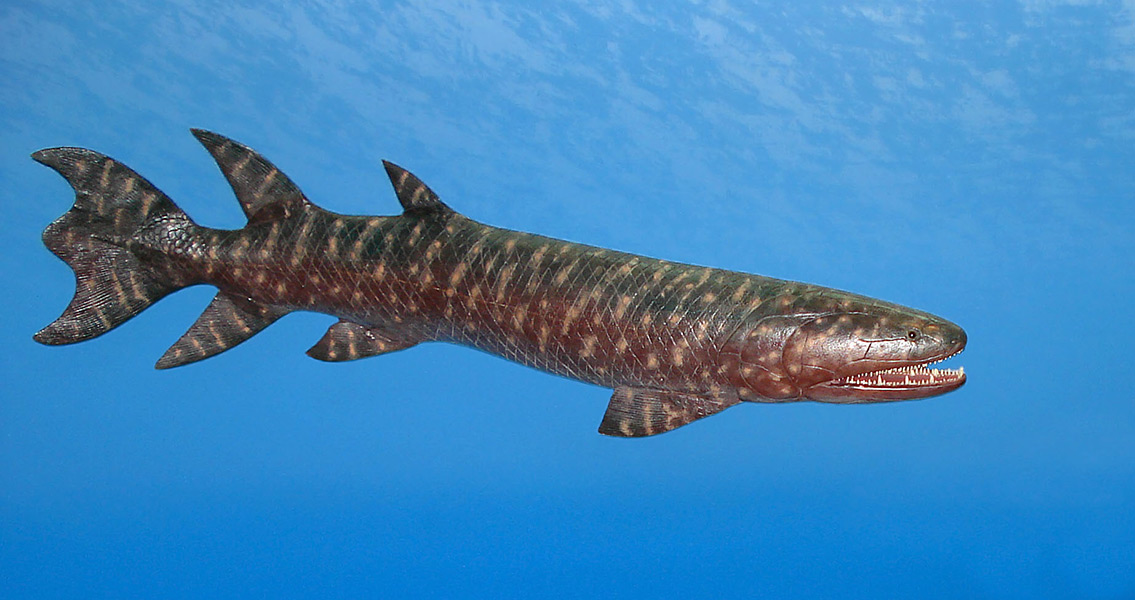
Prehistoric Wildlife notes. Later, however, it was established that it was a fish, though its anatomy and habitat in shallow waters were both factors linked to the later emergence of tetrapods. Land dwelling vertebrate animals originated around 390 to 360 million years ago, when some fish species that had lungs moved into shallow waters before eventually crawling onto land. In fact, all four-limbed vertebrates up to and including humans, along with lobe-finned fish, belong to the class of Sarcopterygii. Initially, this class only included lobe-finned fish but after scientists discovered that these fish were the ancestors of every four-legged animal, the class was expanded to include them as well. Image courtesy of Wikimedia Commons user: Dr. Gunter Bechly]]>

Categories
Breaking News

100,000-Year-Old Human Bones with Bite Marks Found

Categories
Breaking News

Ancient Whalebone Tells When East Africa Began to Rise

Categories
Breaking News

Giant Human Jawbone Baffles Scientists