Categories
Breaking News

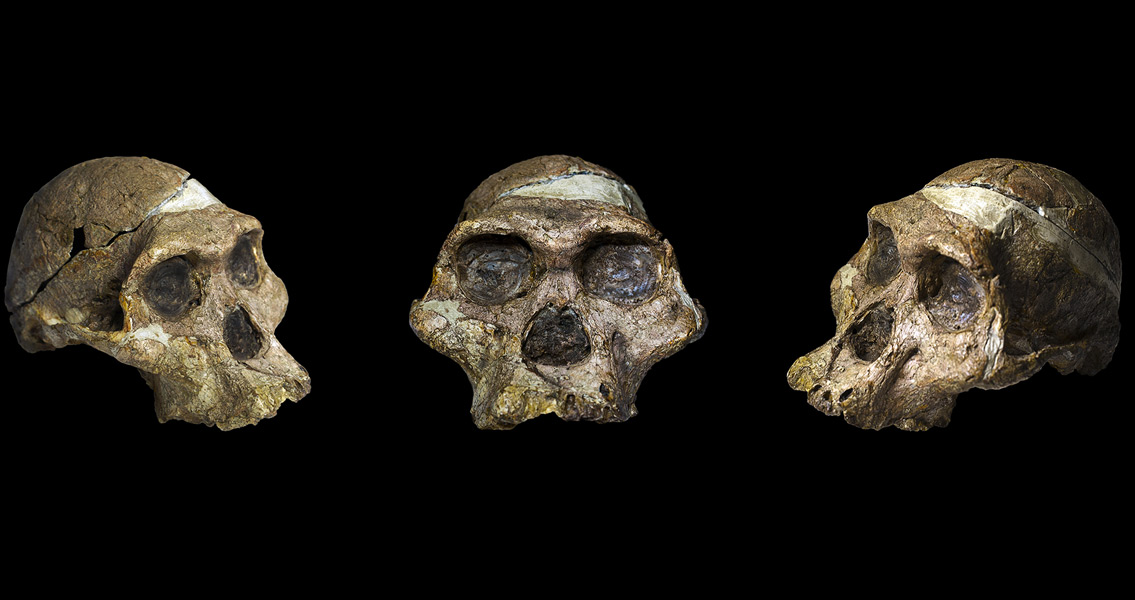
Research Shows “Lucy” Could Walk Upright and Swing Through Trees

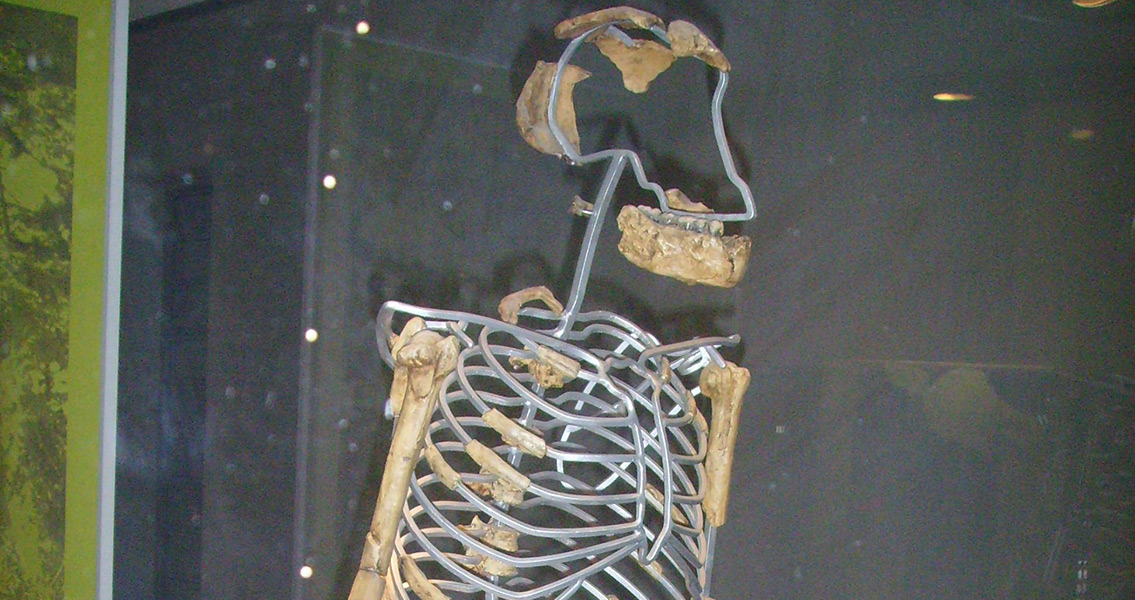
New Scientist. The debate may finally be settled based on the work completed by Christopher Ruff with Johns Hopkins University School of Medicine in Baltimore, Maryland, along with his colleagues. Using CT scans taken of Lucy’s skeleton, they studied the cross sections of both (left and right) upper arm bones along with the left thigh bone — the thigh bone from the right leg was never found. What the team discovered was that Lucy’s arm bones had thick walls, suggesting unusual strength. Bone strength is considered a “use it or lose it” characteristic directly related to an animal’s behavior and not inherited; meaning that at least some australopiths were at home on the ground and in trees. “It would not be present unless Lucy mechanically loaded her upper limbs more than most modern humans,” Ruff told New Scientist. “Ours is the best evidence to date that A. afarensis actually spent a significant portion of their time engaged in arboreal behaviour.” Over the course of a person’s life, bone structure changes depending on the way we use, or don’t use, our bodies. Human thigh bones typically have thicker walls due to all of our walking, our arm bones however, have relatively thin walls because we seldom use them to carry or lift our full body weight. Chimpanzees on the other hand develop arms with thick-walled bones because of their tree climbing. Previously, Ruff and his team discovered injuries to Lucy’s skeleton that indicated she may have died from a high fall, most likely from a tree. That study also suggested that Lucy spent a significant amount of time climbing trees, but it was far from conclusive. “I could fall out of a tree and present the same injuries as they suggest Lucy had,” Harcourt-Smith says in the article. The study has been published in the online journal PLOS One. ]]>
Categories
Breaking News

New Human Ancestor Raises Questions About Our Origins

Australopithecus deyiremeda, as the new human ancestor has been named, lived in the Afar region of Ethiopia some 3.3 million to 3.5 million years ago. This means it would have lived alongside Australopithecus afarensis, another hominin species from the Afar region whose most famous representative, “Lucy”, was discovered in 1974. A. afarensis lived in what is now Ethiopia, between 2.9 million and 3.8 million years ago. “The new species is yet another confirmation that Lucy’s species, Australopithecus afarensis, was not the only potential human ancestor species that roamed in what is now the Afar region of Ethiopia during the middle Pliocene”, said Dr. Yohannes Haile-Selassie, curator of physical anthropolgy at the Cleveland Museum of Natural History and the project team leader of the study, in a press release. The fossil specimens were found on 4th March, 2011, in the Woranso-Mille Paleontological Project study area, situated in the centre of the Afar region, about 325 miles north east of Ethiopia’s capital Addis Ababa, and just 22 miles north of the site where Lucy’s remains were unearthed. Differences in jaw bone mark the two species apart. A. deyiremeda had thick enamel teeth of a different shape and size to Lucy, and a more robust lower jaw. The anterior teeth were also comparatively smaller in A. deyiremeda, suggesting it had a different diet. A. deyiremeda‘s discovery adds to the increasing ambiguity about the process of human evolution. For much of the twentieth century the general consensus among scientists, based on available sources, was that during the Pliocene period only one human ancestor species existed at any time. In 1995, a hominin species called Australopithecus bahrelghazali was discovered in Chad, and in 1999 another called Kenyanthropus platyops was discovered in Kenya. Both of these species were reported to have lived at the same time as Lucy, although this assertion was met with skepticism from the scientific community over whether they really were separate species or simply another example of A. afarensis. Skeptics in the scientific community may still need to be convinced that A. deyiremeda is indeed a distinct species but its discovery adds further weight to the idea that the evolution of homo sapiens was not just a straight line from A. afarensis. “Some of our colleagues are going to be skeptical about this new species, which is not unusual. However, I think it is time that we look into the earlier phases of our evolution with an open mind and carefully examine the currently available fossil evidence rather than immediately dismissing the fossils that do not fit our long-held hypotheses”, said Haile-Selassie. For more information: www.cmnh.org Image courtesy of Wikimedia Commons user: Chartep]]>

Categories
Breaking News

New Technique Dates 3.67 Million Year Old 'Little Foot'

Australopithecus, first discovered 21 years ago in a cave in Sterkfontein, central Africa, is around 3.67 million years old. This makes the skeleton, nicknamed ‘Little Foot’ due to the diminutive size of its bones, one of the oldest ever found. This new date for Little Foot means that it is an older relative of Lucy, a famous 3.2 million year old Australopithecus skeleton found in Ethiopia. Australopithecus evolved in Africa about 4 million years ago before spreading across the continent, eventually becoming extinct soon after 2 million years ago. It is believed that Australopithecus is an evolutionary ancestor of modern humans, and that the genus Homo derived from Australopithecus sometime after 3 million years ago. These early hominins showed the presence of the duplicated SRGAP2 gene responsible for causing increased length and ability of the neurons in the brain. The discovery of Little Foot has a long history. In 1994, the first four footbones were found in a box of animal fossils. Three years later, the position of the end of Little Foot’s shin bone was found in a deep deposit of the Sterkfontein caves, known as Member 2, in the Silberberg Grotto. Excavations at the Silberberg Grotto were particularly difficult. Concrete-like deposits combined with the fragile and scattered nature of the bones to sow the seeds of a long and arduous excavation. It was not until 2010 that the whole skeleton had been exposed. The Sterkfontein area has been internationally famous since the 1930s, when key hominid and paleontological discoveries were made there. No direct dating of deposits, however, have been made without significant controversy. Little Foot, especially, has had a large amount of confusion surrounding its age. In 1999, palaeomagnetic dating of flowstones suggested an age of 3.3 million years. In 2003, cosmogenic nuclide burial dating of the sediments containing the fossilised skeleton proposed it was closer to 4 million years old. Later uranium-lead dating techniques indicated the age of Little Foot to be 2.2 million years old. These major discrepancies surrounding the skeleton have meant its significance has not been understood, until now. Published in this week’s issue of Nature, a collaborative study has precisely dated Little Foot to be 3.67 ± 0.16 million years old. This collaboration between Darryl E. Granger and Ryan J. Gibbon, amongst others, represents the first precise dating for Little Foot. It was made possible by two major technological advances. The first major development was using an ‘isochron’ method. An isochron uses multiple samples from the same site to check that all assumptions are correct; whether the sediment has been reworked, for example. Secondly, the team developed a gas-filled-magnet at Purdue University’s PRIME Lab. This gas-filled-magnet allows for a much better measurement of samples, meaning more precise burial dating. The new research reveals the cutting-edge of anthropological research. It allows us to more precisely map the development of early hominins and, by extension, our own species. Image courtesy of Wikimedia Commons user: Archaeodontosaurus For more information: www.nature.com]]>