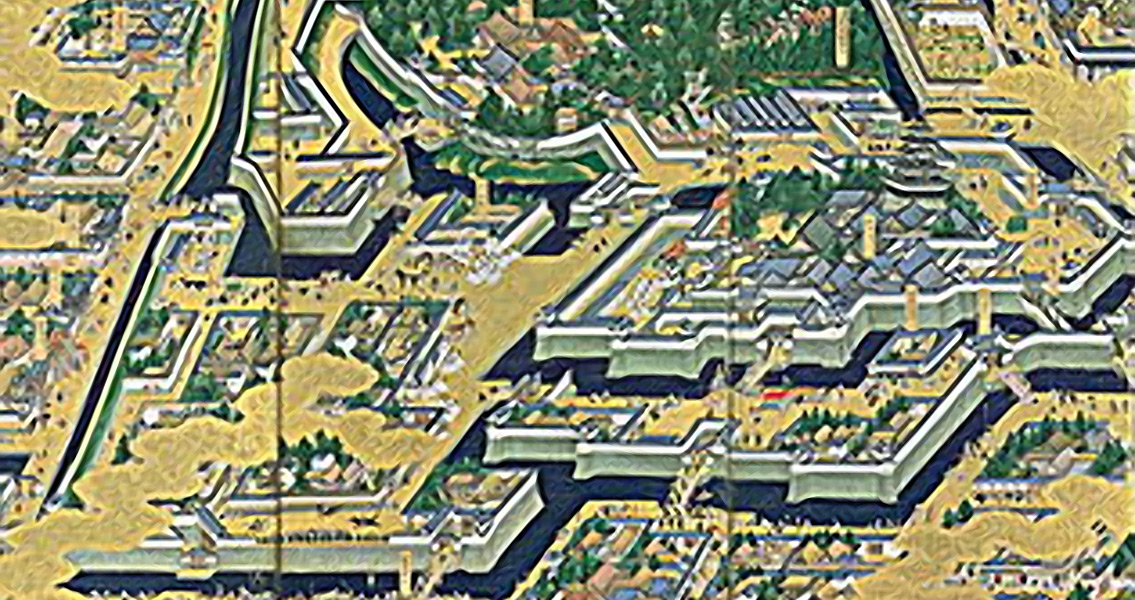


last Autumn during excavations 200 metres south of Takashima Island. The ship was lying around fifteen metres below the surface, with its bow pointing southward. The remains measure twelve metres long, and three metres across at their widest point. Archaeologists from the University of Ryukyus and the Maatsura Board of Education confirmed on the 2nd July that the shipwreck was indeed part of the Mongolian led invasion force of the thirteenth century. It is the second shipwreck that has been discovered from the Kublai Khan led attempt to invade Japan. Professor Yoshifumi Ikeda from the University of Ryukyus, the leader of the excavations, told the Asahi Tribune that his team had found three other ships at the Takashima Kozaki site which could have been part of the invasion force. The team have reached their conclusion based on a wealth of artefacts discovered in and around the shipwreck, and the structure and shape of the ship itself. Around twenty examples of Chinese ceramic wares, including a white porcelain bowl, a brown glaze pottery vase, roof tiles and iron ware, were found in the shipwreck. These have been dated to the twelfth and thirteenth century, which the archaeologists claim is proof the ship is from the Mongolian invasion. By 1274 Kublai Khan’s empire included most of what is modern day Asia, and he had declared himself emperor of China. In 2011, a team of archaeologists discovered and identified the only other confirmed shipwreck from the attempted Mongolian invasion, just off the coast of Nagasaki. Using ultrasound equipment they discovered the well preserved wreck three feet below the sea bed. 4,000 artefacts were unearthed from the site including cannonballs and stone anchors. Kublai Khan attempted to launch two invasions of Japan in the thirteenth century, at a time when the Mongolian Empire was expanding rapidly through Asia and Europe. Both invasions were prevented by ‘kamikaze’: massive typhoons which forced the Mongolians to abandon their attempts at expansion into Japan. The first invasion took place in 1274, when up to 900 ships landed at Japan’s Hakata bay. Heavily armed with weaponry superior to the Japanese, the Mongolian troops initially made substantial inroads into the country’s territory. The typhoon struck however, forcing them to return to their ships for shelter. Over night the storm intensified, destroying most of the invader’s ships and forcing the remainder to return to what is now Korea. In 1281 a second, much bigger invasion was launched comprised of two fleets, one containing 900 ships, the other 3,500. Improved Japanese sea defences held up the Khan’s forces, holding off the massive invasion. The second typhoon struck, sinking 80% of the fleet and drowning a huge section of Khan’s warriors. Those troops who did make it onto the Japanese mainland were quickly killed by an army of Samurai. Historians speculate that the second invasion was so cataclysmic for the Khan because the preparation had been rushed. Desperate to conquer Japan, a fleet of ships had been hastily assembled, many of which were simply inadequate for the journey across the sea. The archaeologists working at the Takashima Kozaki site hope that the information gleaned from the recently identified shipwreck can be used as a starting point to identify other ships in the region. “We have successfully confirmed the two ships from the Mongolian invasion, and further research on them is expected to lead to the discovery of even more sunken Mongolian ships,” Ikeda told the Asahi tribune. Image by Anige of Nepal – an astronomer, engineer, painter and confidant of Kublai Khan ]]>
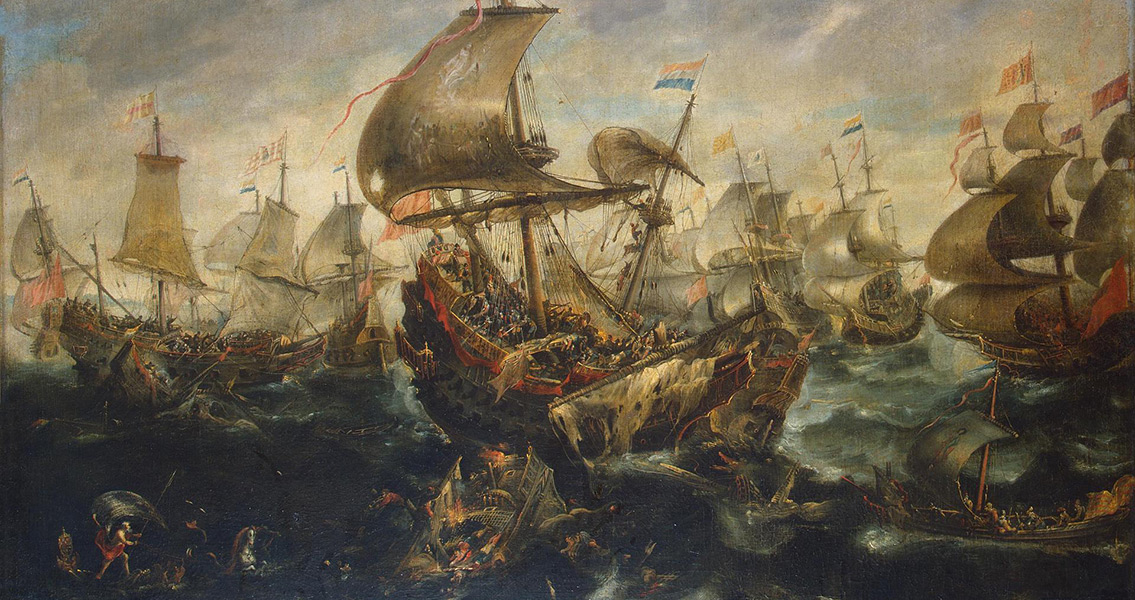
Deadliest Warrior – a television programme which anachronistically pits historical soldiers against one another to find out who would ‘win’ – attests to the appeal of such discussions. A new work has analysed the power of European militaries in the Early Modern period when they came up against their Asian contemporaries. Heated debate over the respective prowess of European soldiers and those from other parts of the world has a very long history. European pamphlets printed in the seventeenth century debated the potential impact of Japanese mercenaries. Some were impressed by the prowess and valour of Japanese warriors; others praised European soldiers for their skill and organisation. In historical circles this debate is scaled up. Individual soldiers are not compared, but armies and navies can be discussed with regard to a central historical question: Did European countries possess a significant military advantage that armies in Asia, the Americas, and elsewhere could not match? This question is important as it could offer an explanation for what is called the “rise of the West.” In an attempt to provide an answer, Adam Clulow, a historian from Monash University, Melbourne, Australia, has assessed the scholarship surrounding this debate. His work is published in the most recent edition of History Compass. Traditionally, it is thought that early modern European powers underwent an unprecedented military revolution. The resultant technological advances – particularly the capital ship, infantry firepower, and the artillery fortress – transformed the continent; leading to a dramatic shift in the power balance between Europe and the rest of the world. It was these tools which allowed Europeans to conquer over 35% of the world by 1800. This model of European expansion, however, has been hotly debated. Many opponents of this model claim that there was not a significant lag between the supposed ‘European military juggernaut,’ as Clulow puts it, and other parts of the world. Military organisation in Europe, therefore, should not be seen as exceptional. New research has forged a middle ground between these two positions. By looking at the Sino-Dutch war (1661-1668), it is possible to see a ‘limited advantage template.’ Clulow states that this conflict allows us to see that “while Europeans did possess a genuine technological advantage, most notably in forts and ships, it was not nearly as expansive as is sometimes assumed by supporters of the military revolution thesis.” Clulow, an expert on Tokugawa Japan, also notes that Europe had not always been able to fully utilise its technological advantages. European powers were unable to use maritime violence against Japan, for example. One reason for this was that the overseas resources the European forces were able to muster were simply not enough to challenge the regime of Tokugawa Japan. “The result was that the potential impact of superior military technology was so consistently blunted that it was essentially eliminated from the equation,” Clulow remarks. Technological advances can often give a military force a decisive upper hand in a conflict. Deadlier weapons and stronger armour are of obvious benefit in a fight. These advantages, however, are only useful if they can be effectively deployed. Clulow’s work clearly shows that rather than overestimate the importance of technology, we should remain cautious in drawing assumptions. Image courtesy of Wikimedia Commons user: Trzęsacz www.onlinelibrary.wiley.com]]>
www.historians.org Image courtesy of Wikimedia Commons user: Takabeg ]]>
www.mbe.oxfordjournals.org Image courtesy of Wikimedia common user: Hautala]]>

