Categories
Breaking News

Military Complex in Israel Dates to the Reign of King Solomon

FoxNews article. “Only when the dates came back from the lab we were reassured that indeed these were the remains of stables and other activities from the time of David and Solomon.” The research highlights the early community’s sophisticated and refined defense system and trade links, demonstrating a connection with the distant Mediterranean region. In addition to moving food and materials back and forth from other regions, the donkeys housed at the complex would have been used as part of copper production. The fact that one of the biggest ancient copper smelting plants in the Timna Valley is located near the fortification is of particular importance. Ben-Yosef says in the article: “Until now we didn’t have evidence of military conflicts in the copper mines of Timna at this period. Moreover, they are in accord with the biblical accounts depicting wars between David and the Edomites who inhabited this region.” The archaeologist went on to add that given the hotly debated accounts between biblical historians, finding actual evidence is significant. Aviv University notes in a recently released statement that the fabled King Solomon mines are believed by some experts to be located somewhere among the Timna Valley ancient smelting camps. There is no clear description of “King Solomon’s mines” within the Old Testament, but there are references to military clashes between the Edomites (the descendants of Esau, Isaac’s firstborn son and Jacob’s twin brother) and Israel. Discovered in 1934, the copper smelting site in Timna Valley was first believed to be a slave camp dating to the Iron Age. This theory was debunked by Ben-Yosef along with his colleagues in 2014, when they analyzed organic clothing and material finds which indicated a sophisticated, hierarchical society. The research team intends to continue their exploration of the ancient societies in the Timna copper mine area. The research has been published in The Journal of Archaeological Science. ]]>

Categories
Breaking News

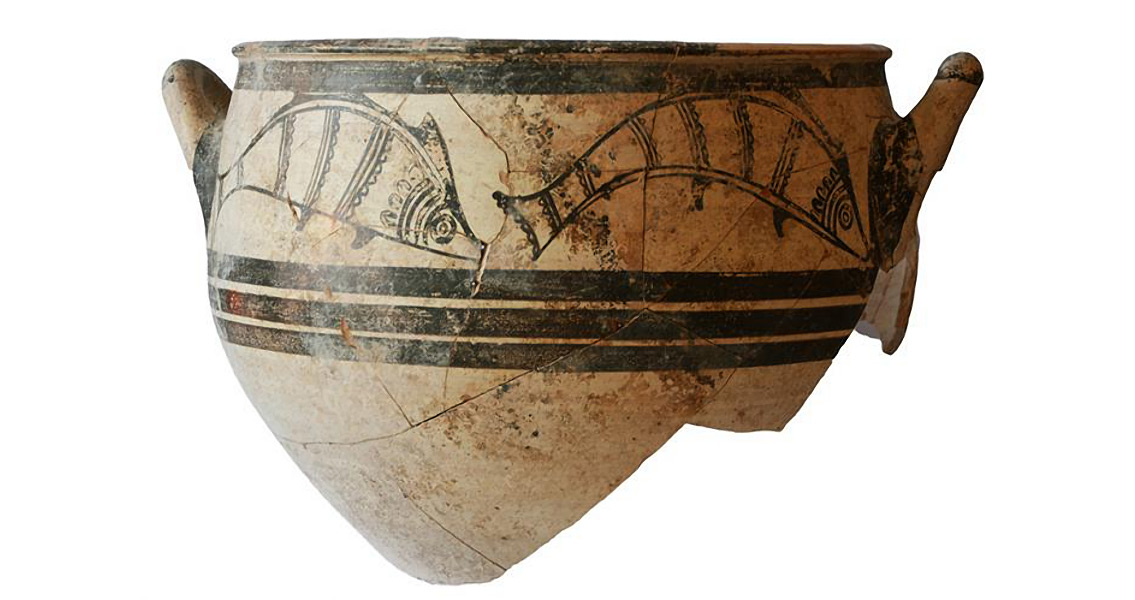
Mycenaean and Egyptian Artefacts Discovered in Cyprus Grave

Categories
Breaking News

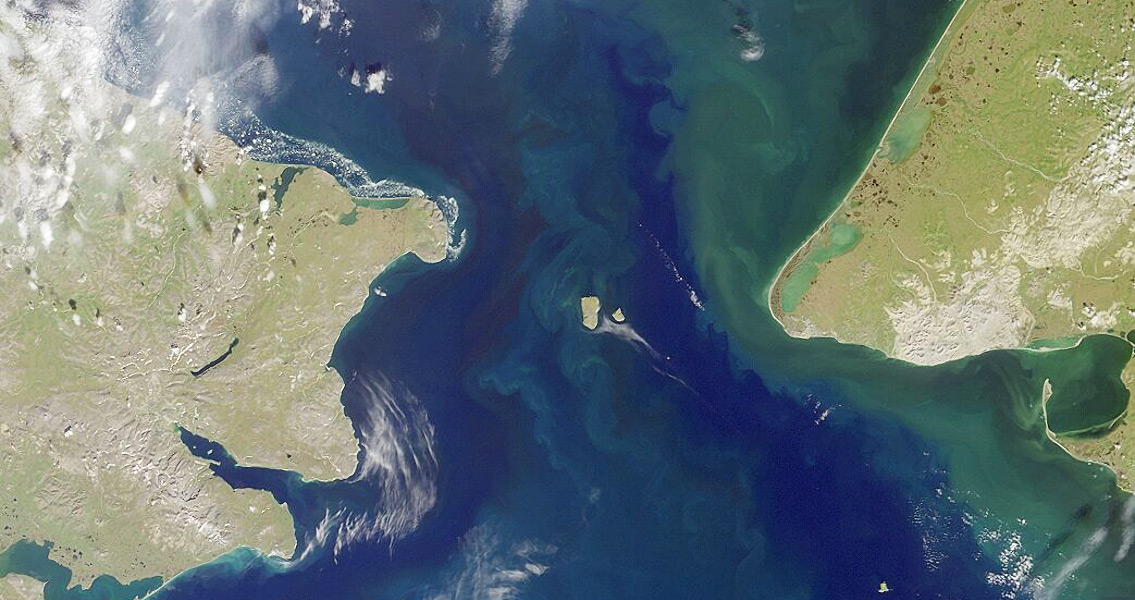
Asian Metals Arrived in Alaska Long Before European Contact

Journal of Archaeological Science, the new findings have the potential to drastically rewrite the history of North America and trade between continents. The artifacts in question, examples of smelted alloys, were found on Alaska’s northwestern coast, at Cape Espenberg. The site, on the Seaward Peninsula, was inhabited by the Thule people, an Arctic culture which originated on the Alaskan coast in around 900 CE and spread as far as Greenland. A society whose existence was built around hunting, Thule houses were built from whale bones, skin and sod. Previous archaeological finds and oral histories have long given clues that objects from Eurasia reached prehistoric North America, but concrete proof had not been found until now. H. Kory Cooper, an associate professor of anthropology at Purdue University, led the metallurgical analysis of the artifacts. “We believe these smelted alloys were made somewhere in Eurasia and traded to Siberia and then traded across the Bering Strait to ancestral Inuits people, also known as Thule culture, in Alaska. Locally available metal in parts of the Arctic, such as native metal, copper and meteoritic and telluric iron were used by ancient Inuit people for tools and to sometimes indicate status”, he explained in a press release from the university. “Two of the Cape Espenberg items that were found – a bead and a buckle — are heavily leaded bronze artifacts. Both are from a house at the site dating to the Late Prehistoric Period, around 1100-1300 AD, which is before sustained European contact in the late 18th century.” Fieldwork for the study was led by Owen K. Mason and John F. Hoffecker, both from the Institute of Arctic and Alpine Research at the University of Colorado, Boulder. Between 2009 and 2011 they excavated a host of artifacts, including six objects made from metal. Both the belt buckle and the bead were made from leaded bronze – an alloy of copper, tin and lead. They were a lucky find, with metal artifacts rarely found at dig sites due to poor preservation. The fragmented leather belt strap was dated to between 500 and 800 years old, although the metal component could be significantly older. “The belt buckle also is considered an industrial product and is an unprecedented find for this time,” Cooper said. “It resembles a buckle used as part of a horse harness that would have been used in north-central China during the first six centuries before the Common Era.” Cooper and colleagues’ study adds to the growing body of knowledge about prehistoric North America, and the remarkably diverse and complicated cultures that lived and thrived there long before Europeans arrived and changed the continent forever. “This will cause other people to think about the Arctic differently. Some have presented the Arctic and Subarctic regions as backwater areas with no technological innovation because there was a very small population at the time.” Cooper said. “That doesn’t mean interesting things weren’t happening, and this shows that locals were not only using locally available metals but were also obtaining metals from elsewhere.” ]]>

Categories
Breaking News

Early Vikings Were Traders, Not Looters

silver ring with an inscription in Arabic in a Viking grave, confirming accounts by Arab travelers from the Middle Ages about their peaceful encounters with the Scandinavians. Image courtesy of Wikimedia Commons user: http://upload.wikimedia.org/wikipedia/commons/thumb/9/96/Comb1.jpg/591px-Comb1.jpg ]]>

Categories
Breaking News

Alaskans Traded with East Asia Pre-Columbus

Categories
Breaking News

Aztec Empire Politics More Complex Than Thought

Journal of Archaeological Science. A possible explanation for why the Aztecs did not intervene in Tlaxcallan’s obsidian gathering is that obsidian was a plentiful resource. “Obsidian was widely available and was an everyday good. It probably wasn’t worth the time and expense to try to cut off Tlaxcallan’s supply of obsidian from El Paredón because other sources were available,” Millhauser writes. Millhauser and his team’s research emphasises the complexity of international relationships in Aztec-era Mesoamerica. Conflict was not as widespread or continual as previously thought. “The fact that they got so much obsidian so close to the Aztec Empire makes me question the scope of conflict at the time,” Millhauser says. “Tlaxcallan was able to access a source of household and military goods from a source that required it to go right up to the border of enemy territory.” Another important aspect of this research is that it reveals an economic divide between Tlaxcallan and the Aztecs. The Aztecs obtained most of their obsidian from a source other than El Paredón. Almost 90 percent of Aztec obsidian came from a site to the north known as Pachuca; Tlaxcallan only obtained around 14 percent of their obsidian from Pachuca. “All of this drives home the fact that geopolitics mattered for the economies of ancient states,” Millhauser says. “Political stances and political boundaries influenced everyday behaviour, down to the flow of basic commodities like obsidian. The popular conception of the Aztec Empire as all powerful before the arrival of Cortés is exaggerated. The region was a politically and culturally complicated place.” For more information: www.sciencedirect.com Image courtesy of Wikimedia Commons user: Nemissimo]]>

Categories
Breaking News

New Research Shows Japanese Traded With Roman Empire

Image Copyright © G.dallorto ]]>

Categories
Breaking News

Oldest Middle-Eastern Metal Object Found