Categories
Breaking News

The First Gate Ever Found at a Jewish Town Named for Gates

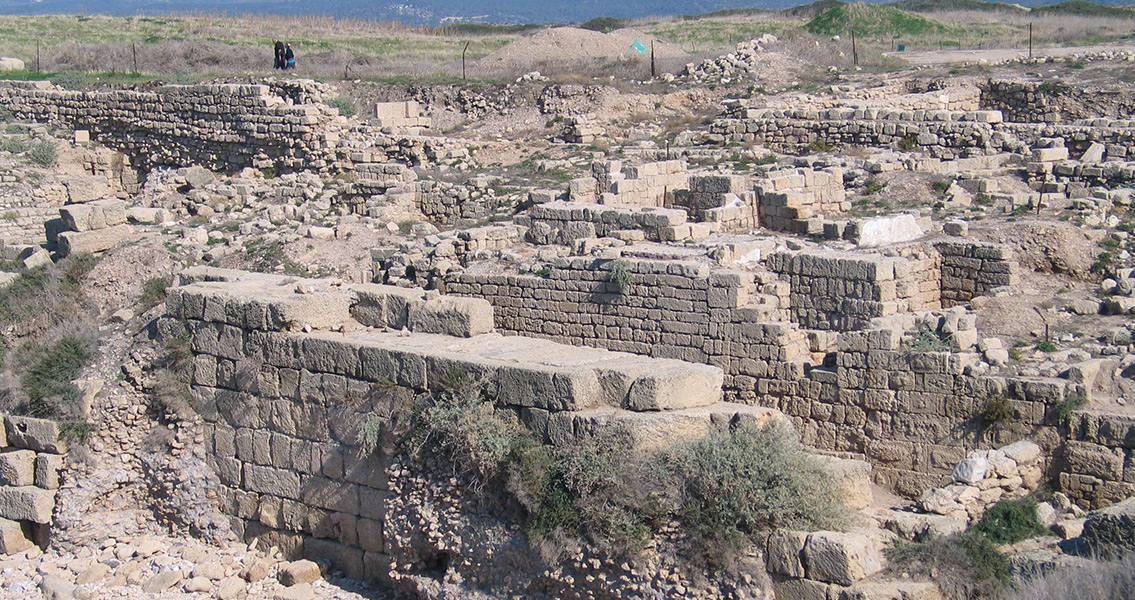
Times of Israel. The town’s affluence could have served as a reason for the heightened security. Beit She’arim was the home to many prominent and wealthy Jews, so the community might have been named from the fortifications built to keep them safe. Another possibility is that it was the site of an important Roman fortress. Erlich and her team have plans to return and continue excavations at both Beit Zaid and Beit She’arim next season. ]]>

Categories
Breaking News

Veteran Archaeologist Discovers Temples in Northern Sudan

Categories
Breaking News

New Research Confirms the Oral Histories of Montezuma Castle

Western Digs: “The conventional thinking left a lot of room for speculation about when and why people might have abandoned the area. The new study doesn’t explain why violence occurred at the site, but it does provide a mechanism for the abandonment. Aside from a small research project conducted in the 1980s, very little archaeological work had been done since the 1930s.” When the site was originally studied approximately 80 years ago, archaeologists discovered a large amount of evidence, including burnt roof beams and charred areas on the wall plaster. One of the structures, the one that became known as Montezuma Castle, was built inside a natural alcove on the face of the limestone cliff, about 90 feet (27 meters) above the canyon floor. The other, erected on the ground next to the canyon’s north wall, was named Castle A. The charred remains of both buildings led many to the conclusion that the buildings burned after they had been abandoned. Later, however, that changed, and some experts came to think the sites had been burned intentionally by the Sinagua as part of some unknown ritual performed as they were leaving. This new research was undertaken to see if new archeological methods and technology could uncover information about why the dwellings were abandoned. Guebard, along with his colleagues, reviewed notes from the original excavations, studied features of the site as well as artifacts which included roof beams, ceramics, and a variety of other architectural elements. Additionally, Guebard solicited several tribal groups whose ancestors were from the Verde Valley, for their input. “Generally speaking, we spend a lot of time and effort working closely with culturally associated Native American tribal governments”, Guebard says in Western Digs. “They review many of our projects and provide important feedback that helps to develop project objectives.” Following these lines of evidence, a completely new picture of the final days at the cliff dwellings started to become clear. For example, new dating of the charred plaster indicates the fire occurred between 1375 and 1395, while the pottery from the dwelling showed signs of having been made in styles from that same time period, suggesting that Castle A was inhabited right up to the time it was burned. Even more persuasive are the four bodies. Discovered in the original excavation in the 1930s, at the time it was believed that the deceased had been buried well before the fire, but a closer look at the earlier research reveals the dead had suffered trauma before their deaths, such as bones with cut marks, burn marks, and skull fractures in three of the four bodies. “We learned that the interior portion of each fracture displayed evidence of singeing on live bone,” Guebard is quoted as saying in the article. “So, the sequence of events seems to be blunt trauma followed closely by burning. It is also interesting to note that all of the remains with reported evidence of trauma and burning were found in a single grave.” The research was corroborated by the oral histories of the Native Americans, which describe Castle A being attacked by rival bands seeking to drive the Sinagua away. “Years before starting the project, I had heard from tribal members that there were stories about violence at the site”, Guebard explains in the article. “So as I started to realize that the archaeological evidence was supporting violence at Castle A, I felt it would be helpful to get their unique perspectives on the project and on my interpretation of the data. What was interesting is how close the oral histories match up with the archaeological evidence, but also how each story provided a unique and different perspective of the event represented by the archaeological evidence.” A Hopi Bearstrap Clan member recounted stories of Sinagua villagers running into Montezuma Castle and then pulling up the ladders, while invaders set it on fire. Members of the Dil zhe’e, also known as the Tonto Apache, recount the story of how their ancestors joined with the Yavapai, and together they evicted the Sinagua by setting fire to the dwellings. ]]>

Categories
Breaking News

1,900-Year-Old Inscription Identifies Unknown Judean Ruler

Times of Israel: “Not only were we able for the first time to identify with certainty the name of the ruler who oversaw Judea in the critical years of the Bar Kochba revolt; this is also just the second time that the mention of Judea has been discovered in inscriptions traced back to the Roman era.” With seven lines, the inscription is the longest ever discovered as part of a maritime excavation in Israel. Although a portion is missing, it’s believed to read: “The City of Dor honors Marcus Paccius, son of Publius, Silvanus Quintus Coredius Gallus Gargilius Antiquus, governor of the province of Judea, as well as […] of the province of Syria, and patron of the city of Dor.” The third and last of the major Jewish–Roman Wars, the Bar Kokhba revolt was a revolt of the Jews in the Roman province of Judea against the Roman Empire. The failure of the First Revolt had led to rising religious and political tensions around changes in the city’s administration, an economic downturn and an increased Roman presence in Judea. These conditions, along with the banning of circumcision, construction of a new city on top the ruins of Jerusalem and the building of a temple honoring Jupiter on the Temple Mount, all led to the uprising. The port city of Dor was established around 2,000 BCE, during the Middle Bronze Age, while its documented history starts in the Late Bronze Age and ends with the Crusader period. The port was the dominating factor in the success of the town all through its 3000-year history, serving all the diverse cultures that occupied it as a commercial port. With between 100 and 200 students and volunteers on site each excavation season, Dor is among the largest ongoing archeological sites in Israel. ]]>

Categories
Breaking News

Site with Reburied Skeletons Discovered by Accident

Western Digs: “This is one of the few archaeological contexts registered by archaeologists in this region, if we confirm the hypothesis [that this burial dates from] the Late Archaic, we could have a site with information about the transition to agricultural, sedentary communities in the region.” A number of the remains, both avian and human, had been naturally mummified by the arid climate. In addition to the skeletons and bird remains; textiles, baskets, stone points and other artifacts were also found. The two sets of remains were surrounded with an array of goods, including a large sea shell and a dress or bag made from deer hide. The gender and exact age of the child is unknown, although the size suggests at the time of death they were between one and three years old. The partial adult skeleton had large leg bones that had been tied together, similar to other, later finds in northern Mexico. The practice of reburying partial skeletons was not uncommon. Starting around 1100, the citizens of Paquime are known to have dug up and then re-buried their dead, sometimes collecting the bones in large jars or bundles, possibly to be buried with relatives. If this new cave site predates Paquime, the burial may be earlier evidence of the practice. Not found at the graves were artifacts, such as ceramics, associated with the Puebloans who built and then settled in trade centers like Paquime during the Medio Period. This absence indicates the graves predate the creation of Paquime, which happened around the year 700. The early date also makes the discovery of the bird, a scarlet macaw, especially significant because tropical birds are not indigenous to the high desert region of Chihuahua. The discovery of the macaw in this pre-Medio Period site indicates the presence of long-distance trade in exotic goods which pre-dates Paquime by centuries. “This finding verifies once again that the [mountains of Chihuahua] have been a cultural corridor between the coast and the desert north with the south,” Gallaga is quoted as saying in Western Digs. “At the end of the day, this discovery shows us that there is still a lot to do in the northern Mexico region, archaeologically speaking.” Gallaga’s team was called to the site when the property owner uncovered the strange remains while using heavy equipment to level the cave’s floor. “Many archaeological discoveries are the result of planned research and are conducted during years of intellectual efforts,” Gallaga says in Western Digs. “Others are the result of an accident.” ]]>

Categories
Breaking News

Biblical Gate Once Considered a False Idol Excavated in Israel

Live Science. The gate-shrine was found in the ancient city of Tel Lachish. The gate’s northern section was uncovered decades ago by archaeologists from Tel Aviv University and the United Kingdom. This recent dig was focused on unearthing the entire structure, no small task considering the gate-shrine is the biggest one constructed in Israel, going back to the First Temple era when the kingdom worshiped at the temple King Solomon built. Sa’ar Ganor, a director with the IAA, said in a statement released by the Authority: “The size of the gate is consistent with the historical and archaeological knowledge we possess.” According to the Hebrew Bible, “everything took place” where the gate/shrine of Tel Lachish was originally built. High-ranking officials, including city elders, governors, and judges, would sit on benches by the city gate. Those benches have been found as part of the excavation project. Thirteen feet (4 meters) of the Tel Lachish gate-shrine have been exposed and preserved. The excavation has revealed benches which included armrests, oil lamps, arrowheads, and jars and scoops used for loading grain. Some of the jar handles had the name “lmlk” on them, which was the king’s seal. These jars may have been related to the administrative and military preparations made by the Kingdom of Judah for the war against the king of Assyria, Sennacherib, late in the eighth century BCE. “Steps to the gate-shrine in the form of a staircase ascended to a large room, where there was a bench upon which offerings were placed,” Ganor said in the statement from the IAA, “An opening was exposed in the corner of the room that led to the holy of holies [the gate-shrine]; to our great excitement, we found two four-horned altars and scores of ceramic finds consisting of lamps, bowls, and stands in this room.” The horns on the altar, however, had been intentionally cut off. “That is probably evidence of the religious reform attributed to King Hezekiah, whereby religious worship was centralized in Jerusalem and the cultic high places that were built outside the capital were destroyed,” Ganor added. Ze’ev Elkin, the minister of Jerusalem affairs, heritage and environmental protection, as well as a member of the Israeli parliament, told Live Science the discovery shows “how biblical tales that are known to us become historical and archaeological stories” The site, which is in the Tel Lachish National Park, has not been opened to the public. ]]>

Categories
Breaking News

The Last Continent Colonized by Homo Sapiens

Categories
Breaking News

Findings from the Site of David Versus Goliath on Display for the First Time

Tazpit Press Service (TPS), “Archaeology cannot find a man and we did not find the remnants linked to King David himself, but what we did find is archaeological evidence of the social process of urbanization in Judea.” This evidence of urbanization is in line with what the Bible describes as the formation of the Kingdom of David, when fortified towns replaced small agricultural communities. Carbon testing on olive pits unearthed at the Khirbet Qeiyafa site indicates the town was built towards the end of the eleventh century BCE, which fits the chronology of the Biblical narrative. Two aspects of the Elah Fortress were of particular interest to archaeologists, the large number of iron stones found and the wall with two unusual hollows, which encircled the site. Sha’arayim means “two gates” in Hebrew, and the hollows in the modern wall, which was constructed directly on top of the ancient wall, were in the same place, precisely, as the ancient wall’s two gates had been. The town’s geographical location also fits with the Biblical description of Sha’arayim, following the battle of David and Goliath and again in the Book of Joshua. The finds from the site include two inscriptions (in Canaanite script) which are considered to be the earliest writing examples of the Hebrew language, and a pottery shard with the Hebrew words, “king”, “don’t do”, and “judge”, easily identifiable. “Although I led the excavations, I myself was amazed to see the different pieces brought together in a way that allows visitors to get a clear picture of how the town looked and that gives them an opportunity to go back in history to the times of the kingdom of David,” Professor Garfinkel told TPS. The biblical account of the battle between David and Goliath tells of it occurring near the Valley of Elah, when the Israelites were facing the Philistines. For 40 days, twice daily, Goliath, the Philistines’ champion, challenges the Israelites to send out their own champion to decide the outcome with a single combat. No one comes forward until David accepts the challenge, taking only his staff, sling and five stones. David defeats Goliath with just one stone from his sling, and the Philistines flee. The exhibition, “In the Valley of David and Goliath”, at the Bible Lands Museum will include the pottery shards in addition to a clay model of a shrine discovered at the site and the huge stones used to build the wall enclosing the town. ]]>

Categories
Breaking News

4,500-Year-Old Mummy Found Near Site of American Pyramids

Andina news agency that the diverse and valuable items the woman was buried with (broaches with animal carvings, a seashell necklace, and a Spondylus pendant) were indicative of her high social status. The items were also suggestive of possible trading between the coastal town of Aspero and the larger inland city of Caral. Radiocarbon analysis dated the mummy to around 2,500 BCE, the same time people of the region started building pyramids, but didn’t offer any information concerning the manner of the woman’s death. Scientists do know that human sacrifice was a rare occurrence within the Caral civilization. The location and method of her burial in addition to the objects found with her also hint at a form of gender equality that allowed both men and women to achieve a higher level of social status and leadership roles. Even though ancient Americans were raising pyramids and building cities at approximately the same time the Egyptians were building the monuments at Giza, much less is known about the ancient people of northern Peru, the Norte Chico as they’re known. Caral has a total of six huge platform mounds (also known as pyramids) as well as several sunken circular courts and giant hive-like buildings archeologists believe served as homes. All of the findings at Caral point towards a complex society capable of undertaking large city projects. The nature and origin of this region of ancient America however, has long been a point of contention between archeologists, with one camp believing that the inland cities grew out of coastal fishing settlements similar to Aspero, while the other camp theorizes that coastal societies originated from inland settlements. While there’s no evidence connecting the 30 or so smaller settlements in the region to a central power, there’s also no evidence to the contrary. Aspero and Caral, along with the region’s other settlements, are known as the Norte Chico civilization, a pre-Columbian culture dating back to between approximately 3,500 BCE and 1,800 BCE. Considered to be the oldest known civilization in the Americas, the Norte Chico civilization thrived throughout the valleys of three rivers; the Patvilca, the Fortaleza and the Supe. Archaeologists have known about the ancient sites scattered across the area since the 1940s at least; archaeological work first took place at Aspero as early as 1905. The most impressive Norte Chico achievement was its massive architecture, which included the large earthen mounds and circular plazas mentioned above. In archaeological terms Norte Chico was a pre-ceramic society during the pre-Columbian Late Archaic; it had no visual art and absolutely no ceramics, just simple carved broaches and seashell necklaces. ]]>

Categories
Breaking News

New Excavation Finds Medieval Backyards Were Typical of Todays