Categories
Editorial

Protect and Record Your Heritage Through Rock Art

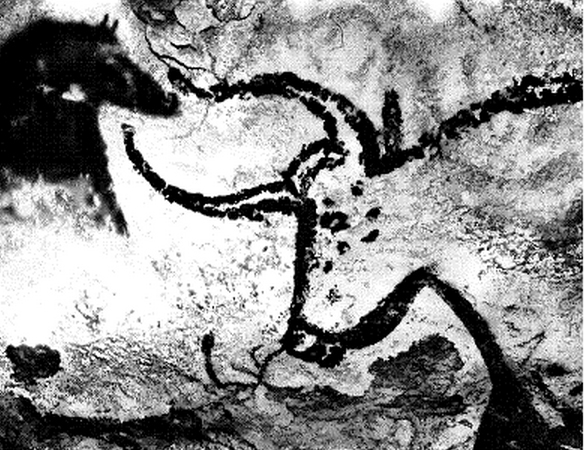
Vandalism a crime, not art Rock art could be used for understanding ancient symbols, religions, cultural boundaries, origins, beliefs and even factors like gender relationships and should be protected from Vandalism Rock art can be an extremely precious phenomenon especially depending on the era it belongs to, the impact of the images and the significance of historic background. They are supposed to be preserved the way they are, so archeologist and anthropologists can extract the comparative study of the human societies that existed before, their culture and development. It is a complex field as well, as one has to predict the most accurate depiction of these pieces of art and establish a link, if any. Art-of-the-Stone-Age,-page-29Thanks to the Pharaoh, Egypt is an example many of us know for rock art reflecting heritage and culture. The Egyptians had their Gods and language carved all over the ancient rocks is an evidence of how they lived, what their beliefs were, what their culture was, what psyche they followed and much more can be concluded from these precious pieces of artifacts. But not being famous for rock art does not mean that there are no such sites reflecting heritage anywhere else in the world. Every place has a history and heritage to go with and same is the case with Australia. Australia has a number of sites that contain rock art that date back to 40,000 or even 100,000 years old. The rock art is a reflection of the culture and beliefs of these localities. These indigenous pieces of art, especially those in the Kimberly, are believed to be 60,000 years old, which is five times older than the Egyptian pyramids. These pictures of men, women and children with their tools, animals and the different actions reflect a lot about how they lived and what their beliefs were. This rock art should be protected from a serious crime, vandalism, as no one wants to lose track or disrupt history. A recent case of vandalism was witnessed in Burrup Peninsula, where the biggest and most important collection of rock carving can be found which is dated back to the ice ages. The maximum fine for such an act is a hefty one as well of up to $20,000. These sites have to be protected by the Government in case of vandalism. The Australian Government should also make sure that all the sites of rock art and ancient rocks are recorded and registered with all the details so we never lose track of them in the times to come. They should start a campaign about such sites and what they reflect about our heritage. In fact, one should cover the 100 most important sites across the globe and have a comparative analysis of the heritages worldwide. With the rain, dust and reptiles crawling over these precious pieces of art, they have survived and they will survive in the future as well, only if protected from vandalism. Such rock art that reflects history is a precious symbolic sign of the past, one can relate to. These sites are a library for history, and should be registered and recorded which is a very inexpensive process.]]>

Categories
News

The Russian Revolution

The Russian revolution of 1917 was practically bloodless, and, to a large extent, swift and effortless. Motivated by capitalism’s inherent greed that had spread across the globe, it ignited a monumental change, not just across Europe, but across the world. In many ways, the 1917 revolution of Russia was inevitable. Karl Marx had a few years earlier spoken of the self-destructive nature of capitalism; he said that it would undo itself, and would be tipped over the edge by the working man. Russia, like many European nations at the time, was deemed sick. Indeed, the German artist Franz Marc claimed that all of Europe was suffering from a sickness that only war could cleanse. Russia’s sickness seemed greater than all the others; more immediate, more damaging, and more terminal. It was certainly a sickness that would take more than war to cure. For centuries Russia had been ruled by the House of Romanov, and had all the while been split between urbanity and peasantry; between the government and its subjects; between the capital and the provinces; between the upper-middle classes, and the working class. Added to these volatile divisions was the sheer size of the empire; by the end of the 19th century, Russia covered a sixth of the world’s surface. The size and scale made managing it difficult, yet Russia was an empire without a parliament. Nicholas II was stubborn, impractical and unwilling to listen to the advice of others. State Dumas (parliaments) were created sporadically, only to be shut down almost immediately. There was a total ban on the creation of political parties, but this only encouraged rebellious, illegal ones to spring up, such as the illegal Labour Party movement. Once political parties were legalised the Social Democratic Labour Party was created, which was a party of Marxists who felt that the working class should overcome the regime and take the reigns. The Social Democrats were ridden by disagreements and factionalism. They broke into two halves; the Mensheviks, who were led by the charismatic Kerensky, felt that Russia was not immediately ready for the transition into socialism. They felt that capitalism needed to continue along its trajectory until the complete industrialisation of Russia was finished. The Bolsheviks, led by the intransigent Vladimir Ilyich Lenin, wanted Russia’s conversion to socialism to be immediate. Lenin advocated a ‘dictatorship of the Proletarian’, and the use of terrorism. Such strong, foreboding words were alien to the basic precepts of socialism according to the Mensheviks. To them, Lenin wasn’t too far from being a madman. He was uncompromising, a man to be feared; he was the embodiment of the terrifying Bolshevik spirit. The Russian Revolution Coinciding with the rise of Petrograd’s political parties was social and economic turmoil throughout Russia and its subjects. By and large, the Russian industry was doing well (although it was largely financed by German bankers), but the workers were poorly paid in comparison to workers in other European nations. The living conditions were sometimes atrocious, and resentment was growing. Everything came to a brief, but pointed head in 1905, when restless civilians who demonstrated against the regime were brutally put down in an act which became monikered as ‘Bloody Sunday.’ Out of this rose the first State Duma, which Nicholas II allowed only reluctantly and dissolved soon afterwards once it became clear that it was too radical and too contradictory to his own designs. A second was established only to also be hastily dissolved. A few years passed with only a few murmurings of discontent until The Great War arrived in 1914. In some ways it had its advantages to Nicholas and the ruling power; it promoted togetherness and patriotism, as everybody fought as one against the Central Powers. The production of armaments meant that the industry didn’t suffer as much as people had expected. As an overall effect, though, the Great War only served to weaken Nicholas II’s position, and accelerate a revolution. The Great War, as inevitable as it was throughout Europe, was the worst thing that could have happened to all the ruling powers, despite their own actions instigating it. The war was mishandled in a few ways by Nicholas II. For him, it was as much about expansion as it was about defence. The socialists decried the war as an ‘imperial conflict’, claiming it was a wretched result of several capitalist nations competing with one another to gobble up the globe. The war, for the socialists as it was for many, presented an opportunity to put a stop to the expansive mindsets of the great powers. It was a chance for revolution, and for the working class to cure capitalism’s innate sickness. Had the fourth State Duma discovered the tsars secretive plans to continue expansion even during the conflict, they would never have thrown their weighty support behind the war effort. The economy suffered as a result of mismanagement during the war. The government printed off roubles in a bid to sustain the economy, but this only resulted in rapid inflation, with wages not being able to keep pace. Sanitation and housing fell into ruin, with soldiers complaining about harsh, unjust military treatment that was damaging morale on the front. Unemployment rose sharply. By February 26th 1917, virtually all of Petrograd was on strike. The Bolsheviks and Mensheviks were sniffing around the political and social debris, imbued with the idea that the monarchy could be overthrown. On March 2nd, Nicholas II abdicated suddenly. A Provisional Government, led by the Kadets, was formed a day later, but even they continued the monarchy’s expansionist aims. The Mensheviks, who wanted Russia to only defend her borderlands, soon found this out and a new cabinet was set up, with the previous members resigning in shame. The Provisional Government made promises that elections would be held for a Constituent Assembly, and that all adults over 21 could vote. Ruling wasn’t easy; the economy and society continued to suffer, war continued to ravage, people were still miserable, which meant that a change in the guard was hardly felt. The Provisional Government, made up of a few parties, was also divided on numerous issues, including the right of national self-determination. The Mensheviks and Socialist Revolutionaries wanted nations like Ukraine to establish their own government, but the Kadets disagreed. Kerenski eventually took charge, but he soon resorted to heavy cocaine use after finding it an arduous, virtually impossible task. Unemployment was escalating, with no state welfare to protect those out of work. The war was still raging. People feared that bread and potatoes would soon be unavailable. There was so much for Kerensky and his government to think about that the Bolsheviks, the most individual, troublesome, and confrontational of all socialist parties, had practically been forgotten about. The Bolsheviks were there, watching and waiting. The Bolsheviks were a different animal to any other socialist party. Led by Lenin, they were uncompromising, refusing to cooperate with any other party. They didn’t want to share power with the Mensheviks, the Socialist Revolutionaries, or the Kadets. Their principles, thoughts and methods were fearsome, with virtually all their leading members former criminals who had served time in Siberia for political agitation. They watched the Provisional Government’s struggles, with Lenin directing constant sniping at the clearly fallible and increasingly flustered Kerenski. Workers began to revolt, taking their bosses captive in some quarters, and a third coalition was formed in September to help quell the unrest. This coalition comprised just 7 socialists, with the rest made up of liberals. This meant that the radical social and economic reforms that had once been at the forefront of the Provisional Government dissipated. Lenin, who was holed up in Finland, declared that the Mensheviks and Socialist-Revolutionaries had, by conspiring with liberals, become agents of capitalism. The Provisional Government was to him little different to the monarchy. He returned to Petrograd and convinced his party that they could seize power in light of the fragility of the Provisional Government. He wanted the Bolsheviks alone to be in control, and, as impatient as he was, he wanted the takeover to be swift, fearing that other socialists might seize power first. The Provisional Government was overthrown by the Bolsheviks on 25 October 1917. It was rapid, smooth and happened under the noses of the Petrograd civilians, who went about their business like any other day. The insurgents were met with little resistance as they took Winter Palace, with Lenin barely believing his own luck as he took power. The Red Guards, following Trotsky’s orders, trapped Kerenski and his ministers in Winter Palace; they seized the railway stations and took the post offices. Lenin’s plan was to take power before the Congress of Soviets, as he sensed his party would not gain a clear majority. As it happened, the Mensheviks and Socialist Revolutionaries were so incensed by this ploy that they denounced the days events as a coup d’etat and walked out of the Congress. This walkout left the Bolsheviks as the clear winners. There were still a few teething snags; the Railwaymen’s Union threatened to go on strike, and a few party members were prepared to leave unless the Bolsheviks formed a coalition with the Mensheviks and Socialist Revolutionaries; but these two parties refused to have anything to do with the Bolsheviks, which meant there was nothing left but for the Bolsheviks to assume complete power. As revolutions go, the Russian revolution was bloodless, but that was certainly not a sign for the bloodletting and violence that was to follow over the next few years.]]>

Categories
News

Roman Military Camp Discovered from the 2nd Century

Categories
News

Remnants of Brazil’s Past Unearthed As They Build Their Future

Categories
News

Outer-Space Jewellery

Some ancient Egyptian jewellery was actually made from material of celestial origin, research has revealed. Recent study has revealed that nine ancient Egyptian beads are actually made from iron meteorites. These beads, which are believed to be the oldest iron artefacts on the planet, were first discovered at a pre-dynasty cemetery near the village of el-Gerzeh, south of Cairo, in Lower Egypt. Their outer – space origins were suspected right from the start when they were first unearthed from a teenage boy’s tomb in 1911. That particular tomb dates back to approximately 3200 B.C.E., more than 5,000 years ago, according to researchers. Initial tests on the beads showed high concentrations of nickel. This is usually a sign of iron meteorite material, however, in the 1980s some academics argued that the high nickel content could have been the result of smelting. To lay this debate to rest the iron beads were scanned with beams of neutrons and gamma rays. High concentrations of cobalt, phosphorous and germanium were found and the result also revealed that these elements were present at levels that only occur in iron meteorites. “The really exciting outcome of this research is that we were for the first time able to demonstrate conclusively that there are typical trace elements such as cobalt and germanium present in these beads, at levels that only occur in meteoritic iron,” noted Thilo Rehren, a professor from UCL Qatar, a Western Asian outpost of the University College London’s Institute of Archaeology. Thilo Rehren is the study lead author. He added, “We had assumed this was the case for 100 years, but it’s nice to be able to put an exclamation mark on the label, rather than a question mark. “This meteoritic iron, it’s very hard material that you find in lumps, and yet here we see it in thin beads. The real question is, how were they made?” When first found inside the tomb, these tube-shaped beads were strung together into a necklace alongside other exotic materials, including gold and gemstones. From the X-ray analysis, researchers also found that the tube shape of the beads was obtained by smithing and rolling. “We are also excited to be able to see the internal structure of the beads, revealing how they were rolled and hammered into form. This is very different technology from the usual stone bead drilling, and shows quite an advanced understanding of how the metal smiths worked this rather difficult material,” Rehren commented. He also claimed that the process is a much more elaborate operation and one that they assumed was only invented and developed in the Iron Age, which started maybe 3,000 years ago — not 5,000 years ago. This operation is said to be different to the one that involves gold and copper, which are considered to be more pliable metals. The works involving solid iron need the advanced technique and craft of blacksmithing, which involves repeatedly heating metals to red-hot temperatures and meticulously hammering them into shape. In a more detailed explanation, researchers suggest the iron meteorites were probably heated and hammered into thin sheets. They were then woven around wooden sticks to create 0.8 inch (2cm) long, tube-shaped beads. “This shows that these people, at this early age, were capable of blacksmithing,” Rehren said. “It shows a pretty advanced skill with this difficult material. It might not have been on large scales, but by the time of the Iron Age, they had about 2,000 years of experience working with meteoritic iron.” In an interview with LiveScience, Rehren told them, “Even 100 years ago, [the beads] attracted attention as being something strange.” These findings smashed previous theories that ancient Egyptians crafted their beads from iron ore. In another part of the world, other researchers have also identified different artefacts that have outer-space origins. About two years ago, German scientists discovered a Buddha statue that was carved from a meteorite, between the eighth and 10th centuries.]]>

Categories
News

Who Really Discovered America?

Who Really Discovered America? For centuries children learned how Christopher Columbus discovered America in 1492. This year came to represent a major turning point in human history – a transition between the Medieval World and Modern Worlds. The United States placed a particular significance on this event. In 1892 a major Columbian Exhibition was held in Chicago and special stamps and commemorative coins issued to marked the four hundredth anniversary of America. Columbia University and the South American country of Colombia are two more very prominent examples of the importance assigned to Columbus’s voyage. Yet even the most enthusiastic supporters of Columbus must admit that he never set foot on the North American mainland. The whole concept of discovering America has also become controversial since it seems to suggest that the continent was empty while in fact the history of the aboriginal Americans goes back many years before Columbus arrived. With these thoughts in mind it is appropriate to take a new look at the Columbus legend. The Historic Voyage Columbus’s 1492 voyage is well documented. He was convinced that by sailing westwards he could reach the Orient much faster than by travelling around the coast of Africa and across the Indian Ocean. Contrary to the popular belief Columbus did not subscribe to the Flat Earth view held by many people in the medieval era. Although he was aware that the world was round he nevertheless believed that its circumference was much less that others believed. He sought to persuade the Kings of Portugal and England to support this exploratory trip to discover a new faster route to the valuable treasures of the Orient. He did not succeed in enlisting their support but he did succeed with King and Queen of Spain. As well as the thoughts of financial gain they saw this mission as a way of spreading their Catholic faith to the heathens. With aid from the Spanish monarchs Columbus set sail from Spain On August 3, 1492 with three of the most famous ships in history: the Nina, the Pinta and the Santa Maria. On October 12th they reached the land Columbus believed to be Asia, but was in fact the Bahamas. He undertook another two trips to the area exploring more of the Caribbean islands and the coast of South America but never North America. Many Other Candidates for the “Discover of America” tile The significance of Columbus’s voyage is undeniable. These trips opened the way for the Spanish conquest of Central and South America a short while afterwards. With the conquest came the Spanish language and Catholic religion and the annihilation of native peoples and their cultures. These are all key events in early modern history but they still do not make Columbus the discoverer of America. The real discovers of America must be considered the aboriginal peoples whom some claim might have migrated into the Continent from Siberia, or maybe even from the Middle East according to some of the more outlandish theories. Actually, the idea that people from the Middle East settled in North America thousands of years ago might not be as strange as it sounds. Modern researchers believe it very probable that the well-known seafaring people the Phoenicians reached North America in their search of new trading opportunities thousands of years ago. The Phoenicians lived in the area occupied today by Lebanon and are well-known for founding the state of Carthage in North Africa. It is possible that they had the skills to undertake such a long sea voyage. Stronger evidence supports claims that a group of Vikings led by Leif Ericson settled in Newfoundland in the tenth century. If by “Discovery of America” we really mean the European discovery of this content, the Vikings probably have the stronger claim to be America’s discoverers.]]>

Categories
Editorial

Richard The Third

Richard the Third is believed to be one of Shakespeare’s earliest plays. It is also the second longest in the collection, with only Hamlet being longer. It is so long, in fact, that its full text is rarely played out. With five acts, each comprised of at least four scenes, it is a monumental accomplishment, even for the most prolific writer in the English language. It is crowded by a litany of characters, with most being from royal families, but including clergy, elected officials, and a handful of ghosts for good measure. Perhaps its best known phrase is the beginning of a speech given by Richard the Third at the start of the second scene. The oft-quoted line, “Now is the winter of our discontent”, has been referenced in popular culture, including the movie “Being John Malkovich”, and even used as the title of a novel by Steinbeck. The plot is complex and demands rigourous attention to the characters and the storyline. It twists and turns through elaborate schemes with different members of different royal families manipulating one another in a fierce battle for power. With his plot to gain the throne having succeeded, Richard goes on to rule for only two years, during which members of rival families make efforts to have him removed. In the finale, his wicked ways return to haunt him on the fields of the Battle of Bosworth where his followers abandon him and the ghosts of his victims admonish him to “despair and die”. His imminent death occurs at the hands of the Earl of Richmond who subsequently assumes the throne. As with all of Shakespeare’s creations, the play contains elements contrary to the principal themes. Some of the despised king’s speeches draw sympathy from the audience and, despite it being classified as a tragedy, it is infused with comedic elements. To be sure, though, it is a dry and ironic humour. And, for all the murderous acts alluded to in the story, acts of physical violence are notably omitted. Richard the Third is available, in unabridged form, from forgottenbooks.org. It is faithfully reproduced from a stage adaptation that was originally published in 1822. As such, it contains details about costumes and notes about how it was to be played. Specifically, there is a diagram of the arrangement of characters at the closing of the final scene. The text has a classic, yet spartan, appearance that lends an ominous atmosphere to the script. It also contains a list of the actors and their corresponding roles as played at two different theatres as well as a list of other publications in the same collection. There is renewed interest in the historical figure of Richard the Third thanks to a bizarre post-mortem on a skeleton found beneath a church in 2012. DNA studies confirmed its identity and anatomic analysis showed evidence of the deformed figure depicted by Shakespeare. It also identified multiple crushing and penetrating wounds to the skull, corresponding to the violent end to a tyrannous reign. Finally, just two weeks ago, the identification of parasitic eggs at the site of the inauspicious burial added yet further to the stranger-than-fiction legacy. For some weary followers, it may be an epilogue, drawing the story of Richard the Third to a close and leaving Shakespeare’s play to tell the tragic tale of England’s most infamous king.]]>