Science. ]]>

Science. ]]>

Antiquity, has offered a personalised insight into the intercultural and spiritual dynamics at play as European and indigenous Caribbean cultures clashed for the first time, showing the tone and attitudes of some of the earliest interactions. “This research reveals a new perspective on the personal encounter between indigenous populations and the first generations of Europeans in the Americas.” said Dr. Jago Cooper from the British Museum. “This is a unique site that helps us to understand the origins of cultural identity in the Americas, the start of a process that continues right up to the modern day.” Image courtesy of University Leicester]]>
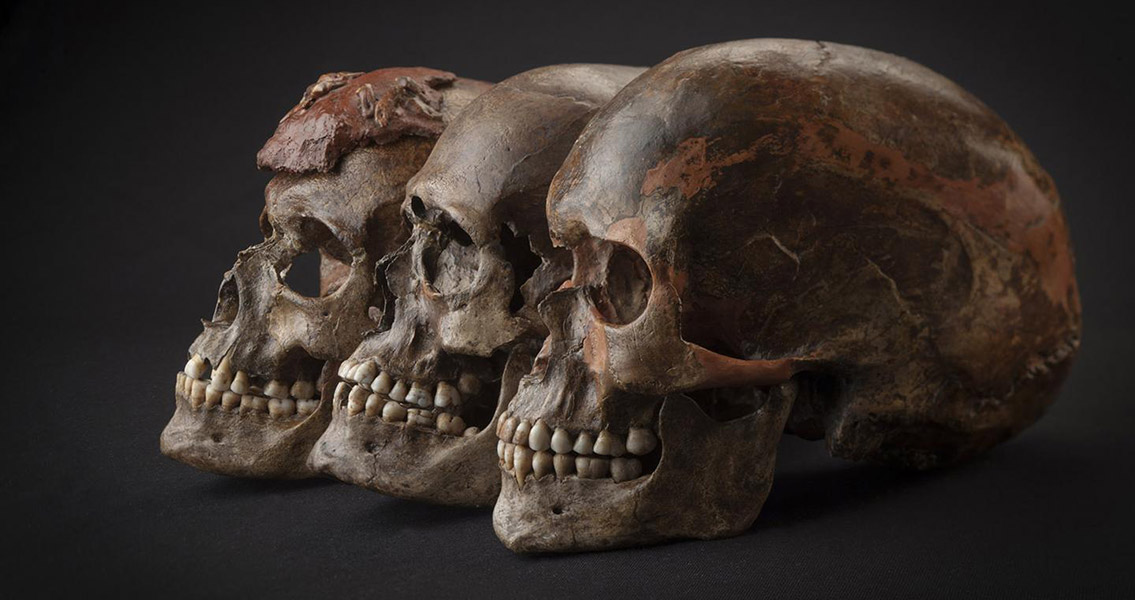
Nature on 2nd May, the study analysed the DNA of prehistoric humans to chart population changes over a period that stretched from the initial inhabitation of Europe by modern humans, to the end of the last Ice Age. The research was led by David Reich, Howard Hughes Medical Institute Investigator at Harvard Medical School. Two massive changes in prehistoric populations are revealed by the genetic data used in the research, which seem to be related to the end of the Ice Age around 19,000 years ago. The first has been documented previously, although in less detail. As the ice sheet retreated, northern Europe was repopulated by prehistoric humans from regions of southwest Europe, such as Spain. A second, more surprising event came some 5,000 years after that initial re-population. Populations from the southeast of Europe, such as what is now Turkey and Greece, migrated into Europe and displaced the first group of humans who had relocated there. The findings have the potential to cause a drastic rethink on how we understand the history of European migration and population. Previously, genetic data were only available for four samples of prehistoric European modern humans between 45,000 and 7,000 years old, but Reich and colleagues’ study has changed that; allowing much better insights to be gleaned on human populations in this distant period. “Trying to represent this vast period of European history with just four samples is like trying to summarize a movie with four still images. With 51 samples, everything changes; we can follow the narrative arc; we get a vivid sense of the dynamic changes over time,” said Reich, in a press release from the Howard Hughes Medical Institute. “And what we see is a population history that is no less complicated than that in the last 7,000 years, with multiple episodes of population replacement and immigration on a vast and dramatic scale, at a time when the climate was changing dramatically.” According to the team’s findings, all Europeans come from a single 37,000 year old population that survived through the last Ice Age. One of the branches of this population, which was represented by a specimen from Belgium, was displaced from most parts of Europe around 33,000 years ago, during the height of the last Ice Age. Some 19,000 years ago, a population related to it expanded across Europe, which the researchers believe could have originated in Spain. The second event took place 14,000 years ago, and would define Europe’s population until the advent of agriculture. “We see a new population turnover in Europe, and this time it seems to be from the east, not the west,” said Reich. “We see very different genetics spreading across Europe that displaces the people from the southwest who were there before. These people persisted for many thousands of years until the arrival of farming.” Fascinatingly, the study also showed the percentage of Neanderthal DNA in humans is decreasing, it consisting of between 3% and 6% of the prehistoric humans’ genetic makeup, but only 2% in most humans today. The results suggest that natural selection could be removing the toxic Neanderthal DNA. Reich and colleagues’ study shows that migration has long been an integral, complicated part of human history, shaping the world’s populations for thousands of years. Image courtesy of Martin Frouz and Ji?í Svoboda]]>
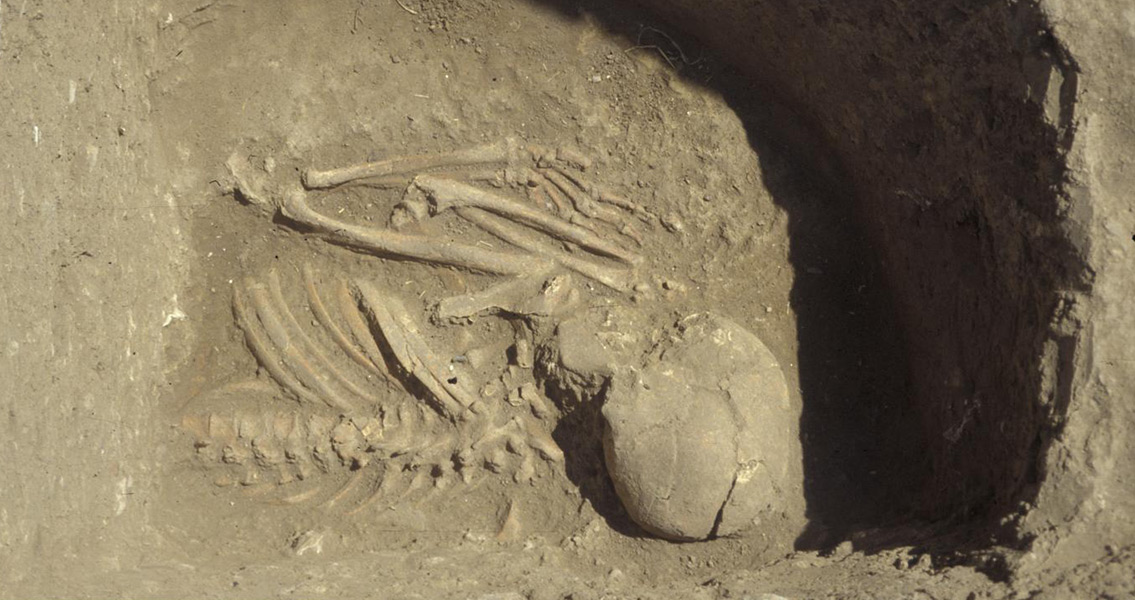
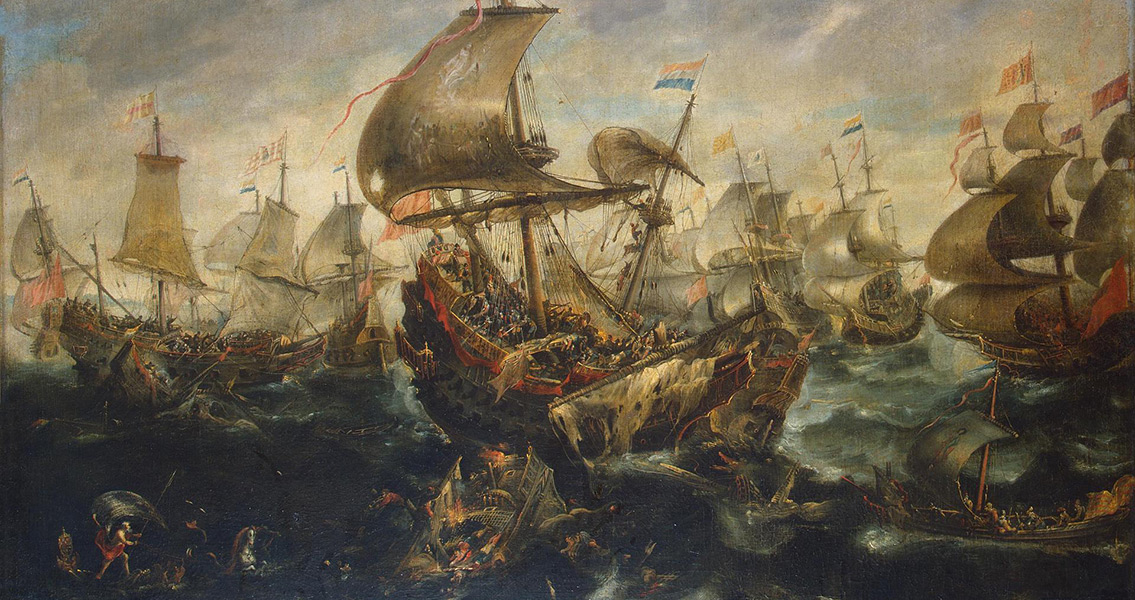
Deadliest Warrior – a television programme which anachronistically pits historical soldiers against one another to find out who would ‘win’ – attests to the appeal of such discussions. A new work has analysed the power of European militaries in the Early Modern period when they came up against their Asian contemporaries. Heated debate over the respective prowess of European soldiers and those from other parts of the world has a very long history. European pamphlets printed in the seventeenth century debated the potential impact of Japanese mercenaries. Some were impressed by the prowess and valour of Japanese warriors; others praised European soldiers for their skill and organisation. In historical circles this debate is scaled up. Individual soldiers are not compared, but armies and navies can be discussed with regard to a central historical question: Did European countries possess a significant military advantage that armies in Asia, the Americas, and elsewhere could not match? This question is important as it could offer an explanation for what is called the “rise of the West.” In an attempt to provide an answer, Adam Clulow, a historian from Monash University, Melbourne, Australia, has assessed the scholarship surrounding this debate. His work is published in the most recent edition of History Compass. Traditionally, it is thought that early modern European powers underwent an unprecedented military revolution. The resultant technological advances – particularly the capital ship, infantry firepower, and the artillery fortress – transformed the continent; leading to a dramatic shift in the power balance between Europe and the rest of the world. It was these tools which allowed Europeans to conquer over 35% of the world by 1800. This model of European expansion, however, has been hotly debated. Many opponents of this model claim that there was not a significant lag between the supposed ‘European military juggernaut,’ as Clulow puts it, and other parts of the world. Military organisation in Europe, therefore, should not be seen as exceptional. New research has forged a middle ground between these two positions. By looking at the Sino-Dutch war (1661-1668), it is possible to see a ‘limited advantage template.’ Clulow states that this conflict allows us to see that “while Europeans did possess a genuine technological advantage, most notably in forts and ships, it was not nearly as expansive as is sometimes assumed by supporters of the military revolution thesis.” Clulow, an expert on Tokugawa Japan, also notes that Europe had not always been able to fully utilise its technological advantages. European powers were unable to use maritime violence against Japan, for example. One reason for this was that the overseas resources the European forces were able to muster were simply not enough to challenge the regime of Tokugawa Japan. “The result was that the potential impact of superior military technology was so consistently blunted that it was essentially eliminated from the equation,” Clulow remarks. Technological advances can often give a military force a decisive upper hand in a conflict. Deadlier weapons and stronger armour are of obvious benefit in a fight. These advantages, however, are only useful if they can be effectively deployed. Clulow’s work clearly shows that rather than overestimate the importance of technology, we should remain cautious in drawing assumptions. Image courtesy of Wikimedia Commons user: Trzęsacz www.onlinelibrary.wiley.com]]>