Journal of Archaeological Science: Reports, can be found here]]>

journal Vegetation History and Archaeobotany, can be found here]]>

Journal of Mass Spectrometry, can be found here Image courtesy of MIPT]]>

ScienceDaily, U-M postdoctoral researcher Sierra Petersen, one of the scientists involved in the study, said that the new temperature data helps to forge a direct link between volcanic activity and impact events regarding extinction pulses, with climate change being that link. The mass extinction that occurred at the end of the Cretaceous was therefore the result of not just the volcanic activity or the asteroid impact but both, something Petersen referred to as a “theoretical ‘one-two’ punch.” This extinction level event spelled the end of non-avian dinosaurs as well as around 75 percent of the plant and animal species on Earth around 66 million years ago. Its cause has been up for debate for years, with many researchers pointing to the Yucatan impact or the volcanic activity in India’s Deccan Traps region as the culprit. Others have sought a synergistic approach, combining the gradual climatic change, or press, of the volcanic activity with the instant catastrophe, or pulse, of the asteroid impact, creating the so-called “press-pulse” theory. The discovery of spikes in ocean temperature records coinciding with both these events has those who support the press-pulse theory hopeful. Petersen remarked that the ecosystem might have already been under stress from the volcanic activity when the meteorite hit, making it more vulnerable to collapse in the first place. The research study is available online through the journal Nature Communications]]>
Current Anthropology, can be found here Image courtesy of Naftali Hilger ]]>


,Chinese Cultural Relics Image courtesy of Wellcome Images]]>
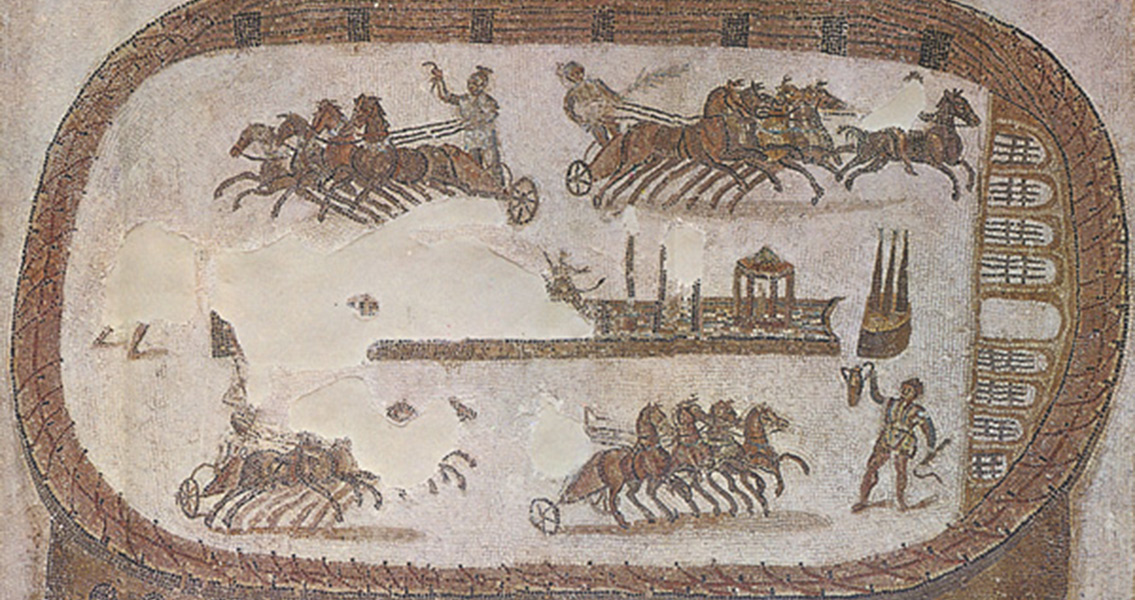
Haaretz, water resistant mortar was discovered within the median strip of the circus known as the spina. This hydraulic mortar, created by mixing lime with pulverized and crushed ceramics, was often used in Roman hydraulic engineering, Tübingen University’s Frerich Schön told Haaretz. The ends of the spina at any circus were often adorned with ornate statues and columns. Archaeologists realized that the spina at the Circus of Carthage had been festooned with water basins, and sprinklers known as sparsores would drop down and dip a clay amphora into each basin in order to sprinkle water on the chariots and their horses as they rounded the corner of the spina, said excavation co-director Dr. Ralf Bockmann. Water basins appearing at the ends of the spina were apparently a common occurrence, as there have been basins found at the Circus of Maxentius, located on the Via Appia outside Rome. Additionally, Carthaginian mosaics depicting the basins, located on the spina of the Circus, have also been found. However, the sprinkling of the chariots as they came around the bend would have been a harrowing job. A career as one of the sparsores meant tossing water from amphorae by hand as the chariots screamed around the arena at high speed, usually from the spina itself. It likely would have required careful organization and timing, Bockmann remarked, adding that it undoubtedly would have been a highly dangerous vocation. The Circus of Carthage was massive in its heyday, as it was at least 500 meters in length according to geophysical surveys undertaken in the 1970s. This is only 80 meters shorter than the Circus Maximus located in the heart of Rome. The Circus Maximus could hold approximately 150,000 spectators at a time, and while Carthage’s chariot ring was slightly smaller, the number of people it could accommodate was also likely to have been quite high. Bockmann, along with co-leader Dr. Hamden Ben Romdhane from Tunisia’s Institut National du Patrimoine, will be studying the Circus for several more years. ]]>