Categories
Breaking News

3,000 year old funeral rituals show earliest evidence of human hair dye

Early funeral rituals: mysteries revealed A collaborative excavation from the University of Granada in Spain, the University of Tübingen in Germany and the University of Cambridge in the United Kingdom has uncovered around one hundred bodies; many of which have been affected by hitherto undiscovered funeral rituals, including hair that has been dyed red. The bodies were uncovered in a Biniadris Cave, which would have been frequented by different societies over a period of between 3,300 and 2,600 years ago.   [caption id="attachment_8737" align="aligncenter" width="500"] View of the entrance to Biniadris Cave in Menorca. Credit: University of Granada[/caption]

Hair dye and its symbolic value

Two archaeological researchers from the University of Granada, Dr. Eva Alarcón García and Dr. Auxilio Moreno Onorato, have written: “Evidently, the red tufts of hair must have had symbolic value for these social groups. They were perfectly cut and deposited in containers of varying sizes that were made of different materials (metal, leather and even wood), which were then hidden in specific parts of the cave.” [caption id="attachment_8738" align="aligncenter" width="500"] Remains discovered in Biniadris Cave, Menorca. Credit: University of Granada[/caption]

A unique combination of funeral rituals

As well as colouring the deceased’s hair red, members of this society practiced a collection of funeral rituals that reflect their local religion and its symbolism. For example, the researchers found that the bodies were usually placed in the centre of the cave, where they were surrounded by ceramic fragments. Trepanation, a symbolic act in which a hole is drilled into the skull of the deceased, was also practiced on many of the bodies. Dr. Eva Alarcón García notes: “There are no precedents for these kinds of social practices in the Iberian Peninsula and they are unique to the Balearic Islands. The buried were placed in the middle of the cave and a variety of elements were used during the rituals, such as plant materials (branches and trunks), ceramic vessels that must have played an important role given the degree of fragmentation they exhibit, iron oxide ores (‘ochre’), etc.”  

Ritualistic attire for Menorca’s deceased

The team of archaeologists also found that many of the bodies were dressed up in ritualistic attire. Needles, fabric and ancient V-perforated buttons made from bones and wild boar tusks were discovered in the cave, close to the bodies. The remains of the hairs and fabric are currently being studied through carbon-14 dating at the University of Cambridge. “Undoubtedly, the findings at the Biniadris Cave will raise many questions and pave the way for new lines of research, not only from archaeological perspectives but also from anthropological ones. For now, the main objective of the research is to solve the enigmas presented by these mysterious funeral rituals performed long ago in the Biniadris Cave,” they conclude.]]>

Categories
Breaking News

History News of the Week – Minoan 'Masterpiece' Unearthed

Discovery of Minoan Sealstone Could ‘Rewrite’ History of Ancient Greek Art Researchers working at the tomb of 3,500 year old Bronze Age warrior in the southwest of Greece have unearthed an ‘intricately carved’ sealstone which University of Cincinnati (UC) archaeologists are heralding as one of the finest works of prehistoric Greek art ever discovered. Depicting an intense hand-to-hand battle, the artefact has been dubbed the ‘Pylos Combat Agate’. “Looking at the image for the first time was a very moving experience, and it still is,” said Shari Stocker, a senior research associate in UC’s Department of Classics “It’s brought some people to tears.” “What is fascinating is that the representation of the human body is at a level of detail and musculature that one doesn’t find again until the classical period of Greek art 1,000 years later,” explained Jack Davis, the university’s Carl W. Blegen professor of Greek archaeology and department head, in a statement from UC. Davis and Stocker have been leading a dig at the tomb of the Bronze Age warrior, which was first discovered in 2015. The tomb’s occupant has been dubbed the ‘Griffin Warrior’, and his final resting place has already yielded a wealth of fascinating artefacts, including four gold signet rings. The size of the hand carved stone is perhaps the most remarkable thing about it, measuring just 3.6cm in length. Many of its details can only be viewed with a powerful camera lens and photomicroscopy. “Some of the details on this are only a half-millimetre big,” said Davis. “They’re incomprehensibly small.” The dramatic image of a warrior plunging a sword into a shielded enemy’s neck is reminiscent of the kinds of scenes described in Homer’s Iliad. Although the researchers can’t say if the image reflects a Homeric epic, they’re confident it would be from a legend familiar to Minoans and Mycenaeans. “It would have been a valuable and prized possession, which certainly is representative of the Griffin Warrior’s role in Mycenaean society,” Stocker explained. “I think he would have certainly identified himself with the hero depicted on the seal.” The sheer skill that would have been needed to create the sealstone is causing a re-evaluation of the history and development of Ancient Greek art. “It seems that the Minoans were producing art of the sort that no one ever imagined they were capable of producing,” explained Davis. “It shows that their ability and interest in representational art, particularly movement and human anatomy, is beyond what it was imagined to be. Combined with the stylised features, that itself is just extraordinary.” “This seal should be included in all forthcoming art history texts, and will change the way that prehistoric art is viewed,” said Stocker. Date of Biblical Eclipse Pinpointed Researchers have determined the date of an ancient eclipse which is referred to in the Bible. They believe it could be the oldest date of a solar eclipse yet recorded. The researchers used a combination of the Bible and Ancient Egyptian texts to pinpoint the date of the eclipse to 30th October 1207 BCE. From this information they’ve been able to refine the dates of Egypt’s ancient pharaohs, particularly the reign of Ramesses the Great. Biblical scholars have long been perplexed by the book of Joshua, which describes Joshua leading the people of Israel in Canaan, a region which covers modern day Israel and Palestine. According to the Biblical text, Joshua prayed “Sun, stand still at Gibeon, and Moon, in the Valley of Aijalon. And the Sun stood still, and the Moon stopped, until the nation took vengeance on their enemies.” “If these words are describing a real observation, then a major astronomical event was taking place – the question for us to figure out is what the text actually means,” said paper co-author Professor Sir Colin Humphreys from the University of Cambridge’s Department of Materials Science & Metallurgy. “Modern English translations, which follow the King James translation of 1611, usually interpret this text to mean that the sun and moon stopped moving,” said Humphreys, who is also a Fellow of Selwyn College. “But going back to the original Hebrew text, we determined that an alternative meaning could be that the sun and moon just stopped doing what they normally do: they stopped shining. In this context, the Hebrew words could be referring to a solar eclipse, when the moon passes between the earth and the sun, and the sun appears to stop shining. This interpretation is supported by the fact that the Hebrew word translated ‘stand still’ has the same root as a Babylonian word used in ancient astronomical texts to describe eclipses.” Evidence that the Israelites were in Canaan between 1500 and 1050 BCE can be found in the Merneptah Stele, an Egyptian text dating from the reign of the Pharaoh Merneptah, son of Ramesses the Great. The large granite block, held in the Egyptian Museum in Cairo, says that it was carved in the fifth year of Merneptah’s reign and mentions a campaign in Canaan in which he defeated the people of Israel. Using an innovative eclipse code, one which considers variations in the planet’s rotation, the team determined that the only annular eclipse visible from Canaan between 1500 and 1050 BCE was on 30 October 1207 BCE, in the afternoon. If the team’s calculations, which have been published in the Journal of Astronomy and Geophysics, are correct, then it is possible to date the reign of both Ramesses and his son to within a year. “Solar eclipses are often used as a fixed point to date events in the ancient world, Humphreys said. If Humphreys et al’s results of accepted, then the reign of Merneptah began in 1210 or 1209 BCE. As it is known from Egyptian texts how long he and his father reigned for, it would mean that Ramesses the Great reigned from 1276-1210 BCE, with a precision of plus or minus one year, the most accurate dates available. Hitler Only Joined the Nazis After Being Rejected by Another Far-Right Group Adolf Hitler only joined the Nazi Party after being rejected by another far right group, a historian at Aberdeen University is claiming. According to the Independent, historian Dr Thomas Weber unearthed an unpublished document which reveals that the German Socialist party told Hitler in 1919 they did not want him in their party nor to write for their newspaper. Weber argues that this rejection by the German Socialist Party should be seen as a crucial historic event, a turning point which ultimately led to Hitler joining the Nazi party and becoming its leader. Weber suggests that Hitler would have found it much more difficult to rise to the leadership of the much larger German Socialist Party. “I can only speculate why they did not let him join but one would imagine it had something to do with the fact Hitler was opinionated and they did not want to have someone there who was telling them what to do,” he told the Independent. He added: “If he had been accepted into the German Socialist party he would have almost certainly remained on the sidelines. Hitler managed to push over the established leadership of Nazi party but that would have been very unlikely to have happened if he had joined the German Socialist party.” The document Weber has discovered is from the testimony of Hans Georg Grassinger, the founding chairman of the German Socialist party, reports the Guardian. It describes how, in 1919, Hitler approached Grassinger to join the Party. Hitler also asked Grassinger to borrow money. Hitler, who was 30 at the time, was informed that the party did not him in their ranks. Featured image: The tiny sealstone depicting warriors in battle measures just 1.4 inches across but contains incredible detail. Credit: University of Cincinnati ]]>

Categories
Breaking News

History News of the Week – Viking Women, Cultural Exchange in the Bronze Age and a Discovery at Hadrian’s Wall

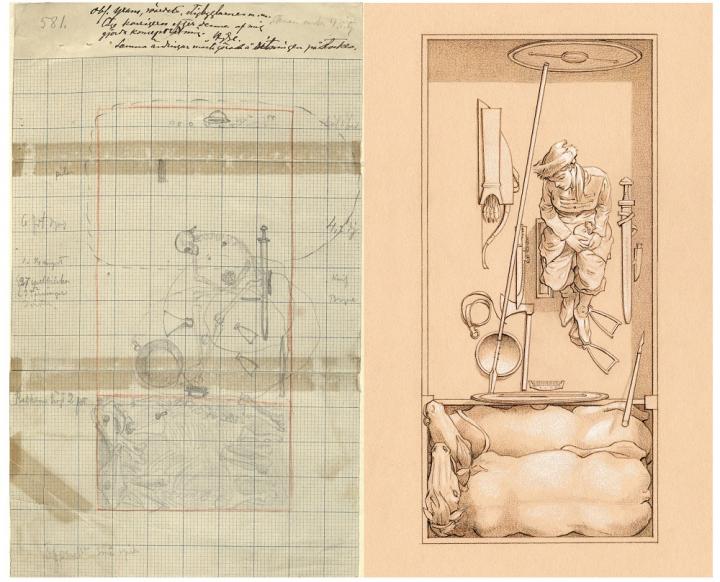
Viking Woman was a Warrior and a Leader Viking society was not as male dominated as one might expect, a new study claims. According to new research from the universities of Stockholm and Uppsala, Viking women took on leadership roles on the battlefield. Charlotte Hedenstierna-Jonson, who led the study, explained: “What we have studied was not a Valkyrie from the sagas but a real life military leader, that happens to be a woman”. At the heart of the research, published in the American Journal of Physical Anthropology, is the grave of a woman Viking warrior, complete with the remains of two horses and a selection of weapons. Significantly, the burial also contained a set of gaming pieces and a gaming board among the remains. “The gaming set indicates that she was an officer,” said Hedenstierna-Jonson. “Someone who worked with tactics and strategy and could lead troops in battle”. Buried in the Viking town of Birka during the mid-tenth century, isotope analysis has shown that the woman had an itinerant lifestyle, commonplace in the martial society that was prevalent throughout Europe between the eighth and tenth centuries. First discovered in the 1880s, it was long assumed that the Viking warrior in the burial had been a man. Thanks to new research techniques however, that assumption has been comprehensively put to bed, allowing the remains to present a fascinating new dimension to Viking culture. Anna Kjellström, who also participated in the study, said: “The morphology of some skeletal traits strongly suggests that she was a woman, but this has been the type specimen for a Viking warrior for over a century, [which was] why we needed to confirm the sex in any way we could.” The team turned to genetics to confirm the Viking woman’s sex, retrieving a molecular sex identification based on X and Y chromosomes. “This burial was excavated in the 1880s and has served as a model of a professional Viking warrior ever since. Especially, the grave-goods cemented an interpretation for over a century,” said Jan Storå, lead author of the study. “The utilisation of new techniques, methods, but also renewed critical perspectives, again, shows the research potential and scientific value of our museum collections”. Women drove Bronze and Stone Age Cultural Exchange A new study has shown the importance of female social mobility for cultural exchange in Bronze Age Europe. Findings published in the Proceedings of the National Academy of Sciences reveal a fascinating trend among Bronze Age families in the Lechtal, south of Augsburg in what is now Germany. While the men in these families had tended to stay in the region of their birth, many of the women came from outside the area, possibly from Bohemia or Central Germany. According to the findings, the pattern of female mobility was not a short-term trend, but one that can be observed over an 800-year period during the transition from the Neolithic to the Early Bronze Age. “Individual mobility was a major feature characterising the lives of people in Central Europe even in the 3rd and early 2nd millennium,” stated Philipp Stockhammer from the Institute of Pre- and Protohistoric Archaeology and Archaeology of the Roman Provinces of the Ludwig-Maximilians-Universität München, the leader of the collaborative research project. The researchers suggest in their study that this mobility was significant in the exchange of ideas and objects, something which increased significantly in the Bronze Age and in its wake encouraged the development of new technologies. For this study, the researchers examined the remains of 84 individuals using genetic and isotope analyses in conjunction with archaeological evaluations. The individuals were buried between 2500 and 1650 BCE in cemeteries that belonged to separate homesteads, and that contained between one and several dozen burials made over a period of several generations. “We see a great diversity of different female lineages, which would occur if over time many women relocated to the Lech Valley from somewhere else,” remarked Alissa Mittnik from the Max Planck Institute for the Science of Human History, a contributor to the study. Corina Knipper, from the Curt-Engelhorn-Centre for Archaeometry explained: “Based on analysis of strontium isotope ratios in molars, which allows us to draw conclusions about the origin of people, we were able to ascertain that the majority of women did not originate from the region.” The burials of the women did not differ from that of the native population, suggesting that the formerly foreign women were integrated into the local community. As well as shedding new light on the role female mobility played in cultural exchange in the Bronze Age, the new findings point to the immense scale of human mobility in general in the period. “It appears that at least part of what was previously believed to be migration by groups is based on an institutionalised form of individual mobility,” concluded Stockhammer. Roman Barracks Unearthed Near Hadrian’s Wall Archaeologists have unearthed a 2,000-year-old Roman Barracks near Hadrian’s wall, the Guardian reports. Over the course of the last two weeks a “treasure trove” of thousands of artefacts has been unearthed, including military and personal possessions from Roman soldiers and their families, according to the Guardian. Remarkably, the barracks itself actually predates Hadrian’s Wall, allowing the findings to provide unique insight into the military build-up in the area prior to the Wall’s construction. Cavalry lances, arrowheads and ballista bolts are among the weapons found at the site, alongside combs, bath clogs, hairpins, brooches and stylus pens. The barracks, which date from 105CE, were discovered under the fourth century fort of Vindolanda, south of Hadrian’s near Hexham in Northumberland. According to the Guardian, the artefacts survived because they were concealed beneath a concrete floor laid by the Romans about 30 years after the barracks was abandoned, shortly before 120CE. The concrete created oxygen-free conditions that helped preserve materials such as wood, leather and textiles. Featured Image: Reconstruction of the Grave in Birka – The drawing is a reconstruction of how the grave with the woman originally may have looked. Credit:The illustration is made by Þórhallur Þráinsson (© Neil Price).]]>

Categories
Breaking News

History News of the Week – Where the Minoans and Mycenaeans came from

Minoan and Mycenaean Origins Revealed The ancient Minoans and Mycenaeans were genetically similar, with both peoples descended from early Neolithic farmers, according to new DNA research. Dating back to the Bronze Age, the archaeological remains of both the Minoans and Mycenaeans show they were culturally, artistically and technically advanced. The Minoans flourished on Crete, beginning around the third millennium BCE, while the Mycenaeans developed on mainland Greece from the second millennium BCE. The origins of these two remarkable Greek cultures has remained a mystery, but the new analysis is providing fresh insights. Published in the journal Nature, the new findings point to the Mycenaeans’ and Minoans’ origins being in Neolithic Farmers who migrated from Anatolia to Greece and Crete thousands of years prior to the Bronze Age. “Minoans, Mycenaeans, and modern Greeks also had some ancestry related to the ancient people of the Caucasus, Armenia, and Iran. This finding suggests that some migration occurred in the Aegean and southwestern Anatolia from further east after the time of the earliest farmers,” said Iosif Lazaridis, a scientist from Harvard Medical School who worked on the study. The research results also show that modern Greeks are largely descendants of the Mycenaeans. For the study, an international group of researchers from Harvard Medical School, the Max Planck Institute and the University of Washington, as well as a range of universities in Greece and Turkey extracted tooth DNA from the remains of 19 ancient individuals who archaeological evidence revealed as Minoans of Crete, Mycenaeans of mainland Greece, and people who lived in southwestern Anatolia. These samples were then analysed, with scientists from the Max Planck Institute and Harvard Medical School comparing Minoan and Mycenaean genomes with each other, 330 other ancient genomes and over 2,600 genomes of modern day humans from around the world. The study itself can be found here Tropical Forests have felt Human Touch for over 45,000 years A pioneering study of the global impact of humans on tropical forests shows that mankind has been altering these environments for over 45,000 years. The findings challenge the widely held view that tropical forests were pristine, untouched environments prior to the advent of agriculture and industrialisation. Looking at distinct phases of human impact on tropical forests, the scientists from the Max Planck Institute for the Science of Human History, Liverpool John Moores University, University College London, and École française d’Extrême-Orient found evidence of techniques such as controlled burning of sections of forest, plant and animal management, and clear-cutting dating back thousands of years. The three phases focused on by the study correspond to hunting and gathering activities, small scale agriculture and large scale urban settlement. The hugely significant findings have the potential to change attitudes to conservation. By showing that an untouched forest ecosystem doesn’t exist, and hasn’t existed for thousands of years, it suggests there is no ideal forest environment that conservationists can use as a basis when setting conservation standards. The authors argue that instead modern efforts should be informed by a past understanding of how forests have been manipulated by humans. “Indigenous and traditional peoples – whose ancestors’ systems of production and knowledge are slowly being decoded by archaeologists – should be seen as part of the solution and not one of the problems of sustainable tropical forest development,” said Patrick Roberts of the Max Planck Institute for the Science of Human History, lead author of the paper. Published in the journal Nature Plants, the study is available here: Forgotten Trenches Unearthed in England A new archaeological survey has revealed for the first time the true extent of the network of trenches and fortifications built to defend England during the First World War, according to the Guardian. The new study aimed to detail the concentration of resources along England’s eastern and southern coasts, the region anticipated to receive the brunt of the German forces in the event of an invasion. Cutting edge LiDAR (Light Detection and Ranging) data gathered by the Environment Agency were used in conjunction with more traditional methods – analyses of periodicals and local history, to plot the defensive network, the Guardian reports. Revealing trenches, gun batteries, and fortified naval bases among other defences, the scientists behind the new research say the biggest surprise was the extent of the defence network uncovered. Titled First World War Fieldworks in England, the findings have been published by Historic England as part of its contribution to the national Centenary Partnership programme about the First World War. Image courtesy of Patrick Roberts ]]>

Categories
Breaking News

Unusual 4,000 Year Old Dolmen Discovered in Galilee

JewishPress.com, “during that time all of those people had to be housed and fed. The building of such a huge construction necessitated knowledge of engineering and architecture that small nomadic groups did not usually possess. And even more importantly, a strong system of government was required here that could assemble a large amount of manpower, provide for the personnel and above all direct the implementation and control of a large and lengthy project.” The study has been published in the scientific journal PLOS One. Image courtesy of Gonen Sharon/Tel Hai College ]]>

Categories
Breaking News

New Theory on Origin of Scythians Put Forward

According to a university press release, anthropologists conducted comparative analysis of non-metric cranial trait frequencies in the remains of Scythians found in the northern Black Sea region. These non-metric traits were then compared to those gathered from Central Asian and Eastern European remains dating to the Bronze Age to look for commonalities. These so-called “cranial series” are groups of skulls found from either one burial or several burials spaced closely together, and from either one archaeological culture or one ethnic group. Non-metric, varying cranial traits can reflect minor anatomical variations in the human skull. These variations take the form of irregular skull sutures and processes or additional and irregular holes, and are consistent among those with similar genetics. When compared to data gathered from molecular genetic markers, these non-metric cranial traits tell a similar tale in determining the genetic distances between populations. Many researchers have begun to use these cranial trait comparisons as an alternative to direct DNA research, which can be much more expensive and not necessarily always appropriate. There are two major hypotheses regarding the origin of the Scythians. One claims the Scythians came from Central Asia as invaders, resulting in local Indo-European populations being assimilated by them. The other claims that the ancient people were descended from the “Timber-Grave culture” of the Srubnaya people who lived between the Dneiper and Ural Mountains during the Late Bronze Age. According to lead author Alla Movesyan, the results of the study provide evidence for both of these theories. In other words, both hypotheses are partly correct: the Scythian gene pool was formed from descendants of the Srubnaya from the Late Bronze Age, but these descendants migrated from Central Asia and mingled with the Indo-Europeans living in the northern Black Sea region. This revelation could be a blow to Eurasian mythmakers who have enjoyed claiming the Scythians were predecessors of the Slavs. While there was undoubtedly some genetic intermingling thanks to geographic proximity, Movsesyan claims that the idea of Slavs being direct descendants of the Scythians is simply no longer supported by any scientific data. The new research study, published in The American Journal of Physical Anthropology, can be found here]]>

Categories
Breaking News

Scottish Archaeologists Find 3,000-Year-Old Spearhead

Categories
Breaking News

Remains of Massive Structure Found Next to Stonehenge

The Independent, it seems as if those who had been responsible for shifting the local populace’s religious beliefs were attempting in some quite literal way to bury the past. Researchers are now gearing up to see if these religious revolutionaries were seeking to conceal their own history or if it was an attempt to erase the influence of another cultural group instead. The significance of this discovery is also high as this sudden change in religious worship is thought to have occurred nearly simultaneously with the transformation of the nearby Stonehenge site into its current configuration: a relatively small-diameter circle of giant stones, from its older, larger diameter configuration created by a multitude of medium-sized stones. The repurposing of Durrington Walls, the reconfiguration of Stonehenge and other, similar events occurring around Britain during this period of prehistory are thought to be part of the process of the Neolithic giving way to the Bronze Age. While it may not be possible to ever discern the political and religious conflicts and rivalries of this time, these new discoveries at Durrington provide some limited context for what may have been happening. ]]>

Categories
Breaking News

Mycenaean and Egyptian Artefacts Discovered in Cyprus Grave

Categories
Breaking News

New Research Uncovers Prehistoric Use of Cannabis

journal Vegetation History and Archaeobotany, can be found here]]>