
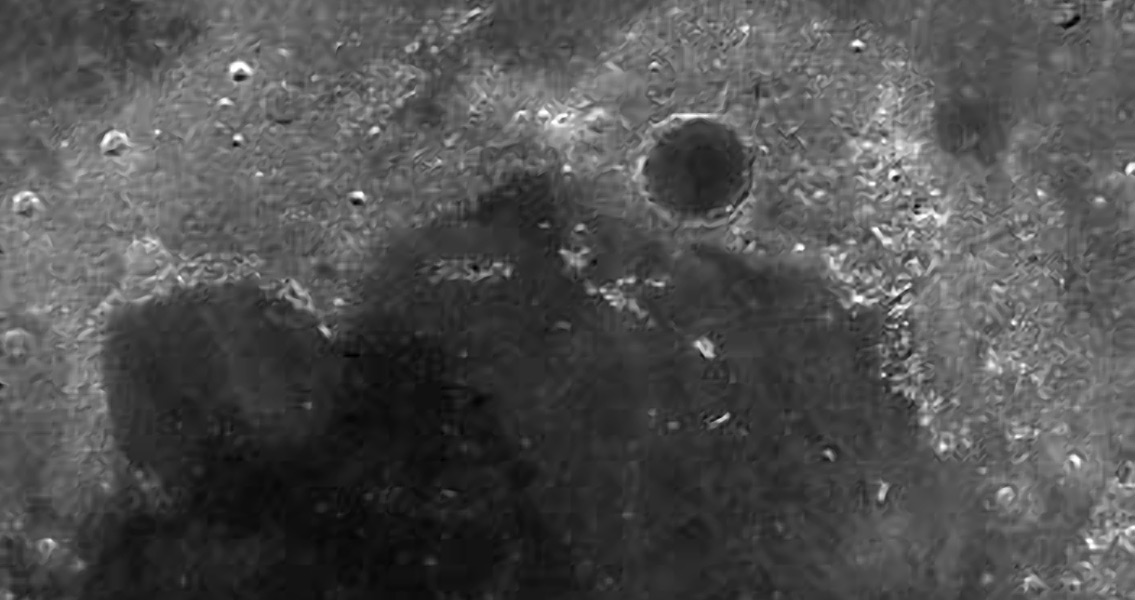
Gizmodo, Brown University’s Peter Schultz remarked that the massive asteroid was originally estimated to have been around 80 kilometers across. The lead author of the study said that this estimate has changed to at least 250 kilometers in size, and even that figure was described by Schultz as “conservative”. Imbrium Basin, the region that forms the right eye of the “Man in the Moon”, is a dark patch on the satellite’s surface that’s around 1200 kilometers wide. Both professional and amateur astronomers have studied the crater since the advent of astronomy, as it’s clearly visible with even the most basic of telescopes. Several radial gashes jut out from the surface of the basin. Clustered on the southeastern side of Imbrium, these marks were formed from ejecta as the proto-planet smashed into the Moon, likely from the northwest. The new study sought to solve some of the mysteries plaguing astronomers for decades, turning away from these well-studied gashes and instead examining scarred regions of the crater that aren’t radial. For 70 years or so, astronomers have been flummoxed as to what had caused those features, Schultz said. However, the mystery may now finally be solved thanks to a hypersonic gun range originally created by NASA during the Apollo program, which was used to simulate collisions. Firing projectiles at the Vertical Gun Range and recording the experiments with high speed cameras allowed Schultz and his team to observe pieces of material break off up-range of the primary impact site. This material preserved its momentum, leaving deep scars in the surface of the crater in a fashion that was not radial – similar to the mysterious pattern on the Imbrium Crater. Additionally, when he applied the physics to Imbrium Basin, Shultz discovered that he could extrapolate the size of the proto planet, leading him to revise the estimated size of the object. The discovery also led to an analysis of the Orientale and Moscoviense Basins on the Moon, revealing that these craters were likely caused by collisions from proto planets or objects similar in size. However, Schultz was quick to say that the Late Heavy Bombardment wasn’t from proto planets in its entirety , as there were plenty of other asteroids pelting the Earth and the Moon at the time – but he explained that the new discoveries point towards there being several proto planets within the early solar system. The research results are available online from the journal at Nature]]>

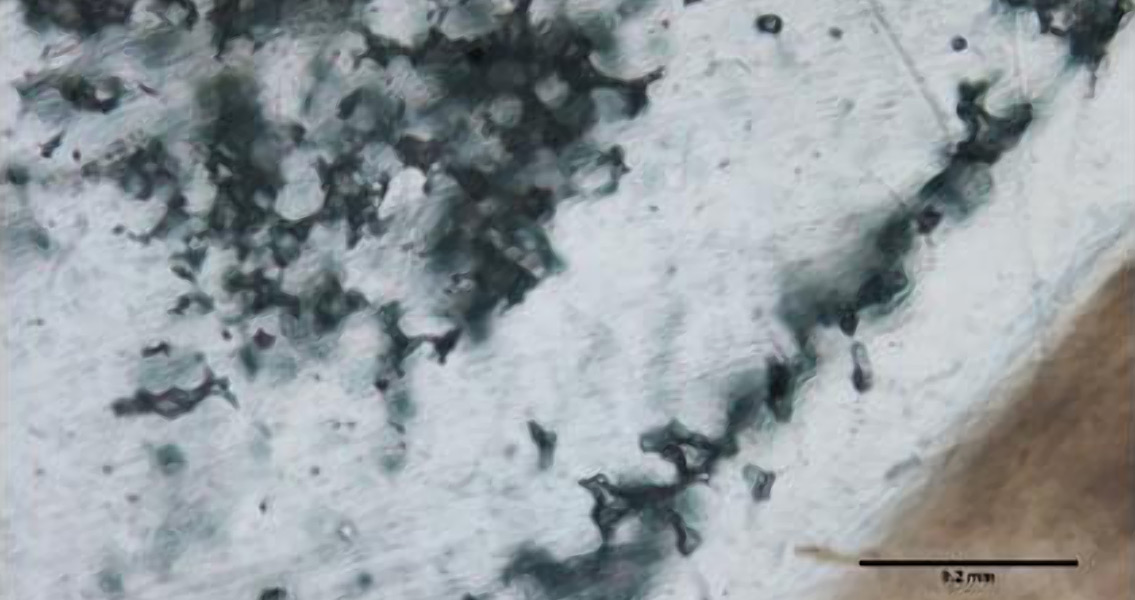
The Journal of Archaeological Science, can be viewed online here Image Reused from Journal of Archeological Science, 2016, with permission from Elsevier]]>
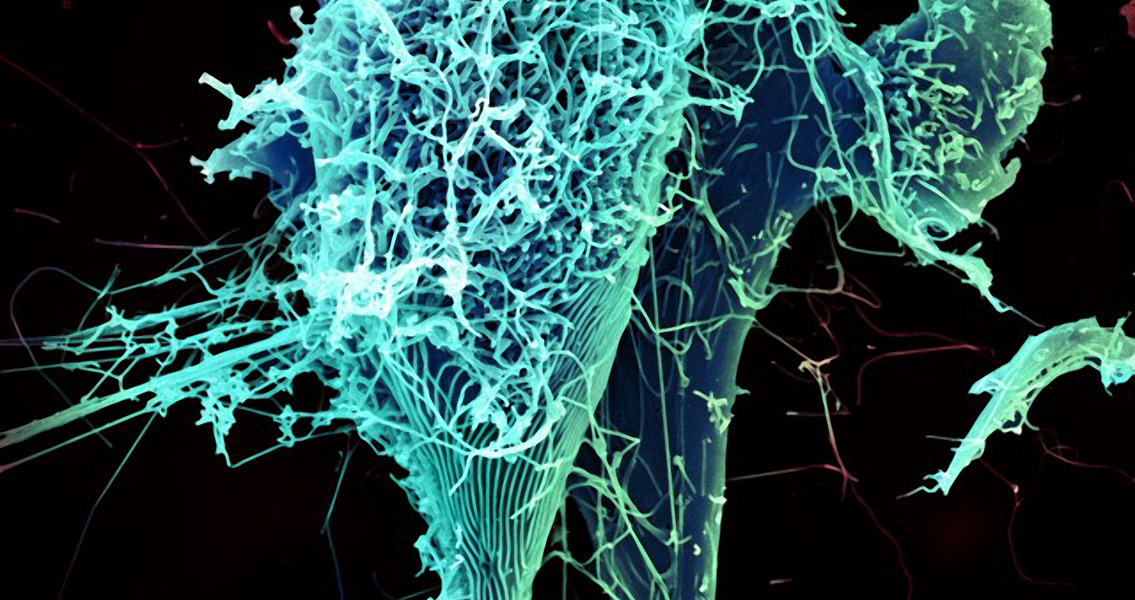
Phys.org, Stanford University postdoctoral fellow and study author David Enard remarked on these findings, stating that while the research team knew that an epidemic or a pandemic that affects a population will either lead to adaptation or extinction, the scientists were surprised at how strong and clear the pattern of viruses having this impact on adaptation was. Proteins are crucial to our biological function, as they are responsible for many different cellular functions. By pulling back the curtain on how small changes in the composition and shape of proteins have aided mammal populations’ response to viral threats, the way could be paved for new therapies against modern-day viruses. Stanford professor Dmitri Petrov, a co-author of the study, stated that researchers are hard at work determining which cell parts have played a role in fighting viral infections in the past, and how this was accomplished without compromising the organism’s health. Existing research has focused on understanding how proteins directly involved in immune response reacted to being exposed to viruses, but this study is the first of its kind to take a global approach to as many proteins as possible. Enard said that viruses don’t just cause adaptation in highly specialized immune proteins. In fact, any protein that happens to come into contact with a virus can be part of the adaptation process of overcoming the ill effects of that virus. The researcher added that data analysis had revealed this adaptation occurred at least as frequently outside the immune response as it did within. The first step of the research study was to flag every protein that we know has had physical interaction with viruses. This led the team to review several thousand scientific abstracts. In the end, Enard and his team whittled down the list to around 1,3000 relevant proteins. Next, big data algorithms were built by the team to see how proteins that interacted with viruses evolved compared to others. The results revealed that adaptations in virus-interacting proteins occurred three times as often as they did in non-interacting proteins. The new study, which has been published in the journal eLife, can be found online here Image courtesy of NIAID ]]>

Historic England aerial investigation manager Helen Winton said the discovery of the long-forgotten Roman road was one of the true highlights of the project, despite the true bounty of “exciting” results the LIDAR study yielded. The South Downs National Park may have prehistoric roots, but it’s a relatively new addition to England’s national park system. Becoming fully operational on April 1st, 2011, the park covers a massive 628 square miles across the counties of East Sussex, West Sussex and Hampshire. The park itself stretches for 87 miles, terminating at the chalk headland known as Beachy Head, the highest chalk sea cliff in Britain. ]]>

Science, is available here Image courtesy of Fereidoun Biglari, National Museum of Iran]]>

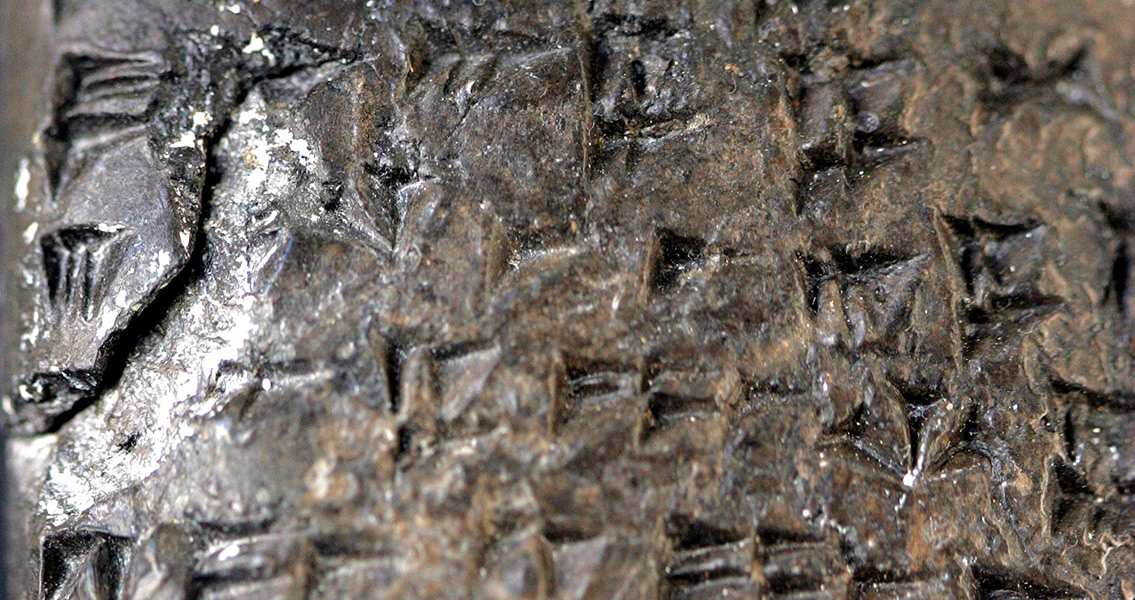
YouTube video, the University of London’s Dr. Richard Dumbrill confirmed the age and origin of the 29 tablets, remarking that all were dated to around 1,400 BCE and were penned in the Hurrian language, most certainly written by Akkadians. Today, all 29 tablets are on display in The National Museum in Damascus – far to the south of their original location, the royal palace of Ugarit – the ruins of which are located along the northern reaches of the Mediterranean coast of Syria. Nikkal, whose name means “Great Lady and Fruitful”, would also come to be worshiped by the Canaanites and the Phoenicians. Her feast day was likely in late summer, when fruit-bearing trees would have been harvested; it is likely then that Akkadian musicians would have raised their lyres in praise to the goddess. She was also worshipped by the Sumerians, where she was known by the name Ningal. After studying tablet H6, Professor Anne Draffkorn Kilmer developed an interpretation of the song in 1972. According to an article in the Daily Mail, the University of California emeritus professor of Assyriology and curator of Berkeley’s Lowie Museum of Anthropology was able to match the top part of the tablet, which contained the lyrics to the hymn, to the number of notes indicated on the bottom half, which were musical notations that acted as instructions for playing the hymn. While the approach Prof. Kilmer used didn’t produce a single note melody but instead harmonies, the notation numbers on the bottom of the tablet matched the number of syllables on the top. The chances of this happening unintentionally, according to the professor, are incredibly unlikely. The Daily Mail also interviewed musician and composer Michael Levy, who specializes in researching ancient musical instruments. Levy recorded a performance of the hymn – also available on YouTube. He told the Daily Mail that the H6 tablet is the oldest nearly complete example of an actual melody discovered to date. Levy remarked that as the expression of emotion through sound, music likely predates the use of language in prehistoric humans. As the oldest known example of actual written music, dating to around 3,400 years in the past, The Hurrian Hymn is unique in its ability to be interpreted and performed in the modern day, the musician added. To hear Levy’s performance, visit Youtube Image courtesy of Wikimedia Commons user: Rama]]>

Current Biology, available here Image courtesy of Wikimedia Commons user: Bart van Dorp]]>