

Kiva, Osterholtz concluded that power struggles, politics and ritual changes could have been the reason behind these killings. The killers could have been outsiders who came into the community to take control, and the best way they could stamp their authority was by intimidation. Based on carbon dating findings, the massacre may have been one of the last events to take place there. Sacred Ridge was abandoned at around 810 A.D.]]>

Science, the dinosaurs may have been neither cold-blooded nor warm-blooded – they were somewhere in-between. Some paleontologists call this scientific phenomenon and the fact that dinosaurs are related to birds as “the last big one”. The lead scientist in this study, John Grady, an ecologist at the University of New Mexico, states that dinosaurs may have been able to generate body heat, but they could not keep their body temperature constant. The term that describes this condition is called mesothermy. This allowed them to move fast and grow larger than any other animal in existence in those times. This adaptation enabled them to live longer than the slow-moving reptiles in existence in those times. In this study, 381 different species of animals were compared, with 21 being dinosaurs. The dinosaurs looked at included the Tyrannosaurus, Allosaurus, Apatosaurus, Tenontosaurus and the Troodon. The other species looked at included a range of mammals, birds, sharks, fish, snakes, lizards and crocodiles. All these animals are either warm-blooded or cold-blooded. The researchers looked at the metabolism of the dinosaurs by looking on the size of their bones, and deduced their body mass. By measuring the growth rings in their bones, the scientists could estimate the growth rate of the animals, which is a similar method arborists use to determine the age of a tree. After all the comparisons were completed, they found that dinosaurs did not grow in the same way warm-blooded animals did, neither did they grow in the same way cold-blooded animals did. They did not grow like any of the mammals, birds, reptiles and fish that were a part of the experiment. These dinosaurs had the best characteristics of both worlds that enabled them to grow and move the way they did. These characteristics include the fast firing or muscles and nerves in warm-blooded animals, and the ability to burn fuel more slowly and grow larger than mammals in cold-blooded animals. This makes sense as large dinosaurs such as the Tyrannosaurus and the Apatosaurus would need to eat 24/7 in order to fuel their large bodies if they were warm-blooded like a mammal. These dinosaurs may have had to hunt for days for their food, so they could not survive if they were warm-blooded. Grady says that the notion that animals today must be put into two groups, warm-blooded or cold-blooded, is too vague and simplistic. There are a few animals today that share the same in-between characteristic that the dinosaurs had. These animals include the echidna (a mammal that looks like an anteater but lays eggs), the leatherback turtle, the great white shark and the tuna.]]>

The history of Orient Express is filled with mystery, intrigue, culinary excellence and luxury. Elegant and historic train, the Orient Express made its maiden journey from Paris to Vienna on June 5, 1883. The train left for Vienna from Strasbourg on its final journey on December 12, 2009, completing an illustrious 126 years connecting people with heritage. Orient Express has a long and interesting history of bringing people and heritage together. The train is steeped with copious amounts of intrigue and mystery and is peppered with luxury, adventure and timeless heritage. The two popular words in the history of international travel – ‘Orient Express’ – are commonly linked to Paris and Istanbul, the original destinations of this historical train. This passenger train service was launched by the Compagnie Internationale des Wagon-Lits. Its maiden journey from Paris to Vienna was on June 5, 1883. It was called Express d’Orient during the initial years and in 1891, it was officially renamed as Orient Express. Initially, in the year 1882, a train called the ‘Train Éclair de luxe’ was used by Georges Nagelmackers, son of a Belgian banker, as a test train. It left Paris on the 10th of October, 1882 and arrived in Vienna on the 11th of October, 1882. The Orient Express is not only known for its enchanting beauty and culinary excellence, but also famous for its constantly changing train route. One of the reasons why the name ‘Orient Express’ is steeped in romance is connected to the routes it travelled – three of Europe’s most popular and romantic destinations – Paris, Vienna and Istanbul. The Orient Express had 10 wood paneled compartments with either a single bed or double beds (one over the other). There were no baths or showers on board, only a washbasin was available. The compartments were used as sleeper compartments in the night and during the day; they were converted into sitting rooms. They were quickly converted into luxurious carpeted sitting rooms, complete with a sofa and table. The beauty and elegance of the Orient Express, perhaps, was in its peak during 1920s, just a few years before the World War I. The services of the train were suspended during the period of the War and resumed after the hostilities ended in 1918. However, soon after resuming the services, Orient Express regained its popularity and patronage by the rich and wealthy. The 1930’s can, perhaps, be considered the golden period in the history of this train. Three parallel services, namely, the Orient Express, the Arlberg Orient Express and the Simplon Orient Express were being operated. This was the period when Orient Express came to be known as one of the most luxurious and elegant vehicle on wheels. It started carrying a number of sleeping cars that offered permanent service, and restaurant cars where exotic food was prepared. A number of celebrities, diplomats, royalty, and business people – the rich and the famous – started frequenting the Orient Express. However, the services were disrupted during the Second World War as well and they did not resume until after 1945. The Orient Express stopped running in the year 1962 and it was replaced with a slow service train called the Direct Orient Express that ran from Paris to Belgrade every day and from Paris to Istanbul and Athens twice weekly. In fact, the Direct Orient Express services were completely withdrawn in the year 1977. Many considered this to be the end of the Orient Express, but a similar service of the same name ran from Paris to Bucharest until the year 2001. During the final years of the Orient-Express, the train ran as a EuroNight service from December 14, 2008 to December 2009. The popularity of the Orient Express reached its zenith when its glamour and history ensured that it made its way into popular culture. It became a part of literature featuring in books, films and documentaries. One of the most famous plots and murder mystery stories of all time, Murder on the Orient Express by Agatha Christie was based on the events happening onboard the train. Although the name suggests Orient Express, it actually takes place on the Simplon Orient Express. In the famous book Dracula by Bram Stoker, the Orient Express is mentioned. In fact, movies Orient Express (1934) and Orient Express (1954) are film adaptations of a book by Graham Greene called Stamboul Train and a plot involving passengers of the train respectively. Orient Express has left an indelible mark on the cultural and historical landscape of the world of travel. The rich history and intrigue surrounding this train is amazing; everyone remembers this train to be the one where Hercule Poirot solved the mystery of the murder, the same train which James Bond rode from Istanbul to London to save the world – yet another time, and the same train from where Alfred Hitchcock’s young lady disappeared from. Everything about the train: from its constantly changing route map to its popularity with spies, to its exotic cuisine to its enchanting décor, continues to enthrall people world over.]]>

Scientists were able to prove the existence of French buhrstone in Ohio by applying ‘forensic’ method in their study We have all seen how CSI forensic teams doing their things on television, analysing a little part of specimen in order to identify its origin. Believe it or not, similar approach is also regularly applied when investigating history. A team of scientists conducted a combination of palaeontology and archaeology study by applying ‘forensic’ method to substantiate the origin of millstones in Ohio used in the 18th and 19th century. Some millstones used in that period are believed to have originated from France. The sole purpose of the study was to safely differentiate local millstones in Ohio from millstones imported from France. Basically, all millstones are quite similar in composition. Millstones were composed from the super hard buhrstone, also known as chertz or flint. Over the course of human history, buhrstone had always been the material used to make stone tools. However, buhrstones from French quarry posses much more value compared to buhrs from any other part of the world, including Ohio. This is due to the fact that stones from France were considered much better in cutting grain. Detailed examination had revealed some important facts that eventually became the basic premise of the differentiation process. The first aspect was the physical feature of the millstones, which is the key feature required by millers. A stone had to possess some degree of porosity in order to be useful. In the year of 1795, Oliver Evans, a famous millwright and inventor, proclaimed that pores “larger in diameter than the length of a grain of wheat” were not really desirable by millers. The claim had provided a strong basis for the theory suggesting the impotance of imported stones from France’s quarry. “The story of the importation of this stone from France is not widely known,” said Dr. Joseph Hannibal, a curator of invertebrate paleontology at The Cleveland Museum of Natural History. Dr. Joseph Hannibal was the lead author on the study. “They are not always correctly identified as being from France. Based on the stones we have examined, it is clear that the French stone was more popular. Examples of millstones made of this stone are widespread in North America and throughout the world. So the use of fossils for their identification is a broadly applicable concept,” he added. Another fact emerged from the examination was that fossils were embedded in the stones. The pores on the stones were the place where those fossils left their marks. Buhrstones from France bear some traces of algae and snails’ fossils originated from a freshwater environment while local Ohio’s buhrs were occupied with invertebrate fossils known as brachiopods, pelmatazoans and fusulinids. These vital facts had made it possible for scientists to analyse those millstones using the ‘forensic’ method without ever having to break them. “Many millstones have been identified as being made of French stone or Ohio stone,” said Dr. Hannibal. “But since the stones used are generally similar in color and other properties, I questioned how these stones had been identified as originating from France or Ohio. When visiting the remains of an old mill in Trumbull County, Ohio, we first noticed that there were charophytes in some millstones. Our study progressed from there.” The study took almost five years before its conclusion. There were 16 fossils-containing millstones studied by the research team, which included high school and college students. Four college students were working as co-authors of the study. The result of the study was documented in a paper published in journal PALAIOS of the Society for Sedimentary Geology (SEPM).]]>
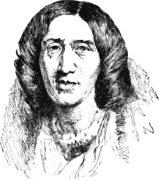
Literary Beginning Now Mary Ann Evans became independent with an income of a hundred pounds a year bestowed on her from her father’s estate. It was far from a fortune but more than enough to meet her needs. Now she faced the challenge of what course to follow in life. She was already well beyond the normal marriageable age for women in her society. Her marriage prospects were discouraging. It was at this time that she started to have her writings published. The well-known Westminster Review began publishing her stories. In 1851 she became Assistant Editor of this publication. It was very unusual at the time for a publication to have a woman in such an important position but Evan’s literary skills were too good to forgo. Private Scandal There may well have been other reasons for Evan’s acceptance onto the staff of the Westminster Review. Her editor, Henry Lewes took a romantic interest in the young authoress. His wife had deserted him and his three children. Mary Ann Evans came to fill her place but their relationship was never formalised in the church wedding social norms at the time expected. Evans’s very respectable mid-Victorian family circle were scandalised by the life she was leading. Lewes encouraged Mary Ann’s creative writing by offering ideas for themes and editing the manuscripts. She decided to use a male penname since she thought that in that way her words would receive the serious attention she believed they deserved. Literary Fame In 1857 Blackwood’s Magazine published her “Scenes from Clerical Life” In 1859 she enjoyed her first major literary success when her novel “Adam Bede” became a best seller. The character of Adam Bede was based in part on her recollections of her father. She also worked into the novel her religious and artistic views. The historical background of the Chartist political unrest of the late 1830s and 1840s would have been familiar to most of readers. In her subsequent novels she continued to explore the religious and moral issues of the day that occupied her mind. For example, “Middlemarch” (1872) is set in the period of conflict surrounding the passing of the 1832 Reform Act. The heroine of the novel finds herself trapped in a loveless marriage and contending with the social limitations women faced at this time. In perhaps the most famous of all her novels, “the Mill on the Floss” (1860), the tragic tale of the miller’s daughter is viewed by literary experts as representative of Evan’s own struggles and conflict with her own family. The death of Maggie and her brother in the flood is also viewed as symbolic of the way the authoress viewed her own life. In her last major work, “Daniel Deronda” (published in 1876) she chose again to explore the frustrations of an unhappily married society lady while also finding a way to attack religious prejudices of the day. Following the death of Henry Lewes, Mary Ann Evans married a friend who was 20 years younger than her – John Cross. She died on 22 December 1880 and was buried in London. ]]>
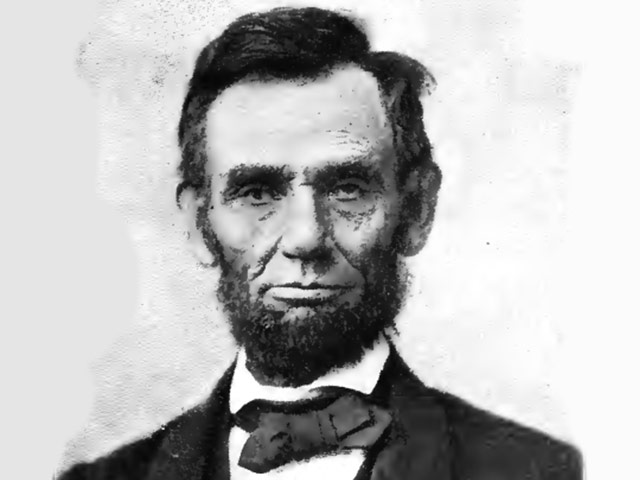
th, 1809. In his own words his paternal and maternal ancestors came from “undistinguished families.” He lost his mother at the age of ten.
He grew up on the wild western frontier of the United States. He was large and very strong for his age and was soon adept at using an axe. He also got an early introduction to hunting. He describes in his autobiography how he shot a wild turkey at the age of eight.
Lincoln’s opportunities to acquire an education were limited in this isolated location. He claimed that he only learned to “read, write, and cipher” in his youthful years but his ambition and natural talents made up for the lack of formal education.
He was an inveterate reader and when he exhausted the limited reading material his poor house contained he would go to borrow books from neighbours.
Although he was physically well-suited to farm work and other manual labour his intellectual strivings would not leave him content with a farm worker’s life. In his twenties Lincoln moved to New Salem, Illinois. He supported himself as a store keeper and post master.
For a short period he also served as an officer in one of the Indian wars but his military service was not particularly distinguished. However, his oratory and ways with people endeared him to the local community. In 1834 he was elected to the local legislature. In the later 1840s he also served for a brief period in Congress. At the same time he was serving as a legislator Lincoln qualified as a lawyer and built up a successful legal practice.
For most of the 1850s Lincoln concentrated on his legal work, but he was not able to remain indifferent to the growing divide in America over the issue of slavery.
Lincoln was a keen opponent of slavery but that was not equivalent to saying that he believed black Americans should have equal rights with white citizens. The reputation he developed as an eloquent but moderate opponent of slavery stood him in good stead when he contested the Senate seat of Stephen Douglas in 1858.
Although he did not unseat Douglas his debating skills made a strong impression across the nation. He was thus a natural choice for the Republican Party in the Presidential elections of 1860. Lincoln was not considered the mostly likely to win the election but contrary to expectations he triumphed by gaining 180 out of 303 electoral votes.
 A good claim can be made that Lincoln’s greatest achievement was rising from a humble background to the country’s highest office, but most people would rate his time in the Presidency as his most outstanding success. Certainly the challenges he faced would have broken someone of lesser caliber.
Lincoln bore no responsibility for the breakup of the union and the bitter Civil War that tore such a deep wound in the nation. His talent in leading the United States during this stormy period made a major contribution to the victory of Union forces. His inspiring addresses to the nation and his courageous decision to abolish slavery made his presidency a seminal period in the shaping of America’s identity.
When John Wilkes Booth assassinated Lincoln on April 14, 1865, he thought he was striking a blow in support of the Confederacy. In actuality his act deprived America of the best person able to heal the nation’s wounds.]]>
th century. The library at Harvard holds over 15 million books but librarians still have no clue as to how many in that collection are actually bound by human skin. The books in question include “Des destinées de l’ame…,” by Arsène Houssaye; A book about French philosophy, a book on medieval law (Spanish) dating back to the 17th century and a collection of Roman poetry . Although the book on Spanish medieval law contains suggestive inscriptions at the back of the book, they have turned out to be inaccurate. Laboratory tests on proteins found in the binding have concluded that it is sheepskin, rather than human. There is no distinct difference these books when compared to other books, and without an inscription that states what material makes up the covers there is no real clue as to what the material of the covers consist of. The books do not really resemble human flesh and skin bindings are only recognizable to someone who is an expert; the discolored look similar to books that have been around for many years makes these books look fairly normal. The law book includes an inscription that suggests that it was done in honor of a dear friend rather than something fiendish. “the bynding of this booke is all that remains of my dear friende Jonas Wright, who was flayed alive by the Wavuma on the Fourth Day of August, 1632. King Mbesa did give me the book, it being one of poore Jonas chiefe possessions, together with ample of his skin to bynd it. Requiescat in pace.” Lawrence S Thompson, states that the practice of anthropodermic bibliopegy i.e. binding books in human skin goes all the way back to the 13th century with a French Bible. The practice took shape in the 17th century however, with evidence stated in a Crimson article. The article reports that on exhibition was the “finest collection of miniature books”. Included among the collection was a book bound in skin. The most famous book that has been bound as human skin is the book by James Allen, entitled “The Highwayman; Narrative of the Life of James Allen alias George Walton”. The book lies at the Athenaeum and is bound by Allen’s own skin at his request. He asked that the book be presented to a man he tried to rob. Other books have been tested including the book entitled “Practicarum quaestionum circa leges regias Hispaniae”. The results were inconclusive regarding whether or not it was indeed human skin]]>
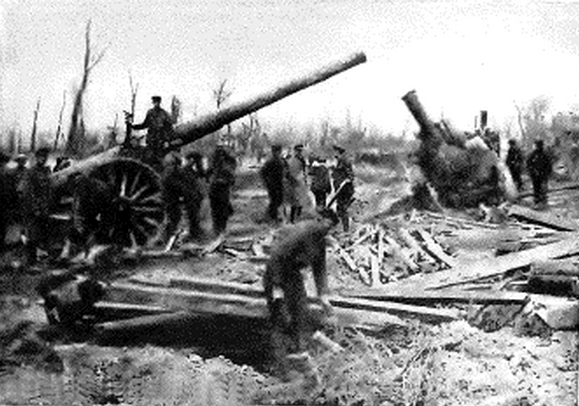
The Russian revolution of 1917 was practically bloodless, and, to a large extent, swift and effortless. Motivated by capitalism’s inherent greed that had spread across the globe, it ignited a monumental change, not just across Europe, but across the world.
In many ways, the 1917 revolution of Russia was inevitable. Karl Marx had a few years earlier spoken of the self-destructive nature of capitalism; he said that it would undo itself, and would be tipped over the edge by the working man. Russia, like many European nations at the time, was deemed sick. Indeed, the German artist Franz Marc claimed that all of Europe was suffering from a sickness that only war could cleanse. Russia’s sickness seemed greater than all the others; more immediate, more damaging, and more terminal. It was certainly a sickness that would take more than war to cure.
For centuries Russia had been ruled by the House of Romanov, and had all the while been split between urbanity and peasantry; between the government and its subjects; between the capital and the provinces; between the upper-middle classes, and the working class. Added to these volatile divisions was the sheer size of the empire; by the end of the 19th century, Russia covered a sixth of the world’s surface. The size and scale made managing it difficult, yet Russia was an empire without a parliament. Nicholas II was stubborn, impractical and unwilling to listen to the advice of others. State Dumas (parliaments) were created sporadically, only to be shut down almost immediately. There was a total ban on the creation of political parties, but this only encouraged rebellious, illegal ones to spring up, such as the illegal Labour Party movement. Once political parties were legalised the Social Democratic Labour Party was created, which was a party of Marxists who felt that the working class should overcome the regime and take the reigns.
The Social Democrats were ridden by disagreements and factionalism. They broke into two halves; the Mensheviks, who were led by the charismatic Kerensky, felt that Russia was not immediately ready for the transition into socialism. They felt that capitalism needed to continue along its trajectory until the complete industrialisation of Russia was finished. The Bolsheviks, led by the intransigent Vladimir Ilyich Lenin, wanted Russia’s conversion to socialism to be immediate. Lenin advocated a ‘dictatorship of the Proletarian’, and the use of terrorism. Such strong, foreboding words were alien to the basic precepts of socialism according to the Mensheviks. To them, Lenin wasn’t too far from being a madman. He was uncompromising, a man to be feared; he was the embodiment of the terrifying Bolshevik spirit.
 Coinciding with the rise of Petrograd’s political parties was social and economic turmoil throughout Russia and its subjects. By and large, the Russian industry was doing well (although it was largely financed by German bankers), but the workers were poorly paid in comparison to workers in other European nations. The living conditions were sometimes atrocious, and resentment was growing. Everything came to a brief, but pointed head in 1905, when restless civilians who demonstrated against the regime were brutally put down in an act which became monikered as ‘Bloody Sunday.’ Out of this rose the first State Duma, which Nicholas II allowed only reluctantly and dissolved soon afterwards once it became clear that it was too radical and too contradictory to his own designs. A second was established only to also be hastily dissolved.
A few years passed with only a few murmurings of discontent until The Great War arrived in 1914. In some ways it had its advantages to Nicholas and the ruling power; it promoted togetherness and patriotism, as everybody fought as one against the Central Powers. The production of armaments meant that the industry didn’t suffer as much as people had expected. As an overall effect, though, the Great War only served to weaken Nicholas II’s position, and accelerate a revolution. The Great War, as inevitable as it was throughout Europe, was the worst thing that could have happened to all the ruling powers, despite their own actions instigating it.
The war was mishandled in a few ways by Nicholas II. For him, it was as much about expansion as it was about defence. The socialists decried the war as an ‘imperial conflict’, claiming it was a wretched result of several capitalist nations competing with one another to gobble up the globe. The war, for the socialists as it was for many, presented an opportunity to put a stop to the expansive mindsets of the great powers. It was a chance for revolution, and for the working class to cure capitalism’s innate sickness. Had the fourth State Duma discovered the tsars secretive plans to continue expansion even during the conflict, they would never have thrown their weighty support behind the war effort.
The economy suffered as a result of mismanagement during the war. The government printed off roubles in a bid to sustain the economy, but this only resulted in rapid inflation, with wages not being able to keep pace. Sanitation and housing fell into ruin, with soldiers complaining about harsh, unjust military treatment that was damaging morale on the front. Unemployment rose sharply. By February 26th 1917, virtually all of Petrograd was on strike. The Bolsheviks and Mensheviks were sniffing around the political and social debris, imbued with the idea that the monarchy could be overthrown.
On March 2nd, Nicholas II abdicated suddenly. A Provisional Government, led by the Kadets, was formed a day later, but even they continued the monarchy’s expansionist aims. The Mensheviks, who wanted Russia to only defend her borderlands, soon found this out and a new cabinet was set up, with the previous members resigning in shame. The Provisional Government made promises that elections would be held for a Constituent Assembly, and that all adults over 21 could vote. Ruling wasn’t easy; the economy and society continued to suffer, war continued to ravage, people were still miserable, which meant that a change in the guard was hardly felt. The Provisional Government, made up of a few parties, was also divided on numerous issues, including the right of national self-determination. The Mensheviks and Socialist Revolutionaries wanted nations like Ukraine to establish their own government, but the Kadets disagreed.
Kerenski eventually took charge, but he soon resorted to heavy cocaine use after finding it an arduous, virtually impossible task. Unemployment was escalating, with no state welfare to protect those out of work. The war was still raging. People feared that bread and potatoes would soon be unavailable. There was so much for Kerensky and his government to think about that the Bolsheviks, the most individual, troublesome, and confrontational of all socialist parties, had practically been forgotten about. The Bolsheviks were there, watching and waiting.
The Bolsheviks were a different animal to any other socialist party. Led by Lenin, they were uncompromising, refusing to cooperate with any other party. They didn’t want to share power with the Mensheviks, the Socialist Revolutionaries, or the Kadets. Their principles, thoughts and methods were fearsome, with virtually all their leading members former criminals who had served time in Siberia for political agitation. They watched the Provisional Government’s struggles, with Lenin directing constant sniping at the clearly fallible and increasingly flustered Kerenski. Workers began to revolt, taking their bosses captive in some quarters, and a third coalition was formed in September to help quell the unrest. This coalition comprised just 7 socialists, with the rest made up of liberals. This meant that the radical social and economic reforms that had once been at the forefront of the Provisional Government dissipated.
Lenin, who was holed up in Finland, declared that the Mensheviks and Socialist-Revolutionaries had, by conspiring with liberals, become agents of capitalism. The Provisional Government was to him little different to the monarchy. He returned to Petrograd and convinced his party that they could seize power in light of the fragility of the Provisional Government. He wanted the Bolsheviks alone to be in control, and, as impatient as he was, he wanted the takeover to be swift, fearing that other socialists might seize power first.
The Provisional Government was overthrown by the Bolsheviks on 25 October 1917. It was rapid, smooth and happened under the noses of the Petrograd civilians, who went about their business like any other day. The insurgents were met with little resistance as they took Winter Palace, with Lenin barely believing his own luck as he took power. The Red Guards, following Trotsky’s orders, trapped Kerenski and his ministers in Winter Palace; they seized the railway stations and took the post offices. Lenin’s plan was to take power before the Congress of Soviets, as he sensed his party would not gain a clear majority. As it happened, the Mensheviks and Socialist Revolutionaries were so incensed by this ploy that they denounced the days events as a coup d’etat and walked out of the Congress. This walkout left the Bolsheviks as the clear winners. There were still a few teething snags; the Railwaymen’s Union threatened to go on strike, and a few party members were prepared to leave unless the Bolsheviks formed a coalition with the Mensheviks and Socialist Revolutionaries; but these two parties refused to have anything to do with the Bolsheviks, which meant there was nothing left but for the Bolsheviks to assume complete power. As revolutions go, the Russian revolution was bloodless, but that was certainly not a sign for the bloodletting and violence that was to follow over the next few years.]]>