Categories
Editorial

Saint George Versus the Dragon

The George and the Dragon story There are several versions of this story. Usually it is set in North Africa. One story recounts how the brave knight arrived in Libya after a very long and arduous trip by land and sea. Here he met a hermit who told him about a terrifying dragon that was terrifying the people of Libya. The dragon had an unpleasant habit of devouring young maidens. The problem the country faced was that all the young maidens had been eaten with the sole exception of the king’s daughter. It was her turn to be the dragon’s lunch tomorrow. The King of Egypt was offering his daughter in marriage to any brave knight willing to rid the land of this dragon. This was exactly the kind of challenge George was searching for. He galloped off the valley where the beast lived just in time to see the princess of Egypt being led to this grisly death. He comforted her with the news that he was off to kill the dragon and she need not fear. True to his words he rode on to the cave where the dragon lived. The huge beast with a fifty foot long tail and a huge head was understandably furious at this intrusion on its territory. It came out of its cave roaring like thunder. George charged at the dragon and speared it but its scales were so thick his spear broke. George was dismounted but found refuge under a magical tree conveniently on hand for some emergencies. The tree’s magical powers shielded him against the dragon’s poison. When he had recovered from the failure of the first attack he went after the dragon again with his sword. The dragon doused him in poison and his armour fell apart. Everything was almost lost but George noticed just in time that there were no scales under the wings of the beast. He struck it under its wings with his sword and at last succeeded in dispatching the monster. Interpretations On the most basic level George and the dragon is an attractive fairy story. We learn about the triumph of good over evil in a manner that leaves no room for alternative interpretations. On a deeper level it is easy to detect in the persona of the dragon a symbolic representation of our fears of the unknown, or situations we perceive as very threatening. The dragon can be seen as almost insurmountable obstacle or approaching terror threatening our very existence. The conquest of the dragon shows that we have the abilities to overcome our most dreaded enemies with sufficient determination and courage. These ideas appeal to individuals. They also clearly held appeal for an island nation fearing invasion from its more powerful Continental neighbours. If you want to connect the dragon slaying with some episode in early history, there is no evidence that Saint George is modelled on a person whom we know lived in a certain historical period. However, it is interesting to note that many cultures have stories featuring dragons. Some scholars suggest that one explanation for this maybe the survival of dinosaurs into a much later period than we used to believe. The theory has always been that dinosaurs died out before man came on the scene. These scholars postulate that early man might have seen dinosaurs and conceivably needed to defend himself against them. If this really was the case there may have been a real prototype for Saint George – an ancient warrior who fought and killed one of these prehistoric monsters. His exploits would have been talked and sung about for generations and so this story may have a germ of truth in its origins. More prosaically the stories of dragons may have been sparked by the discovery of dinosaur skeletons, which would certainly have the power to terrify a superstitious and uneducated farmer. In truth, we will probably never know. ]]>

Categories
News

Implementing ‘Csi’ Method in Historical Study

Scientists were able to prove the existence of French buhrstone in Ohio by applying ‘forensic’ method in their study We have all seen how CSI forensic teams doing their things on television, analysing a little part of specimen in order to identify its origin. Believe it or not, similar approach is also regularly applied when investigating history. A team of scientists conducted a combination of palaeontology and archaeology study by applying ‘forensic’ method to substantiate the origin of millstones in Ohio used in the 18th and 19th century. Some millstones used in that period are believed to have originated from France. The sole purpose of the study was to safely differentiate local millstones in Ohio from millstones imported from France. Basically, all millstones are quite similar in composition. Millstones were composed from the super hard buhrstone, also known as chertz or flint. Over the course of human history, buhrstone had always been the material used to make stone tools. However, buhrstones from French quarry posses much more value compared to buhrs from any other part of the world, including Ohio. This is due to the fact that stones from France were considered much better in cutting grain. Detailed examination had revealed some important facts that eventually became the basic premise of the differentiation process. The first aspect was the physical feature of the millstones, which is the key feature required by millers. A stone had to possess some degree of porosity in order to be useful. In the year of 1795, Oliver Evans, a famous millwright and inventor, proclaimed that pores “larger in diameter than the length of a grain of wheat” were not really desirable by millers. The claim had provided a strong basis for the theory suggesting the impotance of imported stones from France’s quarry. “The story of the importation of this stone from France is not widely known,” said Dr. Joseph Hannibal, a curator of invertebrate paleontology at The Cleveland Museum of Natural History. Dr. Joseph Hannibal was the lead author on the study. “They are not always correctly identified as being from France. Based on the stones we have examined, it is clear that the French stone was more popular. Examples of millstones made of this stone are widespread in North America and throughout the world. So the use of fossils for their identification is a broadly applicable concept,” he added. Another fact emerged from the examination was that fossils were embedded in the stones. The pores on the stones were the place where those fossils left their marks. Buhrstones from France bear some traces of algae and snails’ fossils originated from a freshwater environment while local Ohio’s buhrs were occupied with invertebrate fossils known as brachiopods, pelmatazoans and fusulinids. These vital facts had made it possible for scientists to analyse those millstones using the ‘forensic’ method without ever having to break them. “Many millstones have been identified as being made of French stone or Ohio stone,” said Dr. Hannibal. “But since the stones used are generally similar in color and other properties, I questioned how these stones had been identified as originating from France or Ohio. When visiting the remains of an old mill in Trumbull County, Ohio, we first noticed that there were charophytes in some millstones. Our study progressed from there.” The study took almost five years before its conclusion. There were 16 fossils-containing millstones studied by the research team, which included high school and college students. Four college students were working as co-authors of the study. The result of the study was documented in a paper published in journal PALAIOS of the Society for Sedimentary Geology (SEPM).]]>

Categories
News

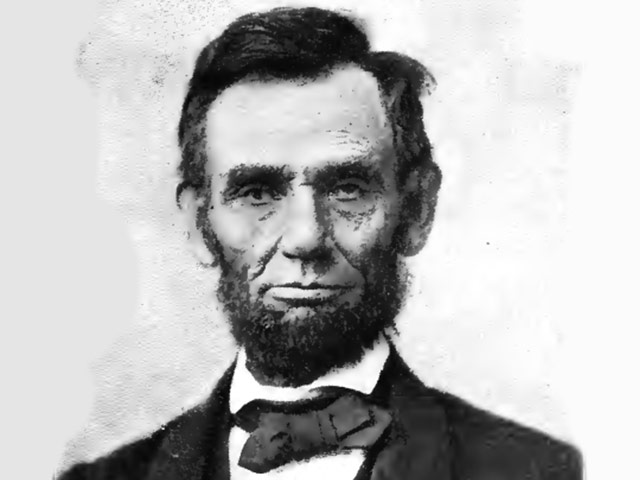
The Most Influential President of the Usa – Abraham Lincoln

th, 1809. In his own words his paternal and maternal ancestors came from “undistinguished families.” He lost his mother at the age of ten. He grew up on the wild western frontier of the United States. He was large and very strong for his age and was soon adept at using an axe. He also got an early introduction to hunting. He describes in his autobiography how he shot a wild turkey at the age of eight. Lincoln’s opportunities to acquire an education were limited in this isolated location. He claimed that he only learned to “read, write, and cipher” in his youthful years but his ambition and natural talents made up for the lack of formal education. He was an inveterate reader and when he exhausted the limited reading material his poor house contained he would go to borrow books from neighbours. Although he was physically well-suited to farm work and other manual labour his intellectual strivings would not leave him content with a farm worker’s life. In his twenties Lincoln moved to New Salem, Illinois. He supported himself as a store keeper and post master. For a short period he also served as an officer in one of the Indian wars but his military service was not particularly distinguished. However, his oratory and ways with people endeared him to the local community. In 1834 he was elected to the local legislature. In the later 1840s he also served for a brief period in Congress. At the same time he was serving as a legislator Lincoln qualified as a lawyer and built up a successful legal practice. For most of the 1850s Lincoln concentrated on his legal work, but he was not able to remain indifferent to the growing divide in America over the issue of slavery. Lincoln was a keen opponent of slavery but that was not equivalent to saying that he believed black Americans should have equal rights with white citizens. The reputation he developed as an eloquent but moderate opponent of slavery stood him in good stead when he contested the Senate seat of Stephen Douglas in 1858. Although he did not unseat Douglas his debating skills made a strong impression across the nation. He was thus a natural choice for the Republican Party in the Presidential elections of 1860. Lincoln was not considered the mostly likely to win the election but contrary to expectations he triumphed by gaining 180 out of 303 electoral votes. A good claim can be made that Lincoln’s greatest achievement was rising from a humble background to the country’s highest office, but most people would rate his time in the Presidency as his most outstanding success. Certainly the challenges he faced would have broken someone of lesser caliber. Lincoln bore no responsibility for the breakup of the union and the bitter Civil War that tore such a deep wound in the nation. His talent in leading the United States during this stormy period made a major contribution to the victory of Union forces. His inspiring addresses to the nation and his courageous decision to abolish slavery made his presidency a seminal period in the shaping of America’s identity. When John Wilkes Booth assassinated Lincoln on April 14, 1865, he thought he was striking a blow in support of the Confederacy. In actuality his act deprived America of the best person able to heal the nation’s wounds.]]>

Categories
Editorial

In the Land of the Giants: Folklore’s Biggest Villains. Literally

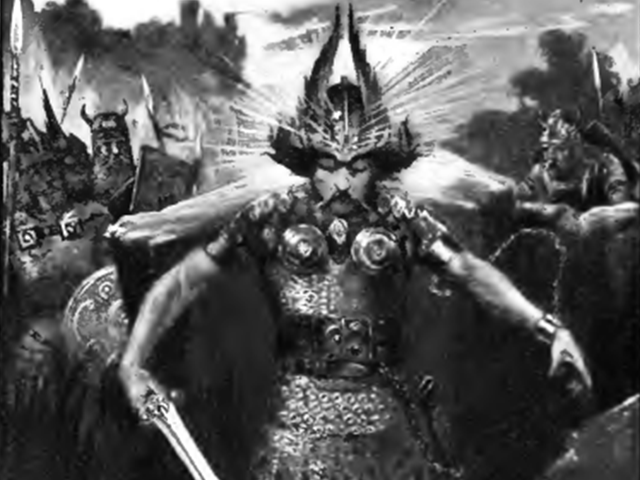
Even though Jack commits violent acts, such as ripping a giant’s belly open in one of the stories, more often that not, it is his clever trickery and quick thinking that helps him out of tough situations. He knows he cannot match the strength and the size of Cormoran, Galigantus, or any other giant, so he exploits their weaknesses. Right from the beginning, it’s an unfair right, but Jack is not the one to be discouraged. At the heart of these stories is the battle of good vs. evil, but the giants are used as villains for a reason. They aren’t fully fleshed-out characters with unique qualities that to them apart from one another, but their lowest common denominator is their size, power, brutality, but also their lack of skill and intelligence, as they are always portrayed as blood-thirsty monsters, often clumsy and dim-witted. As such, they serve to provide the perfect foil for our tiny hero, as Jack’s qualities can shine when juxtaposed with characteristics of the giants. These stories give us the message that is that no matter how small you are, you always have a fighting chance to emerge victorious if you use your smarts, wit and bravery against a brute, mindless, destructive force.]]>

Categories
Editorial

Bad Vs. Good: Two Sides of the Same Coin

The villains play an ungrateful role, and ironically, sometimes their only purpose is to make the hero more appealing. The battle of good vs. evil, light vs. dark, hero vs. villain is as old as time itself. There are many examples of that in folklore, mythology, religion and literature of all cultures. There are numerous references in the Bible, Torah, and Quran which address that subject. Interestingly enough, even though there were and there still are many civilizations, cultures, countries and languages, that particular battle seems to be rather universal. The only thing that changes are the names, locations and the circumstances, but the core of it remains the same. If we were to perform a more thorough research on a single example, we would find that it probably has a similar counterpart in a different culture, under a different name. Of course, this can also be due to the fact that when a new culture suppresses the old one, it inherits some of its characteristics as well. For example, there are many examples of pagan beliefs that were carried over into Christianity. One of the oldest legends which depicts the age-old battle of good vs. evil is the story of Beowulf. Beowulf is an Old English epic poem about the eponymous hero, set in Scandinavia, and is considered one of the most important works of Anglo-Saxon literature. Beowulf, the hero of the Geats, comes to the aid of Hrothgar, the king of the Danes, whose great hall, Heoroth, is being terrorized by a vicious monster named Grendel. In addition to Grendel, Beowulf also has to battle Grendel’s mother and a dragon. Each of these is used to develop the characterization of our hero further, each one presenting a unique set of challenges he has to overcome, displaying his best qualities. Beowulf is a classic example where establishing a dichotomy between a hero and a villain is used to infuse life in both the hero and the villain, making them more complex and real, as opposed to just treating them as polar opposites, with a clear line of division between them. Depicted simply as an evil monster, Grendel isn’t exactly a fully fleshed-out character, but then again, he doesn’t need to be, as his purpose is to make the reader root for the hero, in this case, Beowulf. Very early in the story, we see a dichotomy being created: Grendel, who is sinister and bloodthirsty, spreading evil and fear among the people, and Beowulf, who fights for the people and wants to protect them. We aren’t familiar with what drives Grendel to commit such despicable acts, nor do we know his motives, as he is simply described as creature of darkness, and that serves as a stark contrast to Beowulf’s motives and actions, which are selfless, to an extent, as he does desire glory. The point is the villain, in this case Grendel, is used merely as a tool to make the hero more approachable and likable, and therefore an emotional connection is forged between the reader and the hero. By making the villain as heinous as possible, the hero is glorified and his actions, even those who might be considered questionable, or even flat out wrong, are justified and made acceptable. The hero and villain often share some of the qualities, such as strength, wisdom and intelligence, which makes their rivalry all the more interesting and realistic, but, there is a key difference in their goals and desires. The hero fights to protect others, even if that means putting himself in harm’s way, which might cost him his life, and the villain feeds off his evil acts and his ultimate goal is his self-satisfaction. But, perhaps there is another reason why we always root for the hero. We all like to think of ourselves as good people, with good character traits, and we tend to see the hero as a perfected image of ourselves, and that’s what makes him so relatable]]>

Categories
Editorial

It’s Good to Be Bad: Shining the Spotlight on the Villain

And, really, if we take a quick look at some of the famous and infamous villains, such as Dr. Hannibal Lecter, Hans Gruber, Col. Hans Landa or The Joker, the films in which they appeared wouldn’t have had such an impact without them, or they would be something entirely different. And most actors relish playing those roles, as they can get away with a lot more, as opposed to when they are playing the hero. We always root for the heroes, but they are often one-dimensional characters, limited by the requirements of the script and the expectations of the audience, as they have to be the epitome of all that is good and righteous. Ok, maybe every now and then, there comes a hero that is a bit more complex and dark, with his own demons, but still, he has to obey some rules. A villain doesn’t have to do any of that. He’s not constrained by morals, ethics, and while we may not love them, we certainly love to hate them. If a villain is smart, powerful, ruthless, cunning and often charismatic, we feel that much more satisfied when the hero triumphs. But this is not only true of films. Examples of this can also be found in literature, mythology and folklore of all cultures, and while the line between these three is often blurred, and they share some of the stories and characters, the rules are almost the same. As this subject is really broad, this time we’re going to focus on one well-known Hero vs. Villain rivalry, the one between Robin Hood and the Sheriff of Nottingham. Without question, the Sheriff of Nottingham is Robin Hood’s principal nemesis. There have been many incarnations of both Robin and the Sheriff in films, literature, folklore and each of them brought something new, establishing a distance from the original story in terms of accuracy. It is almost impossible to determine the real facts, or even if Robin or Sheriff were historical figures, but, that’s not our concern at this time. We’re going to focus on what’s common to all the interpretations, the antagonism between the two of them. A good source, if you’re interested in a more in-depth study, is “Robin Hood: A Collection of All the Ancient Poems, Songs, and Ballads, Now Extant, Relative to That Celebrated English Outlaw; To Which Are Prefixed Historical Anecdotes of His Life” by Joseph Ritson (PIBN: 1000597106). We practically know all there is to know about Robin Hood, but the same cannot be said about the Sheriff of Nottingham. The Sheriff himself was appointed by the King, as a legal authority, but that certainly didn’t make him the moral authority, as he and his henchmen were rotten and corrupt, introducing unfair taxes and robbing the people they supposed to protect, executing everyone who stood in their path. He is most commonly portrayed as intelligent, ruthless, greedy figure, who will do anything to stop Robin Hood, the only one brave enough to stand up to him. While we are more familiar with Robin, as he is the hero of this story, and more attention has been given to him and the people around him, such as the Merry Men, or Maid Marian, some space has been left for the Sheriff of Nottingham to counterbalance the good deeds done by Robin, thus making the story more suspenseful and making the hero more likable by setting him up against a truly heinous villain. And although the Sheriff doesn’t have the support of the people, or his associates, which might assist him sometimes, but at the same time have their own agenda, he still has considerable means at his disposal which he uses to battle Robin, including his blackmail, bribe, money or worse. Even though he is evil, he isn’t just a mere psychopath, spewing venom, but a more shrewd, calculated figure, driven by ambition and greed, using his intellect in addition to violence to remove the opponents who stand in his way. In that aspect, he serves as a perfect foil for Robin Hood, displaying character traits of equal intensity, but on the opposite end of the scale. Also, some of the tactics employed by Robin and his men, such as theft, are justified as they present the only way of fighting the villainous authority figure. And that is the key fact that explains our perception of a hero: as someone who is defined by his great deeds, and not necessarily someone who is morally incorruptible. That, in turn, defines the role of a villain, as well, who isn’t burdened by similar requirements. The villain’s job is to provide the archenemy and moral nemesis for our hero. That’s what makes a villain. However, being a great villain is something a lot more complex, as the author needs to infuse the character with a human element, motivation and the reasons for his wrongdoings, making him into something more than a cardboard cutout. As a consequence of that, the story sets itself apart from the bunch, ultimately becoming something more: a legend.]]>

Categories
Book Reviews

Pictures Of Lily

Categories
Editorial

How to Find Free E-Books Online?

  • Forgotten Books: the world’s largest online library with over 1,000,000 books available on demand, carefully organized into categories and available for download in multiple formats. Forgottenbooks.org also features advanced analytical data. Every single word, page and image inside each and every one of their books has been analyzed, indexed and classified. With this valuable research information, it can tell you virtually anything about anything, from the most commonly used word in fiction books published in 1765, to the book with the most images of cats in the first 20 pages. Or perhaps some more useful information, such as a list of every word in the English language in order of usage frequency.
    • Project Gutenberg: boasting the title of the oldest, if not the largest, online library, Project Gutenberg that offers hundreds of thousands of free e-books for readers to download. Started in the 1970s by Michael Hart, it has grown into a non-profit organization that allows you to access over 30,000 titles whose copyrights have expired and which now belong to public domain.
    • ReadPrint: ReadPrint offers you thousands of free books, novels, poems, essays, and works of fiction to choose from. In 2010, they were included in Time Magazine’s list of 50 best websites. It allows you to navigate their library of over 8,000 titles in several different ways, such as a list of Top Authors, and many more.
    • ManyBooks: similar to Project Gutenberg in many respects, ManyBooks is a great place for those who find Project Gutenberg’s basic interface a bit off-putting. Manybooks offers a more polished, user-friendly exterior, and a large number of free e-books to choose from. You can also browse the books by cover art, reviews and summaries.
    The only thing left now is to familiarize yourself with some of the most popular e-books formats available:
    1. EPUB: an extremely popular e-book format designed to run on most devices, such as iPad, iPhone, Sony Readers or the Nook. You can also open it on your computer with the use of appropriate software, such as Adobe Digital Editions or EPUBReader extension for Mozilla Firefox.
    1. PDF: developed by Adobe, it has consistently been one of the most popular formats for years. It is supported by many platforms, and there are a lot of viewers out there that can open it, such Adobe’s own Acrobat Reader, Foxit Reader, Xpdf, among others.
    1. MOBI: originally conceived as a PalmDOC format extension, it can be opened by MobiPocket Reader, which can be installed on numerous devices. There are some drawbacks of the format, such as tables being displayed differently on some readers, or images remaining the same size if the font size is changed.
    After reading this, you should be all set and finding a free e-book should not pose much of a problem for you.]]>