Categories
News

History of Shawnee County, Kansas

Someone would expect that a small town in Illinois of 7,970 people would not have much history. But recently, a group of archaeologists have found evidence of a nearly 1,000 year old Native American village in Murphysboro, which is near the Southern Illinois Airport. This village would have pre-dated any European contact. This find was actually by accident. The group of archaeologists that found the historic land were from the Illinois Archaeological Survey, and their purpose was to survey land in order for the state of Illinois to build. Instead of finding good land for a modern road to be built on, they found something even more valuable.  It is not known for certain the tribe or culture that the archaeologists dug up, but they found material such as clay that was used to make pots, which gave them a few ideas. There are about four known Native American tribes that currently live or have lived in Illinois: Kaskaskia, Moingwena, Peoria and the Moingona. They were part of the Shawnee people that came from the American Midwest. The history of the Shawnee people began in the late Pleistocene age, where at that time they were known as the Paleo-Indians. They hunted large animals such as bison, mastodons, caribou and mammoths. Some of these Paleo-Indians moved to the Ohio region, and settled there. At around 1000 AD, they started to flourish and took up a culture known as the Fort Ancient culture. They were known as the mound builders, as they constructed massive earthen mounds for homes, burials and also for ceremonial purposes. They grew mostly maize and had year-round nuclear families that lived in settlements of about 40 to 50 individuals. These settlements would be scatted along terraces that overlooked rivers and also on flood plains. Some groups had habits of moving to different locations. Now, there are only 1.03% Native Americans in the small town of Murphysboro, and an even meager 0.3% in the whole state of Illinois. 

Patrick Durst, the Senior Researcher of the Illinois State Archaeological Survey, stated that the find has opened up a new area of study for him and his team. They will conduct further research to find out if the groups that lived in this location formed any of the tribes that are known today, or if they stayed in the area and became something else. The tribes today actually came after the remnants of what were found at the site. 

Charcoal was found in the soil, which caused Durst and his team to believe that several homes were burnt down. The excavation also brought up old clay pots, tools and stones. They also found mussel shells and deer and fish bones on the site, which correlates to the way of the Fort Ancient culture of hunting and settling around the local rivers. The artifacts will be further analyzed to better identify the people the artifacts belonged to and their way of life.

]]>
Categories
News

18th Century Military Artifacts Found at Lake George

Categories
News

Ancient Celts May Have Had Gold Dental Implants

Categories
News

Black Cultural Archives Opens in South London

Categories
News

Ancient Roman Pothole Repairs Discovered

Categories
News

Amateur Explorers Find Fort from Second Seminole War

Sun Sentinel that he wants the site of Harrell to be linked to the Tamiami Trail, to facilitate easier access for visitors. The site of the fort could easily have remained uncovered. Its discovery provides a reminder of the lives of those who had to serve in such an inhospitable location. The continued discovery of such sites is also vital for furthering America’s conversation with its past, and acknowledging the often uncomfortable history of the treatment of Native Americans in the nation’s creation.]]>

Categories
News

Archaeologists Investigate an Ancient Mycenaean Citadel

th century BC. Under the project, ancient engineers drained marshlands using drainage control systems and diverted six streams and rivers from the basin to two mammoth canals in the Kopais basin. This transformed the Kopais basin into one of the most fertile plains in Greece. The canals were also reinforced with Cyclopean revetments that helped in supporting roads as well. Archaeologists believe that approximately 2,000,000 cubic meters of earth was required to be moved in order to build the embankments and dykes and as much as 250,000 cubic meters of stone was used to carve the face of the embankments. The Citadel of Glas was believed to be the main administrative center for this project. It was protected by a huge stone wall that was 5.5 – 5.8 meters thick. This wall ran for about 3kms, featured 4 gates and three central enclosures. According to Maggidis, there were certain peculiarities in the Citadel of Glas. He said that one of the biggest oddities was that only 1/3rd of the area seemed to be occupied by buildings and structures, although it did not make sense for the space outside the central enclosure to be completely void of structures. Maggidis believes that the Citadel of Glas was much more than a simple fort to administer the drainage of the Kopais lake. He states that this was what prompted him to explore the Citadel further. As a result of his uncertainties, Maggidis and his colleagues performed a geophysical survey of the citadel with the help of a GPR, satellite imagery, a Fluxgate gradiometer and electrical resistivity. The group mainly focused on areas that were left unexplored. And the results were amazing to say the least. Maggidis states that the tests proved that the Citadel wasn’t void of structures, but was full of buildings that had many uses, including extensive residential quarters, well built complexes, terraces, a cistern and staircases. The picture that emerged was that of a fortified town. Maggidis believes that this discovery finally took them one step further to uncovering the mysteries that the Citadel had to offer. Even though the findings are still at their nascent level, a detailed report that showcases the discoveries made in the Citadel of Glas shall be published in the Popular Archaeology Magazine in September.]]>

Categories
News

Was Vlad the Impaler Buried in Naples?

Dracula. Vlad III is thought to have been a fifteenth century Prince of Wallachia in Eastern Europe. His father was nicknamed ‘Dracule’ meaning dragon, in reference to the badge of his house and ‘Dracula’ means young dragon. Unlike the character in the novel, Vlad III was in fact a Prince rather than a Count. He was a member of the Order of the Dragon, a force set up to protect Christianity from Ottoman Turks. In 1476 Vlad disappeared in battle. The new research argues that rather than being killed, he was in fact imprisoned by Ottoman forces. The researchers at the University of Tallinn claim that Vlad was ransomed to his daughter in Naples, who had been adopted by an Italian family and eventually married to a nobleman. Once the ransom was paid he was sent to Naples, and was buried in a graveyard there, after he had quietly passed away. The main evidence is a gravestone discovered in the Piazza Santa Maria la Nova graveyard by Neapolitan student Erika Strella. This is the graveyard where some historians claim his daughter and son in law were buried. The tomb shows images of a dragon, which was the image of the Prince of Wallachia’s house. It also depicts the Sphinx of Thebes, which was also known as ‘Tepes’ – a pun on Vlad’s nickname. Medieval history scholar Raffaello Glinni told the Hurryiyet Daily News that the style of the images on the headstone were not that of an Italian nobleman from this period, but from the House of Transylvanian ‘Carpathians’. It is an unusual and fascinating discovery, one that has already started to attract tourists to the Neapolitan church, but much more research needs to be done before it can be confirmed. A recent article by Rossella Lorenzi for Discovery News has questioned some of the evidence supplied. The most damaging criticism relates to Vlad’s supposed daughter in Italy. His only recorded offspring was three sons. There is evidence that his ‘secret daughter’ Maria Balsa existed, but nothing confirming her relationship to Vlad. If Balsa was not in fact his daughter, then one of the key explanations for his burial in Naples begins to collapse. The second criticism concerns the coat of arms on the tombstone, and the symbol of the dragon. Some historical records associate this image to the family of Matteo Ferrillo, Balsa’s father in law. As Jason Colavito notes in his blog: ‘The tomb is that of a known Italian noble, with recognized arms.’ This is another piece of evidence that does raise questions over how well the argument holds together. The discovery in Naples is a fascinating one, which is likely to have historians locked in debate for some time.]]>

Categories
News

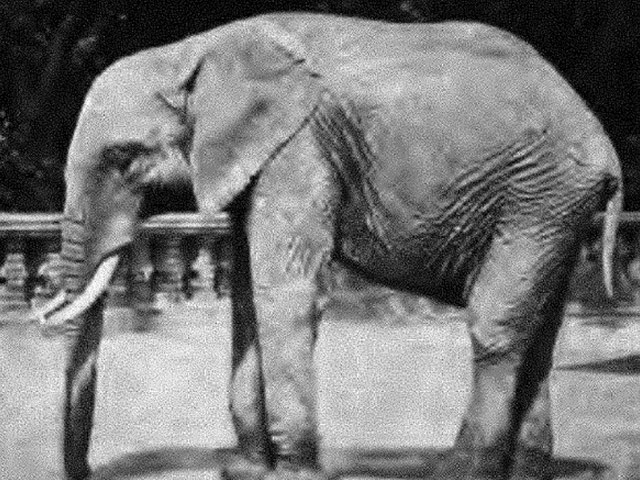
Surprise Find of Pachyderms Being Eaten By Ancient Native Americans

Categories
News

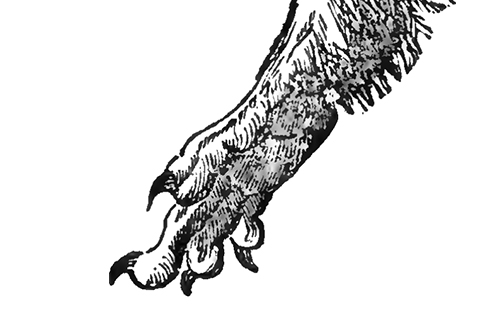
Ancient Metal Feline Claws Found