Categories
News

Do Photos Have the Answer to Amelia Earhart's Disappearance?

nd July 1937 when her plane vanished from over the Pacific Ocean as she attempted to fly her plane around the world at the equator. Hope of finally finding proof of Amelia’s fate emerged as a handful of pictures of the Electra, Amelia’s twin engine Lockheed grabbed attention. These photos were taken in Miami, the 4th stop in Amelia’s journey around the globe. What makes them unique is that they show a distinctive patch of metal which was installed to replace the navigational window. According to the reports of the researchers working at the International Group for Historic Aircraft Recovery (TIGHAR), the metal sheeting perfectly matches a piece of aluminium which was recovered from the island of Nikumaroro, an uninhabited island lying in the Pacific Ocean between Hawaii and Australia. Researchers state that they have been investigating the fateful flight taken by Amelia for years and a major breakthrough finally seems to have arrived. According to Ric Gillespie, the executive director at TIGHAR, if the photo enhancements manage to establish that the rivet patterns on the repair job match the piece of aluminium that was found on the Nikumaroro island, then it can be conclusively linked that the island was connected with Amelia’s disappearance in some way or the other. This discovery would finally prove that Amelia and Fred Noonan (Amelia’s navigator) had not succumbed in the Pacific Ocean because they ran out of fuel. In fact, if forensics can match the piece of aluminium to Amelia’s plane, it may be conclusive enough to state that Amelia was forced to land on the Nikumaroro island and live the rest of her life as a castaway before she finally succumbed to her death on an island located about 350 miles to the southeast of Howland Island. The researchers from TIGHAR have termed the sheet of aluminium as 2-2-V-1 and have made it the subject of extremely intense investigations ever since its discovery in Nikumaroro. This sheet is 10” wide and about 23” long. It has been made from a product that was introduced in the year 1933 by Alcoa Aluminium and was known as 24ST Alclad. However, the researchers at TIGHAR failed to fit the 2-2-V01 sheet anywhere on a Lockheed Electra even though it seems as if Amelia’s plane was skinned with this very material. Gillespie mentions that a series of researches were conducted in the month of March at the National Museum of the United States Air Force to try and match the sheet of aluminium to a Lockheed Electra. However, the researchers believed that the research and the sheet were inconclusive when it failed to fit into the original or the repaired parts of Amelia Earhart’s Electra. The investigation was said to have been renewed when Jeffery Nevile, an air mechanic and a TIGHAR researcher found that one particular part of Amelia’s aircraft wasn’t designed or built by Lockheed. In fact, it was a patch that was installed in Miami. Why this patch was used to replace the navigational window remains unknown. Another mysterious fact is that even though exhaustive evidence can be found of what Amelia Earhart did while she stayed in Miami for 80 days, not a single mention of replacing the window with a customized patch can be found anywhere.]]>
Categories
News

Ancient Cypriot City Discovered

Categories
News

The Neanderthals Were Omnivores, According to Recent Study

PLOS ONE online journal, the paper written by a group of geologists stated that the feces of the Neanderthals contained high portions of plant sterols which show that they did indeed eat plants. They also found much higher portions of cholesterol and coprostanol which supports the idea of high meat consumption. The scientists in this study were Ainara Sistiaga, a geo-archaeologist from the University of La Laguna in Tenerife, Spain, and Roger Summons, a geobiologist from the Massachusetts Institute of Technology in Cambridge, Massachusetts, USA. They looked at different biomarkers of meat and plants in fossilized feces from five different places at El Salt. This is more indicative of an omnivorous diet than the study that found the nitrogenous compounds in the teeth of the Neanderthals, Sistiaga states, as these biomarkers were in their feces. Only humans and other primates are able to convert cholesterol to copropostanol in the form of 5B-stigmastanol, hence why they were so sure that the feces were of human origin and not another mammal. They also made sure that it wasn’t any other primate by looking for any bones belonging to other primates in the surrounding area, and found none. The researchers also looked at the parasites and coprolites in the soil, and discovered only species associated with humans. Some scientists are not convinced with this finding, however. Michael Richards, paleoanthropologist at the University of British Columbia, states that it is difficult to identify the species of coprolites, and that animals passing by that area over thousands of years could have passed by and even settled in the area Neanderthals were, which would produce feces with similar biomarkers as the Neanderthals. Amanda Henry, paleobiologist at the Max Planck Institute for Evolutionary Anthropology in Leipzig, Germany, thinks the study is very exciting and could disprove the idea that Neanderthals were only carnivores, but says the study is incomplete as the researchers would have been better off using DNA or parasites unique to humans to make the findings conclusive.]]>

Categories
News

Discovery of Roman Skeleton to Rewrite British History?

th century when the Roman empire began to decline. Unlike most archaeology students, who are content with finding pieces of glass or pottery in their first dig, the undergraduate students of the Bournemouth University have actually stumbled upon a piece of history that could rewrite the entire Roman history of Britain. For the first time in history, the modern generation has managed to uncover the skeletons of a family from a Roman villa in Dorset field. According to Dr. Miles Russell, a lecturer in archaeology at the Bournemouth University, this finding is very significant because of the fact that none of the occupants of the 700 odd Roman villas in Britain were ever found before. This finding could spur the uncovering of the graves of the owners of these Roman villa all over the country and finally allow historians to understand just who used to live in these villas. This landmark discovery was uncovered by a group of 85 students in their early twenties or their late teens in a corn field next to Winterbourne Kingston, Blandford while carrying out a study. The students were expected to establish whether the ancients living in these Roman villas were British or European. They managed to map the ground with the help of a geophysical survey. To the surprise of students, as well as the faculty, they managed to uncover an enclosure of almost 300 feet of an ancient Roman villa. After excavating the site, the skeletal remains of 2 adult males and females and 1 elderly female were found. It is believed that these remains belonged to 3 generations of a family that used to live in the Roman villa about 1700 years ago. The remains are now being analyzed in order to get a better picture of exactly who used to live in these villas. This groundbreaking work is also expected to become a part of the final year dissertation for the students. According to Dr. Russell, one of the main objectives of the group is to understand who lived in these villas and what sort of changes did Britain go through during the time. They also wish to ascertain whether the people in these villas were Britons or Europeans/ Romans who had moved to exploit the land. Dr Russell also estimates that if these skeletal remains belonged to the Romans, they were most probably tax collectors, politicians or statespeople. He believes that these people represented the top 2 – 3% of the society. Hopefully, the bones should offer more insights into their age and their health. Unfortunately, world history has majorly suffered as many of the Roman villas of Britain that were uncovered in the 19th century could not be cared for properly due to the lack of knowledge and technology. As a result important details of world history were lost to time. Hopefully, these findings could spur a new era where we finally understand just what happened in Britain towards the end of the Roman era.]]>

Categories
News

The Amistad Slave Rebellion

th anniversary of the Amistad Slave Rebellion. In 1838, on the 2nd of July, about 53 Africans aboard the Amistad, a slave carrier, managed to break out of their chains, kill two crew members and disarm the rest of the crew. After seizing control of the vessel, the slaves tried to sail all the way back to their homeland, but ended up sailing North instead. These slaves travelled approximately 1400 miles from Cuba all the way to Long Island in New York, where the navy finally picked them up. This rebellion was termed as the Amistad Rebellion and despite its popularity, it was just one of the thousands of rebellions that have been recorded. About 12 million Africans were forced to become slaves as they were shipped off to the New World between the 16th – 19th centuries. It is believed that almost 1.5 million Africans perished even before reaching land, due to the horrifying conditions present on-board. At the time of the Amistad Rebellion the United States, as well as most other major slave destinations in North and South America, had abolished the process of importing slaves. However, since slavery itself was legal unlawful activities were the norm. For example, a Spanish slave trader by the name of Pedro Blanco was believed to live like an aristocrat along the coast of Sierra Leone and was said to have continued the slave trade with the help of a local leader. The 53 Africans who found themselves aboard the Amistad were rounded up at Lomboko, Blanco’s slave depot. They were then marched all the way through the interior and kept in slave barracks where diseases and beatings were common. According to the testimony of these slaves, they were also shackled around the neck, ankles and wrists and were forced to sleep in contorted positions without even being offered enough room to stand straight. Whippings and beatings on flimsy grounds were common and dead bodies were thrown into the ocean almost every single day. What made this rebellion so famous was that despite being from 9 different ethnic groups, the slaves joined hands towards a common cause – freedom. This was something that was relatively unseen in Africa. The rebellion was led by Cinque, a rice farmer before he was turned into a slave. The captain of the ship was slashed to to death and two other crew members threw themselves overboard. However, to the dismay of the slaves, they had to depend on the Spaniards to set the course since they had no idea about charting out directions on the sea. The Amistad stopped on a number of islands in the Bahamas before it finally reached the United States. It was on August 26 that a US Navy brig entered the ship and imprisoned the Africans in Connecticut, a slave state at the time. These Africans received immense media coverage and thousands of locals also paid “entry fees” to look at them. A few influential people against the slave trade helped them to set up a trial in Hartford. In what became a historic ruling, the Hartford Court ruled that since the Africans were brought in illegally, they were not slaves. Despite having lodged an appeal with the Supreme Court, the decision could not be overturned. Thus, these slaves were finally made free after spending 18 months in the US. During the journey back to Sierra Leone, the number of surviving Africans fell to 35  who at last arrived home on 26th November 1841. This is just one of the many stories of the horrors of the slave trade and the efforts of a few individuals who played a huge role in abolishing slavery and making the world a much better place to live in.]]>

Categories
News

Chapel of 11th Dynasty Egyptian Pharaoh Unearthed

Categories
News

Unintelligent Neanderthal Is A Myth

PLOS ONE, currently available scientific evidence does not support the premise of intellectual inferiority-based extinction. The paper was the combined work of lead author Paola Villa, a researcher and curator at the University of Colorado Museum of Natural History and co-author Wil Roebroeks, an archaeologist at Leiden University in the Netherlands. They wrote the paper after executing a large scale review on recent Neanderthal research. “The evidence for cognitive inferiority is simply not there,” Villa remarked. “What we are saying is that the conventional view of Neanderthals is not true.” Villa and Roebroeks examined several hypotheses including the one that claimed Neanderthals did not apply any elaborate symbolic communication. Other hypotheses claimed that the Neanderthals were less competent hunters compared to the early anatomically modern human. Some of the hypotheses also suggest the Neanderthals used low-grade weapons and that they had a limited range of diet which forced a competitive disadvantage on their side. Not a single hypothesis was supported by the available research. Evidence from multiple archaeological sites in Europe suggests that Neanderthals hunted as a group, using the landscape to aid them. Villa and Roebroeks show that Neanderthals had the ability to strategise. There is evidence that suggest Neanderthals likely drove hundreds of bison, rhinoceros and mammoths to their death by steering them into a sinkhole and ravines in south western France. These findings mean that Neanderthals were able to communicate effectively as a group, could plan ahead and were intelligent enough to take their surroundings into calculations. At another archaeological site, excavated artefacts proved that Neanderthals did in fact have a diverse diet. There were some traces of microfossils found in Neanderthal’s teeth and food remains which lead to the conclusion that Neanderthals may have eaten nearby available foods such as acorns, wild peas, grass seeds, pistachios, wild olives, date palms, and pine nuts. Other findings including ochre, a kind of earth pigment, at sites inhabited by Neanderthals. This may have been used for body painting, while ornaments suggest that Neanderthals had cultural rituals and symbolic communication. Villa and Roebroeks said that the previous misconception of Neanderthals’ intellectual capability may be due to researchers’ affinity to compare Neanderthals from Middle Paleolithic to modern Homo sapiens from Upper Paleolithic period, the time when technology advancement occurred. “Researchers were comparing Neanderthals not to their contemporaries on other continents but to their successors,” said Villa. “It would be like comparing the performance of Model T Fords, widely used in America and Europe in the early part of the last century, to the performance of a modern-day Ferrari and conclude that Henry Ford was cognitively inferior to Enzo Ferrari.” Villa also said that there is no support of any kind from the field of archaeology despite many attempts to relate the Neanderthals’ downfall to a single cause like intellectual or technology inferiority. However, one question continues to linger in the researcher’s mind. What is the real reason behind the Neanderthal extinction if it is not because of them being cognitively and technologically inferior? Whatever the reason might be, Villa and Roebroeks are in agreement that it is possibly a complex explanation. However, both researchers are of the opinion that some hints might be found in the recent studies of the Neanderthal genome. These studies suggest the possibility of inter-breeding between Neanderthals and modern humans that lead to the birth of infertile male progenies that unable to bear children. This would then lead to a decline in the Neanderthals’ population. Another suggestion based from studies was that Neanderthals lived in small communities. This leads to the possibility of assimilation and integration into a much larger modern humans’ population. So far, there is no solid explanation regarding the real causes of the Neanderthals extinction, but we all can bet that intellect inferiority is not one of them.]]>

Categories
News

Hammer of Thor Found

Categories
News

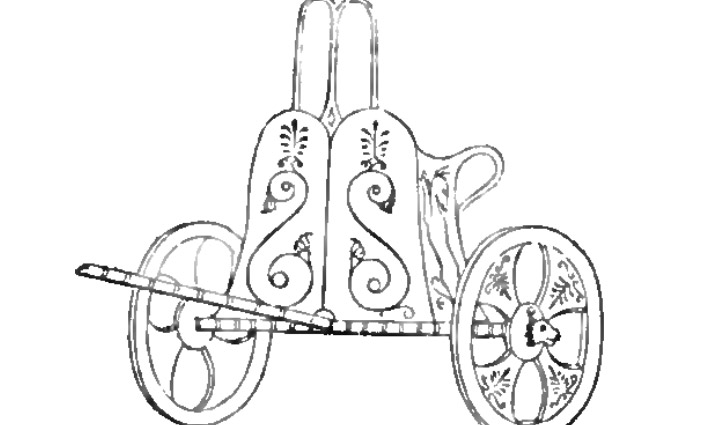
Chariots and Gold Found in a Bronze Age Burial Site

nd half of the 3rd millennium B.C. have also been uncovered in the region of South Caucasus. This leads to theories that interactions between the nomadic tribes from the Eurasian steppes and the farming communities located in and around South Caucasus were present. It is these interactions that seem to have allowed certain individuals like this Bronze Age chief to gain enough influence to receive elaborate burials. The armchair that was discovered at the site also showcases the kind of power individuals like the chief had. Scientists believe that armchairs were used to demonstrate power in the Early Bronze Age and that it was put in the kurgan as a sign of the chief’s power. The kurgan was first uncovered in the year 2012 close to the Lagodekhi municipality, eastern Georgia. ]]>

Categories
News

Ancient Chines Levees Caused Environmental Change