
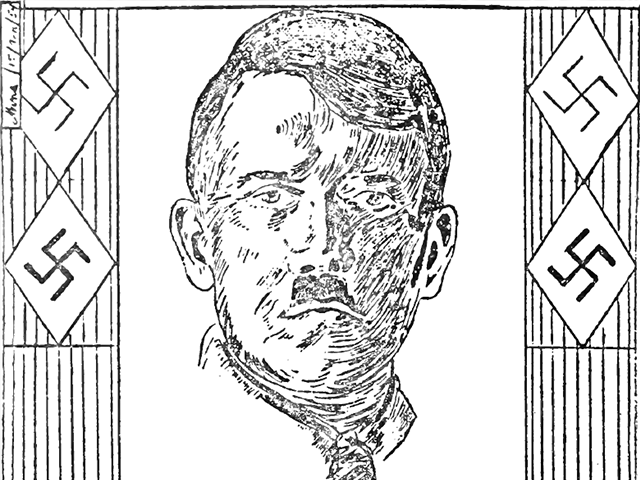
The D Day Invasion was one of the most notable events in World War 2. In fact, it is one of the world’s most remembered events as it was a precursor to the fall of Adolf Hitler. Following yearlong planning, The United Allies launched what was and still remains the largest seaborne attack in history. D Day Invasion refers to the invasion of Normandy (also called Operation Neptune) by the united armies of America, Canada and England on June 6, 1944. It proved a significant turning point for Hitler’s Nazi Army and had been in the planning phase from the previous year. The then commander of the Allied forces who went on to become president of the United States, Dwight Eisenhower, was one of the key players in launching an attack on the unsuspecting Germans. Planning had officially commenced in 1943, and launched a year later on June 6th 1944, two days later than originally planned. British, Canadian and US fleets took over the shoreline and sky at around midnight on June 6 1944. The attack was originally planned for June 2, 1944 but had to be delayed due to inclement weather conditions. The attacks commenced at midnight with the launch of airborne divisions who parachuted their way in. The German troops saw the largest army advancing towards shore on the morning of June 6 1944. There was a fierce battle and even though the Germans fought back heavily, they eventually retreated. D Day attacks saw a resistance in the German army which encouraged the united troupe’s top push towards Berlin. Prior to D Day, Operation bodyguard was launched as a decoy to distract the German troops so they were unaware of the details of the location and timing of Operation Neptune. D Day Invasions came as a result of Hitler’s refusal to surrender to the Allies. Key points in France were taken over even though it was being occupied by the Nazis. The operation was a catalyst for a number of important event s which led to Hitler’s defeat. It was meticulously planned and carried out with expert precision. The Allies could hardly believe some of the discoveries that were made as they marched on Germany. The discovery of concentrations camps that were being used to “cleanse” the world of Jews, homosexuals or anyone else the Nazi regime had declared deviant was a true testament to just how large the holocaust was. The D Day invasions saw the start of a new beginning for many people who were under fear of Hitler’s rule. Following the Battle at Normandy, Hitler’s army was defeated, his closest allies surrendered or changed sides and he finally committed suicide before the allied or Russian forces could reach him. The memories of Operation Neptune are recognized annually in the form of memorials and tributes at the location points where the invasion took place. Most notable among them are Omaha Beach, Pegasus Bridge and the German war cemeteries that exist nearby. A recognition ceremony for those who fought and perished in the D Day invasion is held yearly to honor the brave soldiers who went above and beyond their call of duty to fight for their country to achieve a greater good.]]>

For ’tis a fine life, and ’tis void of all strife. ‘So ’tis, sir,’ Clorinda reply’d; ‘But oh,’ said bold Robin, ‘How sweet would it be, If Clorinda would be my bride!’ She blusht at the motion; yet, after a pause Said, Yes, sir, and with all my heart; ‘Then let’s send for a priest,’ said Robin Hood, ‘And be married before we do part.’ Expert on the Robin Hood Folklore and Robin Hood enthusiast, Ralph Needham, says that the ballad must have been written long after the tale of Robin Hood became popular. To hear of anther love interest before Marian might imply that another story had taken place prior to the more popular version or as others might like to believe, there were additions to the legend long after it became such a popular tale. Nonetheless, Marian will always remain an important part of the story. The love between Robin Hood and Maid Marian is embedded among the larger picture, making it more intriguing. The ballad, the legend, the folktale, all ends with only one true love for Robin Hood, and that is what readers have always kept in their hearts; the love between himself and Maid Marian.]]>

Some ancient Egyptian jewellery was actually made from material of celestial origin, research has revealed. Recent study has revealed that nine ancient Egyptian beads are actually made from iron meteorites. These beads, which are believed to be the oldest iron artefacts on the planet, were first discovered at a pre-dynasty cemetery near the village of el-Gerzeh, south of Cairo, in Lower Egypt. Their outer – space origins were suspected right from the start when they were first unearthed from a teenage boy’s tomb in 1911. That particular tomb dates back to approximately 3200 B.C.E., more than 5,000 years ago, according to researchers. Initial tests on the beads showed high concentrations of nickel. This is usually a sign of iron meteorite material, however, in the 1980s some academics argued that the high nickel content could have been the result of smelting. To lay this debate to rest the iron beads were scanned with beams of neutrons and gamma rays. High concentrations of cobalt, phosphorous and germanium were found and the result also revealed that these elements were present at levels that only occur in iron meteorites. “The really exciting outcome of this research is that we were for the first time able to demonstrate conclusively that there are typical trace elements such as cobalt and germanium present in these beads, at levels that only occur in meteoritic iron,” noted Thilo Rehren, a professor from UCL Qatar, a Western Asian outpost of the University College London’s Institute of Archaeology. Thilo Rehren is the study lead author. He added, “We had assumed this was the case for 100 years, but it’s nice to be able to put an exclamation mark on the label, rather than a question mark. “This meteoritic iron, it’s very hard material that you find in lumps, and yet here we see it in thin beads. The real question is, how were they made?” When first found inside the tomb, these tube-shaped beads were strung together into a necklace alongside other exotic materials, including gold and gemstones. From the X-ray analysis, researchers also found that the tube shape of the beads was obtained by smithing and rolling. “We are also excited to be able to see the internal structure of the beads, revealing how they were rolled and hammered into form. This is very different technology from the usual stone bead drilling, and shows quite an advanced understanding of how the metal smiths worked this rather difficult material,” Rehren commented. He also claimed that the process is a much more elaborate operation and one that they assumed was only invented and developed in the Iron Age, which started maybe 3,000 years ago — not 5,000 years ago. This operation is said to be different to the one that involves gold and copper, which are considered to be more pliable metals. The works involving solid iron need the advanced technique and craft of blacksmithing, which involves repeatedly heating metals to red-hot temperatures and meticulously hammering them into shape. In a more detailed explanation, researchers suggest the iron meteorites were probably heated and hammered into thin sheets. They were then woven around wooden sticks to create 0.8 inch (2cm) long, tube-shaped beads. “This shows that these people, at this early age, were capable of blacksmithing,” Rehren said. “It shows a pretty advanced skill with this difficult material. It might not have been on large scales, but by the time of the Iron Age, they had about 2,000 years of experience working with meteoritic iron.” In an interview with LiveScience, Rehren told them, “Even 100 years ago, [the beads] attracted attention as being something strange.” These findings smashed previous theories that ancient Egyptians crafted their beads from iron ore. In another part of the world, other researchers have also identified different artefacts that have outer-space origins. About two years ago, German scientists discovered a Buddha statue that was carved from a meteorite, between the eighth and 10th centuries.]]>

American President James Madison Declares War on Britain On June 1, 1812, the fourth American President, James Madison declared war on Britain. His decision was spurred by what he and other congressmen believed to be ongoing issues with the British government. They seemed to have scant regard for American citizens, as the British government would force men to join the Royal Navy without warning, there were trade restrictions imposed as a result of the ongoing war between Britain and France, along with many other complaints. President Madison had surmised that Britain would have been distracted by the current war and Canada (a territory they hoped to capture) would give in easily. The fact that the American soldiers were low in numbers, and lacking in confidence and discipline, was not seen as an important factor. Due to this poor judgment the war was expected to be quick and easy, it would not be. The United States at that time was in opposition to the ongoing war between France and Britain. Britain on the other hand saw America as a threat not only because of their stance on the Napoleonic wars but also because their naval empire was growing, leaving Britain feeling vulnerable on the seas. There was also rivalry regarding Britain’s recruitment of what America recognized as naturalized American citizens. The Royal Navy would, without warning, go after British born sailors who had deserted their fleet. While this angered Americans, Britain ignored it and continued. Britain apparently did not take into account that America was uncomfortable with the fact that they did not recognize naturalized American citizens and Britain continued to round them up, leading America to believe that Britain did not think they were not good enough to naturalize former British citizens. After days of deliberations voting was finally complete, and on June 18, more than two weeks after it was declared by the president, the Americans officially began war with Britain by launching their attack at the Canadian borders, seizing parts of what was known then as British North America. Ironically, a peace message was sent by Lord Liverpool on June 23, less than a month after he came into power. Following the assassination of Spencer Percival, the previous Prime Minister, Lord Liverpool’s ascent to the post of Prime Minister came with a need for a change in the relationship between the United States and Britain. Though the peace message was sent, because of the lengthy trip across the continents, President Madison never received it in time. Similar to the lengthy time it took for the message of peace to reach American soil, such was the fate of the declaration of war that was sent by the president. Both Armies Ill-Prepared Though the US army was sparse (with less than 12000 soldiers), an effort was made to expand the army when it became evident that the fighting would go on longer than was anticipated. This proved difficult for the Americans as there were no real motivation for men to willingly want to become a part of the fighting. When up against the British forces they were near powerless as the raw recruits were no match for the highly experienced British soldiers, who had cut their teeth fighting the armies of Napoleon. Another blow to the US army was the lack of funding; the pay was low and was a turn off to potential recruits. Service men involved in the fighting were mostly volunteering and there was a lack of discipline. In fact, more time was spent evading the British army than was spent defending the country. On the other hand for much of the war the British forces were largely engaged in fighting on the European mainland. The US army led by General William Hull, on June 12, 1812, invaded the Canadian town of Sandwich. A month later in Detroit, they surrendered to a smaller group of British soldiers, who were under the command of Major General Isaac Brock. The Americans were adamant in their quest to take over Canada and launched another attack in the Niagara Peninsular some months later. This again proved futile as even though Major General Brock was killed, the British were able to once again defeat them. This constant defeat prolonged the war longer than The US had hoped. The US army would later reorganize their troops but they were never able to conquer Canada. By 1814, Napoleon had abdicated, giving the British Army more elbow room to focus on the War in America. This placed the war in a different light as Britain could now allow for more troops to be deployed to the US. They sent veteran soldiers to fight led by Major General Robert Ross and Rear Admiral George Cockburn, who were two major players in the Burning of Washington. An attack was launched on New York, however the American Army was finally getting its composure and had gained requisite experience to be recognized as worthy foes. Britain was not about to acquiesce however, as another attack was launched, this time at Chesapeake Bay. For the British army, the Chesapeake Bay attack was a definite success. The Attack on Washington The attack on Washington was led by Major General Robert Ross and would go down in history as possibly the most brazen attack on the US capital. Such was its severity that there were talks to relocate the capital to another state. British soldiers marched through the streets of Washington and set fire to many public buildings. Word reached the White House that the British soldiers were on their way, before the army had reached the White House, it was abandoned. First lady Dolley Madison stayed behind and, with the help of a few slaves, she was able to secure the valuables before the soldiers arrived. When they did, they did not hesitate to partake of the feast that was prepared for the president’s dinner and then proceeded to destroy the building. Fuel was added to the fire to prolong the burning straight into the night, luckily the walls remained intact and were later restored during a cleanup exercise. The burning of the White House was condemned by many European leaders and Britain was frowned upon for behaving lewdly on international soil. In return Britain lashed out by saying the American had started the war initially, they believed their actions were justified based on the US invasion of Canada. Nonetheless, it had placed Britain in a bad light. Following the burnings, there was an effort to relocate the capital to another state but with quick funding from Washington businessmen, the buildings were hastily restored in time for the inauguration of James Monroe, who succeeded Madison in 1817. Victory for the US and Birth of the Star Spangled Banner Following the attack on Washington, America struggled to secure their dignity and was able to secure one small victory with the battle of Fort McHenry. The British thought it was the perfect place to launch an attack because of the close proximity to the capital, but they were firing from too far out which proved futile. Plans to go ashore for a more intimate attack were abandoned. On the morning after the bombardment, the American flag remained standing proud, signaling victory for the US. The flag flying amidst the darkness of dawn was an observation made by attorney Francis Scott Key which led him to write a poem that eventually became “The Star Spangled Banner”. The song itself was originally written as a poem entitled “Defense of Fort M’Henry”. On September 3, 1814, Scott Key was on a mission to negotiate the release of a popular doctor who had been captured by the British soldiers. Key was selected by the American President to be a prisoner-of- war exchange officer. On the said morning, he and fellow lawyer John Stuart Skinner went aboard Major General Robert Ross’s ship, the HMS Tonnant, to present their case. They bore letters signed by president Maddison and by soldiers vouching for the doctor’s kind-heartedness. They were able to witness first hand planning of the attack by Ross and his fellow soldiers. They were themselves kept prisoner until those plans were executed as they were seen as a threat. They were however able to witness the attack from their own boat and seeing the American Flag waving to signal victory, he was inspired to write the lyrics to “The Star Spangled Banner”. Though Key was the writer, it was on the initiative of Skinner, who Keys showed his work, that the poem was eventually published. The poem was set to a key of an already popular British song known as the “Anacreontic Song”. It was adopted into song and became the US national anthem in 1931 under the guidance of President Herbert Hoover. The Treaty of Gent In 1814, in Belgium at a town called Ghent, both parties agreed to meet and began peace talks. Both the US and Britain had concluded that they had achieved what they intended. Border restrictions were removed and territories that were captured during the war were given back to the party that was the original owner. Many of the issues were resolved, but ironically the issues that had initially led to the war were not mentioned in the treaty. The treaty of Ghent did not happen overnight, achieving a common decision was a war within itself. Some points were agreed upon while others were in total disagreements. One issue was the migrant slaves who were lured away during the war. To add to their numbers Britain had used a number of tactics to overcome the Americans, one such action being that they welcomed American slaves with open arms, promising them freedom and a ticket to fight against the Americans. Many slaves took advantage of this opportunity and migrated to England and eventually settled in parts of Canada. These slaves were never returned and America thought Britain was being unfair and in violation of the treaty. Britain eventually agreed to reimburse slave owners a sum of $1 204 960. After being at loggerhead five months of negotiations later, they were finally at an agreement. Both America and Britain suffered severe loss and it is still unclear as to who really won. Each country was of the view that they had won the war. Both parties suffered casualties and monetary losses that put their country at a loss. Britain’s debt increased significantly which was one of the factors that led to a closure of the war and talks of peace. Canada was one of the biggest parties to gain as they had successfully retained freedom from United States and still remained a part of the British Empire. “Precis of the Wars in Canada” gives full details on the war as it happened in Canada. The end of the Anglo- American war saw a growing friendship between the two countries and both parties have long since enjoyed over 200 years of peace, described in more recent times as a “special relationship”.]]>

Who Really Discovered America? For centuries children learned how Christopher Columbus discovered America in 1492. This year came to represent a major turning point in human history – a transition between the Medieval World and Modern Worlds. The United States placed a particular significance on this event. In 1892 a major Columbian Exhibition was held in Chicago and special stamps and commemorative coins issued to marked the four hundredth anniversary of America. Columbia University and the South American country of Colombia are two more very prominent examples of the importance assigned to Columbus’s voyage. Yet even the most enthusiastic supporters of Columbus must admit that he never set foot on the North American mainland. The whole concept of discovering America has also become controversial since it seems to suggest that the continent was empty while in fact the history of the aboriginal Americans goes back many years before Columbus arrived. With these thoughts in mind it is appropriate to take a new look at the Columbus legend. The Historic Voyage Columbus’s 1492 voyage is well documented. He was convinced that by sailing westwards he could reach the Orient much faster than by travelling around the coast of Africa and across the Indian Ocean. Contrary to the popular belief Columbus did not subscribe to the Flat Earth view held by many people in the medieval era. Although he was aware that the world was round he nevertheless believed that its circumference was much less that others believed. He sought to persuade the Kings of Portugal and England to support this exploratory trip to discover a new faster route to the valuable treasures of the Orient. He did not succeed in enlisting their support but he did succeed with King and Queen of Spain. As well as the thoughts of financial gain they saw this mission as a way of spreading their Catholic faith to the heathens. With aid from the Spanish monarchs Columbus set sail from Spain On August 3, 1492 with three of the most famous ships in history: the Nina, the Pinta and the Santa Maria. On October 12th they reached the land Columbus believed to be Asia, but was in fact the Bahamas. He undertook another two trips to the area exploring more of the Caribbean islands and the coast of South America but never North America. Many Other Candidates for the “Discover of America” tile The significance of Columbus’s voyage is undeniable. These trips opened the way for the Spanish conquest of Central and South America a short while afterwards. With the conquest came the Spanish language and Catholic religion and the annihilation of native peoples and their cultures. These are all key events in early modern history but they still do not make Columbus the discoverer of America. The real discovers of America must be considered the aboriginal peoples whom some claim might have migrated into the Continent from Siberia, or maybe even from the Middle East according to some of the more outlandish theories. Actually, the idea that people from the Middle East settled in North America thousands of years ago might not be as strange as it sounds. Modern researchers believe it very probable that the well-known seafaring people the Phoenicians reached North America in their search of new trading opportunities thousands of years ago. The Phoenicians lived in the area occupied today by Lebanon and are well-known for founding the state of Carthage in North Africa. It is possible that they had the skills to undertake such a long sea voyage. Stronger evidence supports claims that a group of Vikings led by Leif Ericson settled in Newfoundland in the tenth century. If by “Discovery of America” we really mean the European discovery of this content, the Vikings probably have the stronger claim to be America’s discoverers.]]>