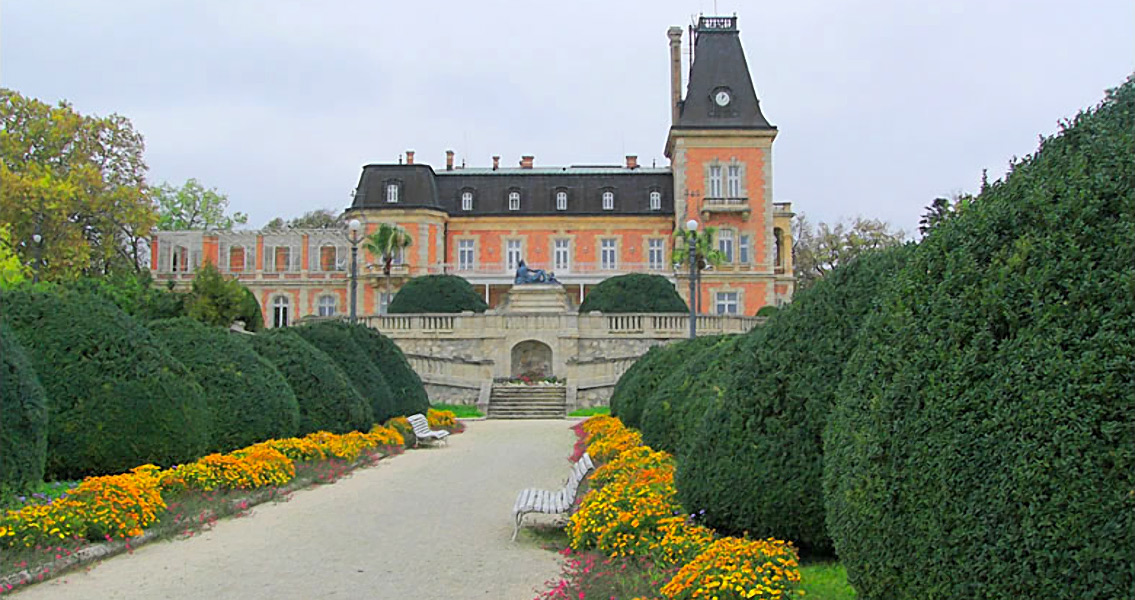
Radio Focus Varna. Other recently discovered artifacts unearthed during the excavations in Kastritsi include a Lydian stone, very rare in Bulgaria, which was used to test the carats of silver and gold coins and was an essential instrument in commercial dealings. Additionally, archaeologists unearthed a small anvil and a mold used to forge silver icons of the Virgin Mary, from the middle of the fourteenth century. Another mold, used to forge icons of Jesus Christ the Pantrokrator, was found during earlier work at the site. Researchers also discovered cattle, pig and lamb bones inside the kilns at the medieval inn, as well as tuna and turbot bones and fish hooks. The exposed parts of the medieval inn are located in Cape Yani, the same location that Tsar Ferdinand, the Third Bulgarian Tsardom ruler between 1887 and 1918, would watch the sea while sitting on a stone throne. The throne was later destroyed during construction of a breakwater in the Communist period. Many of the amazing discoveries found at the Kastritsi Fortress include coins: a hoard of 36 coins featuring Ottoman Sultan Bayezid I the Thunderbolt who ruled from 1389 until 1402, along with a cache of silver coins featuring his father Emir (Sultan) Murad I, who ruled between 1362 and 1389. Another coin unearthed at the site features Bulgarian Tsar Ivan Alexander (ruled 1331-1371) and Despot Dobrotitsa, ruler of the Principality of Karvuna in northeast Bulgaria (1347-1385). Coins from Egypt, Asia Minor, Italy, Wallachia and Poland have also been found. Archaeologists in Bulgaria have excavated over one-fifth of the Kastritsi Fortress site, part of which is open to the public. Images of the Inn can be found here: here Featured Image, Euxinograd Palace, Courtesy of Wikimedia Commons user: Dimcho Panayotov (Benkovski)]]>
Sci-Tech Today that this belief was shared by other pre-Hispanic people as well; like those who lived at Teotihuacan near Mexico City, where a water tunnel was also found. Sanchez Nava cited the allegorical meaning that water had for these cultures, as the cycle of life beginning and ending
Excavations began in 2012, when researchers using geo-radar detected underground anomalies in the area directly in front of the pyramid. Fearing a geological fault or hole that might cause the pyramid to settle or even collapse, they excavated the area and unearthed three layers of stone which had been carefully fitted to cover the top of the tunnel.
Arnoldo Gonzalez, an archaeologist at the site, told Sci-Tech Today that the same type of layered stone covering had been discovered in the floor of Pakal’s tomb inside the pyramid, adding that there doesn’t appear to be a connection between the tunnel and the tomb, although the conduit hasn’t been thoroughly explored because it’s too small for a person to crawl through. Most of the tunnel has been viewed using a robotic camera.
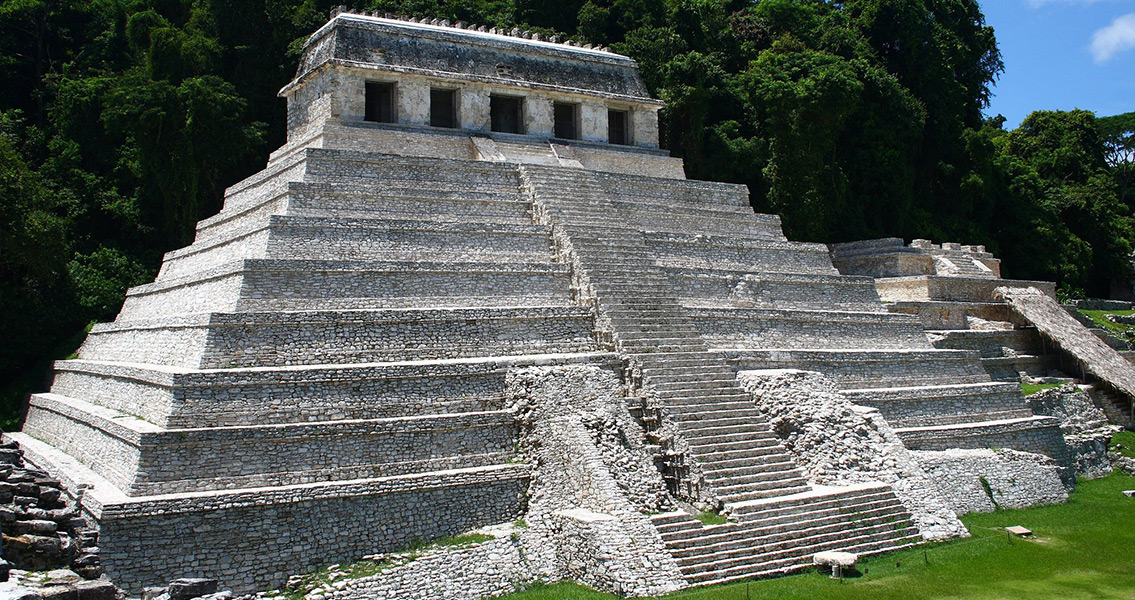
The Temple of Inscriptions was built as the funerary monument of Hanab-Pakal, the most famous ruler of Palenque. The temple is home to a glyphic text, the second longest from the Maya world, and records the city’s history from the fourth through the twelfth K’atun, a period of around 180 years.
In his 1968 book ‘Chariots of the Gods?’, author Erich von Daniken suggested that Pakal’s stance, as engraved on the lid of the stone sarcophagus lid, resembled the position astronauts take. Von Daniken also claimed that it looked like the ruler was seated in a contraption that had flames shooting out of it. Experts, however, say that the “flames” are actually depictions of the Maya’s “Tree of Life” or “World Tree” which, the Maya believed, had roots that reached into the underworld.
The Maya city of Palenque was at its peak during the seventh century. The Palenque ruins have been dated from 226 BCE to 799 CE. After it declined, the city was enveloped by the jungle of cedar, sapodilla, and mahogany trees. It has since been unearthed and restored, becoming a popular archaeological site that attracts thousands of visitors annually.
]]>
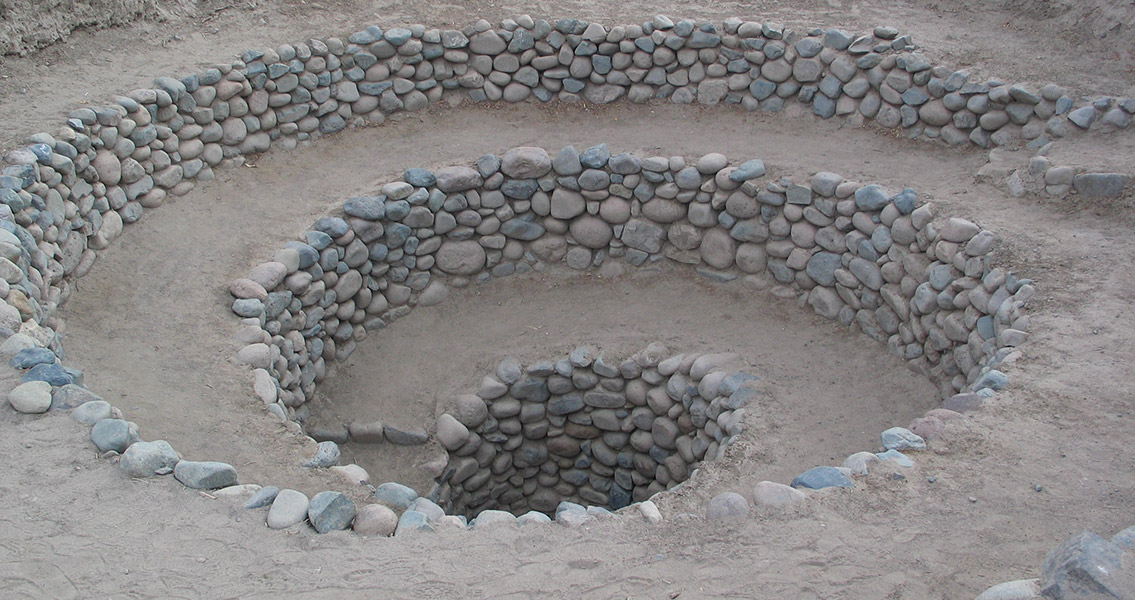
Ancient Nasca World: New Insights from Science and Archaeology. ]]>
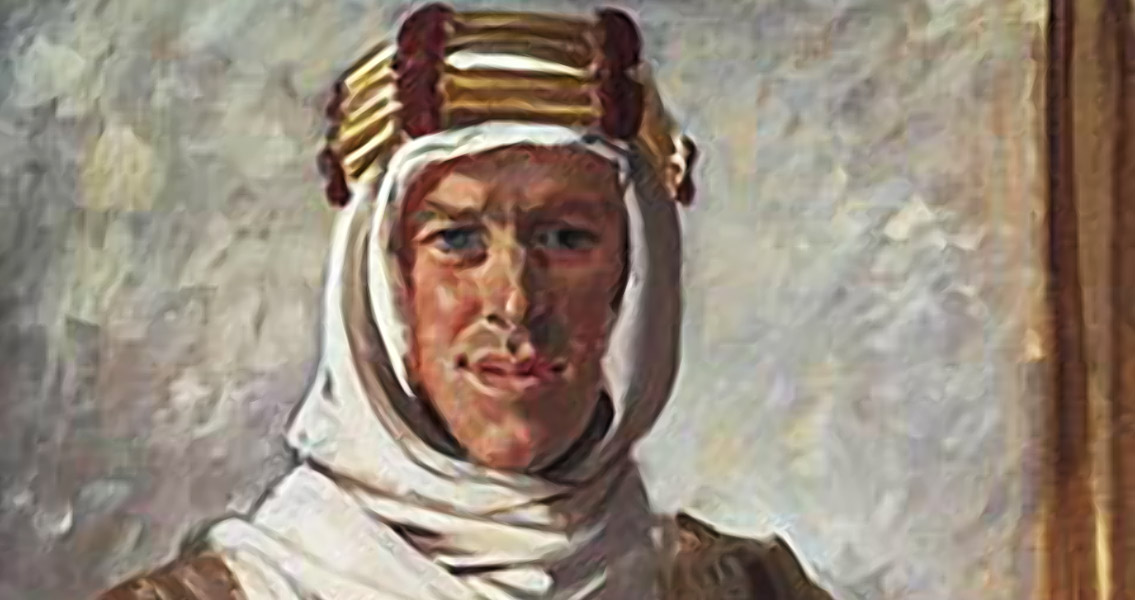
Seven Pillars of Wisdom. In a Bristol University press release one of the project leads, Professor Nicholas Saunders, said, “The bullet we found came from a Colt automatic pistol, the type of gun known to be carried by Lawrence and almost certainly not used by any of the ambush’s other participants.” Over the years the integrity of Lawrence’s portrayal of the rebel skirmishes and his role in them has been questioned, with many believing he had taken some dramatic license in Seven Pillars of Wisdom. However, archaeologists have found nothing at any of the excavation sites to debunk his story. Another project participant, Dr. Neil Faulkner, is quoted in the Bristol press release as saying “Lawrence has something of a reputation as a teller of tall tales, but this bullet – and the other archaeological evidence we unearthed during ten years of fieldwork – indicates how reliable his account of the Arab Revolt in Seven Pillars of Wisdom is.” Only two months previously another item related to the Hallat Ammar ambush, a nameplate from a Hejaz Railway engine, reappeared after being lost for nearly 80 years. In 1933, Lawrence gave the nameplate to his friend Vyvyan Richards’ family for safekeeping, and it remained with them after his death in 1935. The nameplate is inscribed in Ottoman Turkish and translates as “iron road”, that is “Hejaz Railway”. The Richards’ family tradition claims that Lawrence “souvenired” the nameplate from a train he attacked. The ambush of the Hallat Ammar train was a rare opportunity for such a souvenir to be acquired given the Turkish train actually had two locomotives instead of just one, and there would have been ample time to pry off a nameplate. In fact, the ambush was so stunningly successful it likely held more meaning to Lawrence than other attacks, and would have merited taking a souvenir. “It is extraordinary,” Professor Saunders added in the Bristol press release, “that after 100 years new discoveries like this are still being made, casting new light on a guerrilla war which helped reshape the Middle East after 1918 – the consequences of which we are still living with today.”]]>