Categories
Breaking News

History News of the Week – USS Indianapolis Discovered

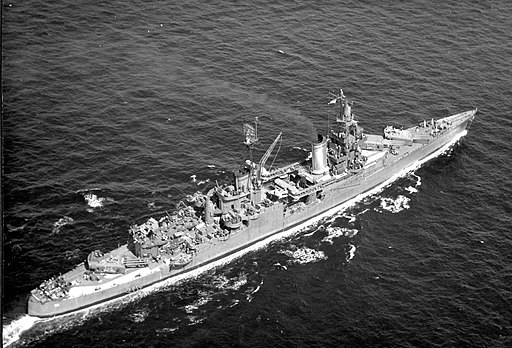
USS Indianapolis Shipwreck Discovered 72 years after its sinking, the wreckage of the USS Indianapolis has been discovered 18,000 feet beneath the surface of the Philippine Sea, according to the New York Times. In July 1945, in the final months of the Second World War, the USS Indianapolis was sunk by a Japanese torpedo, as it returned from a secret mission to deliver parts that were used in the atomic bomb dropped on Hiroshima. The ship’s sinking was the worst loss of life in the history of the US Navy. Of the 1,196 crew on board, just 316 were rescued. Although somewhere between 800 and 900 people escaped the sinking ship, no distress signal was sent. When the survivors were found by chance four days later in shark infested waters, just a fraction were left alive. On Saturday 19th September, a civilian team led by Paul G. Allen, the co-founder of Microsoft, announced that it had found unmistakable wreckage of the Indianapolis. They had been directed to the site by new research from a naval historian which determined a specific region of the ocean where the ship had been sited the night before its destruction. “To be able to honour the brave men of the USS Indianapolis and their families through the discovery of a ship that played such a significant role during World War Two is truly humbling,” Allen told the BBC. Ancient Pompeii’s Water Supply was Poisonous New research claims that the water transported through the pipelines of the ancient Roman city of Pompeii was probably poisonous on a scale that would have likely led to diarrhea, vomiting and liver and kidney damage for anyone who drank it. Kaare Lund, a chemist from the Southern University of Denmark (SDU), analysed water pipes from Pompeii and found high levels of the toxic element antimony, which he believes may have poisoned the drinking water. Antimony is acutely toxic, meaning it causes a quick reaction in anyone who consumes it. According to a statement from SDU, the element is particularly irritating to the bowels, and the reactions are excessive vomiting and diarrhea that can lead to dehydration. In severe cases it can also affect the liver and kidneys and, in the worst-case scenario, can cause cardiac arrest. Pompeii’s location, close to Mount Vesuvius, likely meant the concentration of antimony was higher there than elsewhere in the Roman Empire, as the toxic chemical element naturally occurs in groundwater close to volcanoes. Lund and colleagues’ findings have been published in the journal Toxicology Letters. Hannibal’s defeat and the rise of Rome written in coins Chemical analysis of Roman coins has found that the defeat of Hannibal led to a flood of wealth through the Empire from the silver mines of Spain. According to scientists, the discovery tracks Rome’s transition from regional power to empire. Regarded as a key event in European history, the Second Punic War saw Hannibal lead his formidable Carthaginian army across the Alps in 218 BCE in a failed assault on Rome. Hannibal’s defeat saw the Romans conquer the Iberian Peninsula, with the Romans slowly gaining control over the region’s lucrative silver mines circa 211 BCE. War reparations from Carthage combined with the revenue taken from the Spanish mines ultimately funded Rome’s rapid territorial expansion. The new geochemical analysis has now provided clear proof of the importance of the Spanish silver in funding Roman conquest. A group of scientists based in Germany and Denmark and led by Prof Fleur Kemmers and Dr Katrin Westner (Institute for Archaeological Sciences, Goethe University, Frankfurt) analysed 70 Roman coins dating from 310-300 BCE to 101 BCE, the period surrounding the Second Punic War. Using Mass Spectrometry, the team determined that the lead in the coins from after 209 BCE had distinctive isotope signatures which identified them as presumably originating from Spain. “Before the war we find that the Roman coins are made of silver from the same sources as the coinage issued by Greek cities in Italy and Sicily2. In other words the lead isotope signatures of the coins correspond to those of silver ores and metallurgical products from the Aegean region”, said Katrin Westner. “But the defeat of Carthage led to huge reparation payments to Rome, as well as Rome gaining high amounts of booty and ownership of the rich Spanish silver mines. From 209 B.C. we see that the majority of Roman coins show geochemical signatures typical for Iberian silver”. “This massive influx of Iberian silver significantly changed Rome’s economy, allowing it to become the superpower of its day. We know this from the histories of Livy and Polybius and others, but our work gives contemporary scientific proof of the rise of Rome. What our work shows is that the defeat of Hannibal and the rise of Rome is written in the coins of the Roman Empire.” ]]>
Categories
Breaking News

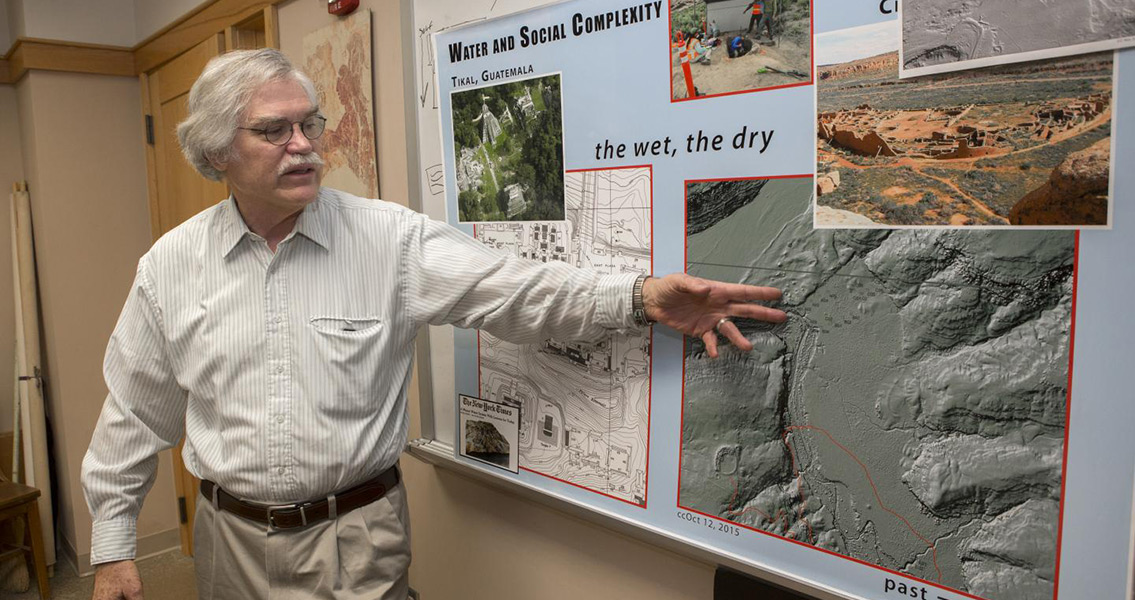
Maya and Ancestral Puebloans Providing Clues on World Water Crisis

Categories
Breaking News

Spectacular Irrigation Systems Revealed in Petra

Haaretz that the massive pool was the end point for a sophisticated aqueduct that fed water into Petra from a spring in the hills outside of the city. The ostentatious nature of the pool – and the exquisite gardens fed by the flowing water – would have sent a clear message to outsiders regarding how successful the Nabataeans were at providing water to the city, she added. Excavations within the city have found a shaft that seems to have funneled water at least 10 meters down, linking the aqueduct to the pool below. Scientists have likewise uncovered subterranean channels that would have provided support for runoff during the region’s rainy season, showcasing how the Nabataeans left nothing to chance. This seemingly unending array of underground water tanks, cisterns, ceramic pipes and channels would have done more than simply supply drinking water to those living in the desert city. In addition to naturally filtering the water, this system would have also made it possible to cultivate growth such as olives, grapes, fruit trees and other crops, and was so efficient that there was enough left over for a massive open-air pool surrounded by lavish gardens. With only 10 to 15 centimeters a year in rainfall, the flourishing of Petra is nothing short of miraculous. It was necessary to develop these advanced irrigation techniques, scientists say, or the city would have never been able to exist. These water preservation and filtration systems conserved every drop of rain that fell in or around Petra, which combined with the Nabataeans’ efforts in piping in fresh water from nearby springs, allowed the desert city to bloom in a remarkable way as early as the first century BCE, when the monstrously-large pool is thought to have been built. Images of the recent excavations can be found here]]>

Categories
Breaking News

Water Tunnel Under Palenque Pyramid Was a Conduit to the Underworld

Sci-Tech Today that this belief was shared by other pre-Hispanic people as well; like those who lived at Teotihuacan near Mexico City, where a water tunnel was also found. Sanchez Nava cited the allegorical meaning that water had for these cultures, as the cycle of life beginning and ending Excavations began in 2012, when researchers using geo-radar detected underground anomalies in the area directly in front of the pyramid. Fearing a geological fault or hole that might cause the pyramid to settle or even collapse, they excavated the area and unearthed three layers of stone which had been carefully fitted to cover the top of the tunnel. Arnoldo Gonzalez, an archaeologist at the site, told Sci-Tech Today that the same type of layered stone covering had been discovered in the floor of Pakal’s tomb inside the pyramid, adding that there doesn’t appear to be a connection between the tunnel and the tomb, although the conduit hasn’t been thoroughly explored because it’s too small for a person to crawl through. Most of the tunnel has been viewed using a robotic camera. The Temple of Inscriptions was built as the funerary monument of Hanab-Pakal, the most famous ruler of Palenque. The temple is home to a glyphic text, the second longest from the Maya world, and records the city’s history from the fourth through the twelfth K’atun, a period of around 180 years. In his 1968 book ‘Chariots of the Gods?’, author Erich von Daniken suggested that Pakal’s stance, as engraved on the lid of the stone sarcophagus lid, resembled the position astronauts take. Von Daniken also claimed that it looked like the ruler was seated in a contraption that had flames shooting out of it. Experts, however, say that the “flames” are actually depictions of the Maya’s “Tree of Life” or “World Tree” which, the Maya believed, had roots that reached into the underworld. The Maya city of Palenque was at its peak during the seventh century. The Palenque ruins have been dated from 226 BCE to 799 CE. After it declined, the city was enveloped by the jungle of cedar, sapodilla, and mahogany trees. It has since been unearthed and restored, becoming a popular archaeological site that attracts thousands of visitors annually. ]]>

Categories
Breaking News

2,000-Year-Old Aqueduct Unearthed in Jerusalem

livescience.com that the aqueduct was initially just an open channel that flowed along a gentle slope, ensuring that the water level only declined by about a metre for every kilometre. The open channel remained in active use until about 500 years ago. During the Ottoman rule over the region a terracotta pipe was placed along the channel to keep the water clean. It was one of the main sources of water for the city of Jerusalem, which explains why it was taken good care of over such a long time. A century ago, however, the aqueduct was replaced by an electric water supply system. Now, the pipe will be studied more closely by the Israeli Antiquities Authority, with sections of it eventually being exposed and turned into a tourist attraction. The same has been done with some already uncovered sections of the aqueduct in the city, while others have been sealed to ensure they are better protected “for the sake of future generations”, according to the official statement of the IAA. The Hasmonean dynasty ruled the ancient state of Judea from 142 BCE until the Roman conquest in 63 BCE. It won control over the land from the Hellenistic Seleucid dynasty, which had sought to establish Hellenistic culture in Judea. The locals were prohibited from practising their religion, which led to a revolt in 166 BCE headed by Mattathias, a member of the Hasmonean family. The revolt succeeded and the Jews re-entered Jerusalem and purified Solomon’s Temple, the greatest hallmark of Judaism, which had been desecrated by the Seleucids. The victory, the first in a series that led to the independence of Judea, is traditionally celebrated during Hanukkah. Solomon’s Pools and the system of aqueducts that brought water from the reservoirs to the south of the country became necessary during the Second Temple Period, between about 530 BCE and 70 CE, after a second temple besides Solomon’s was built in Jerusalem and the number of pilgrims coming to the city increased considerably. In addition to the three pools, the water supply system included two aqueducts that fed the reservoirs and another three that distributed water from the reservoirs to Jerusalem and Herodium. Their overall length was 80 km. Parts of the system, which was refined and expanded during the Roman era in Judea, continued to be in use until as recently as 1967.]]>