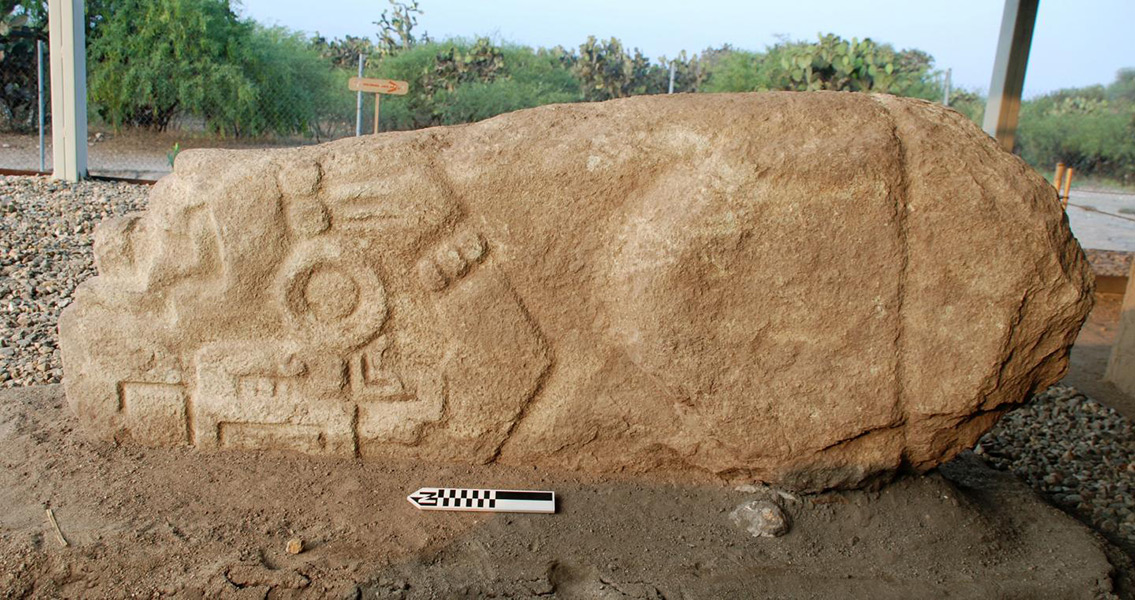
here Featured image, showing pre-1965 graffiti on the Cochno Stone, is courtesy of University of Glasgow]]>

here Featured image, showing pre-1965 graffiti on the Cochno Stone, is courtesy of University of Glasgow]]>
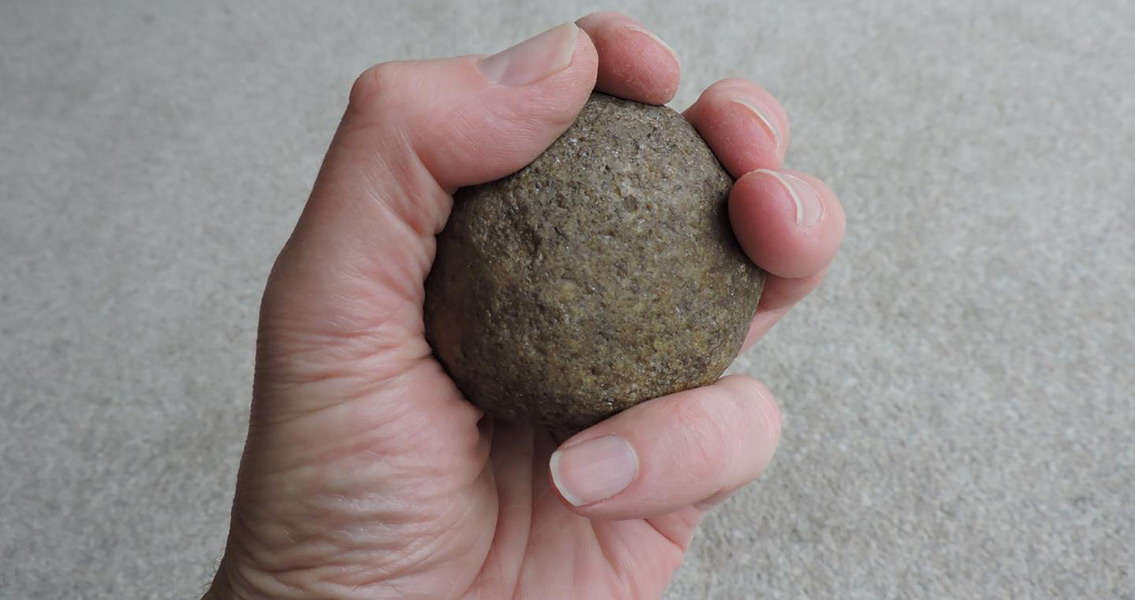
Science Reports. The team combined knowledge about how modern humans perceive an object’s ‘throwing affordance’ with mathematical analysis of the objects’ effectiveness as projectiles, to reach their conclusion. “Our study suggests that the throwing of stones played a key role in the evolution of hunting,” said Indianna University Bloomington professor Geoffrey Bingham, an author of the study, in a press release. “We don’t think that throwing is the sole, or even primary, function of these spheroids, but these results show that this function is an option that warrants reconsidering as a potential use for this long-lived, multipurpose tool.” A theoretical framework and computational tools developed at the Perception/Action lab at IU were the basis for the team’s conclusions. Bingham, the lab’s director, investigates human coordinated action and perceptual abilities. Part of this involves looking at throwing affordance: selecting the best object in terms of size, weight and shape for throwing at the greatest speed and distance, and causing the most damage. 55 ball shaped objects from the South African site were analysed in the lab. The team found that 81 percent of the stone balls were the optimal size, weight and shape to hit a target 25 metres away. Each of the stones is about the size of a tennis ball, but significantly heavier. In addition, the team simulated the motion the objects would undergo if thrown by an expert and the probability of causing damage to medium sized prey, such as an impala. Previous research on biomechanics and perception has shown that a human’s shoulder joint and visual perception are uniquely specialised for throwing objects at targets around 30 metres away. “Humans are the only animals — the only primates even — with that talent,” Bingham explained. “We can throw something to hit something else — like a quarterback throwing to the running back all the way down the field. That’s how in large measure we survived the ice ages. The available food was largely on hoof, or it was ‘mega-fauna,’ such as a mammoth. You don’t want to get close to them.” According to the team’s paper, most of the objects studied had weights that produce optimal levels of damage when thrown at prey. This puts serious doubt on the idea that they had been fashioned solely as simple percussive tools, which tend to be made to be as heavy as possible. “Imagine a human, searching for an object to throw so as to cause the most damage possible to potential prey or a competitor,” said Andrew Wilson of Beckett Leeds University in England, the study’s lead author. “This is a perceptual task: the person needs to perceive throwing-relevant properties of objects and be able to discriminate between objects that vary in those properties.” Bingham, along with former students and other colleagues, has been studying the complex mechanics of throwing for decades. He is in little doubt as to how significant it has been to human evolution. “The ability to throw great distances was not a small thing. It was how we got lunch.” For more information: www.nature.com Image courtesy of Judy Maguire]]>
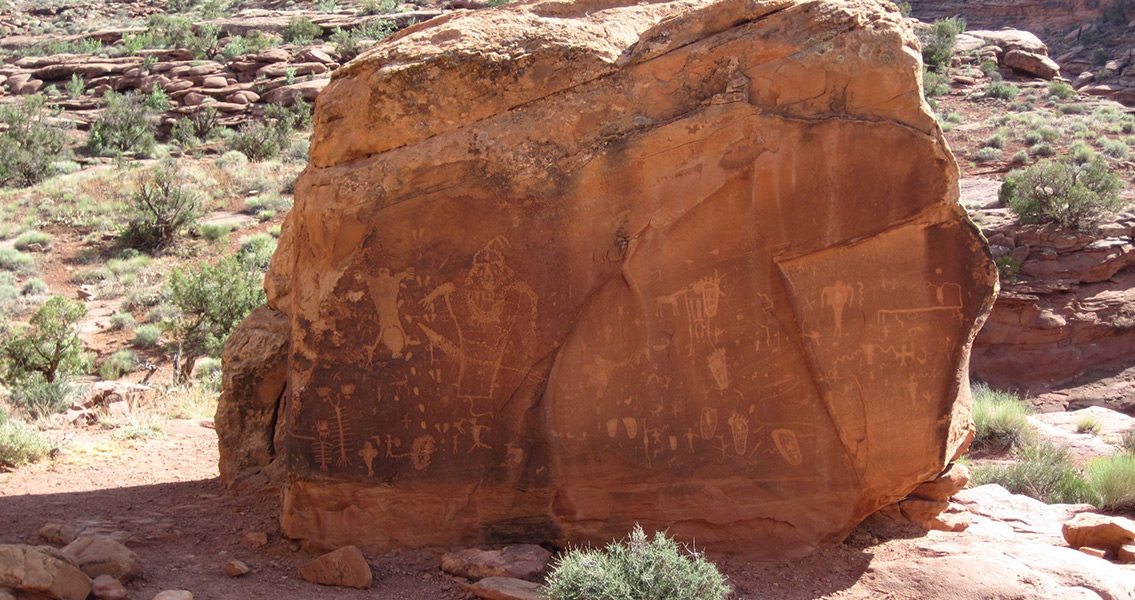

Homo floresiensis from Flores, which is just south of Sulawesi. Similar to the island of Flores where the Homo floresiensis (sometimes called ‘Hobbit’) fossils were first found over a decade ago, Sulawesi may have been a natural lab for human evolution in an isolated condition. Initially, the age of the artifacts was unknown and the early attempts to date them failed to give researchers a definitive answer. At the CAS, colleagues of Dr van den Bergh used the latest technique of luminescence dating for feldspars minerals. Feldspar is a group of minerals distinguishable by the silica and alumina present in their chemistry, the most abundant group of minerals on the planet. Known as multiple elevated temperature post-infrared stimulated luminescence (MET-pIRIR) the technique analyzed the sediment layer the artifacts were discovered in. The research is part of a collaboration between the late professor Mike Morwood who led the team responsible for the ‘Hobbit’ find on Flores, and the Geological Agency of Indonesia. Dr van den Bergh was part of Professor Morwood’s research team at the time of H.floresiensis‘ discovery. The research is being supported by ARC grants and funds from the Geological Agency of Indonesia. Image courtesy of Wikimedia Commons user: Olaf Studt ]]>


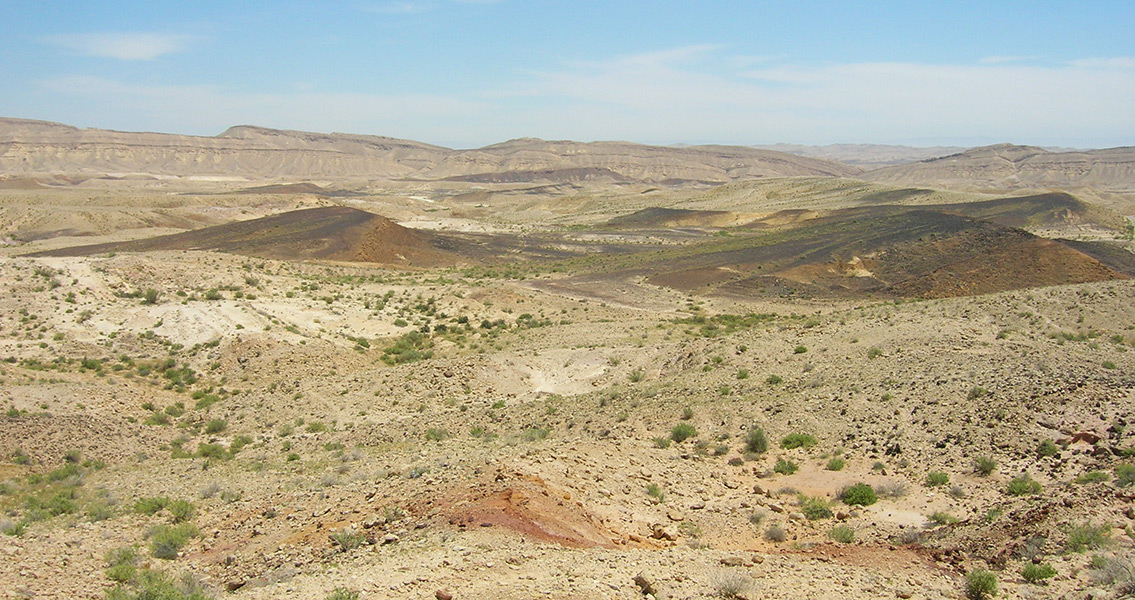
Image courtesy of Wikimedia commons user: http://upload.wikimedia.org/wikipedia/commons/c/cc/Negev_Geology%2C_Large_Makhtesh_Crater%2C_Negev_Desert%2C_Israel_%28469188863%29.jpg]]>

