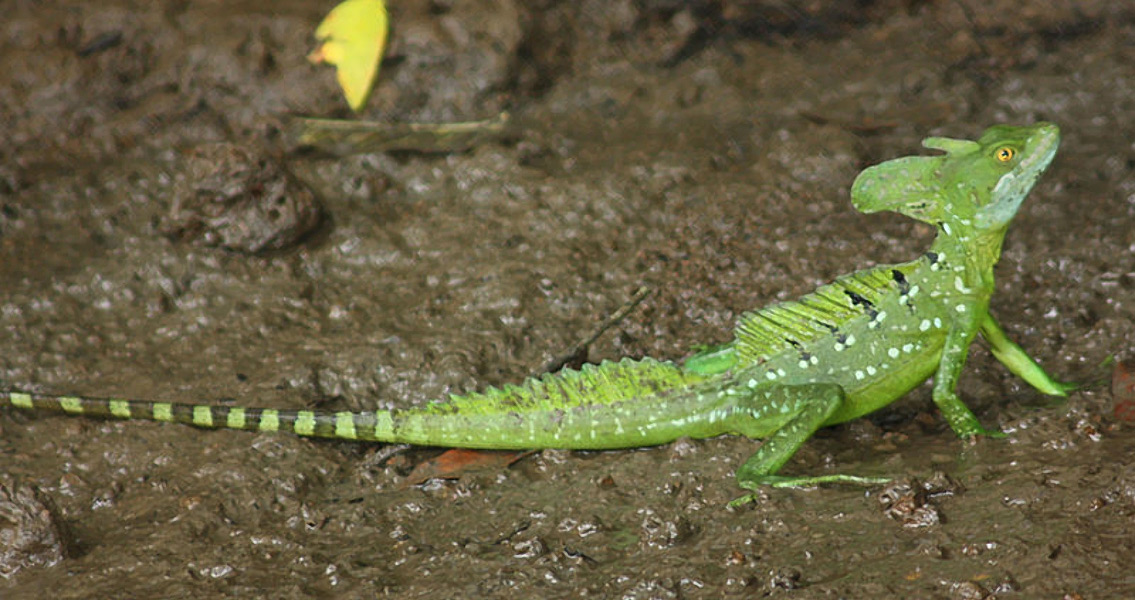
Babibasiliscus alxi and suggested it may have been the first representative of the Jesus lizard family. He said in a press release the lizard was probably active during the day and lived mostly in trees. A bone ridge on the top of its head provided shade from the sun and at the same time probably made it look constantly angry. It had small teeth that ended in three points, suggesting its usual diet included anything from snakes and other lizards to fish, insects, and even plants. However, it also had wide cheekbones, so it is possible that it ate larger animals as well. The basilisk family, which also includes chameleons and iguanas, is among the least studied representatives of the reptile world because there are not many fossils that scientists can study. Today these lizards live across North America, in Central America and as far down south as Ecuador. They are collectively called casquehead lizards, or helmeted lizards, because of the ridge they have on their heads – in some species on just the males, and in others on both females and males. In naming this ancient ancestor of today’s Jesus lizards, Conrad said he had honored an indigenous people from Wyoming, the Shoshone, in whose language “babi” means cousin; pointing to the kind of genetic relationship the ancient species has to modern-day Jesus lizards. These reptiles are called that because of their ability to run across the surface of water over short distances. Based on the fossil record it has previously been suggested that at some point, around 50 million years ago, mid and even high latitudes were characterised by tropical climate but as the weather started cooling down, these heat and humidity loving species moved south. According to Conrad, any evidence of these developments can be useful for the future as it may, he says, “give us an idea of what to expect from our dynamic Earth”, especially at this point in time, when the planet is undergoing another period of global warming. For more information: “A New Eocene Casquehead Lizard (Reptilia, Corytophanidae) from North America. Image courtesy of Wikimedia Commons user: Charlesjsharp]]>