Categories
Breaking News

How intense Ice Age fishing led to the invention of pottery as we know it

Jōmon pottery from the Kanagawa Prefecture, Japan. Credit: Nara National Research Institute for Cultural Properties.[/caption] Examined over a course of three years by researchers from Japan, the Netherlands, Sweden and the University of York’s BioArCh, the findings indicate that ceramics were used by our gatherer-hunter ancestors to initially store and process fish. As fishing techniques evolved and intensified, the range extended to include shellfish, freshwater and marine fish and even mammals. Until recently, ceramic vessels were associated with the arrival of farming. This study, however, debunks that theory. We now know that pottery was a much earlier gatherer-hunter innovation, and was used for the consumption of fish. Professor Oliver Craig, from the Department of Archaeology and Director of the BioArCh research centre at York, who led the study, said: “Our results demonstrate that pottery had a strong association with the processing of fish, irrespective of the ecological setting.” Some of the pottery dates from the end of the Late Pleistocene period: a time when our ancestors were navigating glacial conditions. Other ceramics included in the study are from the post-glacial period, when the climate reached a level close to our current temperature, allowing pottery to be produced in a much greater quantity. Craig continues: “Contrary to expectations, this association remained stable even after the onset of warming, including in more southerly areas, where expanding forests provided new opportunities for hunting and gathering. “The results indicate that a broad array of fish was processed in the pottery after the end of the last Ice Age, corresponding to a period when hunter-gatherers began to settle in one place for longer periods and develop more intensive fishing strategies. [caption id="attachment_8832" align="aligncenter" width="634"] A reconstructed early pottery vessel from Torihama, Japan, dating to the end of the Late Pleistocene (ca 12,000 years old). Chemical analysis revealed that such vessels were used to process fish during the late Glacial period. Credit: Wakasa History and Folklore Museum, Fukui, Japan[/caption] “We suggest this marks a significant change in the role of pottery of hunter-gatherers, corresponding massively increased volume of production, greater variation in forms and sizes and the onset of shellfish exploitation.” Researchers used advanced technologies to recover diagnostic lipids from the charred surface deposits of the vessels. Most of the compounds derive from the processing of freshwater or marine organisms. Because of findings like this, we now know that ceramics played a key role in the ways pre-historic gatherer-hunters consumed fish. Lead author, Dr Alex Lucquin, from BioArCh, Department of Archaeology, University of York, said: “Thanks to the exceptional preservation of traces of animal fat, we now know that pottery changed from a rare and special object to an every-day tool for preparing fish. “I think that our study not only reveals the subsistence of the ancient Jomon people of Japan but also its resilience to a dramatic change in climate.” Dr Simon Kaner, from the University of East Anglia, who was also involved in the study, added: “The research highlights the benefits of this kind of international collaboration for unlocking some of the big questions about the human past, and the potential of engaging with established research networks as created by the Sainsbury Institute over the years.”]]>

Categories
Breaking News

Humans left Africa 270,000 years earlier than we thought

One of the tools from the discovery site in Shangchen, China. Credit: Professor Zhaoyu Zhu[/caption] Prior to this discovery, the earliest evidence of humanity outside Africa was a collection of skeletal remains and stone tools found in Dmanisi, Georgia, which have been dated to 1.85 million years ago – 270,000 years after the new discovery in Shangchen in the southern Chinese Loess Plateau. The research, published in the journal Nature, also suggests that the ancient humans returned to the same site repeatedly, possibly for hunting. The collection includes a notch, scrapers, cobble, hammer stones and pointed pieces. Each item shows sign of human use. The hammer stones, for instance, had been intentionally flaked. Fragments of animal bones that would have been contemporaneous with the items were also found. Most of the artefacts were made of quartzite and quartz, suggesting that the materials were sourced from the foothills and streams of the Qinling Mountains around 5 to 10 kilometres from the site. [caption id="attachment_8815" align="aligncenter" width="425"] The extensive collection of 2.1 million years old artefacts is causing archaeologists to reconsider the overall story of human migration. Credit: Professor Zhaoyu Zhu[/caption] Because the 96 stone artefacts were found in 17 different layers of fossil soils that had developed over a period of one million years, we now know that early humans occupied the Chinese Loess Plateau under varying climatic conditions between 1.2 and 2.12 million years ago. Professor Dennell says: “Our discovery means it is necessary now to reconsider the timing of when early humans left Africa.” The find “may add a new chapter to the story of hominin evolution, suggesting that some of these species left Africa far earlier than once believed and managed to travel over 8,000 miles east of their evolutionary birthplace,” The New York Times reports. The age of the tools “suggests that the hominins who made them were neither tall nor big-brained. Instead, they may have been small bipedal apes, with brains about the size of a chimpanzee’s.” Michael Petraglia, a paleoanthropologist at the Max Planck Institute for the Science of Human History comment:S “The implications of all this are large. We must re-evaluate our understanding of human prehistory in Eurasia.”]]>

Categories
Breaking News

3,000 year old funeral rituals show earliest evidence of human hair dye

Early funeral rituals: mysteries revealed A collaborative excavation from the University of Granada in Spain, the University of Tübingen in Germany and the University of Cambridge in the United Kingdom has uncovered around one hundred bodies; many of which have been affected by hitherto undiscovered funeral rituals, including hair that has been dyed red. The bodies were uncovered in a Biniadris Cave, which would have been frequented by different societies over a period of between 3,300 and 2,600 years ago.   [caption id="attachment_8737" align="aligncenter" width="500"] View of the entrance to Biniadris Cave in Menorca. Credit: University of Granada[/caption]

Hair dye and its symbolic value

Two archaeological researchers from the University of Granada, Dr. Eva Alarcón García and Dr. Auxilio Moreno Onorato, have written: “Evidently, the red tufts of hair must have had symbolic value for these social groups. They were perfectly cut and deposited in containers of varying sizes that were made of different materials (metal, leather and even wood), which were then hidden in specific parts of the cave.” [caption id="attachment_8738" align="aligncenter" width="500"] Remains discovered in Biniadris Cave, Menorca. Credit: University of Granada[/caption]

A unique combination of funeral rituals

As well as colouring the deceased’s hair red, members of this society practiced a collection of funeral rituals that reflect their local religion and its symbolism. For example, the researchers found that the bodies were usually placed in the centre of the cave, where they were surrounded by ceramic fragments. Trepanation, a symbolic act in which a hole is drilled into the skull of the deceased, was also practiced on many of the bodies. Dr. Eva Alarcón García notes: “There are no precedents for these kinds of social practices in the Iberian Peninsula and they are unique to the Balearic Islands. The buried were placed in the middle of the cave and a variety of elements were used during the rituals, such as plant materials (branches and trunks), ceramic vessels that must have played an important role given the degree of fragmentation they exhibit, iron oxide ores (‘ochre’), etc.”  

Ritualistic attire for Menorca’s deceased

The team of archaeologists also found that many of the bodies were dressed up in ritualistic attire. Needles, fabric and ancient V-perforated buttons made from bones and wild boar tusks were discovered in the cave, close to the bodies. The remains of the hairs and fabric are currently being studied through carbon-14 dating at the University of Cambridge. “Undoubtedly, the findings at the Biniadris Cave will raise many questions and pave the way for new lines of research, not only from archaeological perspectives but also from anthropological ones. For now, the main objective of the research is to solve the enigmas presented by these mysterious funeral rituals performed long ago in the Biniadris Cave,” they conclude.]]>

Categories
Breaking News

History of Human Migration to be Rewritten? – The History News of the Week

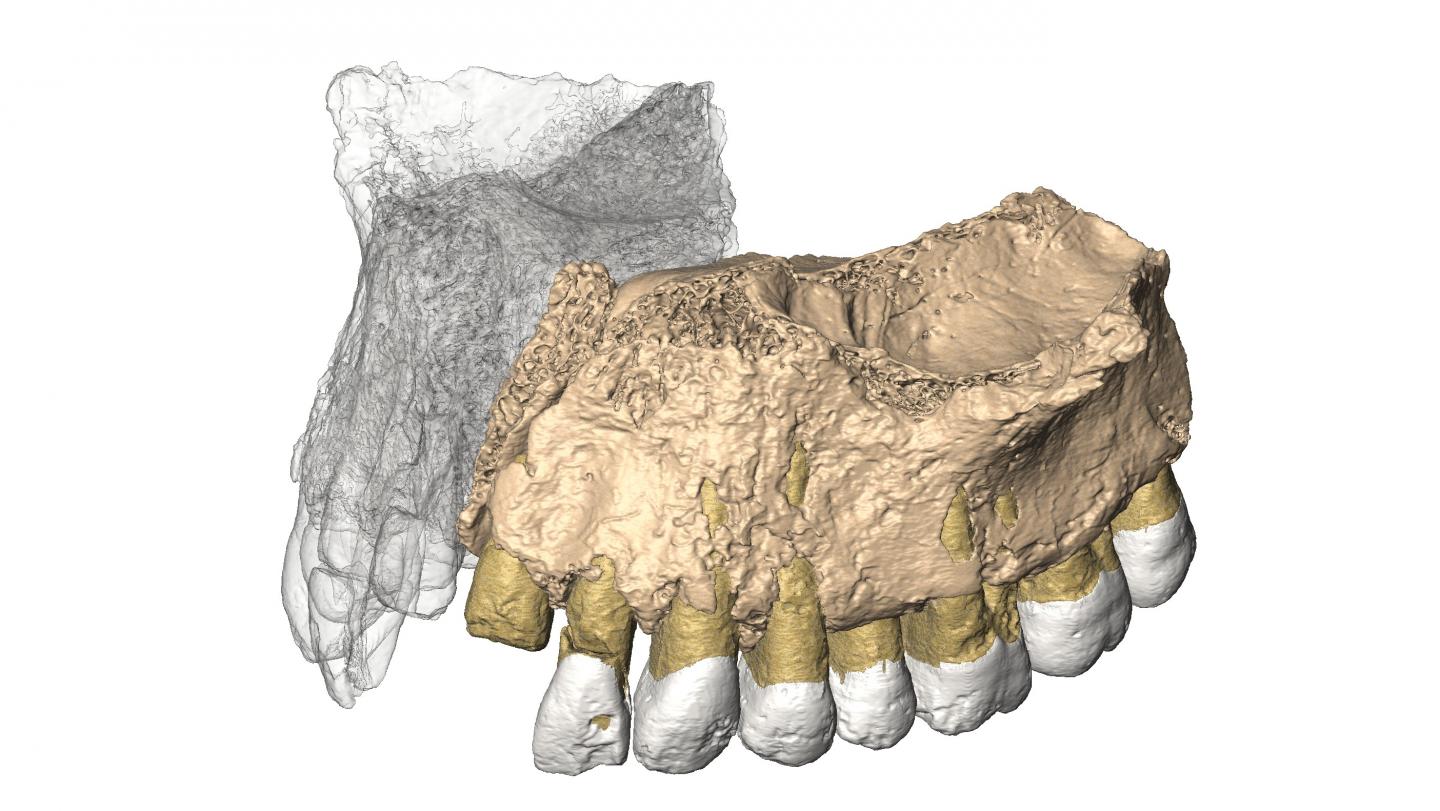
Science. According to Hershkovitz, the findings provide new context for a range of other recent discoveries. “Our research makes sense of many recent anthropological and genetic finds,” Prof. Hershkovitz said. “About a year ago, scientists reported finding the remains of modern humans in China dating to about 80,000-100,000 years ago. This suggested that their migration occurred earlier than previously thought, but until our discovery at Misliya, we could not explain it. “Numerous different pieces of the puzzle — the occurrence of the earliest modern human in Misliya, evidence of genetic mixture between Neanderthals and humans, modern humans in China — now fall into place,” he continued. Horse Skeleton in South Florida Museum Horse Evolution Mystery Solved? The genetic ancestors of the modern horse were animals with five toes. Generally, it is believed that horses evolved to have fewer digits, but new research is challenging that theory and arguing that remnants of the five toes are still present in modern hooves. Humans and horses actually evolved from the same common ancestor, a creature with five digits. As a consequence of living on open grassland, horses adapted to move across these plains. Scientist’s widely believe that this adaption saw horses evolve to have fewer digits. The first horse only had four digits, its later descendant had three, while modern horses have just a central digit, known as the metacarpal. In research published in a recent issue of Royal Society Open Science, a team of scientists are proposing that rather than horses simply losing four digits, all five merged to form the compacted forelimbs with hooves seen today. Currently, scientists accept that splints, small bones found along the outer sides of the metacarpal in modern horses, are partially formed remnants of second and fourth digits. Tapering mid-way down the metacarpal, these fragments were inherited from an earlier ancestor, but ceased to develop into fully formed digits in modern horses. The authors of the new paper claim that this theory is incomplete, failing to account for the animals’ first and fifth digits. “With a distinct surface from the metacarpal, we know the splints on today’s horses to be the remnants of the second and fourth digits,” said Nikos Solounias, a paleontologist from New York Institute of Technology (NYITCOM) and an author on the study. “However, these partially formed digits also appear to contain their own elevated surfaces which hold additional evolutionary clues. We find these ridges, located on the posterior of each splint, to be the partially formed remains of the first and fifth digits, which were once connected to the cartilages of the hoof.” Key to the research are the famous Laetoil footrprints in Tanzania, which show that the famous, eight-million-year-old horse known as Hipparion primigenium walked alongside early humans and had three digits. According to a NYITCOM statement, Solounias analysed the footprints and came to the conclusion that Hipparion actually had five compacted toes, the forelimb divided into five sections – suggesting the small toes had binded together. “Interestingly, we not only find hints of the missing digits on the modern horse, but also its ancestors, such as Hipparion and Mesohippus, two species believed to have three toes,” said Solounias. Neurovascular evidence has provided further support to the NYITCOM researchers’ theory, with dissections of modern equine foetus forelimbs revealing a greater number of arteries and nerves than would be expected in a single digit. “If today’s horse does indeed have one digit per forelimb, we would expect each forelimb to have a total of two veins, two arteries, and two nerve bundles,” said Melinda Danowitz, a recent NYITCOM graduate who worked with Solounias on the study. “However, our dissections found between five and seven neurovascular bundles per forelimb, suggesting that additional toes begin to develop, but do not become fully differentiated.” King Ramses Statue Moved to New Home A colossal, 83 tonne, 3,200 year old statue of the Ancient Egyptian King Ramses II has been moved to a new home, according to Reuters. The complex operation, which saw the statue moved 400m to Cairo’s new Grand Egyptian Museum, required army engineers and specialist contractors. Reuters reports that the statue was put inside a cage, mounted on a truck and suspended from a steel beam to help reduce the impact of any jolts during the journey. Road surfaces on the route were treated with special materials to ensure they could adequately take the massive weight of the statue. The entire operation cost 13.6 million Egyptian pounds ($770,000). The statue was first discovered at the Mit Rahina archaeological site in 1820. Brought to Ramses Square in Cairo in 1955, it was moved again in 2006 due to pollution and congestion, according to Reuters. It was placed in a storage area away from public view, until now. It will be the first site visitors to the Grand Egyptian Museum will see. The museum is set to partially open this year, before its full launch in 2022. Featured image: Reconstruced maxilla from microCT images of the jawbone discovered in Israel. Image credit: Gerhard Weber, University of Vienna, Austria]]>
Categories
Breaking News

Neanderthals Never Had a Chance – The History News of the Week

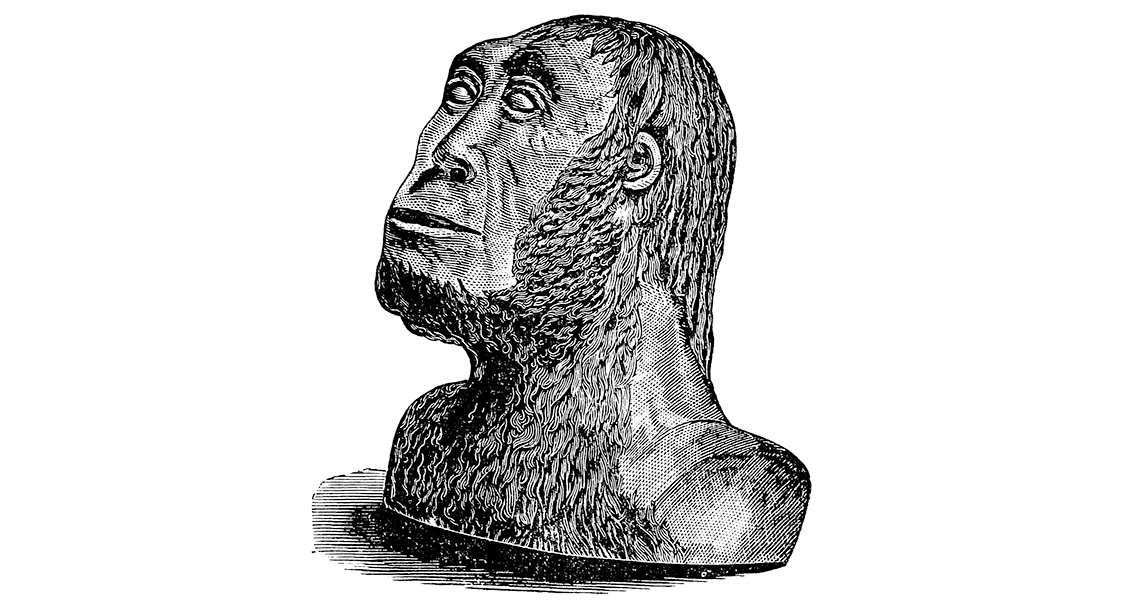
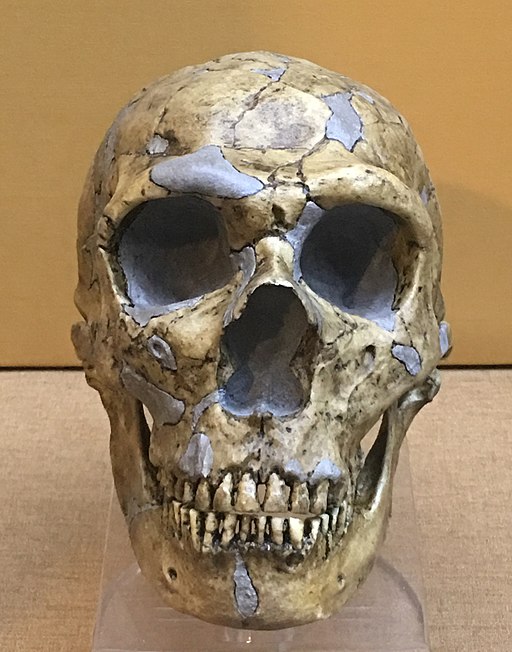
Neanderthals Were Always Doomed A new study, published this week in the journal Nature Communications, claims the Neanderthals were doomed the moment humans entered Eurasia. Scientists have long been trying to determine the cause of the Neanderthals’ extinction. Theories have ranged from the spread of humans providing too much resource competition for the Neanderthals’ to survive, to climate change or fundamental genetic limitations. The latest study suggests that the Neanderthals’ fate was inevitable. The Stamford University scientists used computer modelling to show that the migration of modern humans from Africa into Asia meant humans were always going to eventually replace Neanderthals, whatever factors might have played a role in the species’ collapse. “Here we show that a scenario of migration and selectively neutral species drift predicts the Neanderthals’ replacement,” the authors write in the introduction to their study. Neanderthals inhabited Eurasia for over 300,000 years, yet within 15,000 years of the arrival of modern humans to the region, our closest extinct living relatives were extinct. “We suggest that although selection and environmental factors may or may not have played a role in the inter-species dynamics of Neanderthals and modern humans, the eventual replacement of the Neanderthals was determined by the repeated migration of modern humans from Africa into Eurasia,” the authors write. “Our simple model suggests that recurring migration from Africa into the Levant and Europe—even at a low rate—was sufficient to result in the Neanderthals’ replacement even if neither species had a selective advantage over the other, and regardless of possible differences in population size between the two species.” Fossils of Humans’ Oldest Ancestors Discovered in Southern England Fossils of the oldest mammals from the line that led to mankind have been discovered on England’s Jurassic Coast. The small, rat like mammals lived 145 million years ago, at the time of the dinosaurs, and are the ancestors of most mammals alive today – from humans to blue whales. A team of researchers led by Dr Steve Sweetman from the University of Portsmouth identified the two fossilised teeth of the creatures found on the Dorset coast. Portsmouth graduate student Grant Smith made the initial discovery. “Grant was sifting through small samples of earliest Cretaceous rocks collected on the coast of Dorset as part of his undergraduate dissertation project in the hope of finding some interesting remains. Quite unexpectedly he found not one but two quite remarkable teeth of a type never before seen from rocks of this age. I was asked to look at them and give an opinion and even at first glance my jaw dropped,” Dr Sweetman explained in a University of Portsmouth press release. “The teeth are of a type so highly evolved that I realised straight away I was looking at remains of Early Cretaceous mammals that more closely resembled those that lived during the latest Cretaceous – some 60 million years later in geological history. In the world of palaeontology there has been a lot of debate around a specimen found in China, which is approximately 160 million years old. This was originally said to be of the same type as ours but recent studies have ruled this out. That being the case, our 145-million-year-old teeth are undoubtedly the earliest yet known from the line of mammals that lead to our own species.” According to Dr Sweetman, the animals were likely furry, nocturnal creatures. He believes the smaller one may have eaten insects and could have been a burrower, while the larger may have eaten plants as well as insects. “The teeth are of a highly advanced type that can pierce, cut and crush food. They are also very worn which suggests the animals to which they belonged lived to a good age for their species. No mean feat when you’re sharing your habitat with predatory dinosaurs.” The teeth were recovered from exposed rocks in cliffs near Swanage, a site which has yielded thousands of fascinating fossils in the past. According to Smith’s supervisor, Dave Martill, a professor of Biology at the University of Portsmouth, it quickly became apparent that they’d discovered something remarkable. “We looked at them with a microscope but despite over 30 years’ experience these teeth looked very different and we decided we needed to bring in a third pair of eyes and more expertise in the field in the form of our colleague, Dr Sweetman. “Steve made the connection immediately, but what I’m most pleased about is that a student who is a complete beginner was able to make a remarkable scientific discovery in palaeontology and see his discovery and his name published in a scientific paper. The Jurassic Coast is always unveiling fresh secrets and I’d like to think that similar discoveries will continue to be made right on our doorstep.” A study detailing the findings has been published in the journal Acta Palaeontologica Polonica. Ancient Egyptian Papyri Ink Contained Copper The black ink used by Ancient Egyptian scribes contained copper, according to new analysis by the University of Copenhagen of 2,000-year-old papyri fragments. It’s generally been assumed that writing ink was primarily carbon-based until the fourth and fifth centuries CE, but by carrying out X-ray microscopy on the fragments, the Danish researchers have shown that copper, an element never before identified in ancient ink, was used. Intriguingly, even though the papyri fragments were written over a period of three centuries and originate from different regions, the team’s results did not show much variation. “The composition of the copper-containing carbon inks showed no significant differences that could be related to time periods or geographical locations, which suggests that the ancient Egyptians used the same technology for ink production throughout Egypt from roughly 200 BCE to 100 CE,” said Egyptologist and first author of the study Thomas Christiansen from the University of Copenhagen. Private papers of an Egyptian soldier named Horus, who was stationed at a military camp in Pathyris, and the Tebtunis temple library, were the two primary sources of the papyri. The fragments all formed parts of larger manuscripts which are currently part of the Carlsberg Collection at the University of Copenhagen. “None of the four inks studied here was completely identical, and there can even be variations within a single papyrus fragment, suggesting that the composition of ink produced at the same location could vary a great deal. This makes it impossible to produce maps of ink signatures that otherwise could have been used to date and place papyri fragments of uncertain provenance,” explains Christiansen. “However, as many papyri have been handed down to us as fragments, the observation that ink used on individual manuscripts can differ from other manuscripts from the same source is good news insofar as it might facilitate the identification of fragments belonging to specific manuscripts or sections thereof.” The researchers suggest that their findings, which have been published in the journal Scientific Reports, could also greatly aid conservation efforts of ancient Papyri. Featured Image: Homo neanderthalensis skull – a hominid fossil reconstruction in the Beijing Museum of Natural History – China, July 2017. Image courtesy of Wikimedia Commons user: Bjoertvedt ]]>

Categories
Breaking News

History News of the Week – Does an Ancient Petroglyph Depict a Total Eclipse?

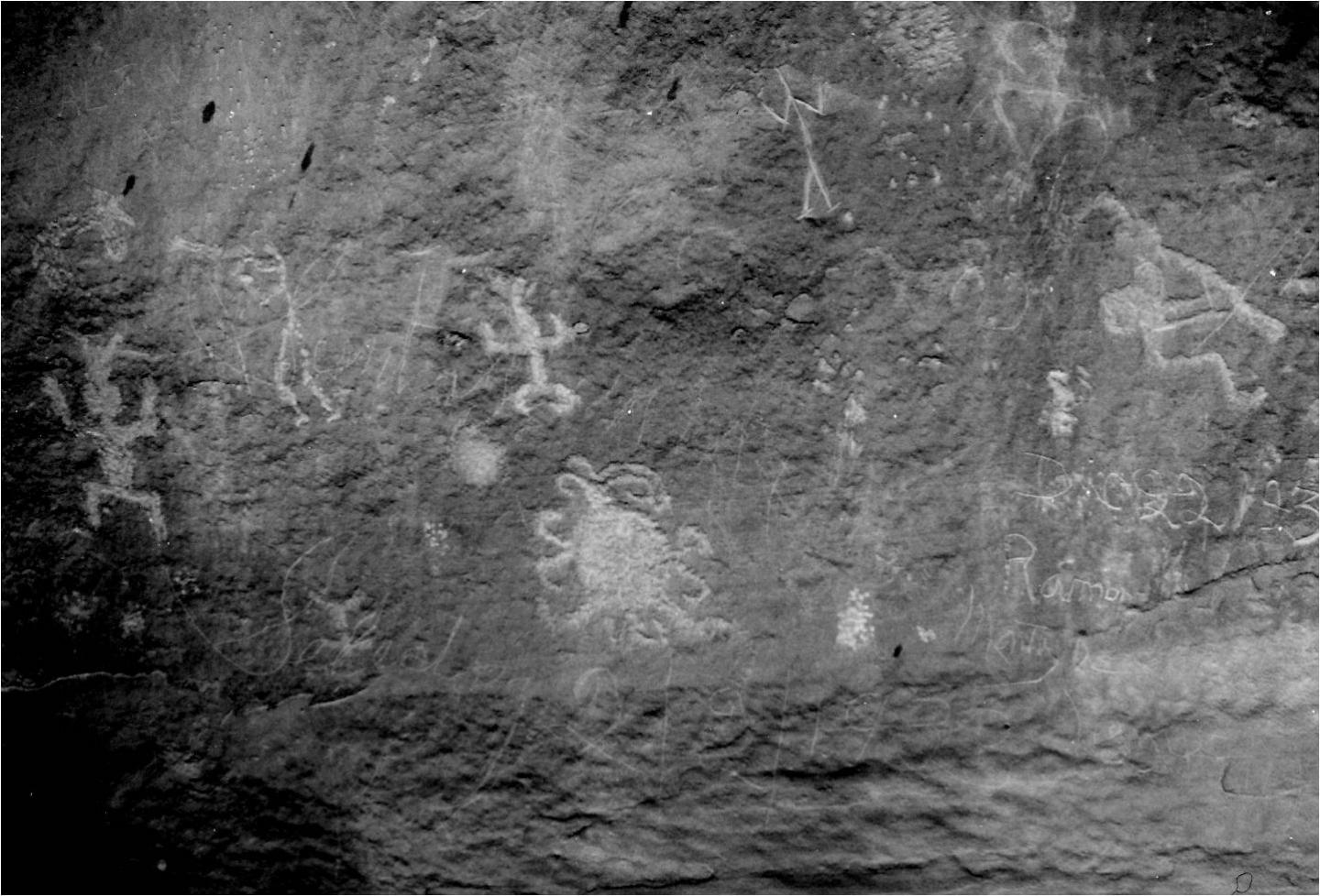
Chaco Canyon Petroglyph Could Depict Total Eclipse A petroglyph carved into a rock face by the ancient Pueblo people could depict an ancient eclipse, according to a professor from the University of Colorado at Boulder. The carving depicts a circle that resembles the sun’s outer atmosphere known as the corona, with tangled protrusions looping off the edges. According to Professor Emeritus J. McKim Malville, the image, which was first unearthed in 1992, may illustrate the total eclipse of the sun that occurred over the region on 11th July 1097. “To me it looks like a circular feature with curved tangles and structures,” said Malville of CU Boulder’s astrophysical and planetary sciences department. “If one looks at a drawing by a German astronomer of the 1860 total solar eclipse during high solar activity, rays and loops similar to those depicted in the Chaco petroglyph are visible.” Malville and colleagues used several sources to assess the activity of the sun around the time of the eclipse, to confirm if the image corresponded to how the sun would have looked at the time. This included looking at tree rings, which can provide an insight into the number of cosmic rays hitting the earth’s surface, and records of naked eye observations of sunspots dating back thousands of years in China. “This possible eclipse petroglyph on Piedra del Sol is the only one we know of in Chaco Canyon,” Malville said. “I think it is quite possible that the Chacoan people may have congregated around Piedra del Sol at certain times of the year and were watching the sun move away from the summer solstice when the eclipse occurred.” The Battle of Lewisham 40 Years On 13th August marks the anniversary of the Battle of Lewisham, a violent clash between a far-right march and counter-protestors in the south London borough. The right wing National Front organised a national march through Lewisham in the southeast of London, calling members from across the country to take part in the protest which they claimed was directed at a rise in crime in the area. At the time, Martin Webster, an organiser for the National Front, told the press: “We believe that the multi-racial society is wrong, is evil and we want to destroy it.” Huge swathes of the local community opposed the march, with Lewisham Council and the Bishop of Southwark leading thousands of peaceful demonstrators in holding a counter march close to the site of the National Front’s. At the same time, another group of counter-demonstrators, comprised of anti-fascists and members of progressive and radical left groups, sought to take more direct action, determined to block the National Front march itself. Violence erupted on the streets of London as the demonstrators and counter-demonstrators met. National Front members clashed with the protesters who then clashed with police as running battles took place through the area. Ultimately, the National Front were forced to abandon their demonstration, and were escorted to trains by the police. In total, 111 people were injured, including 56 police officers, and 214 were arrested. The event was a humiliation for the National Front, revealing the massive, determined opposition to their beliefs, and tarnishing their tough image with well documented reports of police having to usher them to safety. At the same time, the event was significant in the history of policing in the UK. Tactics were used which had never been seen before in England, with baton charges and mounted police used to disperse crowds, and riot shields on display for the first time outside of Northern Ireland. On 13th August a plaque was unveiled in New Cross, close to the site of the clash, to commemorate the community’s stand against fascism and racism. Humans Arrived in Asia Thousands of Years Earlier than Thought Humans may have left Africa and arrived in Asia up to 20,000 years earlier than previously thought, according to new research published in the journal Nature. The same study, led by Macquarie University, also suggests that humans arrived in Australia significantly earlier than is generally accepted. Dating of a cave site in West Sumatra, named Lida Ajer, has provided the first evidence for human rainforest use. It is this that has led to the rethink on the history of human migration. “Rainforests aren’t the easiest place to make a living, especially for a savannah-adapted primate, so it suggests that these people were ahead of the curve in terms of intelligence, planning and technological adaptation,” said Dr. Gilbert Price, from the University of Queensland’s School of earth and environmental sciences. Dutch paleo-anthropologist Eugene Dubois, renowned for the discovery of ‘Java Man’, visited a series of caves in Sumatra in the late 1800s, discovering human teeth there. Price said he and his colleagues are building on Dubois’ work, finally determining the significance of those teeth. “Fast forward over 100 years later, both the team of lead author Dr Kira Westaway of Macquarie University and my crew (separately) were lucky enough to re-discover and visit the caves. “It was quite an adventure. We ended up sharing notes and the collaboration was born.” Through thorough analysis of the teeth and dating of the sediments in the caves, the team determined not only that the teeth belonged to anatomically modern humans, but that they date back to as far as 73,000 years ago. Southeast Asia was a key region in the human dispersal out of Africa and through to Australia. However, until now most archaeological evidence has shown no sign of anatomically modern humans reaching the region earlier than 60,000 years ago. Feature image: A petroglyph of what may be a total solar eclipse in the year 1097 as recorded by the Chaco Canyon, New Mexico Pueblo people. Courtesy of University of Colorado]]>

Categories
Breaking News

Walking On Two Legs Changed Evolution of Human Skulls

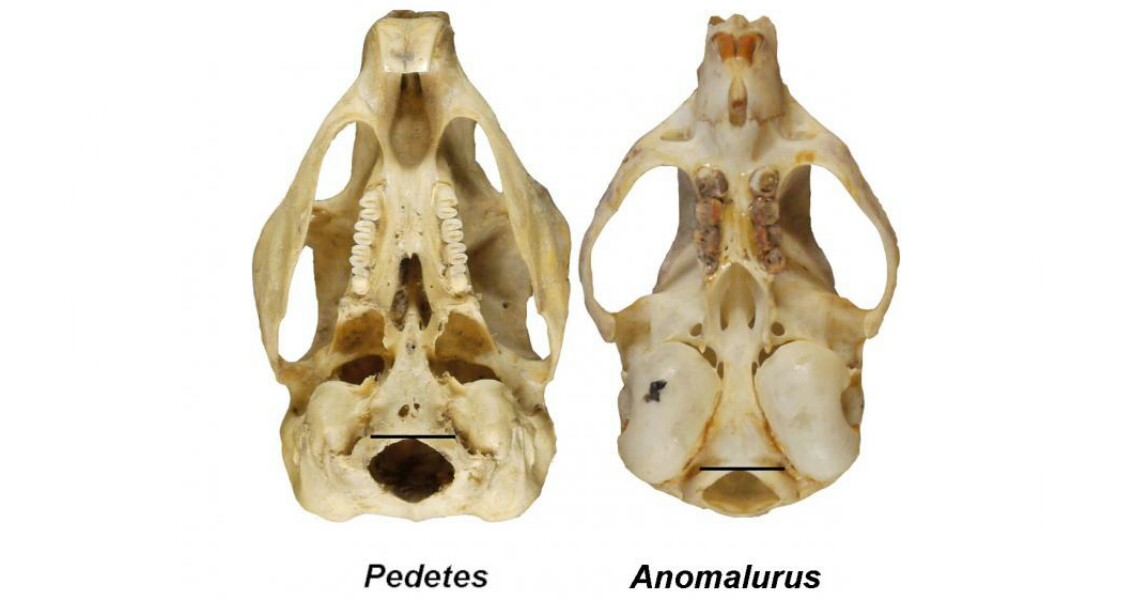
Journal of Human Evolution. This connection has long been highly controversial among biologists and archaeologists. The earliest humans climbed trees and walked on the ground, offering them flexibility of movement and the ability to evade predators. It is widely held that between 6 and 3 million years ago the gradual transition began from climbing trees to walking upright the majority of the time. This switch to exclusively walking on two legs inevitably coincided with significant physical changes, such as longer legs. Homo erectus, around 1.9 millions years ago, had leg and thigh bones very close to those of modern humans, evolved for walking on two legs over long distances. Humans differ from other primates in that the foramen magnum, the large hole at the base of the skull which the spinal cord passes through, is shifted forward. Many scientists argue that this is down to the evolution of bipedalism – the head needing to be balanced directly on top of the spine to aid walking. This connection between the foramen magnum and bipedalism is far from universally accepted, however. In 1925, Raymond Dart first questioned the connection in his description of ‘Taung child’, a 2.8 million-year-old fossil skull of the extinct South African species Australopithecus africanus. Last year, a study by Kent State University biological anthropologist Aidan Ruth further questioned the connection between walking on two legs and the forward shifted foramen magnum. Gabrielle Russo, an assistant professor at Stony Brook University, and UT Austin anthropologist Chris Kirk have provided convincing evidence in their new study that the forward shifted foramen magnum is not just a feature of humans and their fossil relatives, but bipedal mammals more generally. “This question of how bipedalism influences skull anatomy keeps coming up partly because it’s difficult to test the various hypotheses if you only focus on primates,” Kirk said in a press release. “However, when you look at the full range of diversity across mammals, the evidence is compelling that bipedalism and a forward-shifted foramen magnum go hand-in-hand.” Their groundbreaking study sampled the largest number of mammal species to date, as well as deploying new methods to measure aspects of foramen magnum anatomy. By comparing the position and location of the foramen magnum in 77 mammal species, from primates to rodents, Russo and Kirk make their case that bipedal mammals have a more forward-positioned foramen magnum than even their most closely related quadrupedal relatives. “We’ve now shown that the foramen magnum is forward-shifted across multiple bipedal mammalian clades using multiple metrics from the skull, which I think is convincing evidence that we’re capturing a real phenomenon,” Russo said. Establishing the link between bipedalism and the foramen magnum’s position is hugely significant. The connection could allow archaeologists to determine much more accurately whether extinct fossil hominids walked on two feet like modern humans, or on four like modern great apes. The specific measurements offered by the study could be applied to future research to provide a map of the evolution of bipedalism. “Other researchers should feel confident in making use of our data to interpret the human fossil record,” Russo concluded. Image shows comparison of the positioning of the foramen magnum in a bipedal springhare (left) and its closest quadrupedal relative, the scaly-tailed squirrel (right). Image credit: Russo and Kirk, Journal of Human Evolution ]]>

Categories
Breaking News

Mammoth Preservation Project Underway in Mexico

IB Times, adding, “The discovery in Tultepec is important because it indirectly supports the presence of humans 40,000 years ago.” Preliminary research reports the woolly mammal was approximately 25 years old at the time of its death, it was 3.5 meters (11.5 feet) tall and 5 meters (16.5 feet) in length, and weighed around 5 tons. The experts are hopeful that the mammoth remains are in good enough condition to be reassembled and displayed. Woolly mammoths died off around 5,000 years ago. “We are talking about 40,000 years ago so it is a very considerable period of time. The affect (on the bones) over such a period is that the bones are very sensitive.” explained assistant archaeologist Felipe Munos in the article. However, the fact that the remains were found in sediment at the bottom of a lake, and the mud was of a good level, helped to conserve the mammoth remains. Mexico was a hotbed of dinosaur activity at one time, and although the area surrounding modern-day Tultepec is arid, in earlier eras it is thought to have had an ample water supply and lush vegetation. Off the coast of Yucatan, around 825 miles south of Mexico City, is the Chicxulub crater, an impact crater that’s buried underneath Mexico’s Yucatán Peninsula. It was left behind when a large comet or asteroid, approximately 6 miles (10 kilometers) in diameter, struck the Earth. The impact coincides exactly with the Cretaceous–Paleogene (K–Pg) boundary some 66 million years ago, and it’s widely accepted that the global climate disruption caused by the event caused the mass extinction (the Cretaceous–Paleogene extinction event) of 75% of the earth’s animal and plant species, including all of the non-avian dinosaurs. ]]>

Categories
Breaking News

Neanderthal DNA Still Affecting Modern Humans

New Scientist. “The results add to increasing evidence that these effects are often the outcome of changes to the genetic switches,” said Tony Capra of Vanderbilt University in Nashville, Tennessee. His own results published last year revealed Neanderthal influences on a variety of human disorders, including depression and addiction. The control of Neanderthal DNA decreased the most in regions of the brain critical for perception and fine motor skills, the basal ganglia and the cerebellum, which further evolved in humans to enable advanced thinking, behavior and the ability to process language. NTRK2 is another Neanderthal gene with fading influence. This gene is key to neuron survival in addition to the development of brain connections and its reduced influence illustrates the sort of fine-tuning which may have permitted our ancestors to take off intellectually. Another gene in which Neanderthal DNA lost control is a testes gene that affects a sperm’s ability to penetrate and subsequently fertilize an egg. Researchers theorize that once control of this gene was relinquished, neither the Neanderthals nor the human- Neanderthal hybrids were able to mate with humans. This theory is consistent with research results showing a reduction in the health of male offspring from hybrid unions. ]]>

Categories
Breaking News

Faeces Eating Fungus Shows Humans Sent Megafauna Extinct

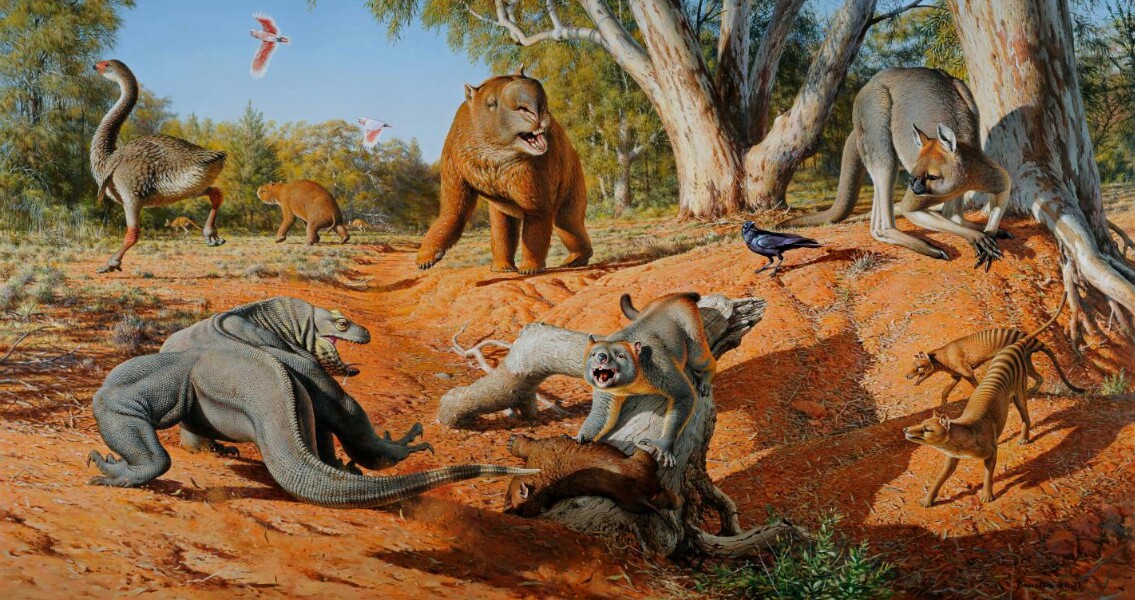
Nature Communications places the blame firmly on humans. Typically, explanations for the extinction of Australian megafauna have focused on either climate change or hunting by humans. The new study, led by scientists from Monash University in Victoria, Australia and the University of Colorado Boulder, has used the ancient faeces left behind by the megafauna to reach its conclusion. The team used a sediment core drilled from the Indian Ocean off the southwest coast of Australia to reconstruct past climate and ecosystems on the continent. The sediment core contains chronological layers of material blown into the ocean including ash, dust, pollen and spores from a fungus known as Sporormiella which thrived on the dung of plant eating mammals. Analysis of the sediment revealed that spores from Sporormiella were in abundance from 150,000 years ago, until plummeting around 45,000 years ago. “The abundance of these spores is good evidence for a lot of large mammals on the southwestern Australian landscape up until about 45,000 years ago,” said Professor Gifford Miller from CU Bolder’s Department of Geological Sciences, one of the study’s authors. “Then, in a window of time lasting just a few thousand years, the megafauna population collapsed.” According to Miller, the study results suggest that shortly after the arrival of humans 85 percent of Australia’s megafauna weighing over 100 pounds went extinct. Tellingly, the sediment core analysis also revealed that Australia’s southwest had dense forests 45,000 years ago, much like it does today. A hotbed of biodiversity, these forests make it unlikely that ecosystem change was behind the extinction of the megafauna. “It’s a region with some of the earliest evidence of humans on the continent, and where we would expect a lot of animals to have lived,” Miller explained. “Because of the density of trees and shrubs, it could have been one of their last holdouts some 45,000 years ago. There is no evidence of significant climate change during the time of the megafauna extinction.” Miller suggests that “imperceptible overkill” could have caused the extinction. A study published in 2006 claimed that even a small amount of megafauna hunting, at a rate as low as one juvenile mammal being killed per person per decade, could well have led to a species going extinct within a few hundred years. “The results of this study are of significant interest across the archaeological and Earth science communities and to the general public who remain fascinated by the menagerie of now extinct giant animals that roamed the planet – and the cause of their extinction – as our own species began its persistent colonization of Earth,” said study leader Sander van der Kaars of Monash University. The issue of the cause behind Australian megafauna extinction is likely to remain controversial, however. Just last week a study was published arguing that humans and certain megafauna coexisted for a least 17,000 years in Australia, highlighting just how complicated the extinction process might have been. Image courtesy of Peter Trusler, Monash University]]>