Categories
Breaking News

Researchers Solve Mysteries of 3,500-Year-Old Egyptian Necropolis

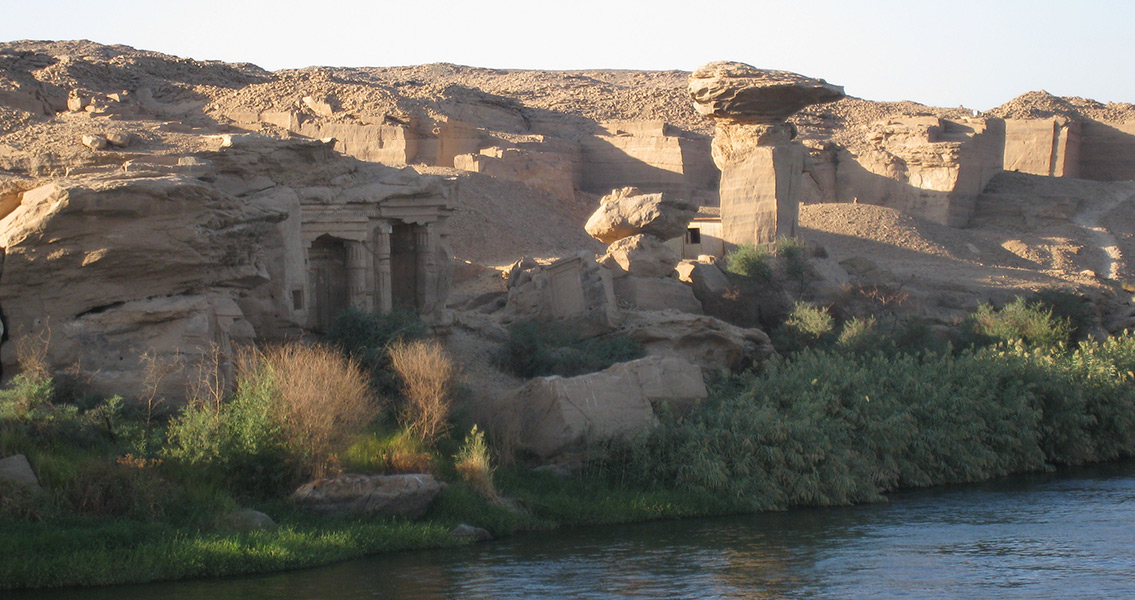
Haaretz, new finds at the Gebel el Silsila necropolis in the form of lavish grave goods show that the individuals buried within were not slaves or menial workers as was first thought. In fact, grave offerings such as crocodiles and cats indicate these individuals, who were likely miners that helped quarry sandstone for construction during the early Eighteenth Dynasty, might have worked hard but were held in high regard. A Swedish archaeology expedition, spearheaded by John Ward and Maria Nilsson, excavated and studied a dozen new tombs, a trio of crypts, and an additional crypt with multiple animal burials, all dating to circa 1543 BCE to 1292 BCE. The discovery of previously-untouched tombs at Silsila – which would have been called Kheny during the Eighteenth Dynasty – has yielded in excess of 55 tombs. Each of these tombs has between 10 to 15 burials, but the majority of these burials have been long-since looted – though the new discoveries show little signs of ancient plundering. The remains of more than 80 people have been recovered so far, according to Nilsson, who said that there were not just men but women and children interred in these tombs. Based on telltale signs of wear on a portion of the skeletal remains, the researcher feels that it’s a good guess that these individuals would have been quarrymen and perhaps their families. Many of these individuals were buried with grave goods in the form of personal belongings. Some were laid to rest with amulets designed to provide protection for the soul’s journey to the world beyond. Such burial goods were expensive, clearly showing these individuals were of a higher social status than conscripted workers or simple slaves, according to Nilsson. More signs indicating the relative wealth and affluence of these ancient Egyptians can be found in the beautiful craftsmanship of the rest of the jewelry that was buried with them. Pendants, scarabs, amulets and earrings found in the tombs show high levels of expertise, indicating that those who worked ancient Egypt’s quarries might have been regarded with high levels of deference – though the researcher was quick to say that there would have to be further study and analysis before this could be concluded categorically. The site is also noteworthy for the high number of animal burials, many of which show signs of being sacrificed prior to being interred. In one instance, a single crypt contained approximately a dozen goats and sheep that look as if they were purposely sacrificed, judging by visible head trauma. Additional remains, which include a pair of crocodiles, a cat and a pair of Nile perch were also included in these animal burials. One of the crocodiles was found outside a tomb, which may indicate that it had expired there after one of the Nile’s many floods. Again, more analysis will be necessary to make final determinations. ]]>
Categories
Breaking News

Seeing Life in Death: Understanding a Pre-Roman Culture

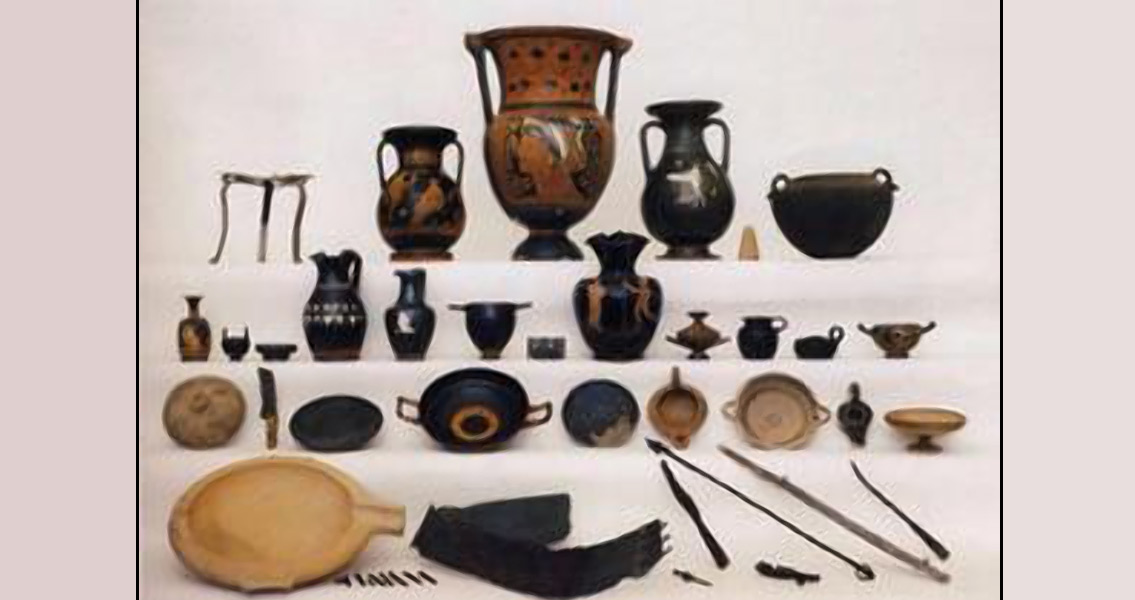
toilets, smaller, less prominent cultures are often consigned to the dimly lit corners of history. New research from the University of Cincinnati has taken a novel approach to this problem by looking into life’s only constant – death. Through analysing ancient bereavement practices from the Central Apulian region in pre-Roman Italy, they have gained an insight into economic and social mobility, military service and even drinking customs in a region and time that had previously been invisible to history. “After going through volumes of collected material, I realized that there was so much more that could be said about what was happening in the development of this particular culture”, said University of Cincinnati Classics Doctoral student Bice Peruzzi, the leader of the research, who recently presented the findings at the 2016 Archaeological Institute of America/Society for Classical Studies Annual Meeting in San Francisco. Analysing the logistics of burials, treatment of the deceased, and contents in graves dating from roughly 525 – 200 BCE, Peruzzi discovered strong evidence of a clear social hierarchy. Men’s tombs from the same period often had metal weaponry lying close to or even across the remains. This has been interpreted as evidence of the commonality of military service in the Central Apulian region in the time period. Peruzzi placed her findings into the broader historical context of the Mediterranean, allowing her to understand the meanings of certain practices, and understand how the lives of the people in the Central Apulian region changed over time. “In spite of having no written history, I was able to distinguish three different periods and then connect them to the larger Mediterranean history to see how their society changed.” An impressive increase in the number of tombs in the region over a period of just fifty years in the fourth century BCE for instance, indicates newer social groups gaining access to ceremonial burials. Evidence suggests that these elaborate burials initially included use of the space for a period of dancing and banqueting by the attendees at the burial ceremony, a practice which had died out by the end of the period under investigation. The First Period that Peruzzi identified in the region, 525 – 350 BCE, unsurprisingly reflected the significant Greek influence over Apulia at the time. Valuable Greek vases and artefacts were found among the contents of many of the tombs. The detailed imagery on some of these artefacts focused specifically on women taking part in every day activities often thought to have been restricted to men, raising interesting questions about the role of women in the society. Along with the increase in the number of tombs in the Second Period (350 – 300 BCE) mentioned above, Peruzzi found evidence of the community’s elites starting to break away and distinguish themselves from others with their burial customs. The burial sites also revealed the onset of urbanisation in the region. “The new growth of specific burial sites to the detriment of others in addition to newly constructed walls surrounding the communities also indicates a general movement toward urbanization in Period 2.” Evidence of entering a time of great transformation can be found in what Peruzzi defines as the Third Period (300-200 BCE). A shift occurred from individual tombs to large chambers sometimes containing whole families. Weaponry was no longer put in graves, while iconography depicting female beauty had disappeared from grave goods, replaced with simple, undecorated ceramics. Meanwhile, the elites had completely abandoned elaborate ceremonial burials, further distinguishing themselves from the other elements of society. Peruzzi’s study provides insights into a period and a region historians and archaeologists have long struggled to understand. Through highlighting changing burial customs she has tracked the onset of social stratification, the emergence of an elite, and the first steps in urbanisation. “From the emergence of new social groups at the end of the 6th century BCE to the gradual urbanization and separation of “ethnic” groups during the 3rd century BCE, the evolution of funerary practices can be successfully used to highlight major transformations in the social organization of Central Apulia communities.” Image courtesy of Source/Riccardi 2003 ]]>