Categories
Breaking News

History News of the Week – Minoan 'Masterpiece' Unearthed

Discovery of Minoan Sealstone Could ‘Rewrite’ History of Ancient Greek Art Researchers working at the tomb of 3,500 year old Bronze Age warrior in the southwest of Greece have unearthed an ‘intricately carved’ sealstone which University of Cincinnati (UC) archaeologists are heralding as one of the finest works of prehistoric Greek art ever discovered. Depicting an intense hand-to-hand battle, the artefact has been dubbed the ‘Pylos Combat Agate’. “Looking at the image for the first time was a very moving experience, and it still is,” said Shari Stocker, a senior research associate in UC’s Department of Classics “It’s brought some people to tears.” “What is fascinating is that the representation of the human body is at a level of detail and musculature that one doesn’t find again until the classical period of Greek art 1,000 years later,” explained Jack Davis, the university’s Carl W. Blegen professor of Greek archaeology and department head, in a statement from UC. Davis and Stocker have been leading a dig at the tomb of the Bronze Age warrior, which was first discovered in 2015. The tomb’s occupant has been dubbed the ‘Griffin Warrior’, and his final resting place has already yielded a wealth of fascinating artefacts, including four gold signet rings. The size of the hand carved stone is perhaps the most remarkable thing about it, measuring just 3.6cm in length. Many of its details can only be viewed with a powerful camera lens and photomicroscopy. “Some of the details on this are only a half-millimetre big,” said Davis. “They’re incomprehensibly small.” The dramatic image of a warrior plunging a sword into a shielded enemy’s neck is reminiscent of the kinds of scenes described in Homer’s Iliad. Although the researchers can’t say if the image reflects a Homeric epic, they’re confident it would be from a legend familiar to Minoans and Mycenaeans. “It would have been a valuable and prized possession, which certainly is representative of the Griffin Warrior’s role in Mycenaean society,” Stocker explained. “I think he would have certainly identified himself with the hero depicted on the seal.” The sheer skill that would have been needed to create the sealstone is causing a re-evaluation of the history and development of Ancient Greek art. “It seems that the Minoans were producing art of the sort that no one ever imagined they were capable of producing,” explained Davis. “It shows that their ability and interest in representational art, particularly movement and human anatomy, is beyond what it was imagined to be. Combined with the stylised features, that itself is just extraordinary.” “This seal should be included in all forthcoming art history texts, and will change the way that prehistoric art is viewed,” said Stocker. Date of Biblical Eclipse Pinpointed Researchers have determined the date of an ancient eclipse which is referred to in the Bible. They believe it could be the oldest date of a solar eclipse yet recorded. The researchers used a combination of the Bible and Ancient Egyptian texts to pinpoint the date of the eclipse to 30th October 1207 BCE. From this information they’ve been able to refine the dates of Egypt’s ancient pharaohs, particularly the reign of Ramesses the Great. Biblical scholars have long been perplexed by the book of Joshua, which describes Joshua leading the people of Israel in Canaan, a region which covers modern day Israel and Palestine. According to the Biblical text, Joshua prayed “Sun, stand still at Gibeon, and Moon, in the Valley of Aijalon. And the Sun stood still, and the Moon stopped, until the nation took vengeance on their enemies.” “If these words are describing a real observation, then a major astronomical event was taking place – the question for us to figure out is what the text actually means,” said paper co-author Professor Sir Colin Humphreys from the University of Cambridge’s Department of Materials Science & Metallurgy. “Modern English translations, which follow the King James translation of 1611, usually interpret this text to mean that the sun and moon stopped moving,” said Humphreys, who is also a Fellow of Selwyn College. “But going back to the original Hebrew text, we determined that an alternative meaning could be that the sun and moon just stopped doing what they normally do: they stopped shining. In this context, the Hebrew words could be referring to a solar eclipse, when the moon passes between the earth and the sun, and the sun appears to stop shining. This interpretation is supported by the fact that the Hebrew word translated ‘stand still’ has the same root as a Babylonian word used in ancient astronomical texts to describe eclipses.” Evidence that the Israelites were in Canaan between 1500 and 1050 BCE can be found in the Merneptah Stele, an Egyptian text dating from the reign of the Pharaoh Merneptah, son of Ramesses the Great. The large granite block, held in the Egyptian Museum in Cairo, says that it was carved in the fifth year of Merneptah’s reign and mentions a campaign in Canaan in which he defeated the people of Israel. Using an innovative eclipse code, one which considers variations in the planet’s rotation, the team determined that the only annular eclipse visible from Canaan between 1500 and 1050 BCE was on 30 October 1207 BCE, in the afternoon. If the team’s calculations, which have been published in the Journal of Astronomy and Geophysics, are correct, then it is possible to date the reign of both Ramesses and his son to within a year. “Solar eclipses are often used as a fixed point to date events in the ancient world, Humphreys said. If Humphreys et al’s results of accepted, then the reign of Merneptah began in 1210 or 1209 BCE. As it is known from Egyptian texts how long he and his father reigned for, it would mean that Ramesses the Great reigned from 1276-1210 BCE, with a precision of plus or minus one year, the most accurate dates available. Hitler Only Joined the Nazis After Being Rejected by Another Far-Right Group Adolf Hitler only joined the Nazi Party after being rejected by another far right group, a historian at Aberdeen University is claiming. According to the Independent, historian Dr Thomas Weber unearthed an unpublished document which reveals that the German Socialist party told Hitler in 1919 they did not want him in their party nor to write for their newspaper. Weber argues that this rejection by the German Socialist Party should be seen as a crucial historic event, a turning point which ultimately led to Hitler joining the Nazi party and becoming its leader. Weber suggests that Hitler would have found it much more difficult to rise to the leadership of the much larger German Socialist Party. “I can only speculate why they did not let him join but one would imagine it had something to do with the fact Hitler was opinionated and they did not want to have someone there who was telling them what to do,” he told the Independent. He added: “If he had been accepted into the German Socialist party he would have almost certainly remained on the sidelines. Hitler managed to push over the established leadership of Nazi party but that would have been very unlikely to have happened if he had joined the German Socialist party.” The document Weber has discovered is from the testimony of Hans Georg Grassinger, the founding chairman of the German Socialist party, reports the Guardian. It describes how, in 1919, Hitler approached Grassinger to join the Party. Hitler also asked Grassinger to borrow money. Hitler, who was 30 at the time, was informed that the party did not him in their ranks. Featured image: The tiny sealstone depicting warriors in battle measures just 1.4 inches across but contains incredible detail. Credit: University of Cincinnati ]]>

Categories
Breaking News

New Findings at Poseidonia Suggest the Wealth of its Greek Founders

Categories
Breaking News

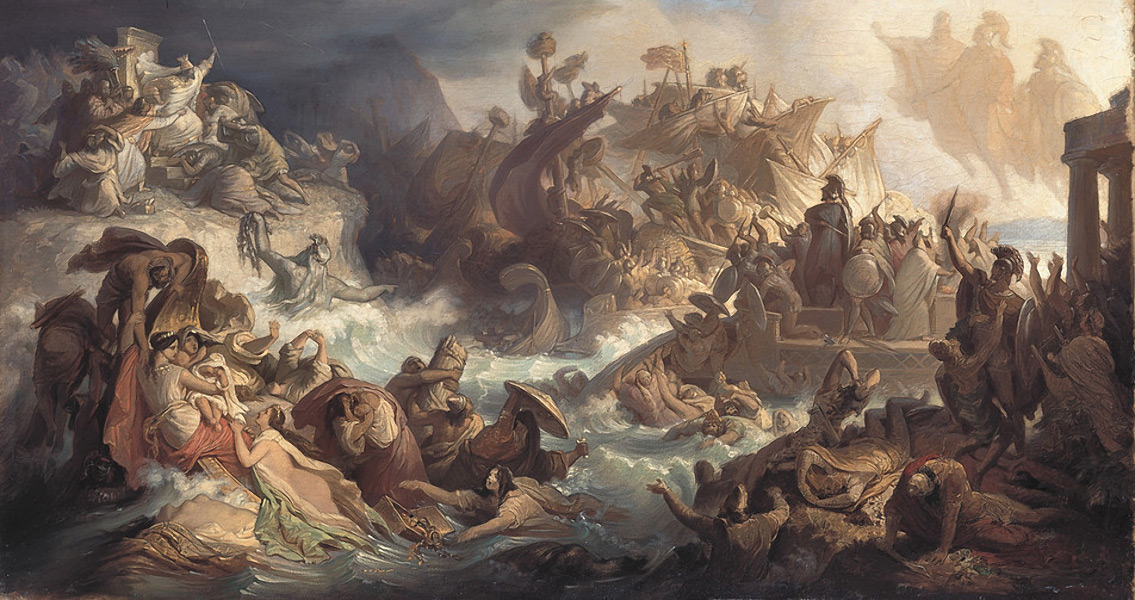
Ancient Greek Battle of Salamis Site Discovered

Categories
Breaking News

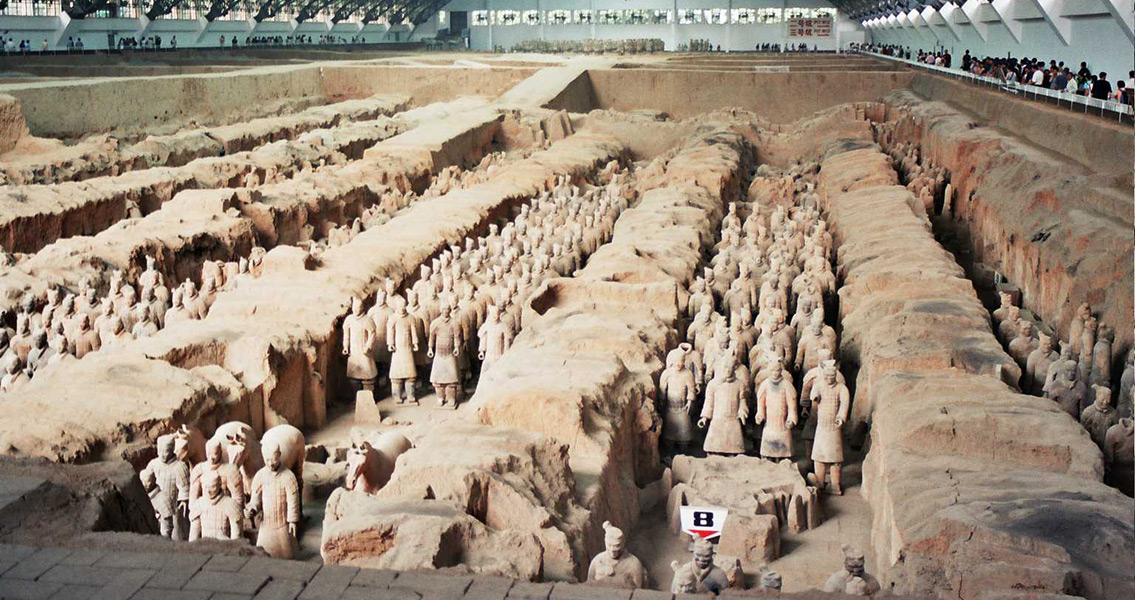
Was the Terracotta Army the Result of Greek Influence?

Guardian. “We now think the Terracotta Army, the acrobats and the bronze sculptures found on site, have been inspired by ancient Greek sculptures and art.” Lukas Nickel, from Vienna University, told the Guardian: “I imagine that a Greek sculptor may have been at the site to train the locals.” Ying Zheng, who took the name of Qin Shi Huang Di—the First Emperor of Qinook, ascended to the throne in 246 BCE when he was only 13-years-old. By 221 BCE, he had successfully unified a number of warring kingdoms. During his reign, Qin standardized coins, measures and weights; interlinked the kingdom’s states with roads and canals; and built the first Great Wall. According to the writings of the court’s historian Siam Qian, Qin ordered the construction of the mausoleum soon after becoming emperor. Over 700,000 laborers labored on the project, which was completed in 209 BCE, a year after Qin’s death. Archaeological finds from the site have already revealed the extent of early trade. The Silk Road, with numerous caravan stops and trading posts, was established in the third century during the Han dynasty. However, a number of the trade routes had already been in existence for years. Chinese historians documented the arrival of Roman traders when Augustus was emperor of Rome (27 BCE to 14 CE), during which time Chinese silk was flooding into Rome. Writers like Seneca even denounced those who wore it as immoral and effete. The research is discussed in the documentary, The Greatest Tomb on Earth, sponsored jointly by the BBC and National Geographic. ]]>

Categories
Editorial

A Short History of Ancient Theatre

Cennarium bring it back to our lives in the digital format. Theatre is here to stay, so let us take a short look at the historical timeline of its development. Primitive Tribal Dance (8500 BCE) Dancing was an integral part of most shamanistic rituals. Body movements naturally accompanied rites of passage and were present in spirit- appeasing performances. Dancing was then primitive, to say the least. It had been synchronised with rhythmic chanting and drumming with simple instruments such as sticks and stones. Shamanism and Ritual (pre-2500 BCE) The shaman is the holy person of a tribe. He communicates with the divine through elaborate rituals. The fact that shamanism foreshadows theatre is evident in the existence of theatrical elements that are present in a shamanistic ritual. These include song, dance, music, characterization, hypnotism, illusion, clowning, and ventriloquism. Rituals were spectacular performances through which humans tried to ensure success in battle, hunting, and life in general. They used various significant artefacts, which now serve as proof for the fact that the first theatrical performances arose from such rituals. One of the first records of a ritual depiction of a myth was as early as 2500 BCE and was performed annually in Egypt. First Recorded Dramatic Production (1887 BCE) The first ever recorded dramatic production is the Egyptian Passion Play that celebrated the mythical and divine king Osiris. The play was held annually for several centuries and it depicts the struggles and triumphs of the Egyptian king and god. As stated by Greek historians, those plays were so realistic that some of the actors consequently died from the severity of their wounds. Dance as Entertainment (1400 BCE) It is not an easy task to determine the exact date of the origin of dance as we know it today. Unfortunately, there are not many artefacts or cave paintings that clearly depict or represent dancing. However, some Egyptian paintings have been found to represent scantily clad girls who danced to music played by seated musicians. The dancing occurred in tombs, as the women tried to bring delight to the deceased and bring them happiness during their next world residence. This is probably one of the earliest representations of dance as entertainment. Dramatic Dance, Myth and Storytelling (800 BCE- 600 BCE) Dancing was definitely a precursor of the theatre as we know it and today it is its integral part. Variations of a dramatic dance included animal imitation, gymnastics and synchronised rhythmic movements. As time went by, people added sound, costumes and masks so as to make the event more spectacular. Since the creation of language, myths and stories were used as devices for learning and entertainment. Oral storytelling was extremely important when it comes to the development of theatre. The epic tales allowed people to elaborate on a certain myth, modify its elements and develop characters in various different ways to create new stories. It is in a similar way that the Greek theatre came to be, through the rites of Dionysus, and it incorporated elements of the aforementioned ecstatic dances. Greek Theatre (600 BCE- 400 BCE) The cult ceremonies of the fertility and wine god Dionysus are directly connected to the origins of the Greek theatre. These performances included female devotees who danced themselves into a state of trance. Besides dancing, they also ripped apart and devoured the raw flesh of sacrificial animals. The Dionysians then went on to develop a more structured version of theatre. More precisely, it was the Dionysian priest Thespis who first introduced a new element to the Greek theatre. He engaged in a first ever dialogue with the chorus and in that way became the world’s first actor. This event also marks the birth of theatre as we would recognise it today. Tragedians (500 BCE) Theatrical performances and contests became integral parts of the festival which was held in the honour of Dionysus. Unfortunately, there are not many tragedies that survived as full texts, but those that did are truly works of geniuses. Namely, there are three extremely important Greek tragedians: Aeschylus, Sophocles and Euripides. Aeschylus – He added a second actor and in that way increased the potential for drama. He wrote around 80 plays, out of which 7 are preserved. He won the prize for the best tragedy in 484 BCE. Sophocles – He added a third actor, thus expanding the possibilities for achieving an even greater dramatical effect. He defeated Aeschylus in 468 BCE when he won the prize for best tragedy. While Aeschylus dealt with topics of great public interest, Sophocles was concentrated on personal interaction between characters. Euripides – He introduced an unconventional view of the Greek myth. He represented mythological characters as having human frailties and by doing so, he influenced the later schools of tragic drama. The Beginning of Greek Comedy (500 BCE) An annual comedy competition started taking place in Athens in 486 BCE. Unfortunately, only one comedy author’s work was saved, namely, Aristophanes: a comedy genius who won the prize many times. Most of his plays heavily rely on the devices that are central to the ongoing tradition of comedy. He satirised basic character flaws while putting the characters in a ridiculous setting. A good example of such a play is The Frogs, which was written mainly to satirise Euripides. Architecture At first, the Greeks sat on hillsides to watch the performance on a temporary wooden stage. In 400 BCE the “venue” got an upgrade in the form of a stone auditorium. This is known today as the theatre of Dionysus and represents a reconstruction from the Roman period. The best example of a classical Greek theatre is Epidaurus, which was built in around 340 BCE. Roman Comedy (300 BCE- 200 BCE) It is well known that Greece heavily influenced Rome in most cultural matters, but this is especially true when it comes to theatre. In the decades before and after 200 BCE, there were two Roman comedy writers who achieved lasting fame. One of them was named Plautus and is famous for his body of work that resembled entertainment similar to a farce. The other one is Terence and he was mostly known for his comedy of manners. However, neither of them ever invented a single plot. They were all based on Greek drama, while the setting of all Terence’s plays was actually Athens. Roman plays were held as a part of a broader event: the Roman games (which were essentially a harvest festival). Consequently, the audience was scarce and inattentive. The main events were chariot races and boxing matches, while the clowns and plays were more of a sideshow act. What is also interesting is the fact that the Roman circus and gladiators were much more popular than the theatre. Romans found greater excitement in the gladiator’s’ arena while watching a fight to the death, than in the theatre. Senecan Tragedies The date of these writings cannot be exactly pinpointed due to the lack of any ancient references. According to a nineteenth-century German scholar, Friedrich Leo, Seneca’s tragedies were written essentially for recitation. Others believe that the tragedies were in fact performed during Seneca’s lifetime. Unfortunately, we cannot be certain solely on the basis of the existing evidence. Nevertheless, Senecan tragedies are of great value. They were written in blank verse and were not all reworks of Greek dramatists. Senecan tragedies include Hercules Hercules, Furens, Troades, Phoenissae, Phaedra, Thyestes, Hercules Oetaeus, Agamemnon, Oedipus, Medea and Octavia. Seneca’s works heavily influenced medieval tragic drama and still remain of great value. And Then There was Silence With the rise of Christianity and the fall of the Roman Empire many festivals were abated. The last records of Roman theatre could be associated within the Byzantine Empire. When the seat of Roman power shifted to the Northern Roman Empire, so did the festivities. Various dances, including a form of ballet, together with pantomime and recitations from comedies and dances became increasingly popular. Unfortunately, by 400 CE the theatre was completely banished because of its association with the pagan gods, the lack of moral constraints and the ridicule of the church by the mimes. After the collapse of the Roman Empire and during the upheaval in Europe, the theatre did not play any significant roles because it was suppressed by the church and reduced to folk tales. It reemerged in the late tenth century when the Christians introduced dramatic elements into the Easter liturgy to make it more interesting and captivating. These dramatic integrations led to the development of the Medieval Christian drama. It is worth noting that this article only covers the development of the Western theatre. The Eastern theatre was unimpacted by the Christian censorship and continued its steady course of development.]]>

Categories
Breaking News

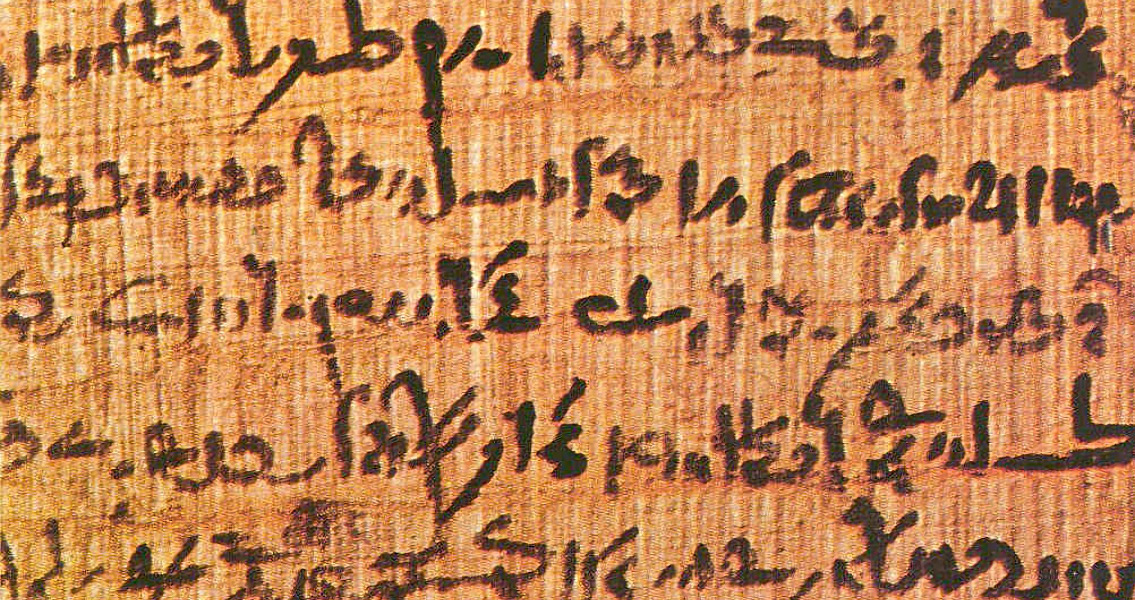
Egyptian Papyri Found to Contain R-Rated Magic Spells

Categories
Breaking News

Evidence of Greek Fortress Finally Discovered

Categories
Breaking News

Seeing Life in Death: Understanding a Pre-Roman Culture

toilets, smaller, less prominent cultures are often consigned to the dimly lit corners of history. New research from the University of Cincinnati has taken a novel approach to this problem by looking into life’s only constant – death. Through analysing ancient bereavement practices from the Central Apulian region in pre-Roman Italy, they have gained an insight into economic and social mobility, military service and even drinking customs in a region and time that had previously been invisible to history. “After going through volumes of collected material, I realized that there was so much more that could be said about what was happening in the development of this particular culture”, said University of Cincinnati Classics Doctoral student Bice Peruzzi, the leader of the research, who recently presented the findings at the 2016 Archaeological Institute of America/Society for Classical Studies Annual Meeting in San Francisco. Analysing the logistics of burials, treatment of the deceased, and contents in graves dating from roughly 525 – 200 BCE, Peruzzi discovered strong evidence of a clear social hierarchy. Men’s tombs from the same period often had metal weaponry lying close to or even across the remains. This has been interpreted as evidence of the commonality of military service in the Central Apulian region in the time period. Peruzzi placed her findings into the broader historical context of the Mediterranean, allowing her to understand the meanings of certain practices, and understand how the lives of the people in the Central Apulian region changed over time. “In spite of having no written history, I was able to distinguish three different periods and then connect them to the larger Mediterranean history to see how their society changed.” An impressive increase in the number of tombs in the region over a period of just fifty years in the fourth century BCE for instance, indicates newer social groups gaining access to ceremonial burials. Evidence suggests that these elaborate burials initially included use of the space for a period of dancing and banqueting by the attendees at the burial ceremony, a practice which had died out by the end of the period under investigation. The First Period that Peruzzi identified in the region, 525 – 350 BCE, unsurprisingly reflected the significant Greek influence over Apulia at the time. Valuable Greek vases and artefacts were found among the contents of many of the tombs. The detailed imagery on some of these artefacts focused specifically on women taking part in every day activities often thought to have been restricted to men, raising interesting questions about the role of women in the society. Along with the increase in the number of tombs in the Second Period (350 – 300 BCE) mentioned above, Peruzzi found evidence of the community’s elites starting to break away and distinguish themselves from others with their burial customs. The burial sites also revealed the onset of urbanisation in the region. “The new growth of specific burial sites to the detriment of others in addition to newly constructed walls surrounding the communities also indicates a general movement toward urbanization in Period 2.” Evidence of entering a time of great transformation can be found in what Peruzzi defines as the Third Period (300-200 BCE). A shift occurred from individual tombs to large chambers sometimes containing whole families. Weaponry was no longer put in graves, while iconography depicting female beauty had disappeared from grave goods, replaced with simple, undecorated ceramics. Meanwhile, the elites had completely abandoned elaborate ceremonial burials, further distinguishing themselves from the other elements of society. Peruzzi’s study provides insights into a period and a region historians and archaeologists have long struggled to understand. Through highlighting changing burial customs she has tracked the onset of social stratification, the emergence of an elite, and the first steps in urbanisation. “From the emergence of new social groups at the end of the 6th century BCE to the gradual urbanization and separation of “ethnic” groups during the 3rd century BCE, the evolution of funerary practices can be successfully used to highlight major transformations in the social organization of Central Apulia communities.” Image courtesy of Source/Riccardi 2003 ]]>

Categories
Breaking News

Egyptians Treated Hangover with Laurel 1,900 Years Ago

Categories
Breaking News

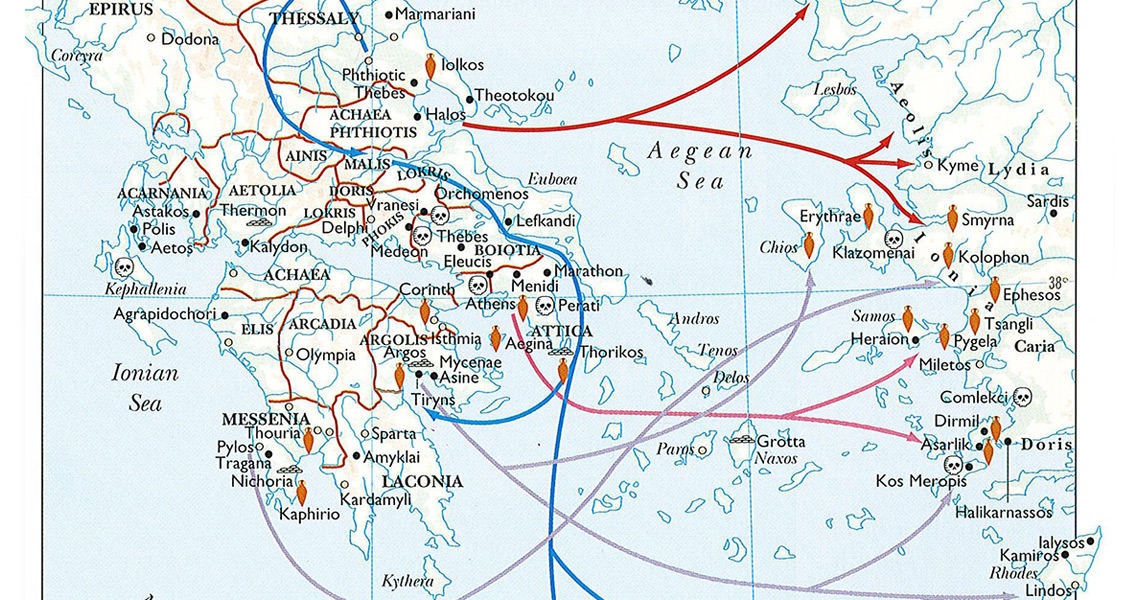
Acidic Soil Possible Cause for Lost Greek Dark Age Evidence