Categories
Breaking News

Brain-Size Evolved with Body-Size Along for the Ride

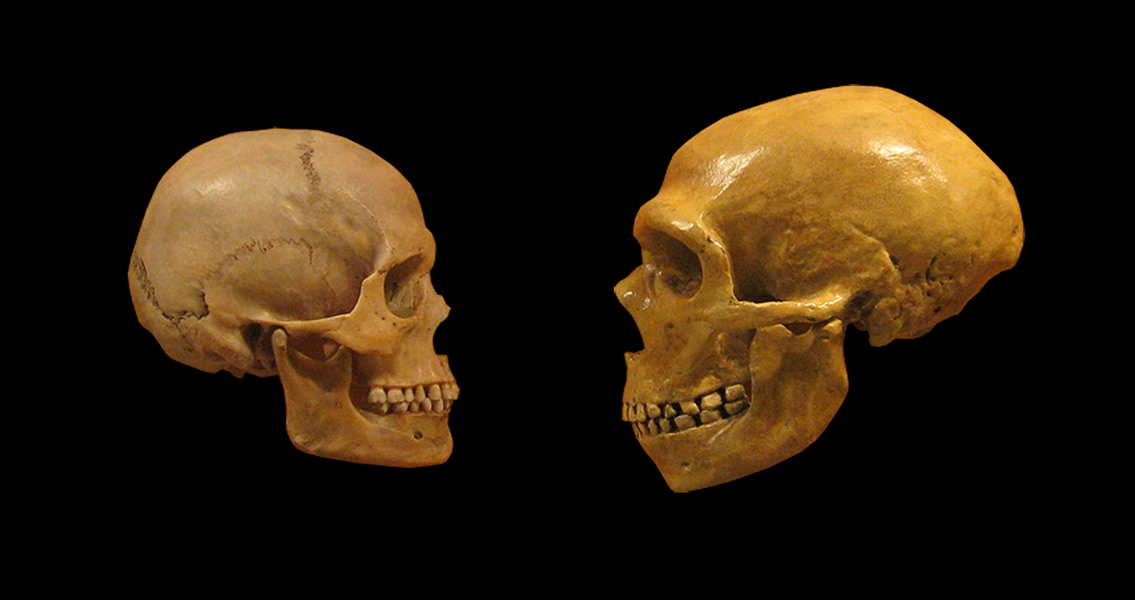
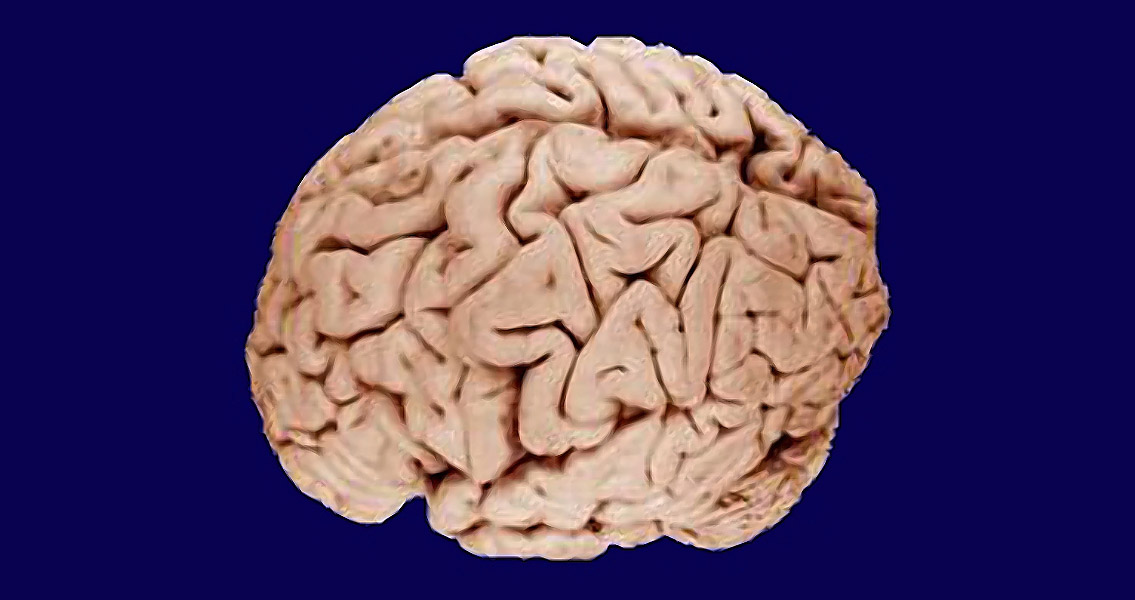
Homo genus. “Over the last four million years, brain size and body size increased substantially in our human ancestors,” Mark Grabowski with the American Museum of Natural History and author of the paper is quoted as saying in a press release from the museum, “This observation has led to numerous hypotheses attempting to explain why observed changes occurred, but these typically make the assumption that brain and body size evolution are the products of separate natural selection forces.” That’s the very assumption now being questioned. There is significant evidence showing that the genetic variations (evolution’s kick starter) in some traits are a result of genes which are also causing simultaneous variations in other traits – leading to the conclusion that the natural selection experienced by either trait causes a correlated response in the unselected trait. For example, consider an elephant’s leg bone; as the bone grows longer, it also grows wider. If you used artificial selection to produce an elephant that was tall, it’s likely the elephant’s legs would also get wider as they get longer. This effect, in part, is because of shared genetic variations (co variations) among the traits of the leg bone. Likewise, researchers set out to investigate this type of genetic relationship between a human’s brain size and their body size and its impact, if any, on our evolution. Using the patterns of brain-size and body-size covariations from an assortment of modern humans and primates, researchers created several different models to examine exactly how these underlying genetic interactions and their associated selection pressures affected the evolution of our lineage. For the first time the findings demonstrate that the strong selection pressure to increase only brain size had a significant role in increasing body size at the same time, throughout our evolution. The phenomenon alone may also have been responsible for a major increase that occurred in both traits when our human ancestors (like Australopithecus) transitioned to Homo erectus. Selection undoubtedly played a role in fine tuning the physical changes inherent to bigger body size, this research suggests however, it was not the driving force and evolutionary models pertaining to Homo origins should be reconsidered. To put it another way, all of the scientific ideas and research done to explain why, over time, humans evolved bigger bodies may be moot; body size simply got pulled along with brain size. The work was published in the journal Current Anthropology.]]>
Categories
Breaking News

Stone Tools Predate Homo Genus

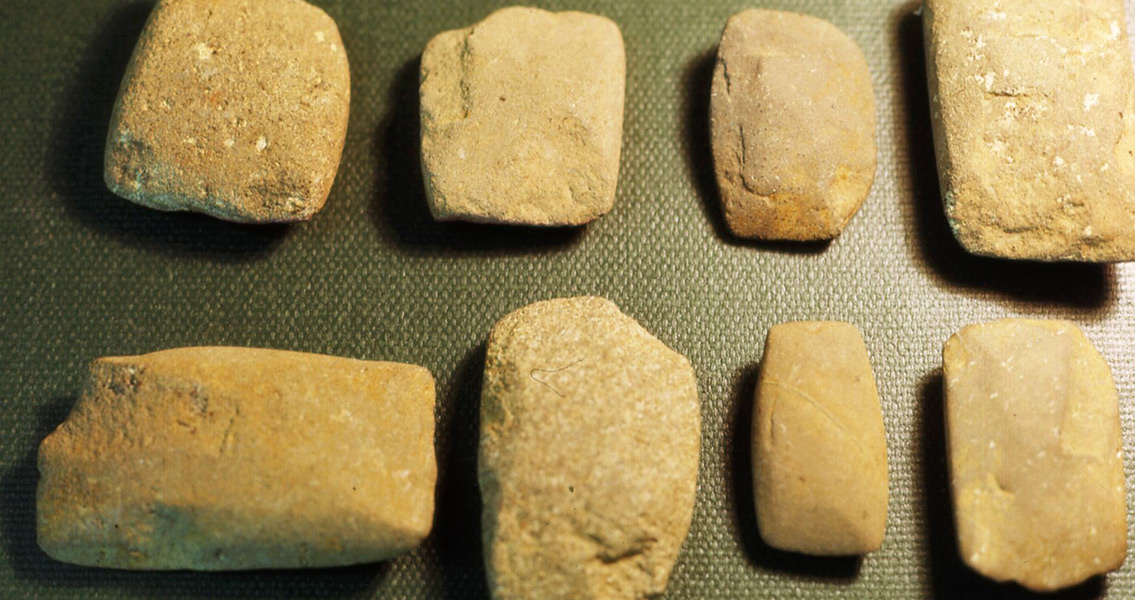
Homo genus was not the first species to discover how to do this. Lead researcher Sonia Harmand, an archaeologist at Stony Brook University, said the team found the site, near lake Turkana in northern Kenya, by accident four years ago after taking a wrong turn. They noticed several stone tools on the surface of the earth, and got digging. Their work yielded 20 more artefacts that were underground, and as many as 130 on the surface. These included cores – chunks of rock from which pieces are chipped to make tools, anvils and flakes (small pieces of stone used as tools). According to Harmand, the pieces bore marks of deliberate manipulation, so they could not have been the result of accidental fracture. The artefacts were well preserved in the sediment, so the researchers were able to date them quite accurately. One of the pieces was so well preserved that it could be fitted back to the core from which it had been chipped with the help of an anvil. As for the genus which made and used these tools, Harmand said she believed it had been either the Kenyathropus or the Australopithecus. The former was a species discovered in the same area, near lake Turkana, in 1999. The fossil was dated to between 3.2 and 3.5 million years ago, and is considered to be evidence of the diversity of pre-Homo species. The Australopithecus’ most famous representative is Lucy, the incomplete female skeleton discovered in the 1970s in Ethiopia, which supplied science with a lot of information about our early ancestors. One other interesting implication of this discovery is related to an earlier study, from 2010, when archaeologists working in Ethiopia unearthed a 3.4-million-year-old hominin child fossil, along with animal bones bearing what the authors of the study claimed were deliberate markings. The study was received sceptically, given the gap in time between what was until then considered the oldest known human tools, but now, thanks to Harmand’s team, its credibility could rise. According to the authors of the earlier study, the Australopitheci used stone tools to deflesh their prey and break the bones to get to the marrow. Both finds are evidence that technology played a major role in hominin evolution even at these early stages and, says anthropologist Alison Brooks from George Washington University, was a driver for the emergence of the Homo genus. Harmand’s team has now proposed a special term for these tools: Lomekwian technology, after the name of the excavations site, Lomekwi 3. Image courtesy of Wikimedia Commons user: John Atherton]]>

Categories
Breaking News

Story of Human Evolution Challenged

Homo, had evolved from smaller early humans becoming taller, heavier and longer-legged. This process eventually resulted in Homo erectus, which was able to migrate out of Africa and colonise Eurasia. Whilst we know that small-bodied H. erectus, averaging less than five feet tall and weighing under 50 kilograms, were living in southern Europe by 1.77 million years ago, the origin of the larger body size associated with modern humans has been elusive. The paucity of knowledge about the origins of larger members of the Homo genus is primarily a result of a lack of evidence. Previous estimates of body size had been based on well-preserved specimens which were easy to assign a species to. Since these samples are rare and disparate in terms of both space and time, little is known about geographical and chronological variation in the body sizes of the early Homo. A joint study between the Universities of Cambridge and Tübingen has shown that increases in body size occurred thousands of years after H. erectus left Africa; this growth in Homo body sizes primarily took place in the Koobi Fora region in modern Kenya. “The evolution of larger bodies and longer legs can thus no longer be assumed to be the main driving factor behind the earliest excursions of our genus to Eurasia,” said Manuel Will, co-author of the study which has been published in the Journal of Human Evolution. By using tiny fragments of fossil, the team were able to estimate our earliest ancestors’ height and body mass. Their findings, rather surprisingly, indicate a huge diversity in body size; this is particularly surprising as the wide variation we see in humans today was thought to be a relatively recent development. “If someone asked you ‘are modern humans 6 foot tall and 70kg?’ you’d say ‘well some are, but many people aren’t,’ and what we’re starting to show is that this diversification happened really early in human evolution,” said Dr Jay Stock, co-author of the study. Stock and Will are the first scientists in 20 years to compare the body size of humans from between 2.5 and 1.5 million years ago. They are also the first to use fragmentary fossils – many as small as toes, none longer than 5cm – to estimate body sizes. By comparing measurements of fossils from sites in Kenya, Tanzania, South Africa and Georgia, the researchers have revealed substantial regional variation in the size of early humans. Groups who lived in South African caves, for example, were 4.8 feet tall on average. Some of the skeletons found in Kenya’s Koobi Fora region would have stood nearly 6 feet tall, a height comparable to the average height of modern British males. “Basically every textbook on human evolution gives the perspective that one lineage of humans evolved larger bodies before spreading beyond Africa. But the evidence for this story about our origins and the dispersal out of Africa just no longer really fits,” said Stock. It appears that Stock and Will have rewritten the history of the development of early humans; diversity has deep roots amongst the Homo genus. www.sciencedirect.com Image courtesy of Wikimedia Commons user: DrMikeBaxter]]>