Categories
Breaking News

Shock discovery that Homo naledi may have lived alongside modern humans

Homo naledi likely lived alongside modern humans, according to a newly published study. First discovered at the Rising Star Cave in South Africa in September 2015, Homo naledi quickly caused a stir in the scientific community. It is believed the creatures may be one of the earliest members of the homo genus, which includes our own species, homo sapiens, and our closest extinct relatives, the Neanderthals (Homo neanderthalensis). Professor Paul Dirks and Associate Professor Eric Roberts from James Cook University have been analysing Homo naledi fossils for the past few years, indeed, they were involved in the first paper describing Homo naledi. By using state-of-the-art techniques, they have now concluded that Homo naledi is between 236,000 and 335,000 years old. “The oldest dated fossils of Homo sapiens in Africa are around 200,000 years old. And now we have a very primitive looking hominid that probably existed at the same time as them. This is the first time one of these primitive hominids has been found in association with more modern humans in Africa,” Professor Dirks said in a press release from James Cook University. Dating was achieved using a combination of the fossil remains and their surrounding sediments. The team has since commenced work on studying a recently discovered second chamber in the cave system, distinct from the one where the initial Homo naledi discovery was made. The dates the team attribute to the fossils have the potential to be hugely significant. “When we first identified the fossils, most of the paleo-anthropologists on site were convinced that they would be a million or two million years old, but we have now shown they are much more recent. It means that a primitive hominid persisted on the landscape in Africa for a very substantial period of time. Well beyond what paleo-anthropologists predicted to be possible”, explained Prof. Dirks. The area around the cave where the Homo naledi fossils were found is littered with prehistoric tools which are typically thought to have been the work of Homo sapiens. The new dating of Homo naledi however, might lead to a rethink on the origins of those tools. “The new dating puts it on the landscape at a time from which we find lots of tools in Africa in the middle stone-age. One of the implications of the new dates is that it’s no longer automatically possible for us to assume that early homo sapiens were making these tools.” Professor Roberts said the team were confident about the new dates. “Much of the initial work on the age range was done here at JCU in our advanced analytic centre. But to get the final date range we used ten different labs and six different techniques which also involved double-blind testing.” Since Homo naledi’s first discovery, a number of figures have been suggested for the age of the remains with each subsequent study seeming to claim the hominid was more recent. A comparative skull study with other members of the Homo genus in December 2015 concluded Homo naledi was around two million years old. In July 2016, another study claimed Homo naledi was only around 900,000 years old. Dirks and Robert’s discovery will likely have far reaching consequences for the study of evolution. “We have many different branches on the family tree and it is only fairly recently that there is only one survivor on the landscape. The new dating of the fossils opens up all sorts of possibilities for an interchange of tool use, cultural activities and behaviours between Homo naledi and homo sapiens,” concluded Dirks. ]]>


Categories
Breaking News

Monkeys Make Stone Flakes Similar to Human Ancestor's Tools

Sapajus libidinosus) uses rocks for a variety of purposes, such as cracking open a seed or fruit to extract the edible part. In addition, they hammer rocks against stone outcroppings, with the clear intention of smashing them. The process frequently produces sharp-edged conchoidal flakes with smooth rounded facets resembling the shape of a scallop shell. Crucially, the flakes are discarded by S.libidinosus, they are not used as tools. The monkeys performing this process have been observed licking and sniffing the quartz dust created by the rock fragmentation, leading scientists to speculate that the routine is performed for a dietary reason – perhaps in search of the trace element silicon, or to extract lichen from the rocks. A team of researchers from Sao Paulo University’s Psychology Institute (IP-USP), in collaboration with colleagues at the University of Oxford’s Archeology School and University College London’s Archeology Institute in the UK, have analysed the inadvertently produced rock fragments as part of the Thematic Project “Tool use by wild bearded capuchin monkeys (Sapajus libidinosus)”. Their results have been published in the online edition of the journal Nature. “We discovered that some of the stone flakes produced accidentally by these capuchin monkeys were very similar to Oldowan stone tools”, said Tiago Falótico, a postdoctoral fellow of IP-USP and one of the authors of the study, in a press release. First identified in Tanzania, Africa, Oldowan tools are among the oldest stone tools ever found and considered the earliest evidence of cultural behaviour, dating to as far back as 2.6 million years ago. Named after Olduvai Gorge, where they were first found, the tools are usually associated with Homo habilis, one of the earliest species of the Homo genus. The stone flakes and other materials gathered by Falótico and principal investigator Eduardo Ottoni over the course of several years were analysed by Tomos Proffitt, a researcher at Oxford University’s Archaeology School and expert on Oldowan tools, and Michael Haslam, a researcher at UCL’s Archaeology Institute. Proffitt and Haslam’s results showed that the stone flakes produced by the capuchin monkeys had identical characteristics and morphology to deliberately produced hominin tools. Half of the flakes exhibited conchoidal fractures, an attribute usually associated with the hominin production of tools. They also displayed varying levels of percussive damage as well as sharp edges, again, characteristics associated with hominin tools. “Paleoanthropologists use the characteristics of sharp-edged stone flakes both to distinguish them from naturally broken stones and to attribute them to the hominins that produced flakes with these shapes intentionally in order to use them as tools,” Falótico said. The fact the capuchin monkeys produced flakes which are indistinguishable from hominin produced ones, however, opens up a range of interesting questions about how we read the paleontological record. “When sharp-edged flakes are found at an archeological site, it’s usually easier to attribute them to hominins because the same digs generally also turn up many stone cores and signs of human occupation, such as fires,” Falótico said. “However, when they’re found in isolation with few or no other archeological artifacts, we should bear in mind that they might not necessarily have been produced by human ancestors.” ]]>

Categories
Breaking News

Flint Tools in Spain May be One Million Years Old

Categories
Breaking News

Predictive Modeling Unearths 12,000 Year Old Stone Tools

Categories
Breaking News

Bonobos Observed Using Tools

Categories
News

New Tool For Studying Extinct Animals

www.onlinelibrary.com ]]>

Categories
Breaking News

3.4 Million Year Old Bones Bear Butcher Marks

www.sciencedirect.com Image courtesy of Wikimedia Commons user: Kameraad Pjotr ]]>

Categories
Breaking News

Dig for Necropolis Unearths Flint Tool Workshop in Bulgaria

Top Novini Razgrad reports. Initially, it was a small-scale enterprise, part of a settlement mound, but in later centuries it expanded. The archaeologists actually believe that many of the stone tools from that era found across Bulgaria came from this one workshop, which was “huge” for its time. Besides the flint tools, the team also found a number of other items, including objects shaped as animals and people, bone needles, plaster fragments, loom weights, and cult objects, which led them to suggest that there was a larger settlement in addition to the settlement mound. For now, the excavation works have been suspended but they will be renewed in September, the team leader said. That next stage of the work will extend the dig into a nearby abandoned school in Kamenovo, a small town, dating from 1910. At the time of the school’s construction, several graves were unearthed in what was to be the yard, along with artefacts dating from the same period of the Late Charcolithic. Archaeology in Bulgaria, a historical website, adds that the dig site was researched by a team of French archaeologists fifteen years ago, who believed it was the location of “workshops for prestigious flint tools”. The reason for their suggestion was the fact that such tools were found in the graves of apparently wealthy individuals from the time, providing an early example of social stratification in the region. Flint was the usual raw material for stone tools in prehistoric times in what is now Bulgaria, and it originated as a domestic practice, writes researcher Boryana Mateva in a paper on the exploitation of flint deposits in northeastern Bulgaria. The first flint people used came from the troughs of local rivers and only in later centuries, during the late Charcolith, did flint-tool making turn into an industrial activity in which the raw material was sourced from mines and processed in workshops. These workshops were part of a complex system that involved the mine, where, according to Skorpil, the initial selection of the flint was done (leaving “bad lumps” and taking only the good ones to the workshop); a primary workshop near the mine, where the pieces were initially processed; and a secondary workshop, close to the settlement, where the stones were turned into tools. Image courtesy of Wikimedia Commons user: Didier Descouens]]>

Categories
Breaking News

Fossils Support Human’s Levant Route into Europe

Phorcus turbinatus, an edible mollusc that early humans ate, as evidenced by the broken upper shells of the animals. The fossils were uncovered at the Ksar ‘Akil site, where two sets of human remains from the Upper Paleolithic had been discovered previously. Combining the age of the mollusc fossils with that of the human remains, the researchers concluded that modern people lived in the Levant as early as 45,900 years ago, according to a press release by the Max Planck Institute. This is before the time modern humans settled in Europe, so the suggestion that they spread across the continent from the Near East was, according to the researchers, the only logical one. Another important suggestion from the study is the timing of this spread. This has also been subject of debate for a long time, mainly because there is scarce human fossil evidence from the early Upper Paleolithic period, Jean-Jacques Hublin, co-author of the study, said in the press release. Two human fossils, however, were found at the Ksar ‘Akil and have now been dated more accurately. One of the fossils, a man nicknamed Egbert by the team who discovered him, lived in the region around 43,000 years ago, during the early Upper Paleolithic. The other fossil, of a woman dubbed Ethelruda, was older, dated back to 45,900 years ago, a period that researchers call the initial Upper Paleolithic. Both fossils were associated by researchers with tools typical for the Upper Paleolithic and both were older than any Paleolithic human fossils from European archaeological sites. This, says co-author Johannes van der Plicht from the University of Groningen, suggests that modern human’s entry into Europe took place some time between 55,000 and 40,000 years ago. The conclusions of the scientists about the route of dispersal into Europe were supported by radiocarbon dating of the molluscs, an endeavour usually extremely difficult on shell remains. The team, however, used a new approach, as explained by Van der Plicht and another co-author, Marcello Mannino. They combined radiocarbon dating with biochemical datasets for more accurate results, including a technique examining the state of amino acids contained in the shells. What these revealed was a confirmation of the dating of the human fossils: modern humans lived in what is today Lebanon before they ventured northwest into Europe and spread across it, displacing the continent’s former masters, the Neanderthals. Image courtesy of Wikimedia Commons user: H. Zell]]>

Categories
Breaking News

Stone Tools Predate Homo Genus

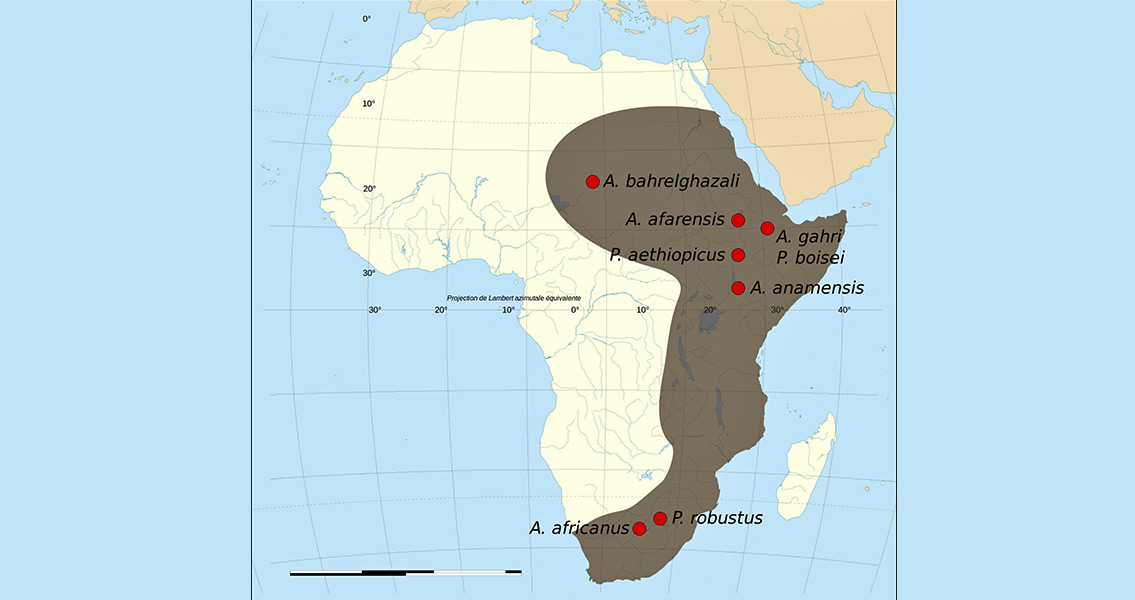
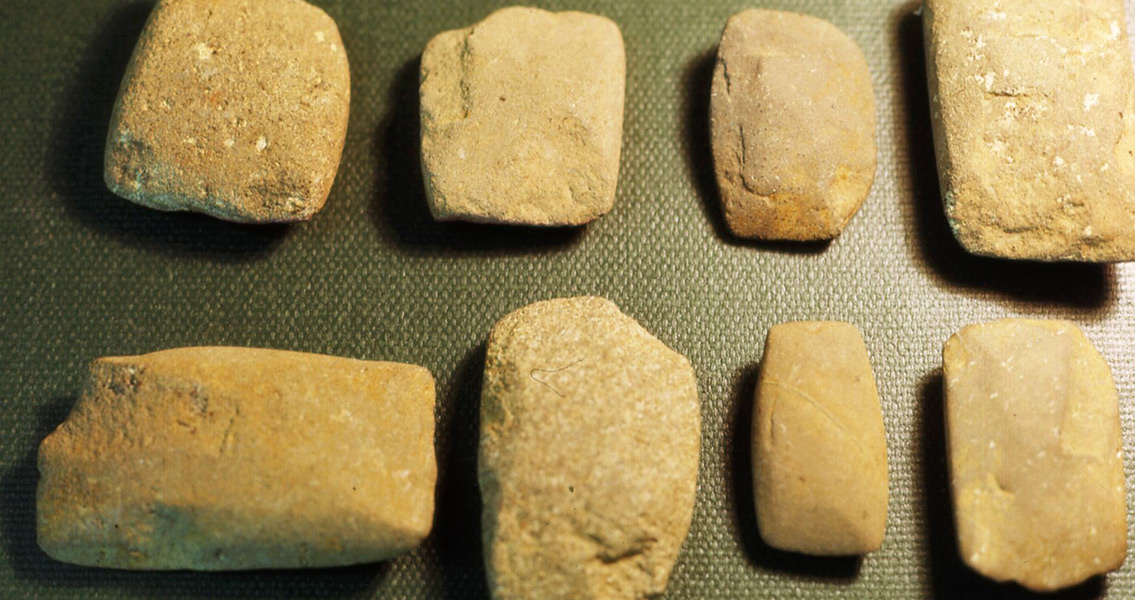
Homo genus was not the first species to discover how to do this. Lead researcher Sonia Harmand, an archaeologist at Stony Brook University, said the team found the site, near lake Turkana in northern Kenya, by accident four years ago after taking a wrong turn. They noticed several stone tools on the surface of the earth, and got digging. Their work yielded 20 more artefacts that were underground, and as many as 130 on the surface. These included cores – chunks of rock from which pieces are chipped to make tools, anvils and flakes (small pieces of stone used as tools). According to Harmand, the pieces bore marks of deliberate manipulation, so they could not have been the result of accidental fracture. The artefacts were well preserved in the sediment, so the researchers were able to date them quite accurately. One of the pieces was so well preserved that it could be fitted back to the core from which it had been chipped with the help of an anvil. As for the genus which made and used these tools, Harmand said she believed it had been either the Kenyathropus or the Australopithecus. The former was a species discovered in the same area, near lake Turkana, in 1999. The fossil was dated to between 3.2 and 3.5 million years ago, and is considered to be evidence of the diversity of pre-Homo species. The Australopithecus’ most famous representative is Lucy, the incomplete female skeleton discovered in the 1970s in Ethiopia, which supplied science with a lot of information about our early ancestors. One other interesting implication of this discovery is related to an earlier study, from 2010, when archaeologists working in Ethiopia unearthed a 3.4-million-year-old hominin child fossil, along with animal bones bearing what the authors of the study claimed were deliberate markings. The study was received sceptically, given the gap in time between what was until then considered the oldest known human tools, but now, thanks to Harmand’s team, its credibility could rise. According to the authors of the earlier study, the Australopitheci used stone tools to deflesh their prey and break the bones to get to the marrow. Both finds are evidence that technology played a major role in hominin evolution even at these early stages and, says anthropologist Alison Brooks from George Washington University, was a driver for the emergence of the Homo genus. Harmand’s team has now proposed a special term for these tools: Lomekwian technology, after the name of the excavations site, Lomekwi 3. Image courtesy of Wikimedia Commons user: John Atherton]]>