Categories
Breaking News

Neanderthal Mutations Could Still be Affecting Humans

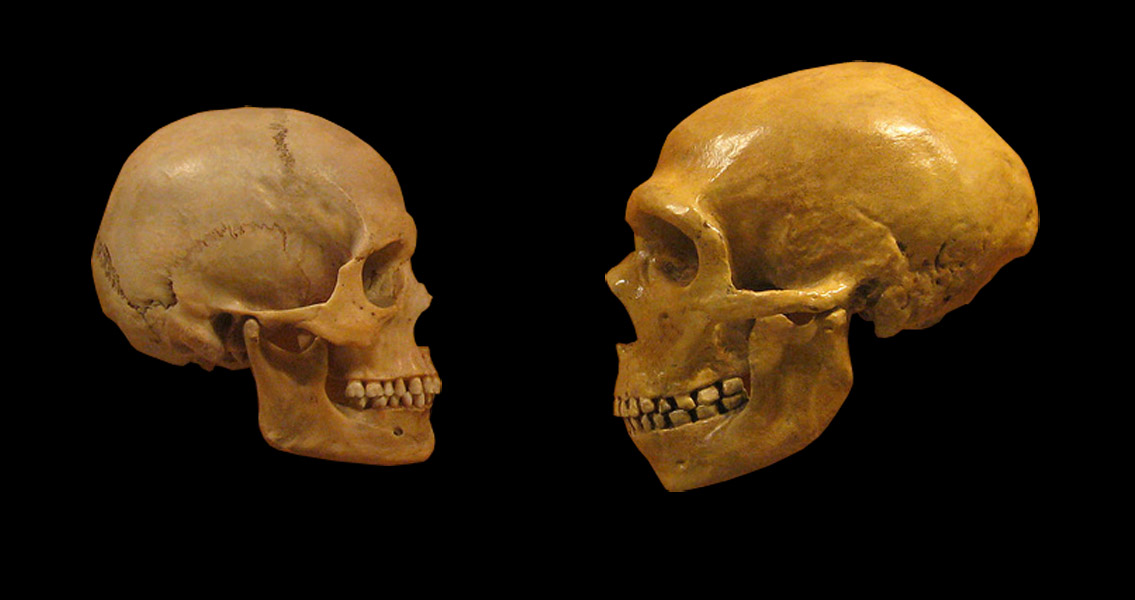
GENETICS. Harmful mutations present in the genome of Neanderthals made them up to 40% less fit reproductively than modern humans, according to the study. Although most of the effects have since been lost to time, these mutations likely passed to non-African humans when they interbred with Neanderthals. It is suggested that the mutations could still be affecting the fitness of some populations today. The study was led by Kelley Harris of Stanford University, along with her colleague Rasmus Nielse, from the University of California Berkley and Copenhagen University. “Neanderthals are fascinating to geneticists because they provide an opportunity to study what happens when two groups of humans evolve independently for a long time–and then come back together,” Harris explained. “Our results suggest that inheriting Neanderthal DNA came at a cost.” It is now widely accepted that modern humans interbred with Neanderthals, our closest extinct genetic relatives, with between 2% and 4% of genetic material in modern, non-African human populations having a Neanderthal origin. A study published earlier this year suggested that anything from the risk of depression to nicotine addiction could be connected to the mixing of human and Neanderthal genomes. Due to their smaller, more concentrated population, inbreeding was much more common among Neanderthals than modern humans, leading to their decreased genetic diversity. Harris and Nielsen were particularly fascinated by the fact that the Neanderthal genetic contribution to the modern human genome is uneven, but not random. Neanderthal sequences tend to be concentrated in certain areas, but totally absent elsewhere. “Whenever geneticists find a non-random arrangement like that, we look for the evolutionary forces that caused it,” Harris remarked. They hypothesised that the explanation could be found in natural selection. In small populations, like the Neanderthals, natural selection is less effective, allowing mutations to persist and have a larger influence. If such a mutation is introduced back into a larger population (such as modern humans) however, it’s quickly lost in the march of natural selection. To understand this process, Harris and Nielsen used computer programs to simulate mutation accumulation during Neanderthal evolution and estimate how humans were affected by the influx of Neanderthal genetic variants. They concluded that Neanderthals would have carried many mild, harmful mutations, combining to make them 40% less fit than humans in evolutionary terms. Their results also suggest that humans and Neanderthals had actually interbred much more freely and frequently than previously believed. The findings suggest that thousands of years ago, when both humans and Neanderthals inhabited the earth, closer to 10% of non-African humans’ genomes would have been Neanderthal. Shockingly, Harris and Nielsen suggest that a fraction of the harmful Neanderthal genetic mutations could still be present in modern human populations. They estimate the result could be a 1% lower reproductive fitness in modern day non-Africans. For more information: www.genetics.org]]>

Categories
Breaking News

Genetic Code Has Its Limits

Science Advances, an organism’s ability to adapt lies squarely on the shoulders of protein synthesis, so it’s critical to biological systems that the information is transferred correctly. Increasing genetic code by building proteins with customized amino acids is one of the goals scientists working with synthetic biology are pursuing. Doing this would allow scientists to assign specific functions to a specific amino acid. Researchers use organisms like bacteria and work in highly controlled systems to produce proteins with specific characteristics that will also allow them to be identified as synthetic, a key function of effective biotechnological systems. Synthetic biology combines various disciplines from within engineering and biology, such as biotechnology, molecular biology, evolutionary biology, biophysics, systems biology, genetic engineering and computer engineering, and describing the field depends a lot on your approach; as an engineer or as a biologist. It was originally considered a field of biology however, chemical and electrical engineering have started to play a larger role in recent years. In addition to the numerous technical and scientific challenges synthetic biology faces, there are the ethical and biosecurity questions. Because of previous issues raised with genetically modified organisms (GMOs) however, there are already extensive regulations in place in the U.S. and Europe. Image courtesy of Wikimedia Commons user: Artur Warchavchik]]>

Categories
Breaking News

Brain-Size Evolved with Body-Size Along for the Ride

Homo genus. “Over the last four million years, brain size and body size increased substantially in our human ancestors,” Mark Grabowski with the American Museum of Natural History and author of the paper is quoted as saying in a press release from the museum, “This observation has led to numerous hypotheses attempting to explain why observed changes occurred, but these typically make the assumption that brain and body size evolution are the products of separate natural selection forces.” That’s the very assumption now being questioned. There is significant evidence showing that the genetic variations (evolution’s kick starter) in some traits are a result of genes which are also causing simultaneous variations in other traits – leading to the conclusion that the natural selection experienced by either trait causes a correlated response in the unselected trait. For example, consider an elephant’s leg bone; as the bone grows longer, it also grows wider. If you used artificial selection to produce an elephant that was tall, it’s likely the elephant’s legs would also get wider as they get longer. This effect, in part, is because of shared genetic variations (co variations) among the traits of the leg bone. Likewise, researchers set out to investigate this type of genetic relationship between a human’s brain size and their body size and its impact, if any, on our evolution. Using the patterns of brain-size and body-size covariations from an assortment of modern humans and primates, researchers created several different models to examine exactly how these underlying genetic interactions and their associated selection pressures affected the evolution of our lineage. For the first time the findings demonstrate that the strong selection pressure to increase only brain size had a significant role in increasing body size at the same time, throughout our evolution. The phenomenon alone may also have been responsible for a major increase that occurred in both traits when our human ancestors (like Australopithecus) transitioned to Homo erectus. Selection undoubtedly played a role in fine tuning the physical changes inherent to bigger body size, this research suggests however, it was not the driving force and evolutionary models pertaining to Homo origins should be reconsidered. To put it another way, all of the scientific ideas and research done to explain why, over time, humans evolved bigger bodies may be moot; body size simply got pulled along with brain size. The work was published in the journal Current Anthropology.]]>

Categories
Breaking News

Neanderthal and Denisovan DNA in Modern Humans

www.science.sciencemag.org]]>

Categories
Breaking News

Genetic Sequencing Sheds Light on Irish Origins