Categories
Breaking News

Ovatiovermis cribratus – A New “Stand-Up” Species

Ovatiovermis cribratus, a 500-million-year-old worm no bigger than a thumb and with leg-like appendages, has recently been identified as a new species. The fossil specimen resembles a flattened shrimp, but the tiny creature, a distant relative of arthropods and tardigrades, hung around in North America’s shallow seas eons before shrimp existed. Evolutionary biologists based their approximation of the worm-like creature on two fossils, the first discovered decades ago and a second which was found by a tourist in 2011 visiting the Burgess Shale. The Burgess Shale Formation, where both specimens were found, is a UNESCO World Heritage site known for its extraordinary deposit of marine fossils. The Formation, a former seafloor, is found in the Canadian Rockies of British Columbia and boasts more than just exoskeletons and bones. It’s also known for the exceptional preservation of the soft tissues of the fossils there. At 508 million years old, Burgess is one of the earliest fossil beds known to contain soft-part imprints. The rock formation is black shale and is visible at several locations near the city of Field, B.C., in Yoho National Park and Kicking Horse Pass – a high mountain pass on the border of Alberta and British Columbia. Another outcrop is located 42 km south, in Kootenay National Park. The Burgess Shale was discovered in 1909 by Charles Walcott, a paleontologist. He returned with his family in 1910 and established a quarry at Fossil Ridge. The importance of soft-bodied preservation, and the wide range of organisms Walcott recognized as being new to science, caused him to return to the site numerous times until 1924. By 1924, at age 74, Walcott had collected more than 65,000 specimens. The name, Ovatiovermis cribratus, stems from how researchers believe the creature fed. Ovatiovermis because it’s thought the creature stood up on the seafloor, in an ongoing standing ovation of sorts, and cribratus in reference to the way it may have sieved passing water in order to collect food. Lobopodians (meaning “blunt feet” in Greek) are worm-like organisms with stubby legs. “Lobopodians have mostly been seen so far as an eclectic group. We think that suspension feeding was common among them and turned out to be important in the initial ‘burst’ of that colossal group that gave rise to water bears, velvet worms and arthropods,” Cédric Aria, a co-author of the recently published study, said in a statement. Other animals, the skeleton shrimp for example, have comparable eating patterns. The Burgess Shale Formation and its fossil-carrying deposits correlate to the Stephen formation, a collection of dark mudstones approximately 508 million years old. The beds holding the fossils were deposited at the bottom of a cliff that was around 160 meters tall, deep enough to be below the agitation caused by waves during a storm. Originally it was believed the Burgess Shale was set down in anoxic conditions, ongoing research, however, suggests oxygen was present on a continual basis. Ovatiovermis cribratus was identified in an article recently published in BMC Evolutionary Biology. Photo courtesy of Jean-Bernard Caron—Royal Ontario Museum ]]>
Categories
Breaking News

Ancient Faeces Shows Deadly Diseases Spread Along the Silk Road

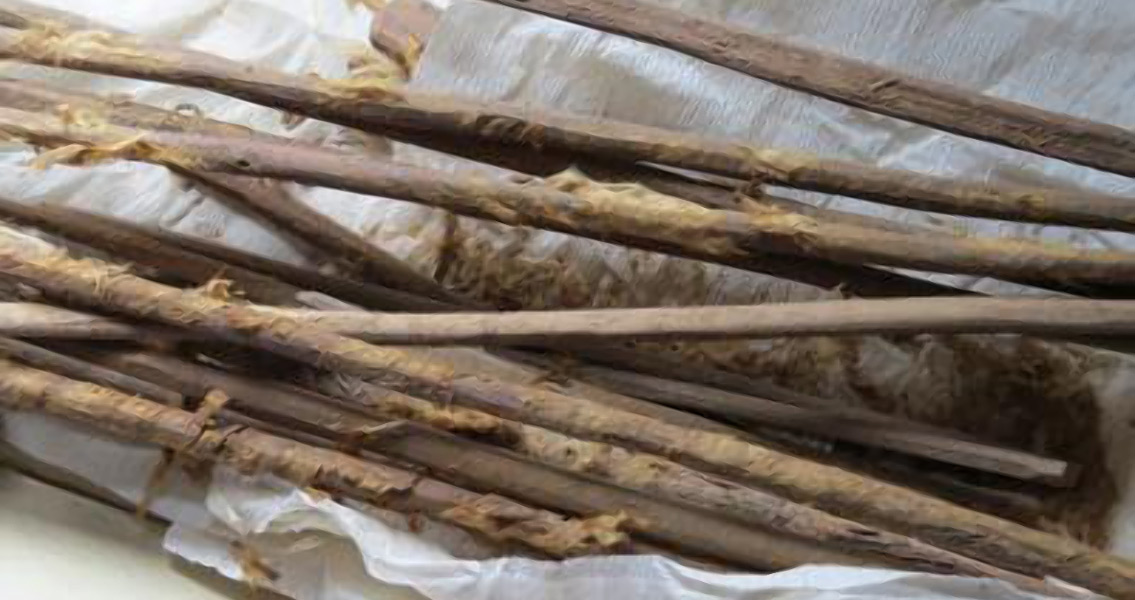
Journal of Archaeological Science: Reports, the discovery made through rather unpleasant means is described as momentous. It has long been thought that the Silk Road could have been a conduit for transporting diseases between Asia and Europe. Now, a 2,000 year old latrine in Western China has provided the first archaeological evidence that this was indeed the case. The findings are likely to be game changers in the history of the origin and dispersal of disease, possibly expanding our understanding of the spread of the Black Death in Asia and Europe, as well as other lethal diseases such as anthrax and leprosy. Hui-Yuan Yeh and Piers Mitchell from Cambridge University used microscopy to analyse the faeces preserved on ancient personal hygiene sticks (used to clean the anus). The sticks were unearthed from the latrine at what was a major Silk Road relay station on the eastern border of the Tamrin Basin, a region that includes the Taklamakan Desert. The researchers believe the latrine dates from 111 BCE and was in use until 109 CE. Chinese researchers Ruilin Mao and Hui Wang from the Gansu Institute for Cultural Relics and Archaeology carried out the initial excavations at the site in Gansu province. The relay station was a popular one, used by travellers as a place to stay, and government officials as somewhere to change horses and deliver letters. Mao and Wang found the hygiene sticks with cloth wrapped around one end. Four eggs from four parasitic worms were present in the faeces studied: roundworm (Ascaris lumbricoides), whipworm (Trichuris trichiura), tapeworm (Taenia sp.), and Chinese liver fluke (Clonorchis sinensis). The Chinese liver fluke provided the key evidence that infectious diseases could be spread over thousands of miles. A parasitic flatworm that causes abdominal pain, diarrhoea, jaundice and liver cancer, Chinese liver fluke requires well-watered, marshy areas to complete its life cycle, nothing like the dry, arid, desert-like environment the relay station was situated in. The liver fluke is simply not endemic to this region, and must have come from elsewhere. At present, the closest endemic area to the relay station for the Chinese liver fluke is Dunhuang, around 1,500 km away. The species is most prevalent in Guandong Province, some 2,000 km from Dunhuang. The authors of the study, from Cambridge University’s Department of Archaeology and Anthropology, argue that the person infected with the liver fluke must have traveled a substantial distance while infected with the parasite. As such, the finding presents the earliest archaeological evidence of diseases being carried large distances along the Silk Road. “When I first saw the Chinese liver fluke egg down the microscope I knew that we had made a momentous discovery,” said Hui-Yuan Yeh, in a press release from Cambridge University. “Our study is the first to use archaeological evidence from a site on the Silk Road to demonstrate that travellers were taking infectious diseases with them over these huge distances.” First coming to prominence during the period of the Han Dynasty in China (202 BCE – 220 CE), the Silk Road allowed merchants, explorers, soldiers and officials to travel between East Asia and the Middle East/Eastern Mediterranean. The fact that similar strains of bubonic plague, anthrax and leprosy have been found in both China and Europe has led many researchers to suggest the Silk Road was the conduit that spread the diseases, but archaeological evidence supporting this theory had been lacking. “Until now there has been no proof that the Silk Road was responsible for the spread of infectious diseases. They could instead have spread between China and Europe via India to the south, or via Mongolia and Russia to the north,” said Piers Mitchell, one of the study authors. “Finding evidence for this species in the latrine indicates that a traveller had come here from a region of China with plenty of water, where the parasite was endemic. This proves for the first time that travellers along the Silk Road really were responsible for the spread of infectious disease along this route in the past.” Image courtesy of Hui-Yuan Yeh. Reproduced from the Journal of Archaeological Science: Reports.]]>

Categories
Breaking News

200-Million-Year-Old Parasitic Interaction Uncovered

Categories
Breaking News

Mystery Ancient Fossil Identified

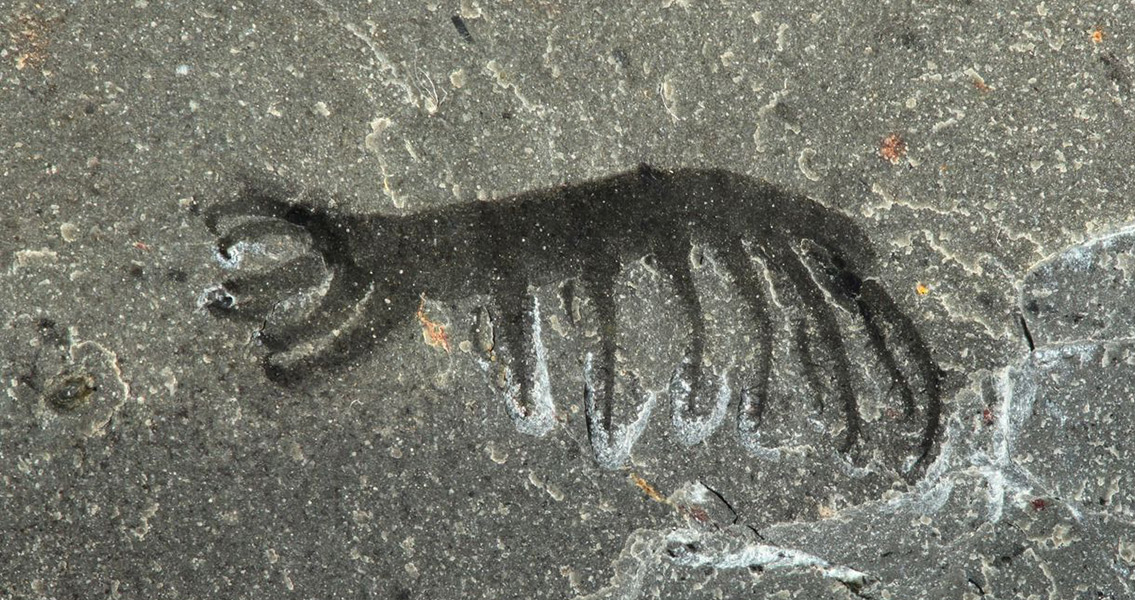
Canadia sparsa, a misnomer as he had mistakenly identified it as an ancestor of today’s earthworms and leeches. The specimen was reported to have had seven pairs of spiny legs and a row of soft tentacles along its back. It was considered to be an evolutionary misfit because of its features. Now scientists have reclassified the species as a worm. About sixty years after its discovery, Canadia sparsa was renamed Hallucigenia sparsa because scientists had started to disagree with Walcott’s annelid classification. Twenty years later, in 1991, Lars Ramskold of the Swedish Museum of Natural History led a team that realized that the tentacles reported to be on the specimen’s back were actually legs, what were thought to be spiny legs were just spines, and the featureless grey head was actually the tail. They argued that the fossil had initially been interpreted backwards and upside-down. Now scientists from Cambridge University have concluded that Hallucigenia was an ancestor of the velvet worms mostly found in tropical rainforests around the world, ending fears that the specimen signified an evolutionary dead end. The scientists at Cambridge used the specimen’s claws to identify the Cambrian species. Based on fossil records the Cambrian Radiation, or Cambrian Explosion, refers to the rapid appearance of major phyla in the animal kingdom, around 530 million years ago. Before this, life on earth was mostly made up of single-celled organisms, which sometimes organized themselves into colonies. Over a period of 70 to 80 million years, the rate of evolution sped up to develop the species that are similar to the animals we see today. The Cambrian expansion ended about 488 million years ago. Since the 1970s, the Hallucigenia was thought to be closely related to the velvet worm, but evidence linking them was hard to find, plus the Hallucigenia’s claws hadn’t been studied in detail like they were recently. It was through analysis of the claws that the connections between the prehistoric creature and today’s creatures were drawn. The scientists found that the spines on the worm’s back were made of a keratin-like substance, similar to that in our fingernails. This can also be found in the jaw regions of today’s velvet worms. Modern velvet worms are themselves very unusual creatures. They are divided into eighteen species which all prey on smaller insects. They capture their prey by secreting a sticky substance. They are also able to produce live young. One of the biggest talking points will be the link found between onychophorans (velvet worms) and arthropods (insects, crustaceans and arachnids). The Hallucigenia find shows that they are distant cousins. Research shows that arthropods are actually closer relations to water bears, which are able to survive vacuums and sub-zero temperatures. The Cambridge scientists see the recent discovery as a bridge linking pre-Cambrian organisms to what we have today. The study was published in the journal “Nature”. ]]>