Categories
Breaking News

15,000kg Dinosaur Fossil Identified after Being Ignored for Decades

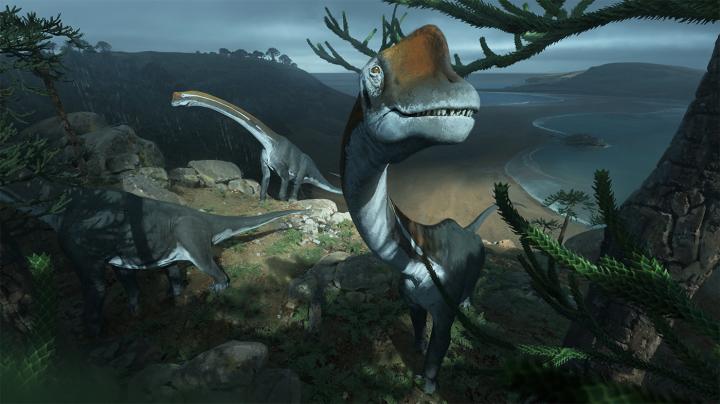
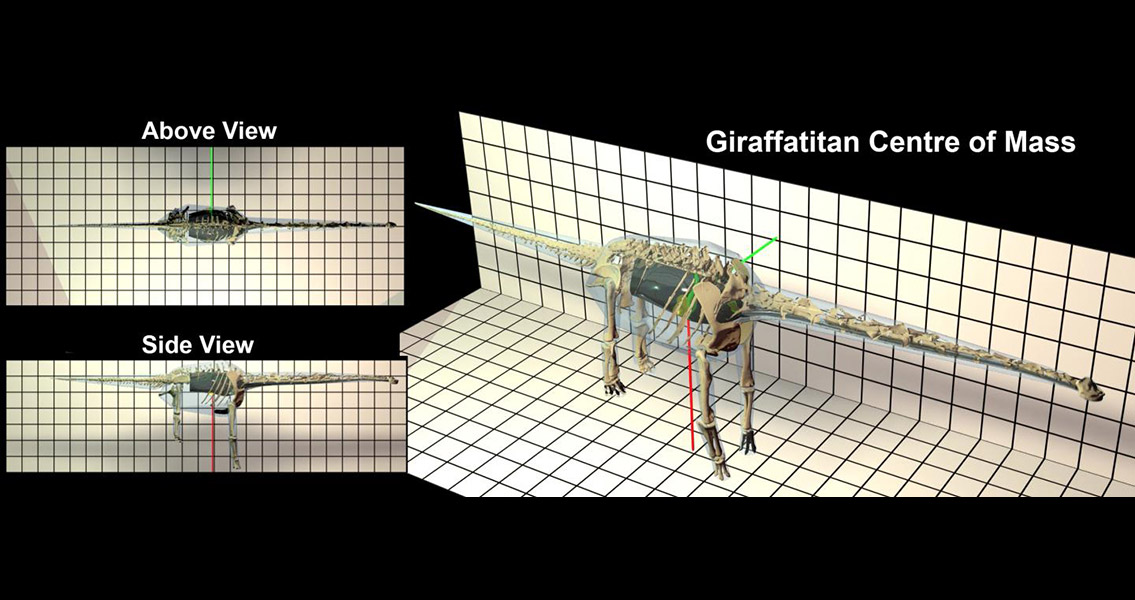
Vouivria damparisensis. Dated to around 160 million years old, V. damparisensis is the earliest recorded fossil from the titanosauriform family, a group of dinosaurs which includes the likes of Brachiosaurus. Analysis of the fossil suggests the specimen died at a young age, weighed around 15,000 kilograms and measured over 15 metres in length. Its neck was spectacularly long and was likely held at a 45 degree angle. Much like other titanosauriforms, the creature also boasted a long tail and four legs of equal length. “Vouivria would have been a herbivore, eating all kinds of vegetation, such as ferns and conifers.” said Dr Philip Mannion, the lead author of the study from the Department of Earth Science and Engineering at Imperial College London, in a press release. “This creature lived in the Late Jurassic, around 160 million years ago, at a time when Europe was a series of islands. We don’t know what this creature died from, but millions of years later it is providing important evidence to help us understand in more detail the evolution of brachiosaurid sauropods and a much bigger group of dinosaurs that they belonged to, called titanosauriforms.” Titanosauriforms were the last surviving group of long necked dinosaurs, only coming to an end with the end-Cretaceous mass extinction event which wiped out the majority of life on earth. The gigantic, diverse group of sauropods originated in the Late Jurassic and included some of the largest creatures to have ever walked the planet. V. damparisensis‘ discovery looks set to greatly aid scientists in understanding the evolution and spread of titanosauriforms across the globe, a subject which has until now proven difficult to shed light on due to a limited fossil record for the earliest members of the family. By incorporating the new species into the fossil timeline, the team have shown that by the Early Cretaceous brachiosaurids were likely restricted to what is now Africa and the USA, and probably extinct in Europe. The discovery also throws into question the previously held belief that brachiosaurids spread as far as South America. Scientists have previously suggested that a sauropod dinosaur called Padillasaurus, whose remains have been found in South America, was a brachisosaurid. The discovery of V. damparisensis however, points to that not being the case. The genus name of the new creature is derived from the old French word for viper – vouivre. In the French-Comte region where the fossil was discovered, ‘la vouivre’ is a legendary winged reptile. The species name damparisensis meanwhile, refers to the village of Damparis where the fossil was first found in 1934. Image courtesy of Imperial College London/Chase Stone]]>
Categories
Breaking News

Computer Model Reveals How the Largest Dinosaurs Evolved

Categories
Breaking News

Origins of the T.rex: Brains Came Before Brawn

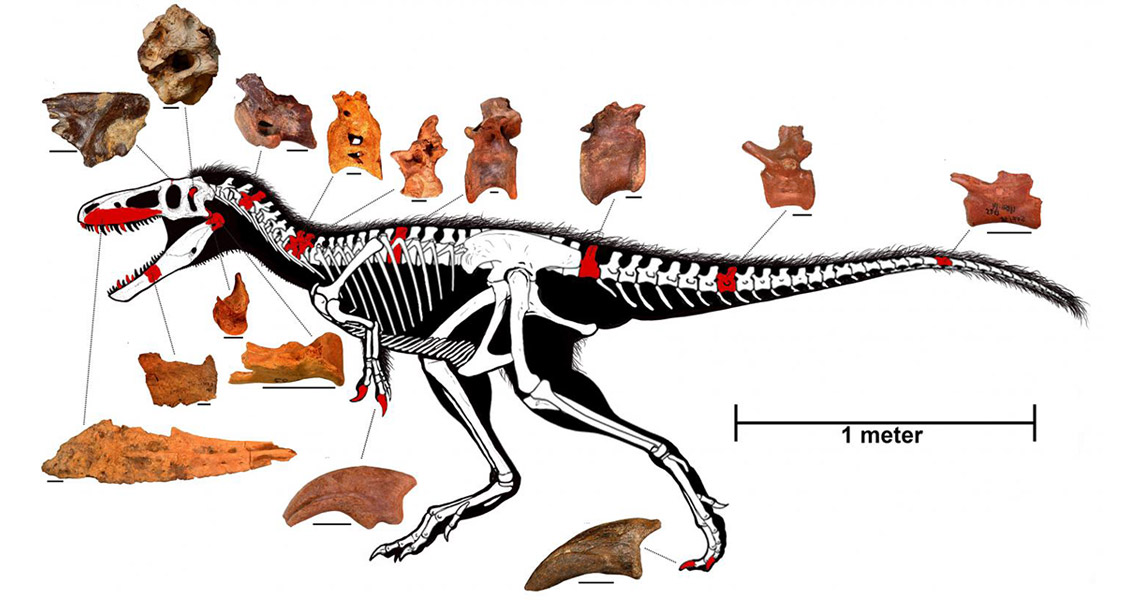
Timurlengia euotica, were discovered over the course of nine years during international expeditions to the Kyzylkum Desert of Uzbekistan. The creature lived around 90 millions years ago, and slots into a 20 million year gap in the fossil record of tyrannosaurs. Although a fellow tyrannosaur, T.eutoica is not the ancestor of T-Rex. About the size of a horse, Timurleniga could have weighed up to six hundred pounds. Its long legs mean it was likely a fast runner. “Timurlengia was a nimble pursuit hunter with slender, blade-like teeth suitable for slicing through meat,” explained Hans Sues, chair of the Department of Paleobiology at the Smithsonian’s National Museum of Natural History, in a press release. “It probably preyed on the various large plant-eaters, especially early duck-billed dinosaurs, which shared its world. Clues from the life of Timurlengia allow us to fill in gaps and better understand the life and evolution of other related dinosaurs, like T. rex.” Perhaps surprisingly, the study, published in the Proceedings of the National Academy of Sciences, suggests that brains came before brawn in the evolution of Tyrannosaurs. Prior to the development of their giant size and strength, Tyrannosaurs developed keen senses and cognitive abilities. These heightened abilities allowed them to reach the top of the food chain after other large meat eating dinosaurs had gone extinct, 80 – 90 million years ago. Although typically associated with North America, T.rex’s and other Cretaceous dinosaurs mostly had their routes in Central Asia. “The discoveries from the Kyzylkum Desert of Uzbekistan are now helping us to trace the early history of these animals, many of which later flourished in our own backyard in North America.” Sues said in the press release. The new species was discovered while Sues and a team of paleontologists led by Steve Brusatte at the University of Edinburgh were sorting through the bones brought back from the Kyzylkum Desert. CT scans of the brain case allowed the team to reconstruct Timurlengia’s brain and gather insights into the development of its abilities. “The ancestors of T. rex would have looked a whole lot like Timurlengia, a horse-sized hunter with a big brain and keen hearing that would put us to shame,” explained Brusatte. Tyrannosaurs originated in the Jurassic Period around 170 million years ago, but they were barely the size of a human. 100 million years later, in the Cretaceous Period, they had evolved into animals like T-rex, which weighed up to 7 tons. The fact Timurlengia was so small, despite living some 80 million years after tyrannosaurs had first appeared, indicates the group’s terrifying size only occurred relatively late in their evolutionary history. For more information: www.pnas.org Image courtesy of © Proceedings of the National Academy of Sciences]]>

Categories
Breaking News

New Species of Jurassic Dinosaur Discovered in Wales

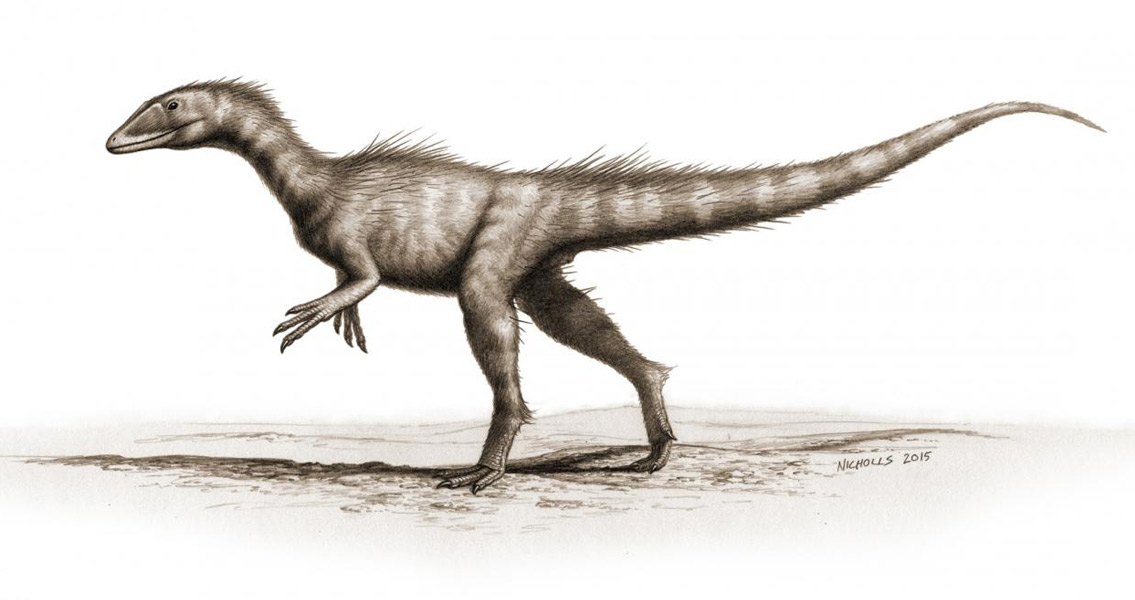
Plos One believe the creature had died on a nearby prehistoric island before being washed out to sea. Ending up on the Welsh coast, the theropod was buried in sediments over millions of years until eventually it was completely encased in what is today the cliff face at Lavernock Point. Following careful analysis at Portsmouth University, it was confirmed that the creature was indeed a totally new species of dinosaur. Scientists have named the theropod: Dracoraptor hanigani – the first part of the name means ‘dragon robber’, and is a reference to the national symbol of Wales, and the fact the creature belongs to the Raptor family. The second part is a tribute to the people who first discovered the fossilised remains: Nick and Rob Hanigan. According to the study, written by David Martill from the University of Portsmouth and his colleagues from the National Museum Wales and the University of Manchester, the creature could be the oldest Jurassic dinosaur ever discovered in the UK, possibly even in the world. Steven Vidovic, a paleontologist at Portsmouth University who worked on the remains and co-authored the study, told the Guradian: “It’s the best dinosaur fossil Wales has ever had.” 40% of Dracoraptor hanigani‘s skeleton has been recovered, including bones from all over its body. Piecing together the sections of snout, teeth, neck, arm, hand, pelvis, leg, foot and tail the paleontologists have started to make conclusions about this prehistoric creature. In life the specimen would have measured 70 cm tall and two metres long, with a long tail likely used to help its balance. Dracoraptor hanigani had sharp front teeth combined with smaller, serrated ones, leading the team to conclude the dinosaur was a meat eater. Many of its bones were not yet fully formed or fused, suggesting the specimen may be of a juvenile dinosaur. The discovery of the creature has the potential to fill some significant gaps in knowledge concerning a crucial period in the evolution and development of dinosaurs. Stratigraphic analysis of the cliffs where the remains were found indicate the creature lived in the Lower Jurassic period, a time when Theropod dinosaurs were likely to have been diversifying rapidly but from when very few remains are available. For Europe especially, all Theropod fossils tend to be isolated, fragmented bones. Mr. Vidovic explained Dracoraptor hanigani‘s significance in a press release: “The Triassic-Jurassic extinction event is often credited for the later success of dinosaurs through the Jurassic and Cretaceous, but previously we knew very little about dinosaurs at the start of this diversification and rise to dominance. Now we have Dracoraptor, a relatively complete two meter long juvenile theropod from the very earliest days of the Jurassic in Wales.” For more information: Plos One Image courtesy of Bob Nicholls]]>

Categories
Breaking News

200-Million-Year-Old Parasitic Interaction Uncovered

Categories
Breaking News

Unique Bat-Like Dinosaur Found in China

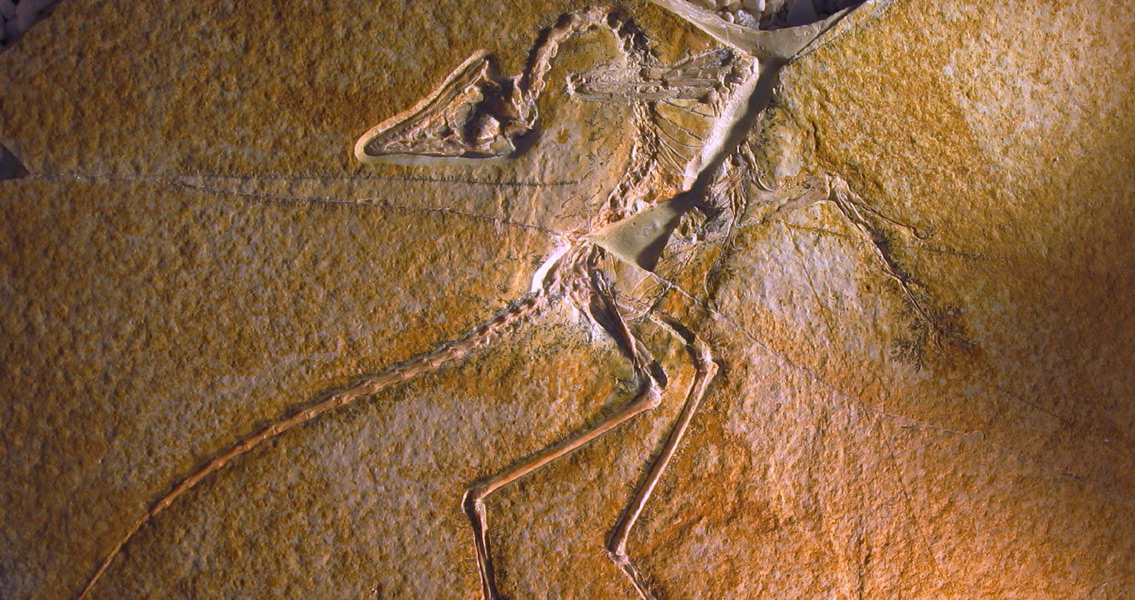
scansoriopterygids, characterised by their long hands, that lived 160 million years ago. All fossilised remains from this group come from China and none of them have such a bone connected to their wrists. This, coupled with the fact that bats and flying squirrels have similar bones on their hands, led the scientists to the suggestion that the dinosaur had wings made from skin, not feathers. The team, including Xu Xing and Corwin Sullivan from the Chinese Institute of Vertebrate Paleontology and Paleoanthropology, and Zheng Xiaoting from Linyi University, named the creature Yi qi, meaning “strange wing”. They explained that at this stage it is impossible to determine whether the wings were used for flapping or gliding but in any case no other dinosaurs that have been discovered in this group of species had anything like them. Zheng said that Yi qi must have been a flight pioneer, given that it lived in the Jurassic era, long before feathered dinosaurs took to the air. However, the evidence is scarce, so it is likely that the publication detailing the find and the scientists’ conclusions will cause controversy. Although it has been long suspected that modern birds evolved from dinosaurs, until recently there was no hard evidence proving the link. Just last year, paleontologists completed a comprehensive family tree of a group of carnivorous dinosaurs from which birds are thought to have evolved. The tree reveals that, unlike with humans, this evolutionary process was gradual, with no “missing links”. Simply put, 150 million years ago a group of small dinosaurs started changing, acquiring bird-like skeletons, beaks and feathers. This process took tens of millions of years, accelerating over time. This, paleontologists explain, is because once the bird skeleton was in place, it greatly increased the potential for further evolution and diversity. For the sceptics, bird DNA has also been linked to dinosaur DNA, including that of the Tyrannosaurus Rex. In 2007, US researchers managed to extract collagen, a protein from the soft tissue of a bone, from the remains of a Tyrannosaurus that had lived 68 million years ago. The closest collagen type found in a modern animal was that in chicken bones. This discovery helped add more weight to the hypothesis that birds evolved from dinosaurs. Image courtesy of Wikimedia Commons user: H. Raab]]>