Categories
Breaking News

Unusual Burial Discovered at the Settlement that Doesn’t Exist

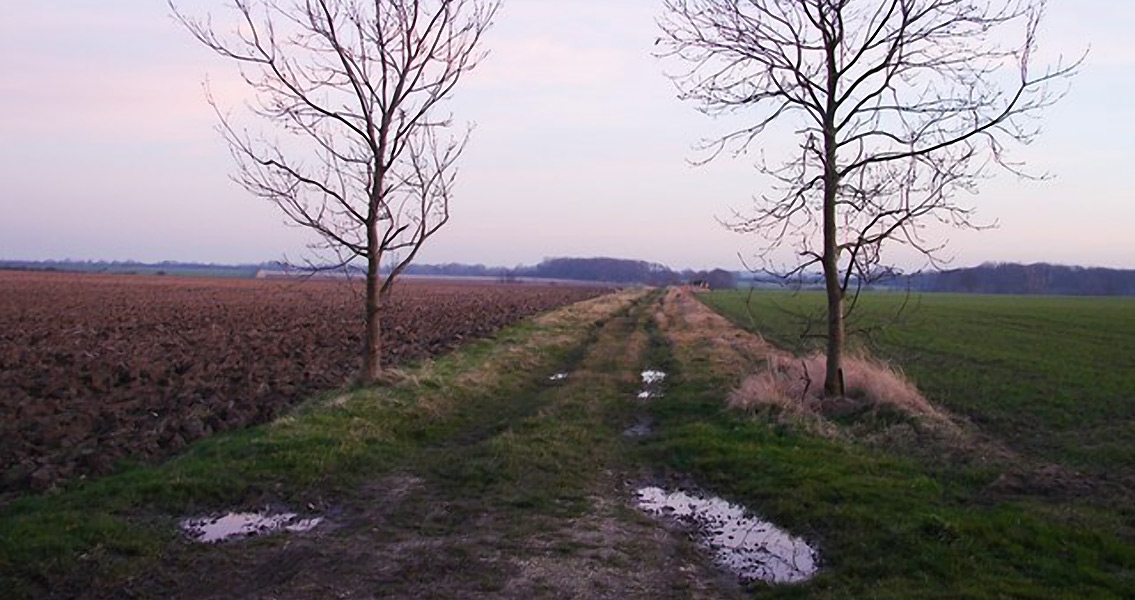
Lincolnshire Live: “What makes this a really interesting burial is the fact that they have been buried on their front. But there’s something else that really makes it special. You see how narrow it is in the grave. It’s about 25cm between the shoulders, it’s really crammed together.” The incredible discovery featured in an episode of Digging for Britain, presented by Anthropologist Professor Alice Roberts. Professor Roberts described the burial of a Christian person in this fashion as “bizarre”, adding, “What we can say for definite is it was buried after the body had started to decompose. The limbs have started to fall away from the rest of the body, but great care has been made to try to put the body back.” Dr. Willmott is quoted by Lincolnshire Live as saying: “A great deal of care has been taken in this burial. So this could be an individual who perhaps has died away from the site and been brought here to be interred here specially. There are stories of the bodies of kings being moved. And of course saints and holy people. So there could be something like that going on here, which suggests Little Carlton was a place of great importance.” The unusual skeleton was just the first of many rare and intriguing finds, including writing tools, approximately 300 clothing pins, a large number of coins dating to the seventh and eighth centuries called Sceattas, a lead tablet with the faint, but still legible word Cudberg (an Anglo-Saxon woman’s name) on it, and glassware that suggested the inhabitants traded with the European mainland. Another rare find in Britain, an iron manacle, was also found, suggesting the site was the location of a slave-trade operation or slaves were owned by the occupants. Additionally, a pair of tweezers commonly used to turn book pages were recovered and may have been used by Christian monks as they read religious manuscripts. Today the site is completely surrounded by dry land, however, it’s believed that in the past the site would have been surrounded by water, and that it was probably occupied by either a trading post or monastery within the Anglo-Saxon Kingdom of Lindsey. The settlement also produced woven textiles that were exported to northern Europe, while German pottery and wine were imported from the mainland. Bizarrely, there is no record of the settlement ever existing. It’s believed that it was abandoned when the Viking raids in England started in the later part of the eighth century, and there was no trace of it ever being there by the time the Domesday Book (a survey of England and areas in Wales) was completed in 1086. Images of the burial can be found at Lincolnshire Live ]]>
Categories
Breaking News

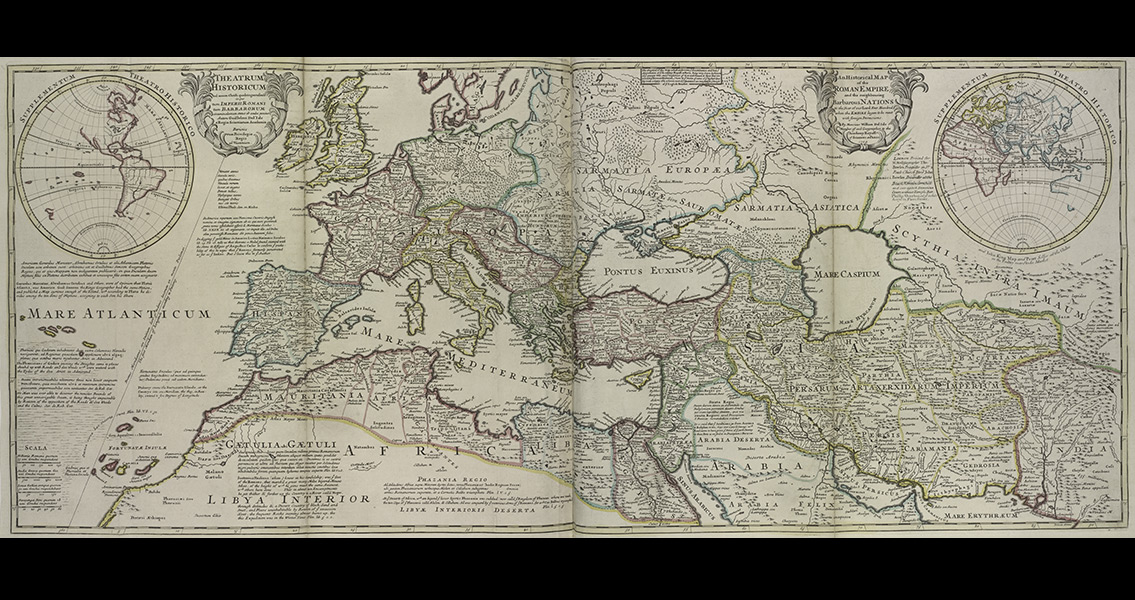
Discovery in Devon Expands the Boundary of Roman Rule in Britain

This article was changed on 1st July 2016. The original wrongly claimed that the Roman Empire had ruled over the entirety of Great Britain]]>

Categories
Breaking News

Skull a 'Game Changer' for South-East Asia Prehistory

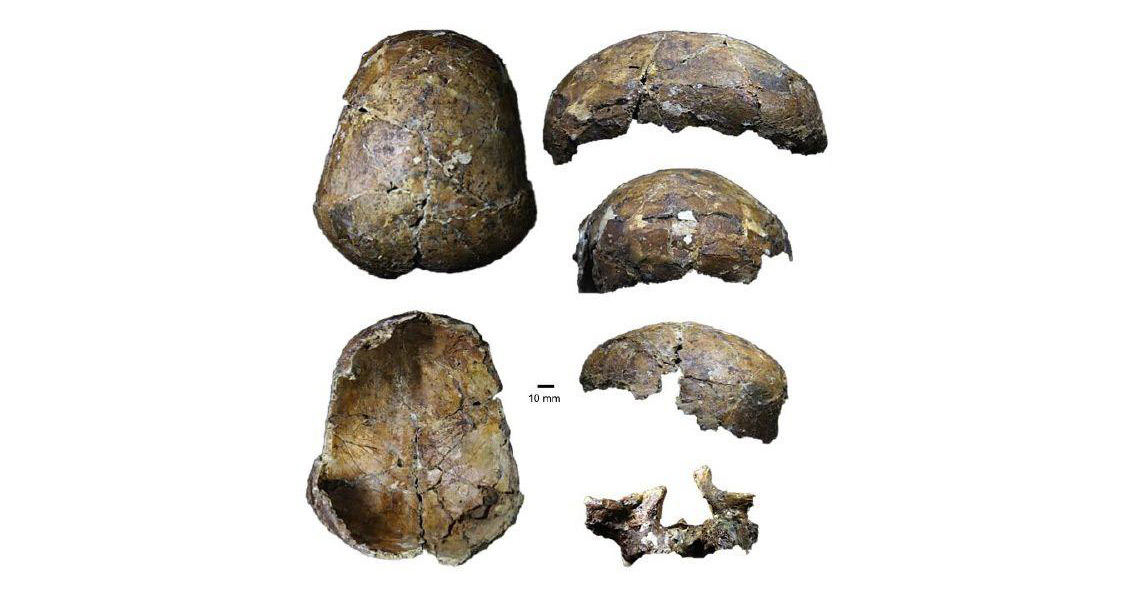
Ecology and Evolution, has brought this conclusion into question. Led by UNSW Australia Associate Professor Darren Curnoe, the research is the most comprehensive study of the skull since it was first found in the Niah Cave in Sarawak, Borneo, in 1958. “Our analysis overturns long-held views about the early history of this region,” said Associate Professor Curnoe, Director of the UNSW Palaeontology, Geobiology and Earth Archives Research Centre (PANGEA), in a press release from the University of New South Wales. “We’ve found that these very ancient remains most closely resemble some of the Indigenous people of Borneo today, with their delicately built features and small body size, rather than Indigenous people from Australia.” Among other revelations, the team have determined that the Deep Skull was likely to have belonged to a mature woman rather, than a teenage boy as previously believed. Scientists often advocate a ‘two layer hypothesis’ for the history of settlement in South-East Asia. This argues that the region was first settled tens of thousands of years ago by people related to Indigenous Australians and New Guineans. Farmers from southern China then preceded to migrate through and settle in the region, but only a few thousand years ago. The Deep Skull was considered major supporting evidence for this view, proof that 37,000 years ago the inhabitants of Borneo were similar to Indigenous Australians. The new study however, throws those assumptions up in the air. “Our discovery that the remains might well be the ancestors of Indigenous Bornean people is a game changer for the prehistory of South-East Asia.” explained Ipoi Datan, Director of the Sarawak Museum Department. The results suggest that, in Borneo at least, the people living there 37,000 years ago were much more like those who live there today, instead of Indigenous Australians. It also points to a long lasting continuity among the people who lived in the region, throwing serious doubt on the two layer hypothesis. “Our work, coupled with recent genetic studies of people across South-East Asia, presents a serious challenge to the two-layer scenario for Borneo and islands further to the north,” said Curnoe. Another ramification of the study is that the indigenous Borneans were not replaced by the migrating Chinese farmers, but instead adapted to the new farming culture when it arrived 3,000 years ago, further complicating our understanding of the prehistory of South-East Asia and raising questions about the dynamics at play during the processes of migration, settlement and resettlement. “We need to rethink our ideas about the region’s prehistory, which was far more complicated than we’ve appreciated until now.”, concluded Curnoe. Image courtesy of Curnoe]]>

Categories
Breaking News

Fermented Fish Cause Rethink of Early Nordic Communities

www.sciencedirect.com Image courtesy of Lund University]]>