Categories
Breaking News

Neanderthals Never Had a Chance – The History News of the Week

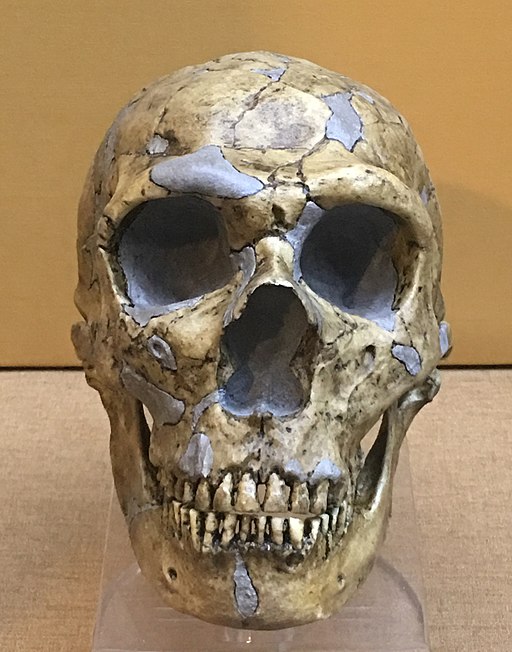
Neanderthals Were Always Doomed A new study, published this week in the journal Nature Communications, claims the Neanderthals were doomed the moment humans entered Eurasia. Scientists have long been trying to determine the cause of the Neanderthals’ extinction. Theories have ranged from the spread of humans providing too much resource competition for the Neanderthals’ to survive, to climate change or fundamental genetic limitations. The latest study suggests that the Neanderthals’ fate was inevitable. The Stamford University scientists used computer modelling to show that the migration of modern humans from Africa into Asia meant humans were always going to eventually replace Neanderthals, whatever factors might have played a role in the species’ collapse. “Here we show that a scenario of migration and selectively neutral species drift predicts the Neanderthals’ replacement,” the authors write in the introduction to their study. Neanderthals inhabited Eurasia for over 300,000 years, yet within 15,000 years of the arrival of modern humans to the region, our closest extinct living relatives were extinct. “We suggest that although selection and environmental factors may or may not have played a role in the inter-species dynamics of Neanderthals and modern humans, the eventual replacement of the Neanderthals was determined by the repeated migration of modern humans from Africa into Eurasia,” the authors write. “Our simple model suggests that recurring migration from Africa into the Levant and Europe—even at a low rate—was sufficient to result in the Neanderthals’ replacement even if neither species had a selective advantage over the other, and regardless of possible differences in population size between the two species.” Fossils of Humans’ Oldest Ancestors Discovered in Southern England Fossils of the oldest mammals from the line that led to mankind have been discovered on England’s Jurassic Coast. The small, rat like mammals lived 145 million years ago, at the time of the dinosaurs, and are the ancestors of most mammals alive today – from humans to blue whales. A team of researchers led by Dr Steve Sweetman from the University of Portsmouth identified the two fossilised teeth of the creatures found on the Dorset coast. Portsmouth graduate student Grant Smith made the initial discovery. “Grant was sifting through small samples of earliest Cretaceous rocks collected on the coast of Dorset as part of his undergraduate dissertation project in the hope of finding some interesting remains. Quite unexpectedly he found not one but two quite remarkable teeth of a type never before seen from rocks of this age. I was asked to look at them and give an opinion and even at first glance my jaw dropped,” Dr Sweetman explained in a University of Portsmouth press release. “The teeth are of a type so highly evolved that I realised straight away I was looking at remains of Early Cretaceous mammals that more closely resembled those that lived during the latest Cretaceous – some 60 million years later in geological history. In the world of palaeontology there has been a lot of debate around a specimen found in China, which is approximately 160 million years old. This was originally said to be of the same type as ours but recent studies have ruled this out. That being the case, our 145-million-year-old teeth are undoubtedly the earliest yet known from the line of mammals that lead to our own species.” According to Dr Sweetman, the animals were likely furry, nocturnal creatures. He believes the smaller one may have eaten insects and could have been a burrower, while the larger may have eaten plants as well as insects. “The teeth are of a highly advanced type that can pierce, cut and crush food. They are also very worn which suggests the animals to which they belonged lived to a good age for their species. No mean feat when you’re sharing your habitat with predatory dinosaurs.” The teeth were recovered from exposed rocks in cliffs near Swanage, a site which has yielded thousands of fascinating fossils in the past. According to Smith’s supervisor, Dave Martill, a professor of Biology at the University of Portsmouth, it quickly became apparent that they’d discovered something remarkable. “We looked at them with a microscope but despite over 30 years’ experience these teeth looked very different and we decided we needed to bring in a third pair of eyes and more expertise in the field in the form of our colleague, Dr Sweetman. “Steve made the connection immediately, but what I’m most pleased about is that a student who is a complete beginner was able to make a remarkable scientific discovery in palaeontology and see his discovery and his name published in a scientific paper. The Jurassic Coast is always unveiling fresh secrets and I’d like to think that similar discoveries will continue to be made right on our doorstep.” A study detailing the findings has been published in the journal Acta Palaeontologica Polonica. Ancient Egyptian Papyri Ink Contained Copper The black ink used by Ancient Egyptian scribes contained copper, according to new analysis by the University of Copenhagen of 2,000-year-old papyri fragments. It’s generally been assumed that writing ink was primarily carbon-based until the fourth and fifth centuries CE, but by carrying out X-ray microscopy on the fragments, the Danish researchers have shown that copper, an element never before identified in ancient ink, was used. Intriguingly, even though the papyri fragments were written over a period of three centuries and originate from different regions, the team’s results did not show much variation. “The composition of the copper-containing carbon inks showed no significant differences that could be related to time periods or geographical locations, which suggests that the ancient Egyptians used the same technology for ink production throughout Egypt from roughly 200 BCE to 100 CE,” said Egyptologist and first author of the study Thomas Christiansen from the University of Copenhagen. Private papers of an Egyptian soldier named Horus, who was stationed at a military camp in Pathyris, and the Tebtunis temple library, were the two primary sources of the papyri. The fragments all formed parts of larger manuscripts which are currently part of the Carlsberg Collection at the University of Copenhagen. “None of the four inks studied here was completely identical, and there can even be variations within a single papyrus fragment, suggesting that the composition of ink produced at the same location could vary a great deal. This makes it impossible to produce maps of ink signatures that otherwise could have been used to date and place papyri fragments of uncertain provenance,” explains Christiansen. “However, as many papyri have been handed down to us as fragments, the observation that ink used on individual manuscripts can differ from other manuscripts from the same source is good news insofar as it might facilitate the identification of fragments belonging to specific manuscripts or sections thereof.” The researchers suggest that their findings, which have been published in the journal Scientific Reports, could also greatly aid conservation efforts of ancient Papyri. Featured Image: Homo neanderthalensis skull – a hominid fossil reconstruction in the Beijing Museum of Natural History – China, July 2017. Image courtesy of Wikimedia Commons user: Bjoertvedt ]]>
Categories
Breaking News

History News of the Week – Ancient Egyptian Prosthesis Studied

New insights into remarkable Ancient Egyptian prosthesis Egyptologists from the University of Basel have been examining a 3,000-year-old prosthetic big toe from Ancient Egypt. Discovered in a female burial from the necropolis of Sheikh Abd el-Qurna close to Luxor, the prosthesis had been studied before, but the Swiss team have now examined it using the most cutting-edge techniques, such as modern microscopy, X-ray technology and computer tomography. It’s been revealed that the remarkable artefact was refitted several times to its owner, a priest’s daughter. The researchers have also reclassified the materials used in the wooden toe’s construction, and determined how the prosthesis was made and utilised. The new analysis has revealed the skill involved in the toe’s construction, particularly in the mobility the prosthesis would have offered, and the intricately designed belt strap which would have fastened it to its wearer. Together with experts from ETH Zurich, the scientists from Basel are assessing the natural and man-made structures of the tomb and its surroundings. According to a statement from the University: “The specialists are currently developing geometric precise digital elevation, landscape, and architecture models for this area. These will then be combined to an archaeological and geological 3-D map that will illustrate the morphology of the terrain as well as the investigated subterranean structures. On that basis, the researchers want to reconstruct and simulate the development of the cemetery and its use phases.” Water Bottles used by Native Americans could have been poisonous A new study suggests that the water bottles manufactured by Native Californian Americans could have been detrimental to their health. Scientists recreated the Native American water bottles to gain insights into the manufacturing process. In particular, they wanted to see if bitumen, a material derived from petroleum, could have had an impact on the indigenous Californians’ health. The team made two types of ancient water bottle using traditional Native American methods. One of the bottles was lined with soft bitumen, known as ‘malak’, which washes ashore after seeping through the ocean floor, and one was lined with hard bitumen, known as ‘woqo’, typically found in land deposits. “In accordance with historical records, we used a Monterey chert flake and a bird bone awl to weave baskets from soft rush plants from California. We sourced abalone shells to use as mixing dish and heated the bitumen with metavolcanic pebbles before applying to the basket by hand using a sea mammal bone,” said Kevin Smith, co-author of the study and a PhD student from the University of California. Bitumen consists of polycyclic aromatic hydrocarbons (PAHs), which are linked with health problems such as cancer, hormone imbalances, organ damage and developmental impairments. After studying the recreated bottles, the scientists behind the study found that although storing water in the bitumen lined bottles didn’t cause dangerous levels of PAHs to leech out – even after two months, olive oil quickly became contaminated, suggesting the storage of fatty foods could have been a health risk. Dr Sabrina Sholts, lead author of the study from the Smithsonian Institution’s National Museum of Natural History, said: “To our knowledge, this is the first time that experimental archaeology has been used to quantify PAH exposure in an ancient population. We believe that our research provides a deeper temporal context for understanding health impacts and evolutionary changes related to harmful chemical exposure caused by human technology.” The study has been published in the journal Environmental Health. Nazi artefacts found in Argentina could be fake On 20th June, the New York Post reported a “a trove of original Nazi artefacts” had been discovered in Argentina. Among the objects were an original bas relief of Hitler and a medical device used for measuring heads. The collection of 75 objects was found hidden in an art collector’s home, just outside the capital city of Buenos Aires. According to the Associated Press, the objects are believed to have belonged to high-ranking Nazis in Germany. “Our first investigations indicate that these are original pieces,” Argentine Security Minister Patricia Bullrich told the Associated Press On 24th June, the Washington Examiner reported that the objects could be fake, citing a leading auctioneer of Nazi artefacts, Bill Panagopulos, president of Maryland-based Alexander Historical Auctions. Panagopulos said the items were ‘obvious replicas’, after seeing video footage and pictures of the artefacts. The art collector whose home the objects were discovered in is still under investigation. Image courtesy of University of Basel, LHTT. Image: Matja� Kačičnik ]]>

Categories
Editorial

A Short History of Ancient Theatre

Cennarium bring it back to our lives in the digital format. Theatre is here to stay, so let us take a short look at the historical timeline of its development. Primitive Tribal Dance (8500 BCE) Dancing was an integral part of most shamanistic rituals. Body movements naturally accompanied rites of passage and were present in spirit- appeasing performances. Dancing was then primitive, to say the least. It had been synchronised with rhythmic chanting and drumming with simple instruments such as sticks and stones. Shamanism and Ritual (pre-2500 BCE) The shaman is the holy person of a tribe. He communicates with the divine through elaborate rituals. The fact that shamanism foreshadows theatre is evident in the existence of theatrical elements that are present in a shamanistic ritual. These include song, dance, music, characterization, hypnotism, illusion, clowning, and ventriloquism. Rituals were spectacular performances through which humans tried to ensure success in battle, hunting, and life in general. They used various significant artefacts, which now serve as proof for the fact that the first theatrical performances arose from such rituals. One of the first records of a ritual depiction of a myth was as early as 2500 BCE and was performed annually in Egypt. First Recorded Dramatic Production (1887 BCE) The first ever recorded dramatic production is the Egyptian Passion Play that celebrated the mythical and divine king Osiris. The play was held annually for several centuries and it depicts the struggles and triumphs of the Egyptian king and god. As stated by Greek historians, those plays were so realistic that some of the actors consequently died from the severity of their wounds. Dance as Entertainment (1400 BCE) It is not an easy task to determine the exact date of the origin of dance as we know it today. Unfortunately, there are not many artefacts or cave paintings that clearly depict or represent dancing. However, some Egyptian paintings have been found to represent scantily clad girls who danced to music played by seated musicians. The dancing occurred in tombs, as the women tried to bring delight to the deceased and bring them happiness during their next world residence. This is probably one of the earliest representations of dance as entertainment. Dramatic Dance, Myth and Storytelling (800 BCE- 600 BCE) Dancing was definitely a precursor of the theatre as we know it and today it is its integral part. Variations of a dramatic dance included animal imitation, gymnastics and synchronised rhythmic movements. As time went by, people added sound, costumes and masks so as to make the event more spectacular. Since the creation of language, myths and stories were used as devices for learning and entertainment. Oral storytelling was extremely important when it comes to the development of theatre. The epic tales allowed people to elaborate on a certain myth, modify its elements and develop characters in various different ways to create new stories. It is in a similar way that the Greek theatre came to be, through the rites of Dionysus, and it incorporated elements of the aforementioned ecstatic dances. Greek Theatre (600 BCE- 400 BCE) The cult ceremonies of the fertility and wine god Dionysus are directly connected to the origins of the Greek theatre. These performances included female devotees who danced themselves into a state of trance. Besides dancing, they also ripped apart and devoured the raw flesh of sacrificial animals. The Dionysians then went on to develop a more structured version of theatre. More precisely, it was the Dionysian priest Thespis who first introduced a new element to the Greek theatre. He engaged in a first ever dialogue with the chorus and in that way became the world’s first actor. This event also marks the birth of theatre as we would recognise it today. Tragedians (500 BCE) Theatrical performances and contests became integral parts of the festival which was held in the honour of Dionysus. Unfortunately, there are not many tragedies that survived as full texts, but those that did are truly works of geniuses. Namely, there are three extremely important Greek tragedians: Aeschylus, Sophocles and Euripides. Aeschylus – He added a second actor and in that way increased the potential for drama. He wrote around 80 plays, out of which 7 are preserved. He won the prize for the best tragedy in 484 BCE. Sophocles – He added a third actor, thus expanding the possibilities for achieving an even greater dramatical effect. He defeated Aeschylus in 468 BCE when he won the prize for best tragedy. While Aeschylus dealt with topics of great public interest, Sophocles was concentrated on personal interaction between characters. Euripides – He introduced an unconventional view of the Greek myth. He represented mythological characters as having human frailties and by doing so, he influenced the later schools of tragic drama. The Beginning of Greek Comedy (500 BCE) An annual comedy competition started taking place in Athens in 486 BCE. Unfortunately, only one comedy author’s work was saved, namely, Aristophanes: a comedy genius who won the prize many times. Most of his plays heavily rely on the devices that are central to the ongoing tradition of comedy. He satirised basic character flaws while putting the characters in a ridiculous setting. A good example of such a play is The Frogs, which was written mainly to satirise Euripides. Architecture At first, the Greeks sat on hillsides to watch the performance on a temporary wooden stage. In 400 BCE the “venue” got an upgrade in the form of a stone auditorium. This is known today as the theatre of Dionysus and represents a reconstruction from the Roman period. The best example of a classical Greek theatre is Epidaurus, which was built in around 340 BCE. Roman Comedy (300 BCE- 200 BCE) It is well known that Greece heavily influenced Rome in most cultural matters, but this is especially true when it comes to theatre. In the decades before and after 200 BCE, there were two Roman comedy writers who achieved lasting fame. One of them was named Plautus and is famous for his body of work that resembled entertainment similar to a farce. The other one is Terence and he was mostly known for his comedy of manners. However, neither of them ever invented a single plot. They were all based on Greek drama, while the setting of all Terence’s plays was actually Athens. Roman plays were held as a part of a broader event: the Roman games (which were essentially a harvest festival). Consequently, the audience was scarce and inattentive. The main events were chariot races and boxing matches, while the clowns and plays were more of a sideshow act. What is also interesting is the fact that the Roman circus and gladiators were much more popular than the theatre. Romans found greater excitement in the gladiator’s’ arena while watching a fight to the death, than in the theatre. Senecan Tragedies The date of these writings cannot be exactly pinpointed due to the lack of any ancient references. According to a nineteenth-century German scholar, Friedrich Leo, Seneca’s tragedies were written essentially for recitation. Others believe that the tragedies were in fact performed during Seneca’s lifetime. Unfortunately, we cannot be certain solely on the basis of the existing evidence. Nevertheless, Senecan tragedies are of great value. They were written in blank verse and were not all reworks of Greek dramatists. Senecan tragedies include Hercules Hercules, Furens, Troades, Phoenissae, Phaedra, Thyestes, Hercules Oetaeus, Agamemnon, Oedipus, Medea and Octavia. Seneca’s works heavily influenced medieval tragic drama and still remain of great value. And Then There was Silence With the rise of Christianity and the fall of the Roman Empire many festivals were abated. The last records of Roman theatre could be associated within the Byzantine Empire. When the seat of Roman power shifted to the Northern Roman Empire, so did the festivities. Various dances, including a form of ballet, together with pantomime and recitations from comedies and dances became increasingly popular. Unfortunately, by 400 CE the theatre was completely banished because of its association with the pagan gods, the lack of moral constraints and the ridicule of the church by the mimes. After the collapse of the Roman Empire and during the upheaval in Europe, the theatre did not play any significant roles because it was suppressed by the church and reduced to folk tales. It reemerged in the late tenth century when the Christians introduced dramatic elements into the Easter liturgy to make it more interesting and captivating. These dramatic integrations led to the development of the Medieval Christian drama. It is worth noting that this article only covers the development of the Western theatre. The Eastern theatre was unimpacted by the Christian censorship and continued its steady course of development.]]>

Categories
Breaking News

Remarkably Preserved 18th Dynasty Tombs Found in Luxor

Categories
Breaking News

New Excavations Begin in Sudan

Image courtesy of Wikimedia commons user: Wufei07]]>

Categories
Breaking News

Proof of Hair Extensions Among Ancient Egyptians