Categories
Breaking News

Aldo Leopold, American Environmentalist, Revisited

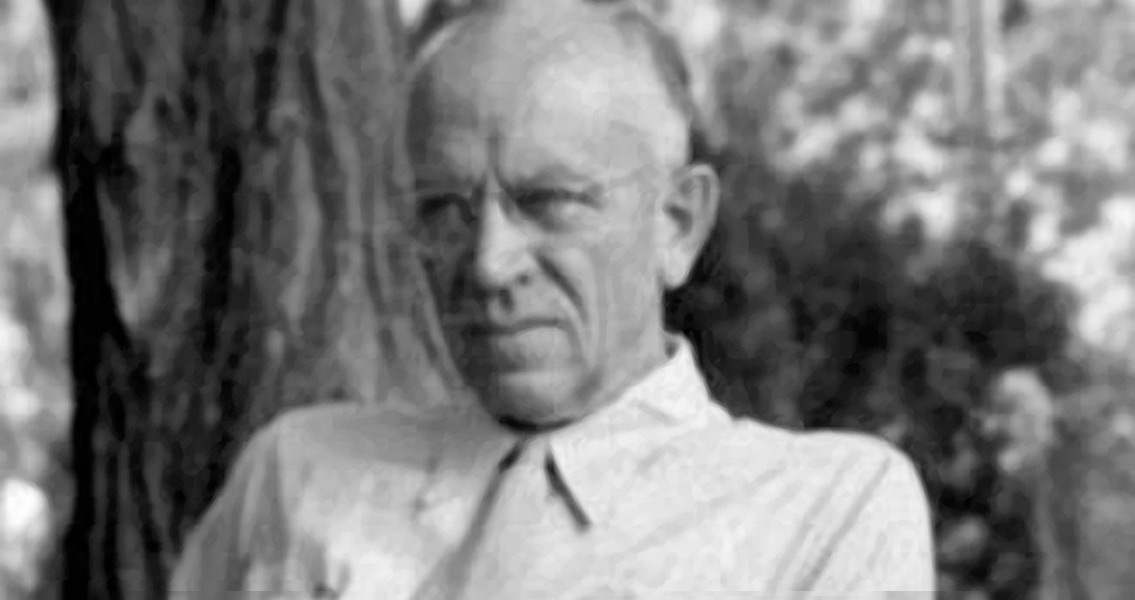
Pacific Historical Review. “But the very fact that even so careful a thinker as Leopold could contemplate ethically questionable policies in pursuit of his environmental vision raises important questions… In this respect, I believe Leopold serves as a cautionary tale.” By examining unpublished articles written by Leopold, Powell has sought to explore Leopold’s fears. “Dread of overpopulation is an underexplored aspect of Leopold’s wilderness thinking,” Powell explained, “and environmentalism is an often-overlooked factor.” The idea of ‘wilderness,’ Leopold argued, was coupled with the character of racial stocks. Frontier virtues, it was thought, were bred into people. “Through this allusion to ‘‘breeding,’’ he hinted that wilderness had shaped the American people not only socially but also genetically,” Powell explains. “Old Stock white Americans had developed in the second half of the nineteenth century to distinguish themselves from allegedly inferior immigrants from southern and eastern Europe.” Tied in with this vision of the wilderness was a Malthusian understanding of the world. Thomas Malthus, an English clergyman, wrote one of the most influential texts on population in the late-eighteenth and early-nineteenth century. He argued that because human population increased at a “geometric ratio”, but food production rose at an “arithmetic ratio”, humans could never completely overcome scarcity, want, and conflict. Beginning in the 1920s, Leopold articulated an enduring understanding of wilderness as an unpopulated space for individual and national rejuvenation. As he formulated his argument, Leopold became increasingly critical of population growth. Leopold argued that humans, through overpopulation, endangered the planet’s soils and water supply, Powell explains in his article. “Although he presented these ideas in his game management lectures, he never published a developed formulation of this position,” Powell writes. “[Leopold argued] that population growth was robbing Americans of the opportunity to enjoy the rejuvenating environs of unoccupied wilderness.” These two essential characteristics of Leopold’s thinking – supposed superiority of Old Stock Americans and the problem of decreasing wilderness area due to a growing population – can lead to a rather unsavoury conclusion. Leopold, Powell argues, sought to control population growth in order to preserve the wilderness. Worryingly, Leopold only expounded controlling those of non-white ethnicity. “Wilderness is less a wondrous place than an inherently exclusionary idea that has empowered certain groups while disempowering others,” Powell concludes. “When defense of wilderness has lapsed into critiques of population growth, it has in a sense extended this exclusionism on to the world’s unborn.” Whilst we should not discredit Aldo Leopold’s work – he was an important thinker who championed a very important environmental cause – it is important to view him in his intellectual context. Powell has made an important study, which allows us to understand Leopold more. For more information: www.jstor.org Image courtesy of Wikimedia Commons user: Yllosubmarine ]]>
Categories
Breaking News

Climate Change Contributed Towards the Collapse of the Maya

www.pnas.org Image courtesy of Wikimedia Commons user: Kimse]]>

Categories
Breaking News

How Hunter-Gatherers Became Farmers, Examined

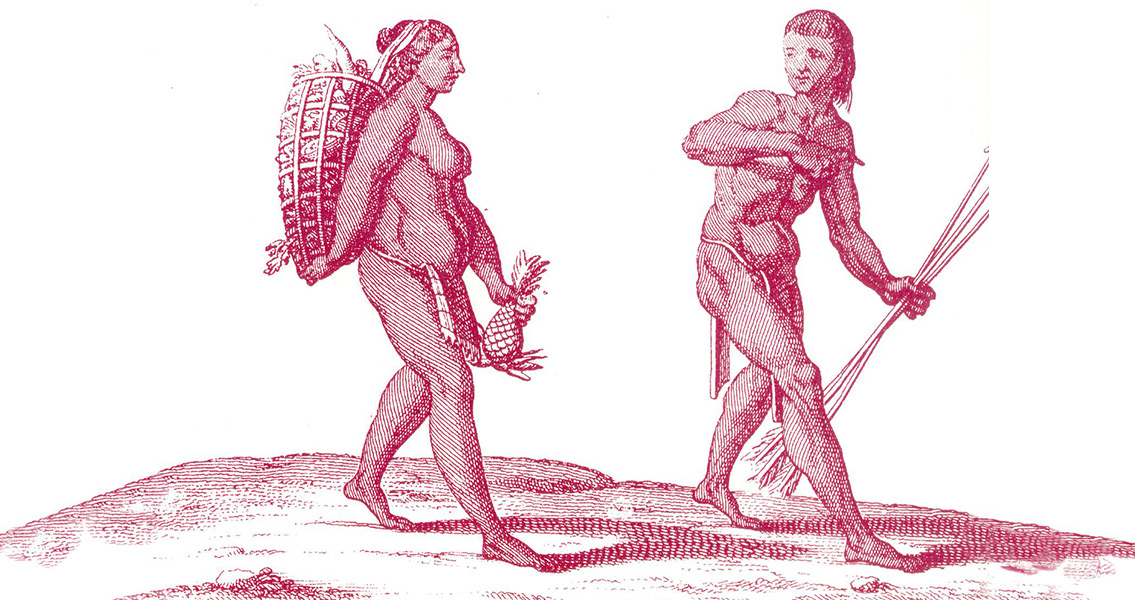
New research has, however, challenged this model. “The concept of intensification has become widely linked to hunter-gatherer research,” Christopher Morgan explains in an article published in the most recent edition of the Journal of Archaeological Research. Intensification, Morgan states, has been used to explain the evolution of human behaviour, the origin of farming, and the development of rank in complex hunter-gather societies. “This has led to diverse and even contradictory applications of the concept of intensification, to the point that a critical assessment of its current methodological and theoretical applications to the archaeology of hunter-gatherers is overdue.” One of the key problems Morgan has with the intensification model is that it does not analyse the conditions which gave rise to increased agricultural production. It is unclear, Morgan argues, whether increasing population, climate change, or changes in social behaviour drove intensification. Further, the intensification model does not examine whether abundance or scarcity drove the development of agricultural societies. Particularly in North America, it is unclear if hunter-gatherers were starving, and consequently intensified in search of a means to supplement their diet, or if they had such a surplus of food that they could explore how to increase production further. Morgan is particularly hostile to the intensification model as it is often used loosely. “One side of this divide uses intensification in a descriptive sense, where it is simply taken to mean any increase in economic productivity. The other uses intensification in an explanatory sense, where it is employed to explain how people solved population-resource imbalances,” he argues. Interesting though the intensification model is, it obviously has significant problems. How far we can apply this model to early societies is debatable. Morgan views intensification as an important consideration in the debate, but warns that over-use of the model can hamper our understanding of the past. With proper refinement and analysis, however, intensification has the potential to open the door to a much more nuanced understanding of how diversification occurred. For more information: www.link.springer.com Image courtesy of Wikimedia Commons user: Cropbot]]>

Categories
Breaking News

New Research Explores Air Raid Shelters' Social Meaning

www.juh.sagepub.com Image courtesy of Wikimedia Commons user: Ultraviolet scissor flame]]>

Categories
Breaking News

Evidence of Cannibalism Found in Britain

www.sciencedirect.com Image courtesy of Wikimedia Commons user: Nachosan]]>

Categories
Breaking News

Mounted Archers' Fearsome Arsenal Revealed

www.wih.sagepub.com Image courtesy of Wikimedia Commons user: Yaan]]>

Categories
Breaking News

Hidden Aspect of Cameroon's Independence Movement

www.academicjournals.org Image courtesy of Wikimedia Commons user: AnonMoos]]>

Categories
Breaking News

Native Californians Used Cloth as a Political Symbol

www.jstor.org Image courtesy of Wikimedia Commons user: Magnus Manske]]>

Categories
Breaking News

Big Data: A Lesson From History

Federal History, raises some intriguing points about how governments have used, and misused, information over the decades. During the Second World War, the US was taken completely by surprise by the Japanese attack on Pearl Harbour on December 7, 1941. As a result of the damage inflicted by this attack, the capacity of the state to fight a war and deal with threats was unclear. “Americans generally supported strong measures to keep the nation safe,” Anderson explains. Anderson argues that the evacuation and incarceration of the West Coast Japanese ancestry population, misleadingly termed the ‘Japanese internment’, reveals that the US government used available data to harm citizens. “[This] example merits historical investigation to understand both what happened at the time and what lessons we can draw for big data issues today,” Anderson writes. History, in this instance, can provide an important message for today’s governments. During the Second World War, the US had numerous instruments of surveillance and record-keeping. Foremost amongst all the records, however, was the census. Collected every ten years since 1790, Congress had forbid using the census to ‘harm’ citizens. The 1940 census data, however, was used to round up the Japanese ancestry population living on the West Coast in 1942. Over 100,000 people were held in concentration camps for most of the war. Interestingly, this use of the 1940 census data was well known at the time. It is clear that census officials and Congress realised the risks of individual-level data and put in place federal statutes to prevent disclosure. Between 1939 and 1941, these concerns and protections were not strong enough to withstand the rising tide of ‘national security’ threats. Further uses of big data were unsuccessful. The census was not a perfect record of every person in the United States and a proposal for a more thorough national population register failed. “When national proposals reemerged in the 1960s for a “federal data center,” they were quickly rejected by Congress and the public as Orwellian violations of privacy,” Anderson notes. In this modern age, however, with such huge reservoirs of data being created by our online activity, this debate is even more prevalent. Anderson hopes that the period of US history following the Pearl Harbour attacks, “can usefully inform debates about data stewardship within professional organizations, provide information for training modules for staff, and facilitate discussion among policy makers about how to build 21st-century data infrastructure that serves the public good.” For more information: www.shfg.org Image courtesy of Wikimedia Commons user: Kayaker]]>

Categories
Breaking News

Kennedy's Civil Rights Record Re-Evaluated

www.shfg.org Image courtesy of Wikimedia Commons user: BotMultichillT]]>