Categories
Breaking News

Sharing Rather Than Migration Behind Stone Age Revolution

Current Biology, the latest study suggests that migration was not a ‘universal driver’ for the spread of farming through Europe. Although archaeology shows that the technologies of the Neolithic Package did reach the Baltic region, the genetics of the populations there remained the same as those of the hunter-gatherers throughout the Neolithic. “Almost all ancient DNA research up to now has suggested that technologies such as agriculture spread through people migrating and settling in new areas” said Andrea Manica from the University of Cambridge, a senior author on the study. “However, in the Baltic, we find a very different picture, as there are no genetic traces of the farmers from the Levant and Anatolia who transmitted agriculture across the rest of Europe.” “The findings suggest that indigenous hunter-gatherers adopted Neolithic ways of life through trade and contact, rather than being settled by external communities. Migrations are not the only model for technology acquisition in European prehistory.” The team reached their conclusion by extracting ancient DNA from a number of remains discovered in Latvia and Ukraine dating to between 5,000 and 8,000 years old. The remains spanned the Neolithic period, and the transition from a hunter-gatherer way of life to one based on food production. Fascinatingly, the team’s results also shed new light on the spread of Indo-European languages. Although showing no influence from Levantine farmers, one of the Latvian genomes did show signs of an external influence which the scientists believe could be from the Pontic Steppe in the East. Lead author Eppie Jones, from Trinity College Dublin and the University of Cambridge, explained: “There are two major theories on the spread of Indo-European languages, the most widely spoken language family in the world. One is that they came from the Anatolia with the agriculturalists; another that they developed in the Steppes and spread at the start of the Bronze Age.” “That we see no farmer-related genetic input, yet we do find this Steppe-related component, suggests that at least the Balto-Slavic branch of the Indo-European language family originated in the Steppe grasslands of the East, which would bring later migrations of Bronze Age horse riders.” Combined with archaeological data, the new study suggests the arrival of the Neolithic Package to the Baltic region was a much more gradual process than elsewhere in Europe, facilitated by trade networks rather than rapid migration and interbreeding. Manica concluded: “It seems the hunter-gatherers of the Baltic likely acquired bits of the Neolithic package slowly over time through a ‘cultural diffusion’ of communication and trade, as there is no sign of the migratory wave that brought farming to the rest of Europe during this time. “The Baltic hunter-gatherer genome remains remarkably untouched until the great migrations of the Bronze Age sweep in from the East.”]]>
Categories
Breaking News

Archaeologists Find Evidence of Scotland’s Earliest Farmers

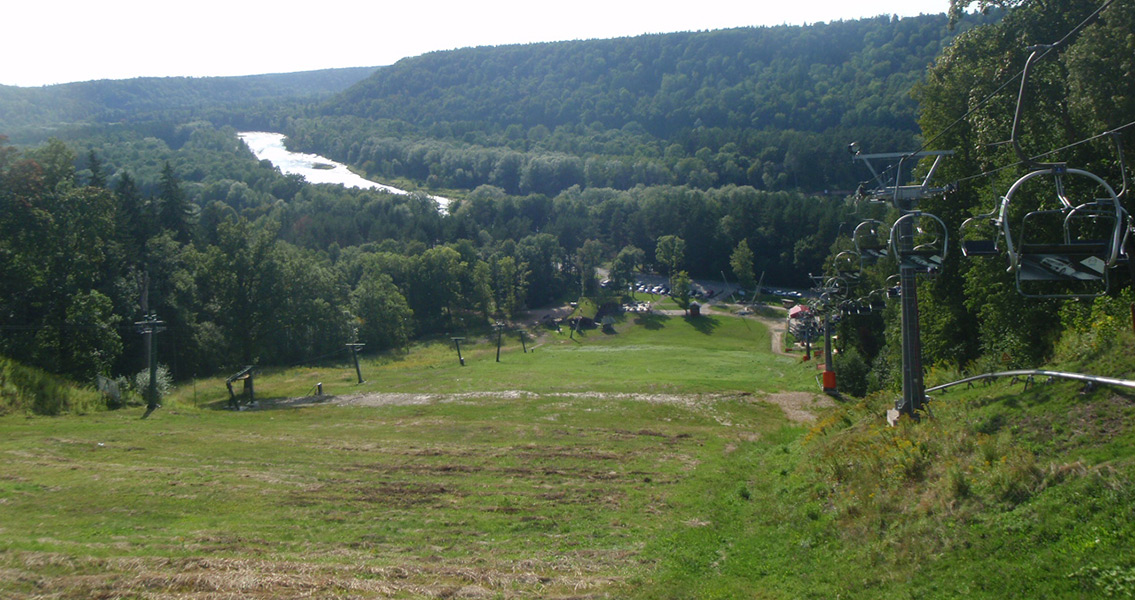
The Courier, “Evidence for ploughing and fields in Neolithic Britain is incredibly rare and so the excavation of the ard marks at Wellhill is a very significant discovery that suggests a farming economy had taken hold in this location only a few generations after farming began in Britain around 4000BC. This is an amazing insight into the lives of Scotland’s first farmers.” Additional radiocarbon dating of the pit sites shows that they may actually date back even further, into the eighth millennium BCE, meaning they’re providing evidence of the very first Mesolithic events in the lowlands of Kinross and Perth. Dr. Rebecca Jones, with Historic Environment Scotland, is quoted in The Courier as saying, “These are very significant discoveries for archaeology in Scotland and even further afield, which is thanks mainly to the endeavors of the principle excavator, Dr. Dene Wright, who recognized the potential of these astonishingly early settlements, which were then confirmed via radiocarbon dating.” Historic Environment Scotland is a public body that was established to investigate, preserve and promote Scotland’s historic monuments and structures. They are responsible for approximately 300 historically significant properties, including Edinburgh Castle. In total, these sites receive over 3 million visitors annually. The organization is also responsible for a variety of collections, including over 5 million drawings, manuscripts, and photographs, in addition to 20 million aerial images of sites around the world. The SERF project has received an archaeology grant from Historic Environment Scotland to complete excavation, geophysical surveys, reporting and archival research. ]]>

Categories
Breaking News

New Study Reveals Poison Arrow Use in African Hunters

here. Image courtesy of KU News Service | University of Kansas]]>

Categories
Breaking News

Farming Not Responsible for Prehistoric Population Growth

Categories
Breaking News

Equality Helped Hunter-Gatherers Survive

Categories
Breaking News

How Hunter-Gatherers Became Farmers, Examined

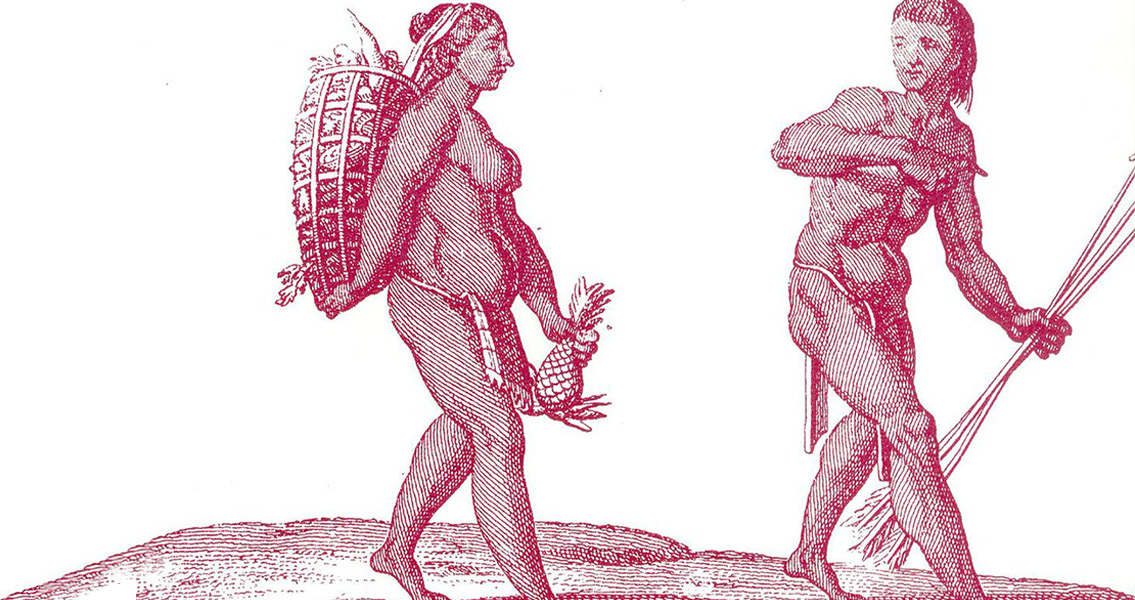
New research has, however, challenged this model. “The concept of intensification has become widely linked to hunter-gatherer research,” Christopher Morgan explains in an article published in the most recent edition of the Journal of Archaeological Research. Intensification, Morgan states, has been used to explain the evolution of human behaviour, the origin of farming, and the development of rank in complex hunter-gather societies. “This has led to diverse and even contradictory applications of the concept of intensification, to the point that a critical assessment of its current methodological and theoretical applications to the archaeology of hunter-gatherers is overdue.” One of the key problems Morgan has with the intensification model is that it does not analyse the conditions which gave rise to increased agricultural production. It is unclear, Morgan argues, whether increasing population, climate change, or changes in social behaviour drove intensification. Further, the intensification model does not examine whether abundance or scarcity drove the development of agricultural societies. Particularly in North America, it is unclear if hunter-gatherers were starving, and consequently intensified in search of a means to supplement their diet, or if they had such a surplus of food that they could explore how to increase production further. Morgan is particularly hostile to the intensification model as it is often used loosely. “One side of this divide uses intensification in a descriptive sense, where it is simply taken to mean any increase in economic productivity. The other uses intensification in an explanatory sense, where it is employed to explain how people solved population-resource imbalances,” he argues. Interesting though the intensification model is, it obviously has significant problems. How far we can apply this model to early societies is debatable. Morgan views intensification as an important consideration in the debate, but warns that over-use of the model can hamper our understanding of the past. With proper refinement and analysis, however, intensification has the potential to open the door to a much more nuanced understanding of how diversification occurred. For more information: www.link.springer.com Image courtesy of Wikimedia Commons user: Cropbot]]>

Categories
Breaking News

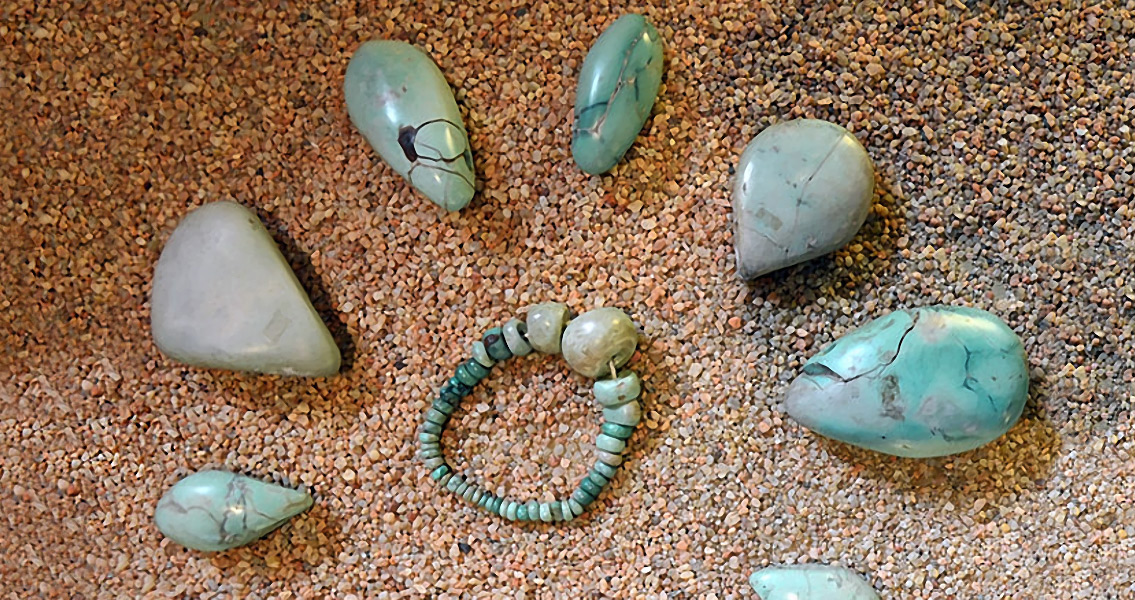
Northern Europe Resisted Farming, Ornaments Reveal

Categories
Breaking News

Diverse Maya Groups Cooperated on Vast Building Projects

www.pnas.org Image courtesy of Wikimedia Commons user: Laslovarga]]>

Categories
Breaking News

60,000-Year-Old Hunter Gatherers Slew Giant Aurochs