Categories
Breaking News

10,000-Year-Old Case of Cannibalism Discovered in Spanish Cave

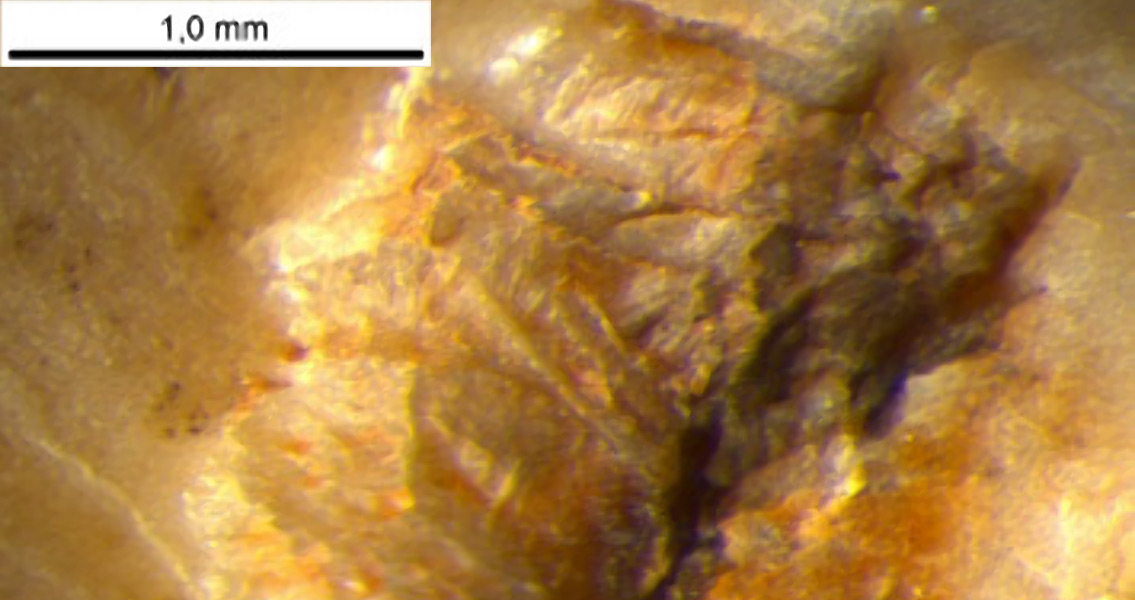
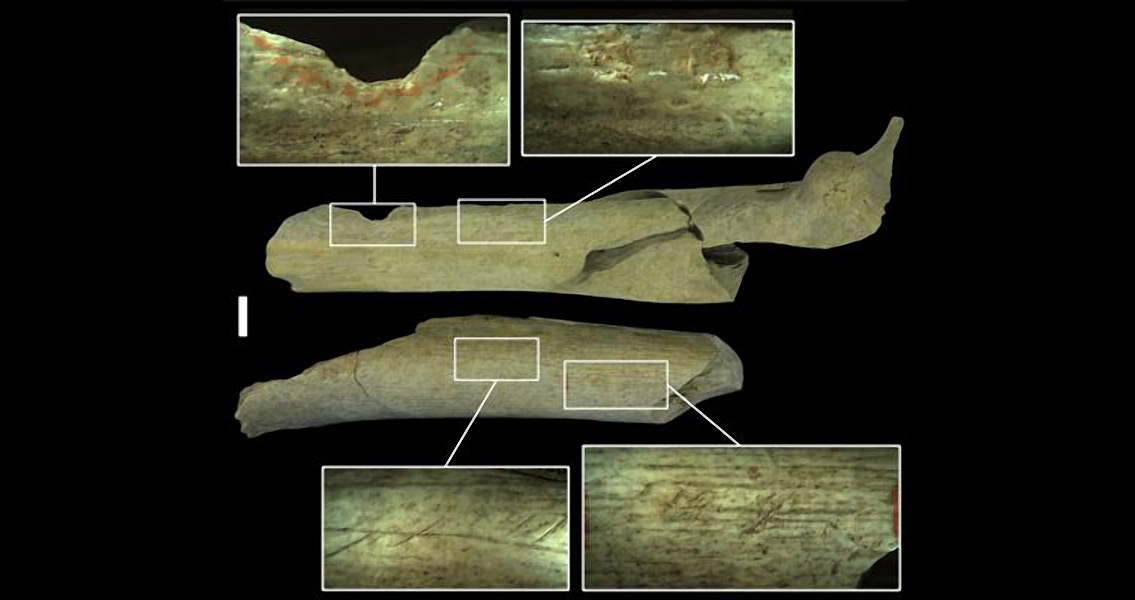
Ars Technica, the remains in question show no signs of violence, indicating that the bodies were likely consumed after death. Identifying cannibalism can be a tricky business, but Morales-Pérez and his team say the evidence was clear. The bones themselves were discovered buried alongside the remains of other, non-human animals; bore signs of being burned and butchered, and evidence of being bitten and scraped. Radiocarbon dating has set the age of the bones to between 9,000 and 10,000 years old. Finding evidence of the practice of cannibalism during this time period is not unheard of, though this is the first time that cannibalism has reared its ugly head in Spain during the Mesolithic. Other archaeological finds throughout Europe and the Levant dating to this time period have yielded evidence of humans eating their own. Additional questions have arisen after discovering the cannibalism. One such question – one that may not ever be able to be answered – is why the humans inhabiting this cave in Spain decided to turn to the practice in the first place. Necessity due to starvation is always one reason for cannibalism, but the multitude of animal remains found in the cave indicates that the food sources for the humans living there were varied and apparently abundant. Occasional periods of privation do occur of course, and the evidence of cannibalism could represent a desperate time in the lives of the people who lived there when food sources were scarce. However, the possibility that the cannibalism might have been ritual in nature cannot be discounted – there’s precedent of complex rituals for eating the flesh of the deceased, often important members of the community, dating back thousands of years. The beginning of the Mesolithic also represented a time period when humans were beginning to transition from their hunter-gatherer existence of the earlier Paleolithic, and taking up the trappings of a more sedentary, agrarian lifestyle. The conflict between these two ways of life could have precipitated some funerary practices that would seem gruesome and barbaric to our own modern sensibilities, researchers say. The state of the remains seems to contradict the idea that they were consumed as part of a ritual. Seemingly dumped unceremoniously in a midden heap at the rear of the cave, these butchered, fire-processed and chewed human bones don’t seem to have been treated with much care. However, with literally ten thousand years having passed between the event and the discovery of the evidence of that event, there’s no way of knowing if the remains had at one time been buried with reverence and then ended up in a new location due to rain runoff and soil erosion. The new research study, published in the Journal of Anthropological Archaeology, can be found online here Image courtesy of Journal of Anthropological Archaeology]]>
Categories
Breaking News

New Evidence of Neanderthal Cannibalism Found in Belgium

Scientific Reports, has helped expand the knowledge of known Neanderthal behavior in relation to the dead in northern Europe. As more and more insights are gradually revealed about the behavior of the Neanderthals, humanity’s closest extinct relatives, it becomes apparent that they displayed significant variability in their actions and customs. This perhaps shouldn’t be surprising, that different groups of Neanderthals had different practices, just as is the case among different groups of humans. This diversity of practices is clearest in the ways the Neanderthals dealt with their dead. At some sites, there is evidence that they buried the deceased. At others, there is evidence of cannibalism, that they broke the bones and ate the meat of other Neanderthals for food. These cannibalistic practices have been discovered at sites in both France and on the Iberian Peninsula. Neanderthals lived between roughly 200,000 and 30,000 years ago in Eurasia. Their appearance was similar to modern humans, though they were shorter, stockier, and had angled cheek bones, prominent brows and wide noses. Evidence has been found that they used tools, controlled fire, and in some cases (Chapelle-aux-Saints in France, and Sima de las Palomas on the Iberian Peninsula for example) buried their dead. Until the latest study however, the paucity of remains discovered north of latitude 50º meant it had been difficult to gain insight into how Neanderthals in the northern latitudes treated their dead. A third of the Neanderthal remains discovered at the Troisième caverne had cut marks, and a plethora had been crushed to extract marrow. The Neanderthal remains had been treated in a similar manner to horse and reindeer bones at the site, suggesting that all three species had been prepared and consumed in similar ways. Other Neanderthal remains at the site showed signs of having been used as soft percussors to shape stone. It is the fourth time a site has been found with evidence Neanderthals used the bones of their deceased to shape stone tools, joining Krapina in Croatia, and Les Pradelles and La Quina in France. Whereas the previous sites only contained a few examples of bones being used on tools, five sets of remains at Goyet had been used as retouchers. Due to their remarkable state of preservation it has been possible to date the remains at Goyet to between 40,500 and 45,500 years old. It has also been possible to extract the mitochondrial DNA of the remains, revealing that the Neanderthals at the cave were most similar genetically to those found in Feldhofer (Germany), Vindija (Croatia) and El Sidrón (Asturias, Spain). Such genetic similarity over such large distances suggests that the Neanderthal population of Europe was quite small. Earlier studies of partial Neanderthal skeletons discovered at Feldhofer, Germany and Spy, Belgium, showed evidence that Neanderthals had interred their dead. This latest study only adds to the increasingly complicated image of the contrasts between the different groups of humanity’s extinct cousins. Image courtesy of Asier Gómez-Olivencia et al.]]>

Categories
News

Self-Confessed Cannibal Released on Parole

Categories
Breaking News

T-Rex Bone Speaks of Cannibalism

a study of Tyrannousaurus fossils in museums in North America revealed four specimens which had bite marks on them, made by a large animal. Since the largest carnivore in the region at the time was the T-Rex, the researchers concluded that the eater must have been another T-Rex, suggesting cannibalism was a common behaviour among Tyrannosauri. Earlier this year, British researchers studied in Alberta, Canada, the remains of a Daspletosaurus, another species from the Tyrannosaurus family, which bore traces of multiple fights and cannibalism. The Daspletosaurus was smaller than the T-Rex and had apparently become a victim of a bigger genetic cousin, who also snacked on it after its death. The evidence pointing in that direction included bite marks and even one puncture wound to the back of the head, which was the result of a particularly hard bite, according to the researchers who studied the skull. The cousin in question, however, was not T-Rex because the Daspletosaurus lived 75 million years ago, the BBC writes, before that most famous of the Tyrannosaurids came onto the scene. For more information: TYRANNOSAUR CANNIBALISM: A CASE OF A TOOTH-TRACED TYRANNOSAUR BONE IN THE LANCE FORMATION OF EASTERN WYOMING Image courtesy of Wikimedia Commons user: David Monniaux]]>

Categories
Breaking News

Evidence Emerges that Conquistadors “Stayed for Dinner”

Categories
Breaking News

100,000-Year-Old Human Bones with Bite Marks Found

Categories
Breaking News

Cannibalism: An Evolutionary Defense?

www.nature.com ]]>

Categories
Breaking News

Evidence of Cannibalism Found in Britain

www.sciencedirect.com Image courtesy of Wikimedia Commons user: Nachosan]]>