Categories
Breaking News

305 Million Year Old “Almost Spider” Remains Found

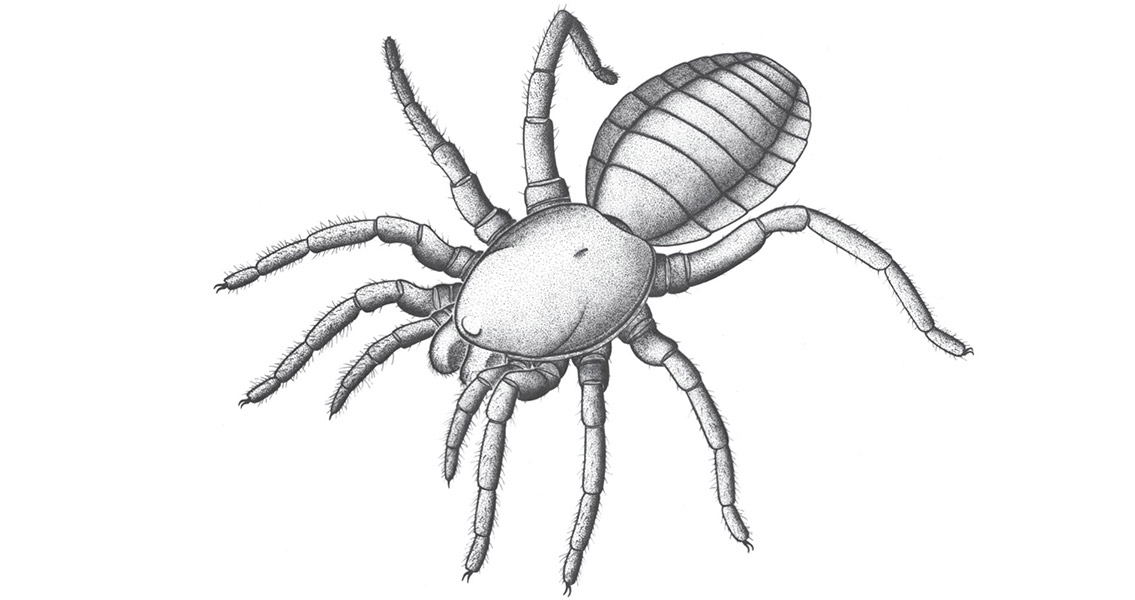
Idmonarachne brasieri as a nod to Idmon, the father of Arachne from Greek mythology – the woman who was transformed into a spider out of the jealousy of the goddess Athena. With the process of evolution producing an arachnid just one step removed from a “true” spider, naming I. brasieri in such a manner seems highly appropriate. The evolutionary journey from arachnid to spider is further complicated by the fact that there is evidence of true spiders living alongside their almost-spider arachnid relatives. The oldest known spider fossil, discovered in eastern France at a Montceau-les-Mines coal seam, also happens to be 305 million years of age. Garwood remarked that this shows an arachnid subspecies that were nearly identical to spiders – though one that eventually died off – likely split from a common ancestor before that date. It has been difficult to pin down the origins and evolutionary pathways of arachnids, said Garwood. One of the first species to dwell on land, arachnids – or their progenitors – began to adopt a terrestrial way of life 420 million years in the past; little of this early history has been recorded in the fossil record. Meanwhile, using DNA analysis to trace the evolutionary relationships between arachnid species also presents difficulties due to the rapid diversification of the creatures. This has resulted in little to no evolutionary changes in their genetics that can be traced. The results are that there is little in the way of knowledge when it comes to how other arachnids like scorpions and spiders are interrelated in the overall scheme of evolution. Garwood and his colleagues say that there are plans to continue to study arachnid fossils in an attempt to glean more information on their mysterious origins. Image courtesy of Garwood, Russell J.; Dunlop, Jason A.; Selden, Paul A.; Spencer, Alan R.T.; Atwood, Robert C.; Vo, Nghia T. & Drakopoulos, Michael (2016)]]>
Categories
Breaking News

New Etruscan Religious Text Discovered in Italy

Categories
Breaking News

Ancient Remains Paint Picture of Grassland Climate Change

advances.sciencemag.org Image by Fishhawk, courtesy of Oregon State University]]>

Categories
Breaking News

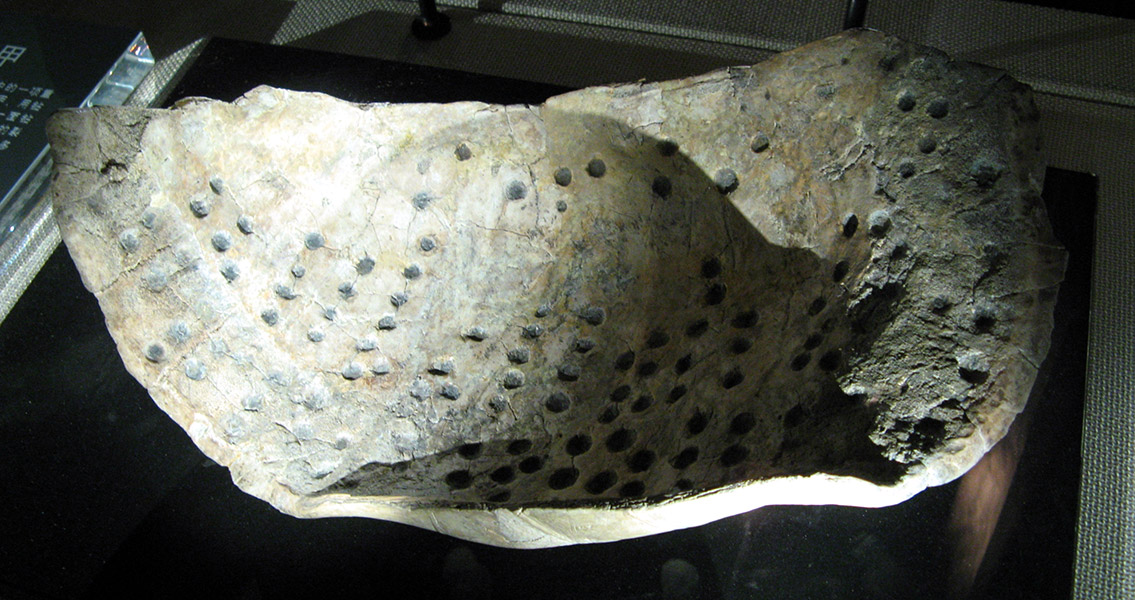
Ancient Chinese “Oracle Bone” Printed in Hi-Res 3D

here]]>

Categories
Breaking News

Fossils of Two New Marine Plant Species Discovered

Scientific Reports Image courtesy of Stephen Dornbos]]>

Categories
Breaking News

My Kingdom for a 3D Interactive Grave Site!

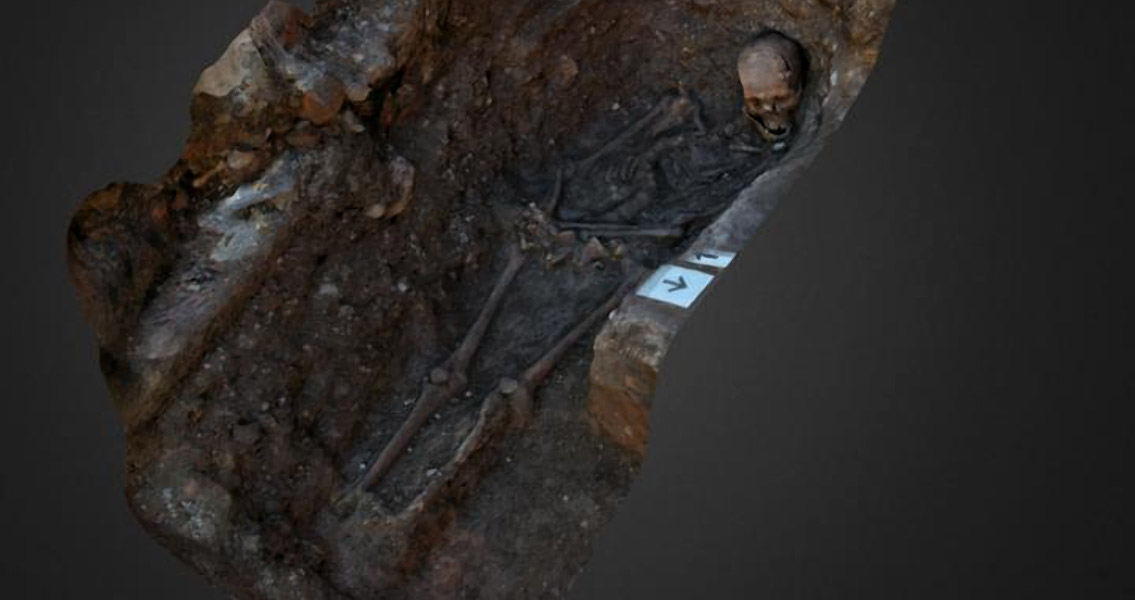
Sketchfab, a 3D sharing platform, the interactive model can be rotated and examined in order to provide an immersive pathway to study the king’s grave – and reveals the perfunctory, less-than-reverent nature in which his remains were interred. In fact, researchers discovered that the grave itself was dug poorly and seemingly in haste, as its sides sloped and its base was uneven. The grave was also too short to accommodate the king’s body properly, resulting in it being laid out slumped to one side with the head propped up – providing evidence that matches contemporary accounts that the monarch was buried unceremoniously. In a university press release, ULAS site supervisor Matthew Morris said that two-dimensional images of the burial, while having a drama all of their own, aren’t as arresting as a three-dimensional model is, especially when it comes to grasping the spatial relationships that are revealed. The first man to lay eyes on the remains of the king since his internment centuries ago added that the new 3D model of the grave affords researchers the ability to continue examining it long after the end of the excavation. Additionally, it allows scientists to examine the grave from angles that would have been impossible during the initial exhumation. The process used to create the digital reconstruction of the grave, known as photogrammetry, has seen widespread use not just in archaeology but in other industries as well, including the entertainment industry. The technique is both cost-effective and swift in building a three-dimensional model out of several two-dimensional images. The grave, along with other 3D imaged archaeological sites explored and documented by ULAS, can be explored on the Sketchfab website Image courtesy of University of Leicester ]]>

Categories
Breaking News

Proliferation of Pottery Had Cultural Impetus

here ]]>

Categories
Breaking News

Celtic Buckle Found in Grave of Danish Viking

ScienceNordic News that he had never seen anything like the circular buckle before. After documenting his find, he sent several photographs to Else Resdahl, Professor Emeritus of Denmark’s Aarhus University – only to discover that his colleague had never seen anything like it before either. The quest to identify the artifact intensified, with several other colleagues collaborating to narrow down the origins of the buckle to the British Isles based on its design and its ornamentation. Additionally, the researchers involved in the study of the disc unanimously agreed that it had not begun life as a petticoat buckle; instead it was likely pried off a religious wooden box and then stolen in a Viking raid. Stidsing pointed out that such objects simply weren’t traded, meaning that some church or monastery – possibly a pre-Christian one – was looted through good old-fashioned plunder. The bronze ornament itself has been dated to approximately 800 CE; the grave, in comparison, is about a century younger. There’s no way to determine how this particular piece of Viking plunder made it to western Denmark. However, Stidsing theorizes that it might have first arrived on Norwegian shores, based on a few uncommon examples of similar buckles within the country. A woman from Norway could have traveled to Denmark and lived there until her death, the archaeologist suggested. In order to test his theory, the teeth of the deceased buckle owner are being subjected to strontium isotope analysis; this could help to pinpoint her geographical region of origin. With Norwegian Vikings being notorious for raiding parties sent to regions of England such as Northumberland and even farther afield, it’s a distinct possibility that Stidsing will turn out to be correct. Museum Southeast Denmark curator and fellow archaeologist Jens Ulriksen, also interviewed by ScienceNordic, agreed that such belt buckles are exceedingly rare when it comes to being found in Denmark. Ulriksen was excited by the prospect of discovering evidence of the woman being originally from Norway or from even greater distances before settling in western Denmark, adding that there’s a historical precedent: Slavic princesses, for example, were routinely married off to Danish kings from 900 CE. The archaeologist added that he wouldn’t be surprised if there was such a cultural exchange, but having it confirmed would be invaluable – especially if it led to the confirmation of dynastic connections across Scandinavia. Additionally, being able to confirm the origins of the woman as Norwegian could aid researchers in understanding the extent of Viking mobility during the medieval era. The research study associated with the new archaeological find has been published by the University of Copenhagen’s Saxo Institute. Images of the artefact can be found here]]>

Categories
Breaking News

Researchers Recover Bronze Bell from Wrecked Japanese Sub

Categories
Breaking News

St. Erik’s Remains Subjected to Modern Scientific Study