

Proceedings of the National Academy of Sciences. The results suggest that dairying was present in the region right from the onset of agriculture. By analysing Neolithic pottery, the multidisciplinary team found widespread proof of prehistoric milk production. Two main sources of evidence were used by the researchers behind the study. More than 500 pottery vessels were rigorously tested for evidence of milk and carcass fats. In addition, the remains of domesticated animals were excavated from 82 different sites in southern Europe dating from the fifth to seventh millennia BCE. The animals were analysed for their age at time of death. A correlation quickly emerged; the slaughter profiles of the animals matching the fats detected in the pots. The team’s findings show different intensities of dairying and non-dairying activities throughout the northern Mediterranean. Cynthianne Spiteri, University of York; Mélanie Roffet-Salque, University of Bristol; and Roz Gillis, Centre National de la Recherche Scientifique; undertook the pioneering research as part of their PhDs. Spiteri said in a press release: “At the onset of food production in the northern Mediterranean region, milk was an important resource to these early farming communities. “It is likely to have played an important role in providing a nourishing and storable food product which was able to sustain early farmers, and consequently, the spread of farming in the western Mediterranean.” Just how important milk and dairy production were in the northern Mediterranean has long been a contentious source of fascination among historians and archaeologists. Previous research had suggested that the desire for milk may have been the driving force behind the domestication of animals such as cows, goats and sheep. Significantly, the study is the first to combine both an analysis of fat residue from cooking vessels with a record of the domesticated animals that actually lived in an area, allowing far more detailed insights into prehistoric agricultural and dairying habits than was available previously. “In this work, we integrate for the first time the findings of the analyses of lipid fats extracted from hundreds of cooking pots with the reconstruction of the actual herds at tens of sites, based on the remains of sheep, goats and cattle.” explained Dr. Roffet Salque, from the School of Chemistry at the University of Bristol. “Our earlier work had demonstrated that milk use was highly regionalised in the Near East in the 7th millennium BC, and this new multidisciplinary study further emphasises the existence of diverse use of animal products in the northern Mediterranean Neolithic.” explained Professor Richard Evershed, also from the University of Bristol. Intriguingly, northern Greece appears to have been a notable exception when it came to the widespread practice of Neolithic dairying. “Dairying was clearly practiced both in the east and west of the region, but it is still surprisingly barely detectable in Northern Greece, where the lipids from pots and the animal bones tell the same story: meat production was the main activity not dairying.” The results are particularly astounding given that much of the modern population in the region are lactose intolerant – i.e unable to digest milk. “We presume this was also true back in the early Neolithic period, although this is still to be confirmed through genetic testing of ancient skeletons.” said Professor Oliver Craig from the University of York. “Despite this deficiency, our research shows that they certainly exploited milk because we have found organic remnants in the pots they were using.” It is a fact which raises fascinating questions as to how exactly these prehistoric farmers processed milk to enable their communities to consume it. “What is particularly intriguing is that lactose intolerance was clearly no barrier to milk use.” said Roffet-Salque. “The major question that still remains is how the milk was being processed to make it palatable to these early Neolithic farmers.”]]>

Antiquity. During the later half of the twentieth century, historians began to argue that the true devastation of the Black Death had been exaggerated. They suggested that in reality there was little evidence of ‘catastrophe cemeteries’ from the fourteenth century, while evidence of depopulation in England seemed to have occurred too late to be a direct consequence of the spread of the Plague. The new study, led by Professor Carenza Lewis from the University of Lincoln, has used discarded pottery shards as a means to measure demography. Based on extensive analysis, she has concluded that the pottery using population was 45% lower in Eastern England following the Black Death than it had been beforehand. Thousands of members of the public assisted in the study, digging 2000 test pits across six counties in search of pieces of broken pottery. As the most commonly excavated archaeological evidence domestic pottery is a valuable indicator of population size, due to its widespread daily use and the frequency with which it was discarded. By counting and comparing the number and weight of broken pottery from different date levels, patterns emerged of the historic demography of different sites. The sheer geographic scale of Lewis’ study means it has been possible to determine which towns and counties suffered, and to what extent. “As a result, we can now say with some confidence that the pottery-using population across a sixth of England was around 45% lower in the centuries after the Black Death than before.” Lewis writes in the study, due to be published in next month’s edition of Antiquity. “Furthermore, we can identify exactly where in the settlement landscape this contraction was most and least severely felt, at scales ranging from plot to region.” The results show that as extreme as the 45% reported population drop was, in some areas the consequences of the Black Death were even greater. At Great Shelford in Cambridgeshire, the weight of pottery excavated from different test pits dropped from 2kg to 200g at the levels linked to the Black Death. “Mapping these data reveals that this large village—which in the high medieval period sprawled continuously for more than 1200m from its river-side church along a high street and around two greens—was reduced to a single row running barely 200m immediately east of the church.” Shockingly, Lewis actually believes the results presented in her study could be conservative. The excavations focused on 55 currently occupied rural locations known to have been settlements in the fourteenth century. As such, any areas where the population was devastated to the extent a settlement was completely abandoned will not have been covered by the project. The Black Death was just one element of what many historians refer to as the Crisis of the Middle Ages, a period when centuries of demographic growth in Europe were abruptly reversed by a series of political, social and economic calamities on top of those caused by the great epidemic. The Great Famine of 1315-17, alongside civil and international conflicts such as the Hundred Years War and the War of the Roses, brought prosperity and population growth to a halt over the course of the thirteenth, fourteenth and fifteenth centuries. As well as providing chilling insights into the long and short term demographic effects of the Black Death in one region, Lewis’ study offers a new methodology which can be applied to a whole host of different times and scales. “Deployed sufficiently widely elsewhere in Eurasia, test-pit excavation could provide new data to inform our understanding of how the world we inhabit today came to be. Moreover, this potential extends beyond the era of the Black Death, as test-pits can produce material of any date that may illuminate demographic change in many periods.” she writes, in the conclusion to her study. More information about the study is available here Image courtesy of Wikimedia Commons user John Davey]]>

here ]]>

www.journals.plos.org Image courtesy of Wikimedia Commons user: Tordenbrinker ]]>
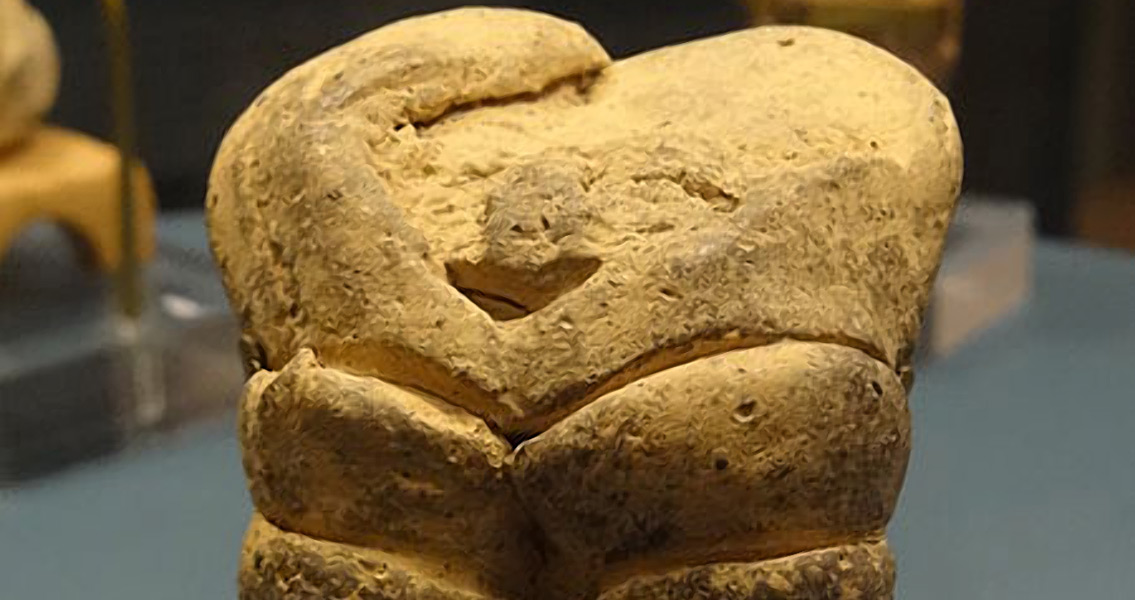
Haaretz reports, citing the archaeologists who took part in the dig. It is likely that the artefact was made by another neolithic culture, Jericho 9, which was initially thought to have emerged after the decline of the Yarmukians. Now, it is possible that the two cultures co-existed and shared a lot of their religious beliefs, even though they lived in different parts of the Levant. So far Neolithic figurines have been found at nine locations in Israel, most of them in the region of Sha’ar Hagolan, in the north of the country. The region is the main source of Yarmukian artefacts, including white clay pottery, of which many of the figurines were made. The height of the Yarmukian civilisation is believed to have been 7,500 years ago, and it is considered the first civilisation to have started baking clay in the Middle East. The most abundant source of information about this people, however, are the figurines, made both from clay and limestone, of which more than 150 have been found so far. They are characterised by a refined artistic style, something unique at the time, and are considered a major artistic achievement of Neolithic people. Although the bulk of Yarmukian figurines have been found in northern Israel, this latest find, a red-clay figurine, was made in Revadim, a kibbutz in south-central Israel, an area associated with the supposedly later Jericho 9 civilisation. According to Edwin van den Brink, the lead researcher at the dig, these two, the Yarmukians and Jericho 9, were in fact one single culture, apparently capable of different styles in pottery. They had one system of beliefs, in which the image of a fertility goddess seems to have played a central role, given the abundance of such figurines. Still, the question of whether the two types of figurines were made by one culture or two different ones remains because, as suggested by the other lead archaeologist at the site, Yitzhak Marmelstein, the red-clay one may well have been made in the north and then brought to the south of the country. Chemical tests to be performed on the new find are expected to determine whether this was the case. The ancient inhabitants of Sha’ar Hagolan were initially believed to have lived in pits dug in the ground, but later archaeological work unearthed dwellings built from stones and mudbricks, and covered with straw or mud set on wooden frames, according to information from the Israeli Ministry of Foreign Affairs. In addition to clay pottery, the Yarmukians also extensively used stone vessels and tools. Image courtesy of Wikimedia Commons user: Hanay]]>


