Categories
Breaking News

Major Viking Age Archaeological Find Discovered in Denmark

CPH Post Online, researchers have discovered several chamber graves in the Jutland Peninsula, the northern continental reaches of Denmark that splits the North and Baltic Seas. The new archaeological site was found in the hamlet of Hørning in eastern central Jutland, near Skanderborg. What makes this collection of grave sites stand out is that one of the chamber-graves discovered by archaeologists has been revealed to be a Viking Age treasure trove. Named the tomb of the Fregerslev Viking, the grave contains the remains of a high-status individual as well as several priceless grave goods. The quality of these items more than confirms the high standing of the individual who was interred alongside them. According to project manager Merethe Schifter Bagge, an archaeologist from the Museum of Skanderborg, the artifacts already recovered from the chamber-grave include ornate horse bridle fittings that were painstakingly gilded in gold. The researcher added that this particular type of bridle would not have been made available to just anyone; its presence indicates the Fregerslev Viking was an enormously important individual and that the bridle might have been a gift from the king after forging an important alliance. Researchers have dated the fittings to around 950 CE, which places the Fregerslev Viking during the reign of Gorm the Old, the Danish king who ruled from between circa 940 to 958. Harald, Gorm’s son and successor as king of the Danes, was known as Harald Bluetooth – for whom the modern wireless communication technology was named. The Viking interred in the chamber-grave could have been a trusted confidant of Gorm the Old, Schifter Bagge reasoned – or perhaps even a powerful rival. This new find is thought to be the most breathtaking one in the country since 1983. In fact, researchers are already comparing finding the Fregerslev Viking to that of the discoveries of Egtved Girl, the remains of a Bronze Age girl discovered in the 1920s, and Tollund Man, an incredibly well-preserved, naturally mummified corpse from the fourth century BCE discovered in the 1950s. Like the Fregerslev Viking, both these finds were discovered in Jutland as well. The chamber-graves in Hørning were initially discovered in 2012, but so far only a small area has been examined. Researchers plan to continue excavating starting in April of 2017, according to Ejvind Hertz, the Museum of Skanderborg’s director of archaeology. Hertz, who also serves as an inspector for the museum, has high hopes that the rest of the Viking’s grave goods will be discovered at that time. A selection of the discoveries made at the site will be on display at the museum for a month, starting April 7th. In the meantime, the museum will also be providing daily guided tours for local residents or tourists visiting the grave site. ]]>

Categories
Breaking News

Stone Age Fences Discovered in Denmark Surround Mystery

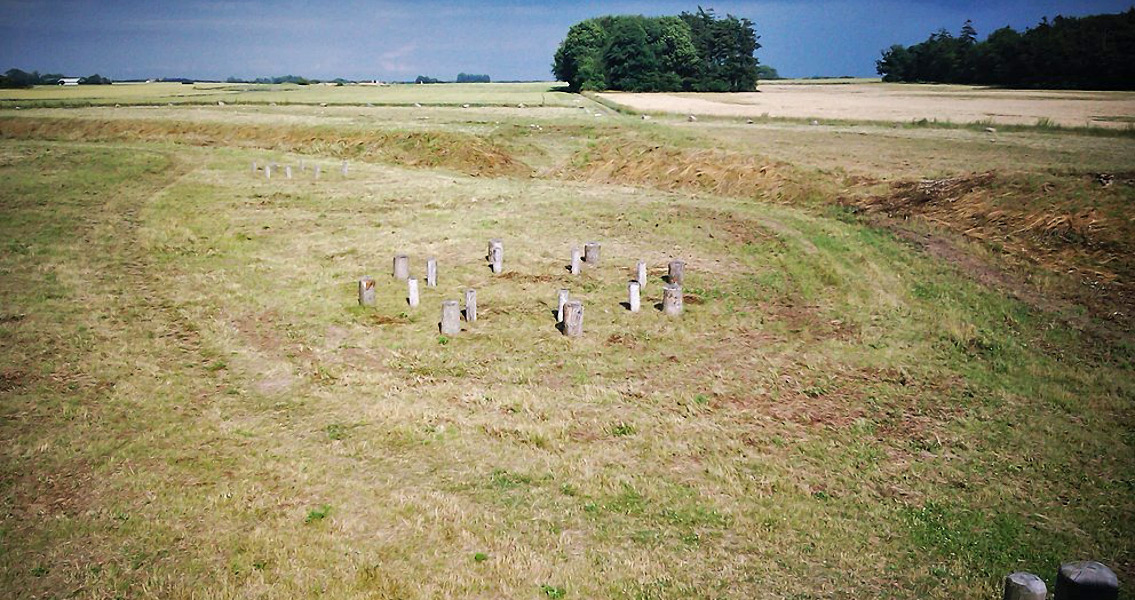
Science Nordic. “The openings don’t seem to sit next to each of the post rows, and we’re slightly amazed by that. But maybe it functioned as a sort of labyrinth–at least that’s how we imagine it. That way you weren’t able to look inside the common space, which may have been an advantage.” Generally, a palisade type of construction is built for defense, however, the rows of poles at Stevns would have stood approximately two meters tall and were placed in a way that would have allowed a person to squeeze through, suggesting a gathering area. Numerous palisade enclosures have been discovered in Denmark and Sweden in recent years, with some of the most intriguing sites found on Bornholm, a Danish island in the Baltic Sea. In 1988 a large timber palisade (one of two on the island) enclosing a sun temple was excavated by archeologists at Vasagårds Field on the south side of the island. The Stevns site may have also had a ritualistic purpose. One difference between the Stevns site and the Bornholm palisades is that the poles at Bornholm are located much more tightly together. It’s also probable the Bornholm fences were built prior to the ones at Stevns. Dating analysis of the Stevns site is not yet complete, however, several of the pottery fragments found there indicate it may date to the latter half of the Middle Neolithic Funnel Beaker Culture between 2900 BCE and 2800 BCE. The Funnel Beaker culture draws its name from its characteristic beakers, ceramics and amphorae which were formed with funnel-shaped tops and found in dolmen burials. A dolmen is a type of megalithic tomb with a single chamber, which typically consisted of a flat horizontal capstone supported by at least two vertical megaliths. “We’ve unfortunately not found any circular shaped constructions like they have on Bornholm, but the similarities between the enclosures makes me think about rituals in our finds too,” Sloth says in the article. Image courtesy of Danish Geodata Agency / Pernille Rohde Sloth ]]>

Categories
Breaking News

9/11 Triggered Sharp Spike in Mental Disorders Outside the USA

American Journal of Epidemiology. Using population data from the Danish Psychiatric Central Research Register, covering the period from 1995 to 2012, the team looked for changes in the incidences of mental disorders around the time of the 9/11 attacks. By analysing 1,448,250 contacts with psychiatric services, the team found the week following September 11, 2001, coincided with a 16% rise in the incidence rate of stressor and trauma related disorders, such as post traumatic stress or adjustment disorders. For six months after the attacks, the incidence of stressor and trauma related disorders remained elevated by around 5% above the normal level. The surge did not dissipate until roughly a year after 9/11. No similar increases were found for other mental disorders in the same period. “[the outcome of the study] sadly confirms that one of the alleged purposes of [certain types of] terrorism – to generate mass-scale attention and intimidation – is in fact achieved”. the authors write, in their conclusion. Anyone old enough to remember 9/11 will know that one of the most startling things about the events that day was the extensive mass media coverage they received, a tragedy transmitted across the globe almost in real time. Unsurprisingly, the study authors think this was key to the effect they observed. “The extra-national character of the post-9/11 deterioration of mental health observed in this study also highlights the pronounced importance of mass media in transmitting stress-inducing information to populations in countries far removed from the target of the [terrorist] attack.” The study, by Bertel T. Hansen; Søren D. Østergaard; Kim M. Sønderskov and Peter T. Dinesen, highlights the impact of 9/11 as it was experienced vicariously in Denmark – across the Atlantic and thousands of miles away from the actual site of the attacks. Beyond this historical insight however, it also offers an ominous warning for the future. “Although this remains to be examined, it seems likely that such an effect [as observed in the study] would become even stronger in the future, given the highly visual and real-time nature of today’s mass media.” For more information: oxfordjournals.org]]>

Categories
Breaking News

Celtic Buckle Found in Grave of Danish Viking

ScienceNordic News that he had never seen anything like the circular buckle before. After documenting his find, he sent several photographs to Else Resdahl, Professor Emeritus of Denmark’s Aarhus University – only to discover that his colleague had never seen anything like it before either. The quest to identify the artifact intensified, with several other colleagues collaborating to narrow down the origins of the buckle to the British Isles based on its design and its ornamentation. Additionally, the researchers involved in the study of the disc unanimously agreed that it had not begun life as a petticoat buckle; instead it was likely pried off a religious wooden box and then stolen in a Viking raid. Stidsing pointed out that such objects simply weren’t traded, meaning that some church or monastery – possibly a pre-Christian one – was looted through good old-fashioned plunder. The bronze ornament itself has been dated to approximately 800 CE; the grave, in comparison, is about a century younger. There’s no way to determine how this particular piece of Viking plunder made it to western Denmark. However, Stidsing theorizes that it might have first arrived on Norwegian shores, based on a few uncommon examples of similar buckles within the country. A woman from Norway could have traveled to Denmark and lived there until her death, the archaeologist suggested. In order to test his theory, the teeth of the deceased buckle owner are being subjected to strontium isotope analysis; this could help to pinpoint her geographical region of origin. With Norwegian Vikings being notorious for raiding parties sent to regions of England such as Northumberland and even farther afield, it’s a distinct possibility that Stidsing will turn out to be correct. Museum Southeast Denmark curator and fellow archaeologist Jens Ulriksen, also interviewed by ScienceNordic, agreed that such belt buckles are exceedingly rare when it comes to being found in Denmark. Ulriksen was excited by the prospect of discovering evidence of the woman being originally from Norway or from even greater distances before settling in western Denmark, adding that there’s a historical precedent: Slavic princesses, for example, were routinely married off to Danish kings from 900 CE. The archaeologist added that he wouldn’t be surprised if there was such a cultural exchange, but having it confirmed would be invaluable – especially if it led to the confirmation of dynastic connections across Scandinavia. Additionally, being able to confirm the origins of the woman as Norwegian could aid researchers in understanding the extent of Viking mobility during the medieval era. The research study associated with the new archaeological find has been published by the University of Copenhagen’s Saxo Institute. Images of the artefact can be found here]]>

Categories
Breaking News

Neanderthals Could Have Lived in Southern Scandinavia

Quarternary International, the new study questions this idea. Although not proving either way whether Neanderthals actually made it as far as Southern Scandinavia, it shows that climate constraints wouldn’t have been enough to stop them. Two main hypotheses exist regarding Neanderthal inhabitation of Southern Scandinavia. The first, and by far the most widely held, is that climate constraints and dispersal barriers made it an impossibility. The second hypothesis claims that they did migrate north of 55°N, but they have for some reason remained invisible to the archaeological record. Led by Trine Kellberg Nielsen from Aarhus University, the authors of the study constructed climate models of where Neanderthals are known to have lived, and where they could have lived. Palaeoenvironmental reconstruction techniques were used to model the environment of Northern Germany and Southern Scandinavia during the Last Interglacial Complex. “Our results are inconsistent with the claim that climatic constraint and/or a lack of suitable habitats can fully explain the absence of Neanderthals in Southern Scandinavia during the Eemian Interglacial and Early Weichselian Glaciation”, they write in the abstract to the study. For years a cast of roe deer bones held in Denmark’s National Museum were considered evidence that Neanderthals had reached Southern Scandinavia. Archaeologists argued that the bones, discovered in 1955, showed signs of having been manipulated by Neanderthals. In 2013 this evidence was debunked by a team specialising in genetic engineering, from Aarhus University. Other evidence for a Neanderthal presence in Denmark comes in the form of Coups de poing, Lower Paleolithic hand axes. Around fifteen such axes which could have been used by Neanderthals have been found in Denmark. This evidence is far from conclusive however, human stone age hunters also used the primitive stone axes, and the examples found in Denmark were all unearthed from mixed soil, making it impossible to definitively date them. The timing and extent of Neanderthal migration throughout Europe is under constant revision and revaluation. Late last winter a study argued that Neanderthals had reached Italy 100,000 years earlier than previously thought. Significantly, Nielsen and colleagues’ study does find evidence that a geographic barrier may have impeded northerly migrations during the Eemian Interglacial Period between 130,000 and 115,000 years ago. The higher temperatures of the Interglacial Period inevitably led to higher sea levels, and there is a strong indication that the Baltic and North Seas were connected over southern Denmark. As such, even if the climate was warm enough for Neanderthals to have lived in Southern Scandinavia, a sea could have prevented them from walking there. Neanderthals lived across Eurasia between 200,000 and roughly 30,000 years ago, although these dates are far from agreed upon. Their duration, and the breadth of the area they inhabited: from the Middle East to the British Isles, shows the Neanderthals’ flexibility and endurance, especially when one considers the period they lived in included the last Ice Age. Nielsen et al’s study shows just how much there is still to learn about our closest extinct relatives. For more information: www.sciencedirect.com]]>

Categories
Breaking News

New Evidence Egtved Girl Was a Bronze Age Bride

Categories
Breaking News

New Relics Discovered in Remains of Danish Sun Temple

Categories
Breaking News

500-Year-Old Figurehead Recovered from Baltic Shipwreck

Categories
Breaking News

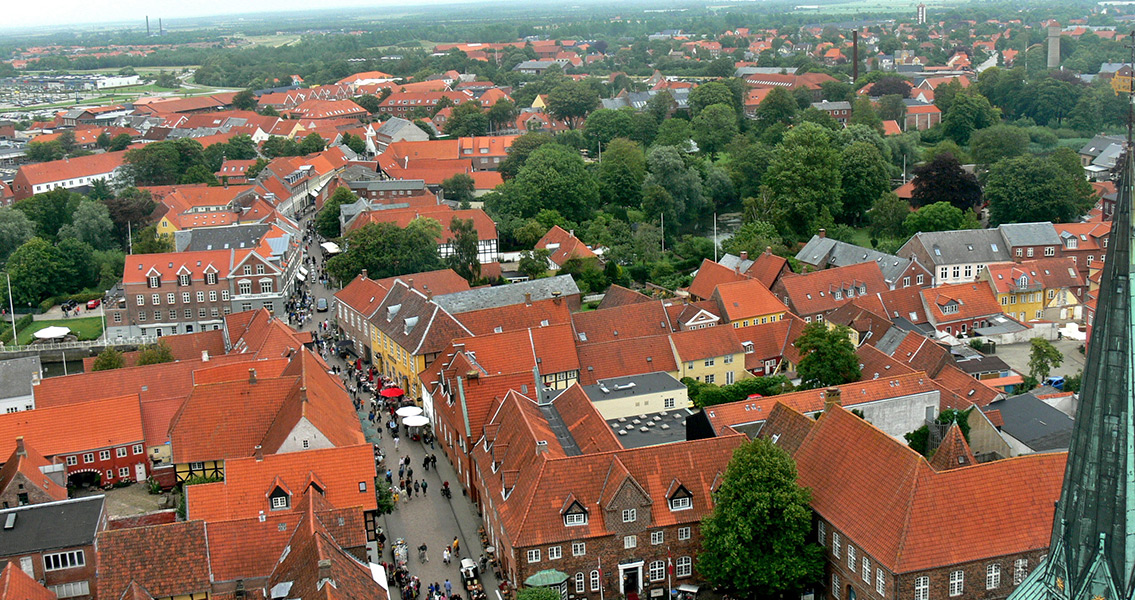
Ancient Pitcher Discovered in Historic Danish City

Categories
Breaking News

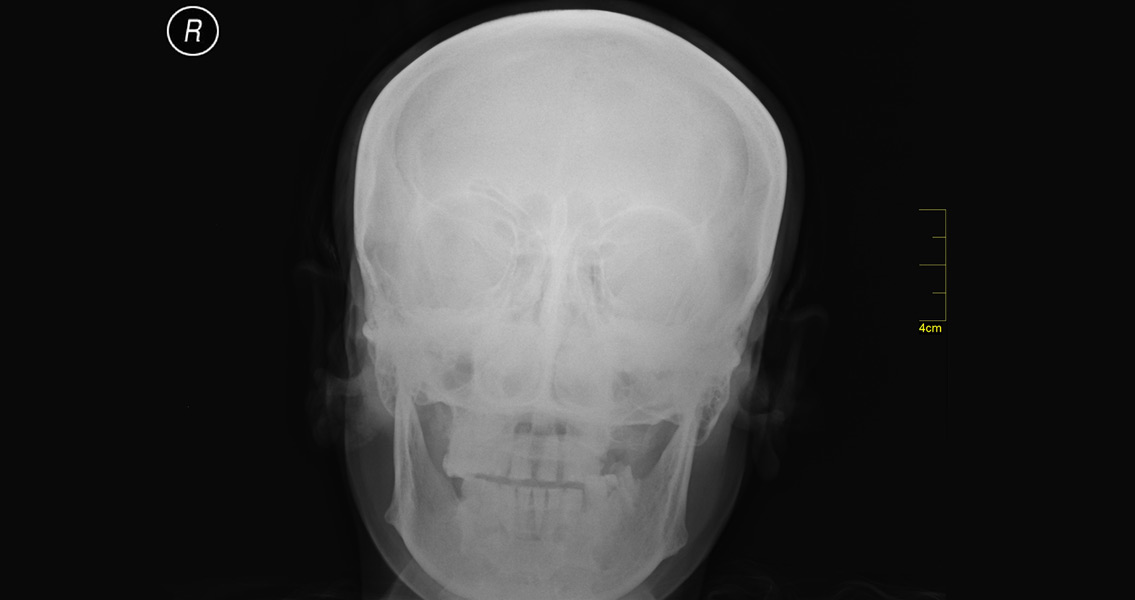
Medieval Skulls Reveal Brain Injuries

Image courtesy of Wikimedia commons user: Nevit Dilmen ]]>