st of February 2014 marked the 200th anniversary of the publication of Lord Byron’s ‘The Corsair’. The lyric poem sold out the initial run of 10,000 copies on the day of its release, an impressive feat even by modern standards and unprecedented back then. The poem was hugely popular in nineteenth century England, and the continued fascination with Byron shows that his works are still capable of striking a chord. The plot revolves around the life of Conrad, the Corsair from the poem’s title. The first canto details Conrad’s decision to raid the riches of the Sultan Seyd, and his wife’s endeavours to make him change his mind and stay at home. The second canto details the raid itself. Conrad and his men launch their attack on Syed. Initially everything goes according to plan until Conrad is distracted by, and attempts to rescue, the women in the Sultan’s harem. This gives the Sultan’s men time to regroup and capture Conrad. Gulnare, the Sultan’s favourite slave, comes to Conrad in his cell and vows to try and save his life as thanks for his attempt to save hers. In the final canto, the escape plan begins with Gulnare attempting to trick Syed into releasing Conrad. This fails, and when unable to convince Conrad to kill the Sultan, Gulnare does so herself before the successful escape. Gulnare returns with Conrad to his home, where he finds Medora has died from grief, having believed him dead. At the end, Conrad leaves the island alone…
“And Conrad comes not, came not since that day
Nor trace, nor tidings of his doom declare
Where lives his grief, or perished his despair”
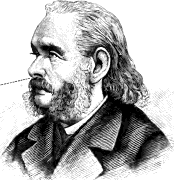
Born in 1788, Byron was one of the most extreme and flamboyant of the Romantic poets, in both his writing and lifestyle. The Corsair was written at a tumultuous time in his life. His early works had been critically slated, but from 1812 he was becoming increasingly popular. He had recently been involved in a scandalous affair with Lady Caroline Lamb, while also rumoured to be the father of his half sister’s third child. The Corsair reflects much of the poet’s life. As he said himself, it was written “con amore, and much from existence.” The protagonist finds himself embroiled in a confusing relationship, the loving wife who longs for him to settle down into domesticity, and the temptation presented by Gulnare. Most pertinently Conrad has a moral code, however alien it may seem. Byron presented a window onto his own life, the temptations he found himself surrounded by and struggling to control. He often seemed to live a life with no consequence, but The Corsair at least provides an insight into his inner turmoil. The popularity of his works also reveal a great deal about the society in which he lived, one in the early stages of industrialisation, just before the advent of rigid Victorian values. For all the legendary eccentricities, controversies and debaucheries that surround Byron’s life, the continued fascination with the man says a lot. He was a one person topic for conversation. His writings were popular but he was also a source for gossip, a personality that was, and for many people still is, just as important as his art. In many ways one could argue he was the prototype of the modern celebrity – a fame brewed from 50% art and 50% the artists own character. The brooding, gloomy Corsair reveals to us another side of this larger than life writer. Related Books The Works of Lord Byron
Vol. 2 of 6
by George Gordon Byron
PIBN: 1000228173
[gap height=”20″]]]>
 Poems of John Donne
by John Donne
PIBN: 1000146331
[gap height=”20″]]]>
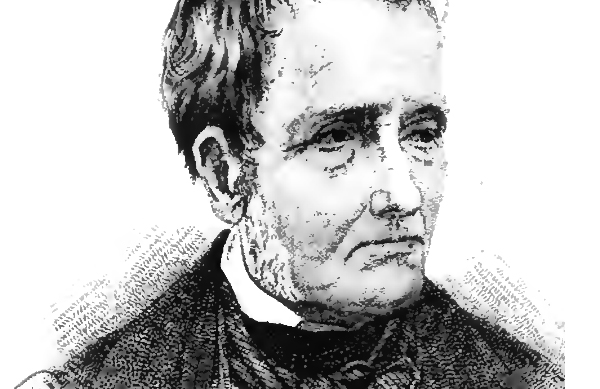




 Said to have been based on Mark Twain’s Memoir, Life on the Mississippi, The Adventures of Huckleberry Finn follows the life of a young adventurous boy (Huck Finn) as he runs away from both his guardian, the Widow Douglas and his father Pap. He accidentally teams up with another runaway, a slave named Jim.
As the two set off they hope to find freedom from different things; Huck from both the thought of being “civilized” and his drunken father, and Jim from his current life. Jim is a slave and is running away to become a free man so he can in turn free his family from slavery.
The two unlikely friends journey down the Mississippi in what turns out to be a series of adventures filled with death, disguise and eventually not just the growth and maturity of their friendship but also of Huck. The river, on which their journey is set, is an important motif and acts as both the agent that brings the two closer to their destination as the motion that pushes Twain’s story along.
The Mississippi is the fourth largest river in the world and stretches over ten US states. What has made the Mississippi River so famous is not only the importance it plays to those towns surrounding it but the way in which Mark Twain uses the river in many of his literary works as an important motif.
Twain retells his experiences on the Mississippi river in a memoir published in 1883, centered on his life as a steamboat pilot. It follows his journeys on the Mississippi from St Louis to New Orleans. His own experiences were what inspired the 1834 novel, The Adventures of Huckleberry Finn. Twain’s recount of Huck’s journey along the river maps the road to the young boy discovering himself.
One of the most obvious features of the river is the way in which it provides a hidden getaway for anyone who wants a quick way out of town. Because the river spans so many states, one could easily hide in one of the many towns that the river passes though. The river acts as a back road and is the first option for making hasty retreat.
It begins as a friendly journey as Jim and Huck gain a raft and food that has been washed up. Twain seems to point out how giving the river can be and how much they can hide comfortably on this hidden trail, but it doesn’t stay calm for too long.
Their subsequent encounters with hoodlums, thieves, liars and murderers shows that just like the river that can be friendly on some days and rough and engulfed in fog on other days, such are their experiences; they might be able to sail smoothly and bask in the sunshine and the quietude on parts of their adventures, but not far downstream they can encounter rough waters.
Another astounding feature worthy of mentioning is the way in which Twain seems to compare the Mississippi river with the aristocracies. Huck ends up meeting a family known as the Grangerfords and realizes they have been locked in a feud for years with their neighbors, the Shepherdsons , a family with whom they attend church. There is no difference with life on the Mississippi and life among these people.
Their longstanding feud erupts when two members of either family decided to elope. The feud turns deadly and seems to reflect Huck’s earlier experiences on the river where a feud between friends ended in death. There is a stark comparison between the two worlds as Huck seems to have been caught in between the two.
 Twain’s love for the Mississippi river is no doubt evident in the novel. It is portrayed not just a long and winding avenue that leads out of town and away from potential conflicts but a road that enables one to find themselves.]]>