Categories
Breaking News

Unknown Culture Discovered in Peru

th – 7th century CE, and it literally indicates that the northern parts of the Atacama Desert were inhabited by civilizations and farming communities much before the Tiwanaku civilization came into Peru. The discovery was made during the Tambo Project, a project that has been carried out by the Institute of Archaeology since the year 2008. These burials were found in the Tambo river delta which is located in the northern parts of the Atacama Desert. According to Jozef Szykilski, the leader of the project, the graves were dug into the sand and without the presence of any stone structures, they were almost impossible to locate. As a result, they did not fall prey to robbers and managed to remain safe across centuries. Professor Szykulski also mentions that the burials were made by people about whom almost nothing is known. He believes that the items found in graves also indicate that the people had a clear cut social division as well. Archaeologists have discovered numerous artifacts, headgear made from llama wool, bodies wrapped in mats, bodies wrapped in cotton burial shrouds as well as bodies wrapped in nets. Archaeologists also mentioned that they found some arrows tipped with obsidian heads, bows and quivers. This in itself becomes an extremely rare find, because bows are considered to be rare in Peru. Another interesting discovery was the discovery of a llama. This proved that the animal was brought to the Tambo delta much earlier than was previously believed. Archaeologists have also discovered maces that contained copper or stone finials in a number of male graves. Professor Szykulski believes that these objects along with the bows were used to denote power. This also offers evidence that the culture of this long lost civilization had a stratified society where the elite were allowed to take power with them into their afterlife. Other goods found at the burial sites include objects made from tumbaga and copper, jewelry items, reed withes that were attached to the ears of the dead and protruded all the way to the surface and weaving tools. Archaeologists believe that these reed withes acted as ritualistic communication tools that allowed the living to communicate with the dead. Polish archaeologists had previously discovered the Tiwanaku civilization tombs in the Tambo river delta and dated them back to the 7th – 10th century CE. This makes the new discoveries even more sensational as civilization was not expected to have reached the area before the Tiwanaku. The presence of ceramic vessels, weapons and tools also denote that the society was quite advanced. Archaeological work continues to be carried out and the study area covers a span of almost 20000 sq. kms. With the scheduled work expected to continue for a few more years, we can certainly expect many more details about this previously unknown  culture to emerge.]]>

Categories
Breaking News

Latest Dive to Provide New Insights on a Legendary Shipwreck’s Remains

‘star’ of King Henry VIII’s fleet took her last bow and went into the sea. She rested on the seabed for about 436 years before being successfully salvaged on 11 October 1982. Collective efforts from some hardcore enthusiasts had proven to attract plenty of attention, which laid the foundations for the eventual salvation of the Mary Rose. Today, she lies in a museum in Portsmouth, where her awe-inspiring remains continue to wow millions of visitors. The Mary Rose Museum has been the main contender for several awards including the Art Fund Museum of the Year award and the National Lottery Good Causes award in the Best Heritage category. ]]>

Categories
Breaking News

Archaeoastronomy Steps on the Stage

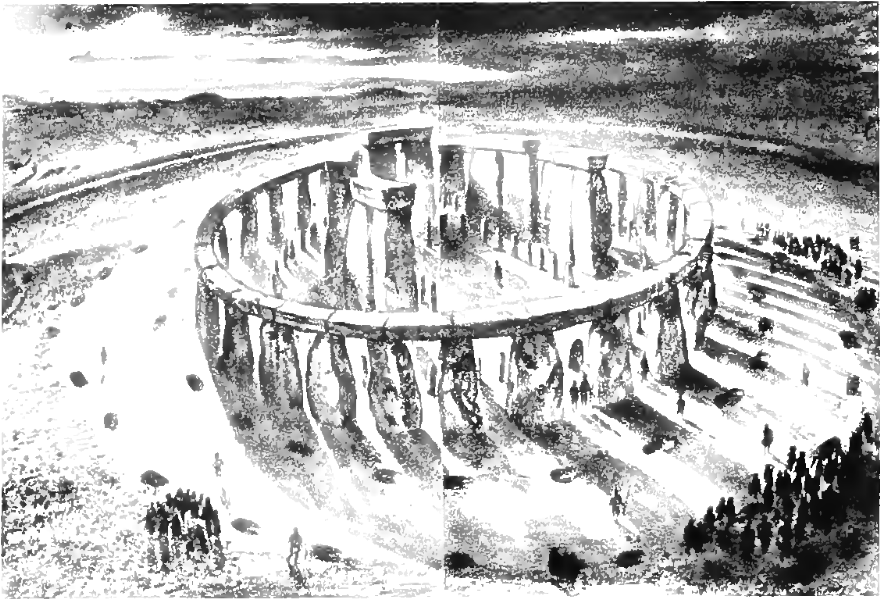
Researchers presented their works to shed a brighter light on Archaeoastronomy Recently the field of archaeoastronomy gained a new level of attention when it was presented to the scientific community at the National Astronomy Meeting 2014 in Portsmouth. This is due to the growing evidences found by archaeo-astronomers around the world that shows people from prehistoric era were actually watching the Sun, Moon and stars. The evidences also show that prehistoric human, from the Neolithic and Bronze age period, managed to establish some level of understanding about the mechanic of celestial objects. Archaeoastronomy is an interdisciplinary field that focuses on the study of ancient astronomical practices and structures. To put it in another words, it is the study that tries to relate the prehistoric and ancient societies’ understanding of celestial objects with the structures they built. Some scientists put it in much simpler terms when they described archaeoastronomy as “anthropology of astronomy”. The field began to gain attention when discoveries about Stonehenge came to light in 1960s. In the presentation of his work on 4000-year-old astronomically aligned standing stones at Gardom’s Edge, Dr. Daniel Brown of Nottingham Trent University however, stressed that archaeoastronomy encompassed more than just Stonehenge. He said “Modern archaeoastronomy encompasses many other research areas such as anthropology, ethno-astronomy and even educational research. It has stepped away from its speculative beginnings and placed itself solidly onto the foundation of statistical methods. However, this pure scientific approach has its own challenges that need to be overcome by embracing humanistic influences and putting the research into context with local cultures and landscape.” The term ‘archaeoastronomy’ owes its existence to Elizabeth Chesley Baity, the first person to use that term. As of late, some researchers believe a new term should be used considering the combination of several disciplines into it. ‘Skyscape Archaeology’ was the term proposed by some experts. Dr. Fabio Silva is among the people who agreed to that term and had even recently established the Journal of Skyscape Archaeology. “We have much to gain if the fields of astronomy and archaeology come together to a fuller and more balanced understanding of European megaliths and the societies that built them. Archaeologists will need to learn some basic observational astronomy, but archaeo-astronomers will also have to engage more with the archaeological record and ask different research questions. It is no longer enough to simply collect orientation data for a large number of monuments spread over vast regions and look for broad patterns. In addition, archaeo-astronomers cannot base their assumptions on modern concepts of precision and symmetry of axis, unless this can be independently demonstrated. To understand what alignments meant to prehistoric people and why they decided to incorporate them into their structures, we need to identify patterns and interactions between structures, landscape and skyscape,” said Dr. Silva. Experts are also in disagreement regarding the first person that launched archaeoastronomy into the fast track of scientific research. The disagreements exist because until this day, archaeoastronomy is still a loosely-defined term. According to Clive Ruggles, Heinrich Nissen who worked in the mid-nineteenth century was arguably the first archaeoastronomer. Clive Ruggles is the Emeritus Professor of Archaeoastronomy in the School of Archaeology and Ancient History at the University of Leicester, in United Kingdom. His opinion was countered by Rolf Sinclair, the author of Current Studies in Archaeoastronomy, believes Norman Lockyer, who worked in the late 19th and early 20th centuries, to be the ‘father of archaeoastronomy’. In contract to those two experts, Euan Mackie, a British anthropologist and archaeologist, put Alexander Thom who worked on the subject in Britain between the 1930s and the 1970s, to be the pioneer of archaeastronomy. Also presenting their work during the meeting were Pamela Armstrong of the University of Wales Trinity St David, Brian Sheen and Gary Cutts of the Roseland Observatory, Liz Henty of the University of Wales Trinity St David and Dr Frank Pendergast of Dublin Institute of Technology.]]>

Categories
Breaking News

Stone Spearheads Unearthed in Northern Lapland

Categories
Breaking News

Rome’s Colosseum Used As Condominiums in the Medieval Era

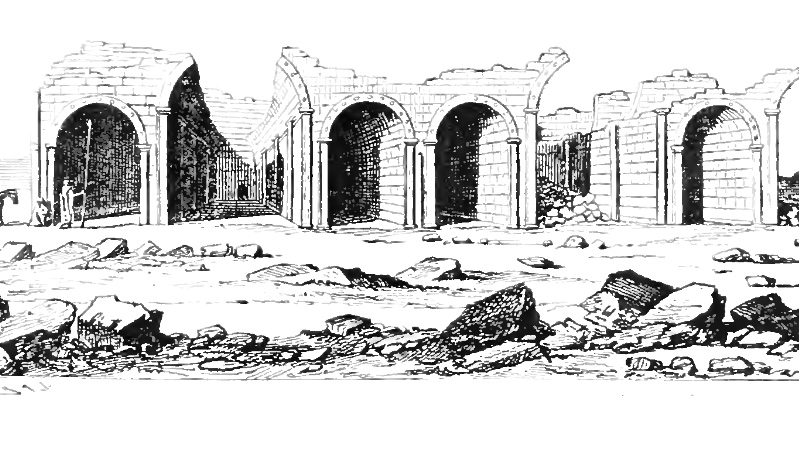
th century until the year 1349 when the iconic monument was terribly damaged by a major earthquake. This fact was uncovered after a 3-week excavation that uncovered a few arched entrances which lead into the arena. Archaeologists discovered the foundations of a 12th century wall that was used to enclose a particular property in the Colesseum, potshards and terracotta sewage pipes. According to Rossella Rea, the Director of the Roman Colosseum, these excavations allowed archaeologists to identify a complete housing lot from the Medieval era. It is believed that this unusual condominium also consisted of workshops and stables and that area within the Colosseum was rented out by friars of the Santa Maria Nova Convent who had control of the monument. Further research also indicated that all houses opened onto the area where the gladiators once used to fight. Professor Riccardo Santangeli Valenzani, teaching medieval archaeology at the Roma Tra University, believes that the area that once hosted glorious gladiator battles was transformed into a common space for the Romans living there in the medieval era. It is believed that this courtyard was buzzing with goods, animals and people. Archaeologists also uncovered cooking pottery along with the figurine of a tiny monkey that was carved from ivory. It is believed that this piece was used as a pawn in a chess set during the medieval era. The Roman Colosseum dates back to the year AD 72 when it was built by the great emperor Vespasian on the bed of a drained lake. It is considered to be the most popular remains of Ancient Rome. Many might not know this, but the Amphitheatre was actually opened in the year AD 80 by Titus, Vespasian’s son. This amphitheatre was inaugurated with a festival that lasted for 100 days and consisted of naval battles, fights and gladiatorial combats. Another reason why the Colosseum became so popular over the centuries was the fact that it survived 3 major earthquakes as well as a huge fire. It transformed into a garbage dump after emperor Honorius banned bloody gladiatorial combats as well as a stone quarry for buildings such as the St. Peter’s Basilica. The recent excavations have uncovered yet another piece of history for the Roman Colosseum. The Roman Colosseum is currently undergoing a $43 million restoration and cleaning project, the cost of which is being sponsored by Tod’s, a popular leather bag company in Italy. According to Rea, the dig should continue in the year 2015 when the second phase of the cleaning and restoration starts. More and more mysteries pertaining to the most visited monument of Italy are expected to be uncovered during the second phase of excavations. ]]>

Categories
Breaking News

Protection for World War 1 Ships in Focus

th anniversary, members of UNESCO (The United Nations Educational, Scientific and Cultural  Organization)  met in Belgium in order to discuss how to best protect the underwater heritage of the historic event. The organization is expected to extend the 2001 convention so as to safeguard a number of sites, particularly World War 1 shipwrecks that are being threatened by looting, destruction and salvaging. The 2001 Convention introduced by UNESCO aimed to help the member countries to protect their shipwrecks, submerged valuables and ruins and other fragile segments of the underwater heritage. According to UNESCO, there are about 3 million undiscovered shipwrecks that are still scattered all over the globe. This number is said to include about 12500 sailing vessels that were lost at sea between the years 1824 and 1962. The constant advancements in technology have made these shipwrecks very easy to detect, thereby making them vulnerable to salvage operations, looting and treasure hunters. The 2001 Convention had originally included sites that were sunk more than 100 years ago. However, according to the current changes, this status is expected to be extended in order to cover thousands of other sites as well. The naval losses of the World War 1 might have been lesser than the carnage seen in the trenches, but it still constitutes a significant portion of history to ensure that it remains preserved for years to come. It is said that Britain had mobilized a total of 11000 vessels out of which 1100 had been sunk. The Germans also lost hundreds of warships and as many as 35000 men. Since the locations of these sinkings are well known, it is easy to discover the ruins and undertake looting, salvaging operations and treasure hunting activities. According to reports, the number of ships being salvaged has kept increasing over the years as more and more ships are being dismantled for aluminium, copper and brass. The increase in the number of protected sites is obviously expected to place a major strain on the already strained resources of the member nations. According to Dr. Innes McCartney, the leader of the research expeditions of the ships from the Battle of Jutland, the English Channel is full of war graves that have been subjected to looting, salvaging and treasure hunting in the recent past. Dr. McCartney also states that the only way to stop the looting is to allocate the proper resources and protect many more underwater sites. He also states that the one of the major challenges would be to show people what lies out there and how important it is to the culture and the legacy of the world. UNESCO had asked all ships at sea to use a commemorative signalling on Saturday, the 28th of June 2014, by lowering the ensigns or flags to half mast. A sound signal was also made a part of the procedure that served as a symbol of reconciliation and peace, a remembrance to those who lay down their lives in the war and a reminder to the public on the need to protect the land and underwater cultural heritage. ]]>

Categories
Breaking News

Rare Calculators Dating Back to the Incas Found in Peru

th century. This makes the present day findings even more important. ]]>

Categories
Breaking News

Destruction of Ancient City By Isis Feared

One official who oversaw the security of Hatra, Mohammed Abdallah Khozal, reported that the police officers guarding the city left when they heard that ISIS was coming their way. He says that there is no one protecting the temple and rebels have taken full control. He fears that gun fights and explosives may cause more damage to the area. UNESCO Director-General, Irina Bokova, voiced her concerns about the uprising taking place in Iraq and said that more of Iraq’s cultural heritage could be destroyed, as it was during the war. She calls on the rebels to avoid the destruction of cultural and religious sites, as their destruction is a war crime and a blow to the identity of the Iraqi people. One of the incidents that Bokova might have been referring to was the destruction of the al-Askari golden mosque in Samarra, north of Baghdad, by Islamist terrorists in 2006. These fears over the destruction of this heritage site by ISIS are certainly not unwarranted. Several landmarks have already been destroyed by terrorists. Earlier this month, the statue of the 19th century Iraqi composer and musician, Othman al-Mousuli, was destroyed when the city of Mosul was taken over by the militants. These rebels also destroyed the tomb of Arab poet Abu Tammam from the Abbasid era and the tomb of 12th century Arab philosopher Ibn al Athirl, who traveled with the army of sultan Salahuddin.]]>

Categories
Breaking News

Logbooks Show Proof of Death and Misery Onboard Connecticut Ships

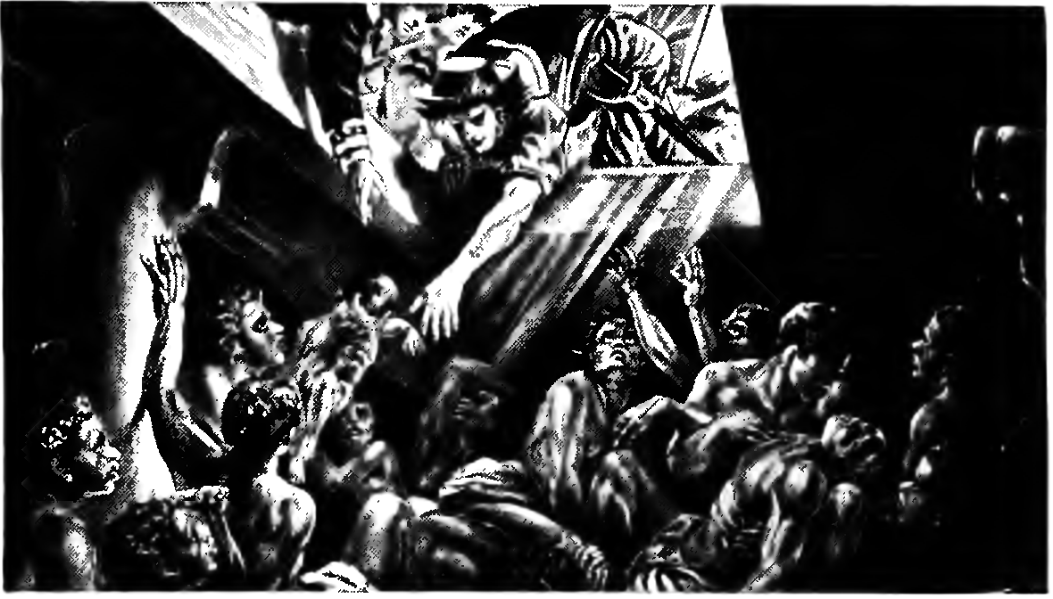
th century ship that ended up linking New London ships to the West African slave trade. According to this logbook, men from Connecticut travelled to Sierra Leone, where they bought slaves to be shipped as slaves to the West Indies. Contrary to popular belief, the keeper of this logbook wasn’t Sam Gould, but an aristocrat named Dudley Saltonstall. Ever since this discovery was made about 10 years ago, researchers have continued their studies on the slave trade and the involvement of North London families in the slave trade. A number of details have emerged since the first revelations and more and more ships have been linked with the slave trade. In fact, some of the leading families of the colonies were also said to be involved with slave trade. The suffering of captives during the Middle Passage from Africa to the Caribbean has been well documented. However, the logbooks and ongoing research highlight the lethal nature of the trade – both for the officers as well as the seamen. According to records, traders from Connecticut had died of fevers, killed in uprisings or been mutilated at the hands of black traders.  One particular captain had his head bashed in by his chief mate, a crime to which the chief mate later confessed. Saltonstall was just about 18 when he first began to maintain a logbook in the voyage of 1757. His father, Gurdon Saltonstall, was the deputy mayor of New London and an extremely successful merchant as well. According to reports, Gurdon owned two of the three ships for which young Dudley kept records and logbooks. It also appears that Gurdon placed Dudley on the ship so that he could monitor the distributions that were being distributed to the seamen and act as his father’s eyes and ears on board the ships. According to Saltonstall’s log, the ships were in Sierra Leone on April 8, 1757 so that the seamen could buy rice to feed the slaves. The logbook also recorded that the ships were at Bence Island to take in slaves, wood and water five days later. Further proof was found when a record dated April 27, 1757 stated that 169 slaves had been boarded onto the ships. However, numerous slaves on board Dudley Saltonstall’s ship became infected with amoebic dysentery and began to fall ill during the first week itself. The logbook states that one slave fell dangerously ill and another slave died on May 4, 1757. Yet another post for the very next date mentioned that 3 more small slaves had died from the flux within a period of 24 hours. Another entry dated May 14 stated that a total of 9 slaves had died, leaving a total of 160 slaves on board. Dudley Saltonstall might have been court martialled for the loss of 100 ships and the rout of the Colonials in Maine’s Penobscot Bay, but he still managed to always land on his feet. He was disliked by his officers and was known to be extremely snobbish and arrogant. Later on in the war, Saltonstall brought the greatest prize ship of the war – the vessel that belonged to the British General Sir Henry Clinton. However, this achievement did not erase the massive costs that were spent in the Penobscot Expedition, a Pearl Harbor equivalent during the Revolutionary War. It is believed that Saltonstall remained in the business till almost 1784, traces of which were found in letters written to his wife where he mentioned that he longed to buy 300 slaves in order to sell them off in Charleston, S.C. ]]>

Categories
Breaking News

Napoleon Bonaparte's Weapons Found in Alexandria, Egypt