Categories
Breaking News

New Documentary Estimates Hitler's Net Worth in the Billions

Hitler was not only a war-machine, but also a money-making machine as well. He had numerous financial schemes that made him money, including copyrighting his image, which earned him royalties for every stamp that was sold with his face on it. Most of these money-making schemes were running in the country unbeknownst to Germany’s tax authorities. Copies of Mein Kampf, which were given to newlyweds on their wedding day, are thought to have earned him the equivalent of at least $1 million a year in royalties. The makers of the documentary surmise that Hitler owed the German tax authority over $3 million in tax in today’s money. Shortly after his death his will was found by a German Jew, Herman Rothman, working in British Intelligence, and questions were raised about his fortune. Mr. Rothman, now in his 90s, told the makers of the documentary that the Counter Intelligence Unit that he was working with spotted a man dressed in civilian clothing whom they believed was a Nazi. They captured him and took his jacket, which contained a seven-page document detailing Hitler’s last will. In this will, Hitler blamed the Jews for starting the conflict, and from the second page onwards, it is seen how much of a shrewd investor he was. Earning money from different appearances, speeches, and royalty claims, he built himself a personal $6 billion empire. It is even said that his family members living today could claim a portion of those missing billions from his image rights alone, although it is yet to be seen if anyone will come forward. “The Hunt For Hitler’s Missing Millions” aired on Britain’s Channel 5.]]>

Categories
Breaking News

19th Century 'Elixir of Long Life' Found

Categories
Breaking News

Roman Goblet Shows Ancient Knowledge of Nanotechnology

Categories
Breaking News

Ancient Schistosome Parasites Linked to Agriculture

Categories
Breaking News

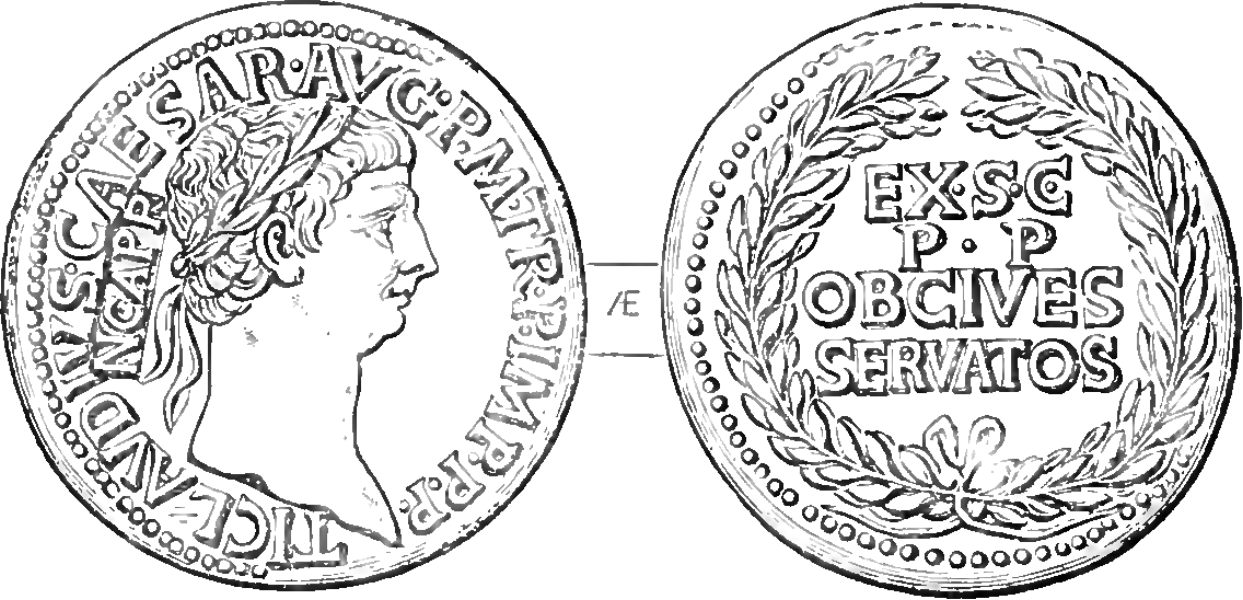
Rare Coin from Emperor Nero Found in England

th century. What makes this revelation even more surprising is that the archaeological site where the excavations are taking place has been subjected to thousands of searches and it has also offered countless coins over the years, but amazingly this is the very first gold coin to be excavated here. Albert, the one who actually discovered the coin, humbly stated that he was completely shocked and surprised to see something shining out of the soil as if it was dropped moments ago. In fact, the coin is also considered to be much older than the archaeological layer where it was found. This led researchers and historians to believe that the coins were in circulation for almost 300 years before they were lost to time. ]]>

Categories
Breaking News

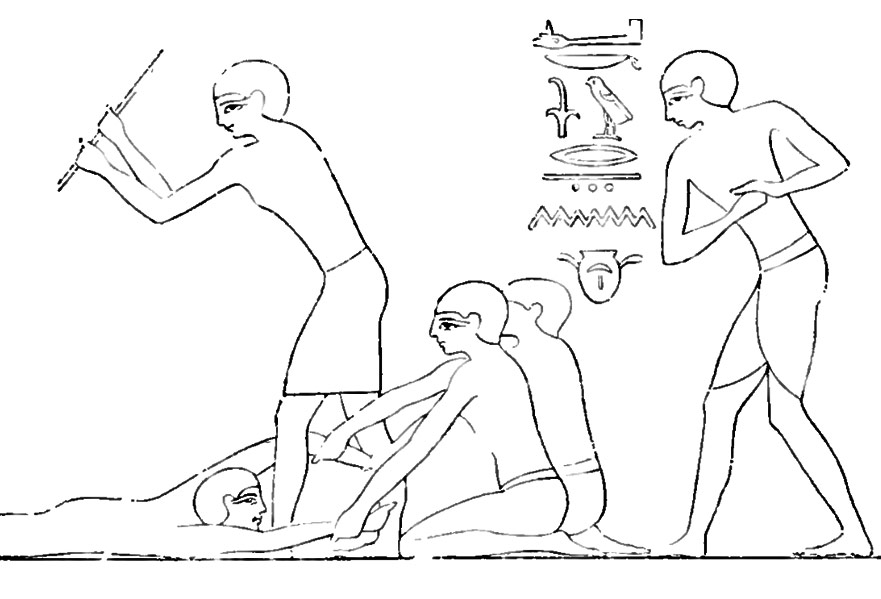
Ancient Plague Victims Dound in Egypt

th Century BC for a steward named Harwa and was used even after his death. Harwa’s successor Akhimenru’s tomb can also be found here. A group of scientists who work for the Italian Archaeological Mission to Luxor (MAIL) have finally found a major breakthrough, laying fruit to the 15 years of excavation and research work that has been performed in the region. Recent archaeological excavations have unearthed the remains of a number of victims who fell to the ancient plague that was termed as the end of the world by St. Cyprian. LiveScience reports that the remains found by archaeologists at the site were covered with a layer of lime, an ingredient that was used as a disinfectant in history. Researchers have also uncovered kilns where this lime was produced and countless human remains that have been scattered over something that resembles a monstrous bonfire. This has led theorists to believe that the plague victims were incinerated in Ancient Egypt. Researchers have also found pottery within the kiln that allows them to date the site to the 3rd Century AD, a period when the Plague of Cyprian was ravaging through the entire Roman Empire. Bishop Saint Cyprian further chronicled accounts of the suffering of those afflicted by the plague in his Latin text that has been entitled De Mortalitate. According to the saint, excessive vomiting, limbs being taken off due to contagion and bleeding from the eyes were common among all plague victims. Plague might have been termed as a form of measles or smallpox by modern day scientists, but it certainly took its toll on the Roman Empire and Ancient Egypt. Apart from claiming more than 5000 people on a daily basis in Rome, it also claimed two emperors (Hostilian and Claudius II Gothicus). Even though the plague was not the end of the world as predicted by Saint Cyprian, most historians believe that the great plague of Cyprus was one of the major reasons that weakened the Roman Empire and ultimately led to its downfall. The lack of religious rites at the funeral complexes also give rise to theories that the ancients tried to curb the spread of the disease by burying their dead in a quick and efficient manner. The burial monument also has traces of being abandoned after the plague, never to be used again. According to Francesco Tiradritti, the director of MAIL, the fact that these sites were used for burial of infected corpses doomed them for centuries until tomb raiders once again entered them in the 19th century. The discovery of this undisturbed complex also allows historians to further their insights into an era known as the Pharaonic Renaissance, a period that lasted from the 7th Century BC to the 6th Century BC. ]]>

Categories
Breaking News

The Great Auk Bone Excavated

Bone from the Extinct Great Auk Unearthed at the Scottish Seabird Center An upper arm bone of the extinct Great Auk, also known as Scotland’s Dodo, was unearthed in an archeological dig at the Scottish Seabird Center at a location called the Kirk Ness site. Archaeologists were excavating the grounds of the Scottish Seabird Center when they uncovered this invaluable piece of bone fragment of the Great Auk, also known as Scotland’s Dodo. The archaeological dig, led by Addyman Archeology and supported by Historic Scotland, uncovered a number of invaluable animal bones belonging to the mid-18th century, in addition to the bone of the Great Auk. This bone fragment was, reportedly, unearthed near the entrance area of an old building. The Great Auk, also called as Scotland’s Dodo, was a flightless, Penguin-like bird. The meter-tall bird, while extant, had a range that extended from north-eastern United States all the way across the Atlantic, and covered the British Isles and Northern parts of Spain and France. As the bird could not fly, it was an easy target for hunting. Moreover, it was a staple food of people in the Middle Ages, both because of its inability to fly and its availability in abundance. However, the Great Auk started experiencing a severe decline in its population because of massive hunting, until it finally became completely extinct by the middle of the 19th century. The bird was last seen on St. Kilda British Waters in 1840. The Great Auks largely bred on the rocky and remote islands present in the Atlantic Ocean region. Since these islands provided great access to food, these birds flourished. The birds were also found on the coasts of Iceland, Greenland and Canada, and as far as the British and Norwegian coastlines. Mr. Tom Brock, Chief Executive of the Scottish Seabird Center said, “The discovery of the Great Auk bone on site at the Scottish Seabird Centre is fascinating but also very sad.We are so fortunate in Scotland to have a rich variety of seabirds and we must use the extinction of the Great Auk as a warning to future generations to look after our wonderful wildlife and the marine environment as an absolute priority.” Mr. Brock also said, “There are both behavioral and environmental lessons that must be taken from this internationally-important finding, and as an educational and conservation charity we will remain dedicated to inspiring people to enjoy, protect and learn about wildlife and the natural environment.” Although this excavation sheds light on the Great Auk and endangered wildlife, it is also believed be able to provide better insights into human society during the Middle Ages. Remains of various domestic buildings, in addition to the remnants of daily life at North Berwick, manage to provide us with a limited but encouraging glimpse of the way in which people and wildlife of East Lothian had been at that time. It will also help us gain a sounder understanding of extinction as a phenomenon, and help us make better decisions regarding our present-day environmental scenarios. Mr. Todd Addyman, of Addyman Archeology, said, “The discovery of the Great Auk bone at Kirk Ness is an illuminating find, as we seek to understand and document the importance of the area in the history of wildlife and human habitation in the Middle Ages. We hope that its discovery helps historians and conservation experts, such as the Scottish Seabird Centre, to educate future generations about the precious nature of our natural resources.” Senior Archeology manager of Historic Scotland, Mr. Rod McCullagh, said, “In the last two decades, there has been a renaissance in our understanding of the archaeology and history of early Medieval Scotland. The discovery of the remains of domestic buildings and the associated detritus of daily life at Kirk Ness gives us a glimpse of what ordinary life was like in East Lothian at this time. That ‘daily life’ involved the killing of such valuable birds as the Great Auk is no surprise but the discovery of this single bone perhaps attests to a time when hunting did not overwhelm such a vulnerable species.” ]]>

Categories
Breaking News

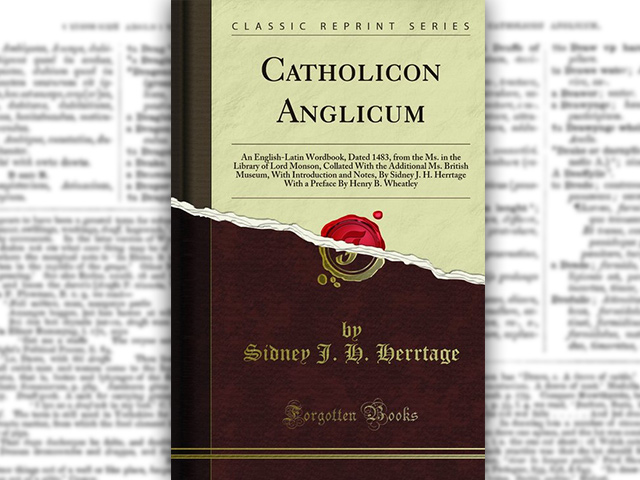
500 Year Old Dictionary

th century dictionary, potential buyers would have to spend £92,500. ]]>

Categories
Breaking News

5000 Year Old Painting Destroyed By Thieves in Jaen Province, Spain

Categories
Breaking News

The Newly Discovered Work of the Lyrist Sappho