Categories
Breaking News

Monkeys Make Stone Flakes Similar to Human Ancestor's Tools

Sapajus libidinosus) uses rocks for a variety of purposes, such as cracking open a seed or fruit to extract the edible part. In addition, they hammer rocks against stone outcroppings, with the clear intention of smashing them. The process frequently produces sharp-edged conchoidal flakes with smooth rounded facets resembling the shape of a scallop shell. Crucially, the flakes are discarded by S.libidinosus, they are not used as tools. The monkeys performing this process have been observed licking and sniffing the quartz dust created by the rock fragmentation, leading scientists to speculate that the routine is performed for a dietary reason – perhaps in search of the trace element silicon, or to extract lichen from the rocks. A team of researchers from Sao Paulo University’s Psychology Institute (IP-USP), in collaboration with colleagues at the University of Oxford’s Archeology School and University College London’s Archeology Institute in the UK, have analysed the inadvertently produced rock fragments as part of the Thematic Project “Tool use by wild bearded capuchin monkeys (Sapajus libidinosus)”. Their results have been published in the online edition of the journal Nature. “We discovered that some of the stone flakes produced accidentally by these capuchin monkeys were very similar to Oldowan stone tools”, said Tiago Falótico, a postdoctoral fellow of IP-USP and one of the authors of the study, in a press release. First identified in Tanzania, Africa, Oldowan tools are among the oldest stone tools ever found and considered the earliest evidence of cultural behaviour, dating to as far back as 2.6 million years ago. Named after Olduvai Gorge, where they were first found, the tools are usually associated with Homo habilis, one of the earliest species of the Homo genus. The stone flakes and other materials gathered by Falótico and principal investigator Eduardo Ottoni over the course of several years were analysed by Tomos Proffitt, a researcher at Oxford University’s Archaeology School and expert on Oldowan tools, and Michael Haslam, a researcher at UCL’s Archaeology Institute. Proffitt and Haslam’s results showed that the stone flakes produced by the capuchin monkeys had identical characteristics and morphology to deliberately produced hominin tools. Half of the flakes exhibited conchoidal fractures, an attribute usually associated with the hominin production of tools. They also displayed varying levels of percussive damage as well as sharp edges, again, characteristics associated with hominin tools. “Paleoanthropologists use the characteristics of sharp-edged stone flakes both to distinguish them from naturally broken stones and to attribute them to the hominins that produced flakes with these shapes intentionally in order to use them as tools,” Falótico said. The fact the capuchin monkeys produced flakes which are indistinguishable from hominin produced ones, however, opens up a range of interesting questions about how we read the paleontological record. “When sharp-edged flakes are found at an archeological site, it’s usually easier to attribute them to hominins because the same digs generally also turn up many stone cores and signs of human occupation, such as fires,” Falótico said. “However, when they’re found in isolation with few or no other archeological artifacts, we should bear in mind that they might not necessarily have been produced by human ancestors.” ]]>

Categories
Breaking News

Brazilian Dinosaur Discovered Six Decades Ago Comes Out of the Closet

Austroposeidon magnificus. Diogenes de Almeida Campos, the Museum director, is quoted as saying in Phys.org that six decades does sound on the slow side for studying such a big find. He went on to explain that in the 1950s Price and his colleagues were pioneers in the field of paleontology for Brazil and that a vertebra of this size needed to be studied. Campos continued, saying that a lack of money had held back research, as well as a shortage of staff qualified to take up the task. Today there are still only ten dinosaur experts in the entire country of Brazil. Campos told Phys.org: “We were waiting for the staff…, for a laboratory that started from nothing to mature. We made a first effort with students about eight years ago and it didn’t succeed.” It was one of Campos’ students, Kamila Bandeira, who made the mysterious creature the subject of her doctoral thesis, and put the pieces of the puzzle together. A majority of dinosaur discoveries occur in the desert or largely barren areas, like the southwest region of the USA, the south of Mongolia or Argentina, because they’re easier to find. The fossilized bones belonging to the biggest dinosaur ever discovered, around 40 meters (130 feet) long, were discovered in 2014 in Argentina. Like so many other discoveries, Austroposeidon magnificus was found by chance, by construction workers building a road near Sao Paulo. Researchers believe the small number of bones recovered at the site points to the creature’s unceremonious end. Campos told GMA News Online, “When these animals die, it’s… a huge new source of meat. So all the hunters, the carnivores ate this creature. The first thing they ate is the head, because the brain must be tasty. They also broke the long bones to get at the marrow… After, came smaller animals and nothing was left over. Anything that did remain the beetles and the spiders and the ants finished, and when there was just bones, the bacteria came. Finally, the remains sank into the lagoon.” There may yet be many more such discoveries waiting in Brazil’s thick flora. “Pay attention when roads are built, when wells are dug,” Campos tells GMA, “You could have a dinosaur in your backyard and not realize!” ]]>

Categories
Breaking News

Brazilian Monkeys May Have Long History of Tool Use

Current Biology, available here Image courtesy of Wikimedia Commons user: Bart van Dorp]]>

Categories
Breaking News

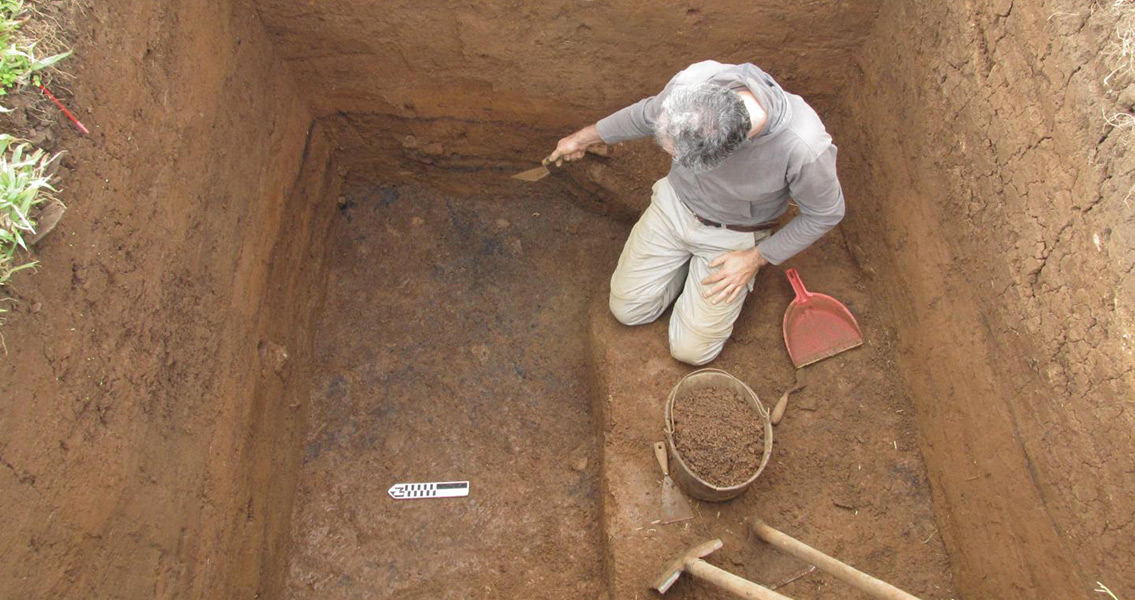
New Research Shows Brazilian Pit Houses Were Homes to Generations

PLOS ONE. Image courtesy of University of Exeter ]]>

Categories
Breaking News

Legacy of Brazil’s Slave Trade Hotly Contested

Categories
Breaking News

Beheading in New World Much Older Than Thought

“The Oldest Case of Decapitation in the New World (Lapa do Santo, East-Central Brazil)” Image courtesy of Wikimedia Commons user: Archaeodontosaurus]]>

Categories
Breaking News

Brazil’s Lessons from Indian Independence

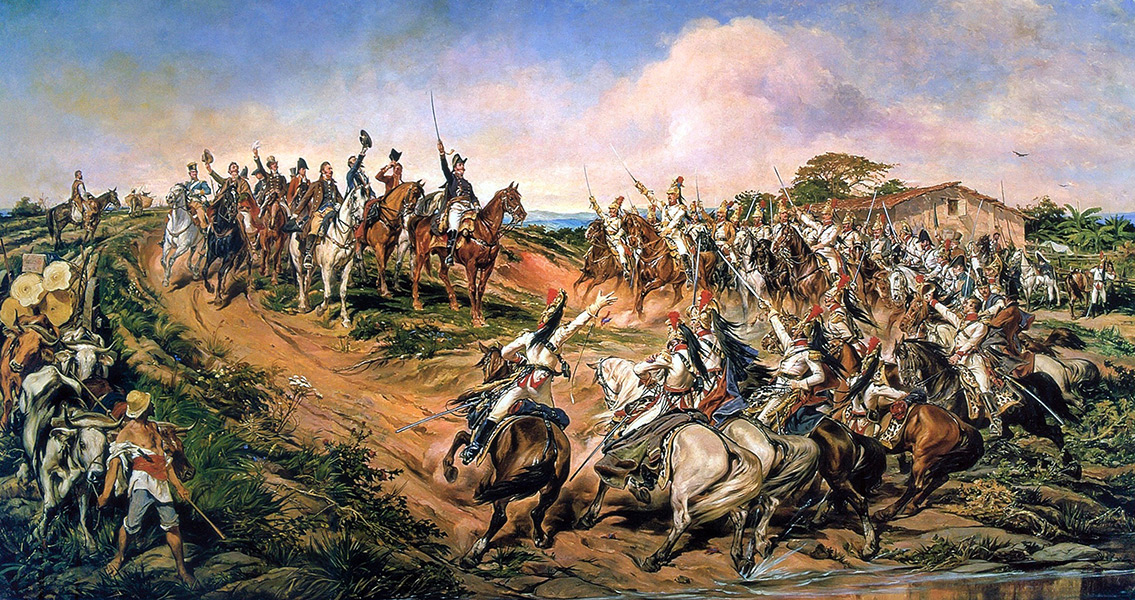
Journal of Global History. “Latin America, by virtue of its radically different history of colonialism from much of the ‘Third World’, resists many of the narratives of either Cold War historiography or postcolonial theory that have emerged from considerations of these regions.” Colonialism in Latin America happened earlier, endured longer, and became much more deeply embedded in society in comparison to other colonial countries. Latin America’s post-colonial movements did not, therefore, lead to the same anti-colonial nationalism which typifies independence movements in Africa and Asia. Brazilians were not averse to being considered ‘Western’, Chakravati argues, but they did not wish to be considered peripheral to the West. By studying several prominent Brazilian intellectuals, Chakravati has revealed that these thinkers examined Indian independence. “Despite their differences in personality, career, and ethical and political commitments, our Brazilian protagonists demonstrated,” Chakravati argues “[a] shared starting point of a self-identification with the West, including its imperial heritage, complicated by their own position as postcolonial figures from the global periphery.” By examining India’s independence, Brazil’s intellectuals saw a troubling mirror-image of their own peripheral position with regard to the West. Following independence, India was of less importance to the West as wide-ranging reforms decreased the profits foreign investors could make. By nationalising heavy industries such as steel, aviation, shipping, electricity and mining, India aligned itself very clearly as a post-colonial nation. In Brazil’s case, the newly-independent country did not oppose the colonial powers. Chakravati argues that one particular event shows this very clearly. After gaining independence in 1947, India requested Portugal cede its territories on the subcontinent to India. After more than a decade, India annexed Goa using military force in 1961. In response to this, Brazil – rather than condemning Portugal’s continued colonial policy around the world – declared the matter to be a bilateral issue between India and Portugal. Clearly, therefore, Brazil was attempting to portray itself as a pro-Western, independent nation. Chakravati has effectively shown that post-colonial countries should not be treated as entirely passive entities, wrapped up in the wider context of Cold War politics. They were independent nations which located themselves in world politics in nuanced and varied ways. Image courtesy of Wikimedia Commons user: Lmbuga For more information: www.journals.cambridge.org]]>

Categories
News

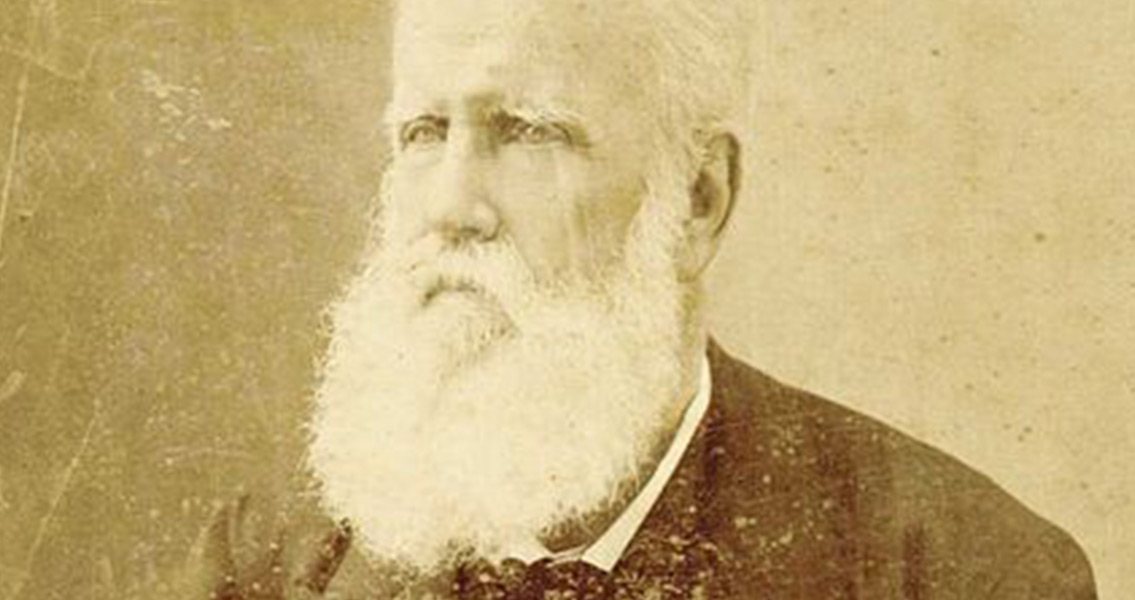
The Last Brazilian Emperor

Categories
Breaking News

New Species of Flying Dinosaur Discovered

Categories
News

Mysterious Rings Older Than the Amazon