Categories
Breaking News

Secret Ancient Amazon Population Revealed – The History News of the Week

New Amazon Population Revealed Archaeologists have discovered remarkable new evidence that parts of the Amazon long thought uninhabited were in fact home to thriving, diverse populations of up to a million people. The researchers from the University of Exeter have unearthed remains revealing that a 1,800 km stretch of Southern Amazonia was continuously occupied from 1250 until 1600 by people living in fortified villages. Key to the research was the analysis of mysterious earthworks called geoglyphs – man made ditches with strange square, circular or hexagonal shapes. The new study, published in the journal Nature Communications, shows there are an estimated 1,300 geoglyphs across 400,000 square km of Southern Amazonia, with 81 in the area focused on in the latest research. The archaeologists estimate there would have been between 1,000 and 1,500 enclosed villages, with two-thirds of the sites yet to be found. “There is a common misconception that the Amazon is an untouched landscape, home to scattered, nomadic communities,” said Dr Jonas Gregorio de Souza from the University of Exeter’s Department of Archaeology. “This is not the case. We have found that some populations away from the major rivers are much larger than previously thought, and these people had an impact on the environment which we can still find today.” Dr de Souza continued: “The Amazon is crucial to regulating the Earth’s climate, and knowing more about its history will help everyone make informed decision about how it should be cared for in the future.” With large swathes of the Amazon rainforest still unexplored by archaeologists, especially in the areas away from major rivers, the latest discovery is helping fill in gaps in the history of the Amazon. Professor José Iriarte, from the University of Exeter, another member of the research team, said: “We are so excited to have found such a wealth of evidence. Most of the Amazon hasn’t been excavated yet, but studies such as ours mean we are gradually piecing together more and more information about the history of the largest rainforest on the planet “Our research shows we need to re-evaluate the history of the Amazon. It certainly wasn’t an area populated only near the banks of large rivers, and the people who lived there did change the landscape. The area we surveyed had a population of at least tens of thousands.” North America’s Oldest Footprints Discovered 13,000-year-old human footprints have been discovered on Canada’s Pacific coast, the oldest ever found in North America. The finding could have significant repercussions for the history of how North America was populated. It is widely believed that humans migrated to the continent from Eurasia during the last ice age, which ended 11,700 years ago. It is thought they entered on what is now the west coast of British Columbia, however, the search for archaeological evidence has been hindered by the densely forested and difficult to access landscape. Archaeologist Duncan McLaren and colleagues from the University of Victoria, Canada, have spent several years excavating tidal sediments on the shoreline of Calvert Island, British Columbia, searching for traces of human activity. Their findings have now been published in the online open access journal PLOS ONE. They reveal that 29 footprints have been uncovered of at least three different sizes. This suggests that they likely belonged to two adults and a child who were all walking barefoot. Radiocarbon dating has estimated the footprints to be around 13,000 years old. This suggests humans were present on the west coast of British Columbia as it emerged from the last ice age. “The results presented here add to the growing body of information pertaining to the early deglaciation and associated human presence on the west coast of Canada at the end of the Last Glacial Maximum,” the authors write in the introduction to their recently published study. 13,000 years ago, the sea level on the shores of Calvert Island was up to ten feet lower than it is today. Even so, it still would have only been accessible by boat. “[This] implies that the people who left the footprints were seafarers who used boats to get around, gather and hunt for food and live and explore the islands,” Duncan Mclaren, lead study author and anthropologist at the Hakai Institute and the University of Victoria in British Columbia, told the New York Times. Pre-historic Russia-Canada Connection Illuminated With Insect Fossils [caption id="attachment_8580" align="alignnone" width="1440"]A New Species of Scorpionfly Fossil From 53 Million Years Ago at Mcabee, British Columbia A new species of scorpionfly fossil from 53 million years ago at McAbee, British Columbia named Eomerope eonearctica. This insect is very similar to a fossil species that lived at the same time north of Vladivostok on the Asian Pacific coast, highlighting connections between Canada and Russia in ancient times. Credit: SFU[/caption] A newly discovered, 53 million-year old insect fossil is shining new light on the ancient Canada-Russia connection. Known as a scorpionfly, the insect discovered at the McAbee fossil bed site in British Columbia bears a ‘striking resemblance’ to fossils of the same period from Pacific coastal Russia. “We’ve seen this connection before through fossil plants and animals, but these insects show this in a beautiful way,” said Bruce Archibald, a research associate at Simon Fraser University’s Department of Biological Sciences. “They are so much alike that only the wing colour of the new McAbee species tells them apart.” The new Canadian species has been named Eomerope eonearctica, while its Russian counterpart is Eomerope asiatica, which was first described in 1974. “I’m not aware of any case where two such species so much alike and so close in age have been found in both Pacific Russia and Pacific Canada, and that’s pretty great,” said Archibald. According to Archibald, the insect’s only living relative is found in the temperate forest of central Chile, which has a climate similar to British Columbia’s 53 million years ago. Archibald worked with Alexandr Rasnitsyn, of Moscow’s Russian Academy of Sciences to describe the scorpionfly find. Their research has been published in The Canadian Entomologist. Featured Image: Compound structure with a small enclosure in the interior of a larger one. Credit: University of Exeter ]]>

Categories
Breaking News

New Native American Population Could Rewrite History – The History News of the Week

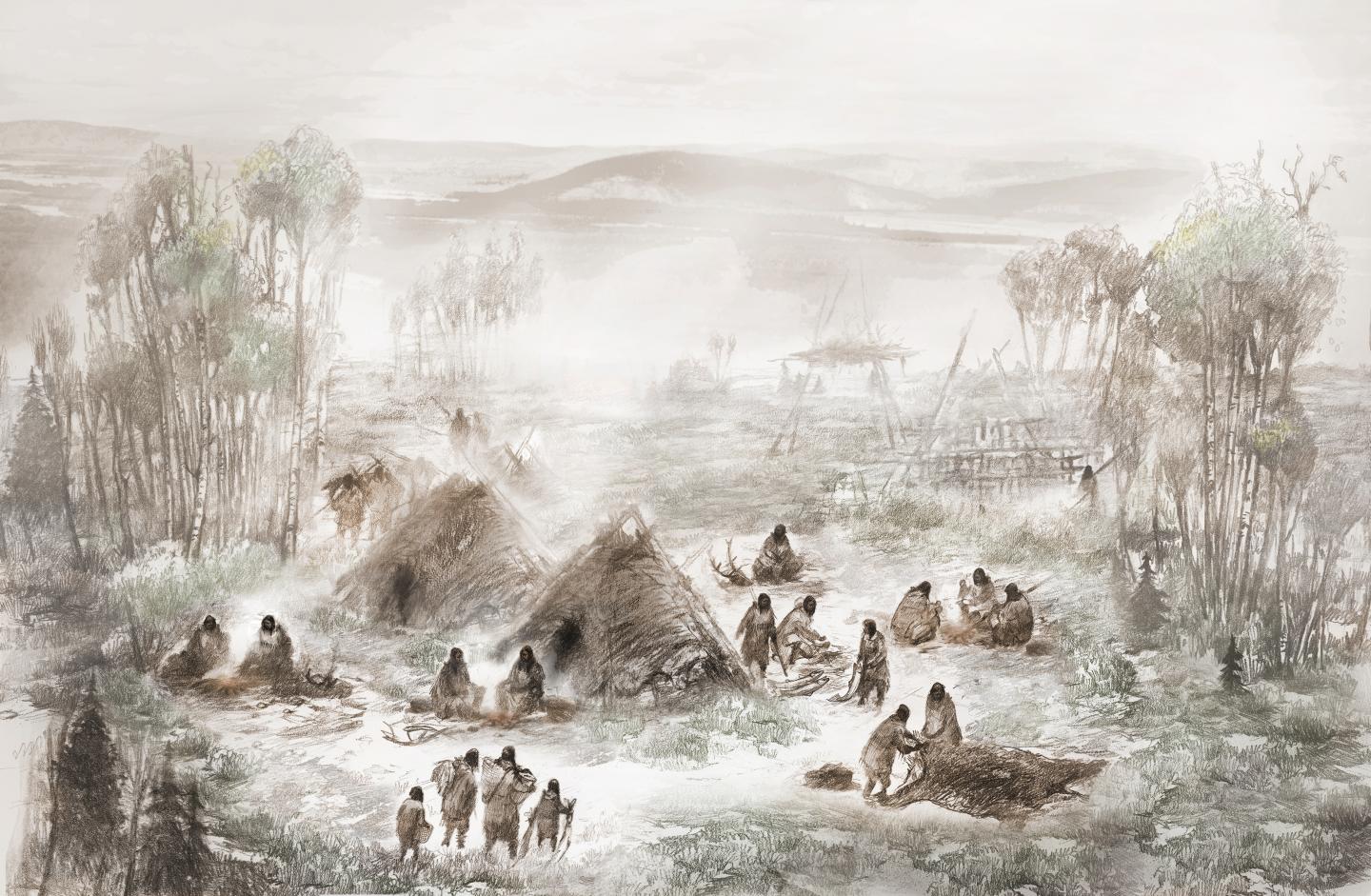
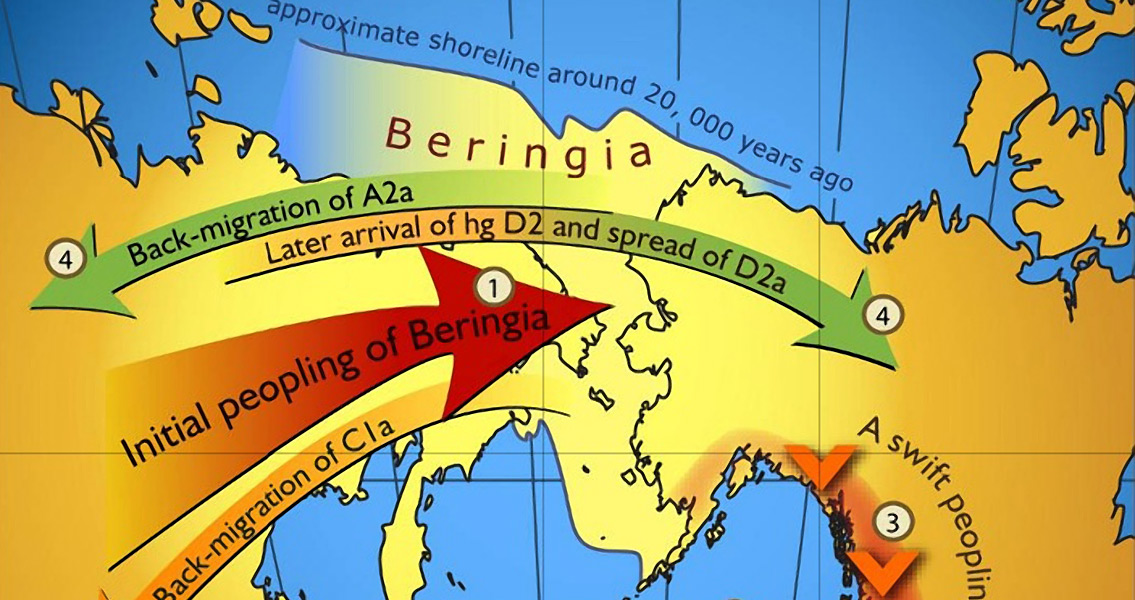
New Native American Population Could Rewrite History of North America Scientists have found evidence of a previously unknown population of Native Americans, a discovery that could cause a drastic rethink on the history of how humans populated the Americas. The revelation came from the genetic analysis of ancient DNA from the remains of a six-week old infant found at an Interior Alaska archaeological site. The new Native American group have been named “Ancient Beringians”. “We didn’t know this population existed,” said Ben Potter, one of the lead authors of the study published in the journal Nature, and a professor of anthropology at the University of Alaska Fairbanks. “These data also provide the first direct evidence of the initial founding Native American population, which sheds new light on how these early populations were migrating and settling throughout North America.” The discovery suggests two new scenarios for the populating of the Americas. One possibility is that there were two distinct groups of people who crossed the Beringian land bridge prior to 15,700 years ago. The second is that a single group crossed the land bridge and then split in Beringia into two groups, the Ancient Beringians, and other Native Americans, with the second group moving south of the ice sheets 15,700 years ago. Combined with archaeological evidence, the DNA results suggest that Athabascan ancestors moved north again, possibly around 6,000 years ago, and eventually either absorbed or replaced the Ancient Beringian population. “There is very limited genetic information about modern Alaska Athabascan people,” Potter explained. “These findings create opportunities for Alaska Native people to gain new knowledge about their own connections to both the northern Native American and Ancient Beringian people.” New Method for Determining a Skeleton’s Age of Death Christine Cave, an archaeologist from the Australian National University, has developed a new way to determine a skeleton’s age of death based on how worn the teeth are. The breakthrough could cause a drastic rethink on just how long people lived prior to the arrival of modern medicine. The method involves analysing the wear on teeth and comparing it to living populations of comparable cultures. Cave applied the technique to skeletal remains from three Anglo-Saxon cemeteries for people buried between 475CE and 625CE. “People sometimes think that in those days if you lived to 40 that was about as good as it got. But that’s not true.,” Cave said in an Australian National University press release. “For people living traditional lives without modern medicine or markets the most common age of death is about 70, and that is remarkably similar across all different cultures.” Cave believes that this myth about ancient populations dying young comes from difficulties in categorising the elderly in archaeological studies. “Older people have been very much ignored in archaeological studies and part of the reason for that has been the inability to identify them,” she said. “When you are determining the age of children you use developmental points like tooth eruption or the fusion of bones that all happen at a certain age. Once people are fully grown it becomes increasingly difficult to determine their age from skeletal remains, which is why most studies just have a highest age category of 40 plus or 45 plus. “So effectively they don’t distinguish between a fit and healthy 40-year-old and a frail 95 year old. It’s meaningless if you are trying to study elderly people.” Cave’s new method allowed her to notice a significant difference in the way male and female people of old age were buried in the Anglo-Saxon period. “Women were more likely to be given prominent burials if they died young, but were much less likely to be given one if they were old,” she said. “The higher status men are generally buried with weapons, like a spear and a shield or occasionally a sword. Women were buried with jewellery, like brooches, beads and pins. This highlights their beauty which helps explain why most of the high-status burials for women were for those who were quite young.” Cave’s research has been published in the Journal of Anthropological Archaeology. She is a PhD scholar at the Australian National University’s School of Archaeology and Anthropology. Mummy’s Name Finally Revealed A new scanning technique has revealed the name of an ancient Egyptian mummy, according to the Daily Express. The new technique was developed by researchers from University College London and the University of Manchester in collaboration with scientists from the USA. It revealed the name of the mummy, a man named Irethoreu. Irethoreu’s name was hidden on the foot plate of the coffin. According to the Daily Express, the international team of researchers used different frequencies of light to read hieroglyphics painted on scraps of papyrus used to make the case. Without this innovative technique, the only way to have read the name would have been by destroying the coffin. The name means “The Eye of Horus”. It’s believed that Irethoreu lived sometime between 664 CE and 30 CE. Featured image: A scientific illustration of the Upward Sun River camp in what is now Interior Alaska. Illustration by Eric S. Carlson in collaboration with Ben A. Potter ]]>

Categories
Breaking News

Neanderthals in Germany Went Extinct Right After Population Peak

Homo neanderthalensis was the dominant human species in Europe, populating the whole of the continent. Although archaeologists have discovered numerous settlements in Germany, they have also uncovered evidence which shows that Neanderthal populations there came to an unexplained, sudden end. Based on the analysis of several archaeological sites, Jürgen Richter (Collaborative Research Center 806 — Our Way to Europe), has concluded that shortly after Neanderthals reached their peak population in Germany, their numbers rapidly declined, leading to their extinction. Neanderthals lived during the Middle Paleolithic, the time between 200,000 and 40,000 years ago. Richter’s research suggests that over 50 percent of the identified Neanderthal settlements in Germany specifically date back to between 60,000 and 43,000 years ago. Therefore, the peak Neanderthal population lies within this period. Neanderthals were an ancient human species, part of the genus Homo, that became extinct approximately 40,000 years ago. With 99.5% of the same DNA, they’re closely related to modern humans. Bone and stone tools left by Neanderthals have been found throughout Eurasia, in western to central Europe, and northern and western Asia. Their species is generally classified as Homo neanderthalensis, believed to have separated from Homo sapiens around 600,000 years ago. Some experts however, believe Neanderthals were a subspecies of Homo sapiens and therefore should be classified as Homo sapiens neanderthalensis. The number of Neanderthal sites, as well as the analysis of artifacts discovered in them, indicate the Neanderthal population in Germany were subjected to extreme demographic changes. For example, during the Middle Paleolithic there seem to have been numerous migrations, increases and declines in population, even extinctions in certain locations followed by a return of settlers. During the time period between 110,000 and 70,000 years ago there were only four identified Neanderthal settlement sites in Germany, however, during the following period between 70,000 and 43,000 years ago there were ninety-four. Less than 1,000 years later, after this peak in population, there was a rapid decrease and the Neanderthals disappeared. Why the species went extinct is still unknown. It may have been the result of decreased genetic diversity; another possibility is competition for resources with the growing number of Homo sapiens. Around 55,000 years ago, the climate began to fluctuate back and forth from extremely cold to milder cold conditions in the span of a few decades. Neanderthals had bodies that were well suited for surviving in cold climates, with stocky limbs and barrel chests that stored body heat much better than Cro-Magnons (the first early modern humans). However, these rapid climate fluctuations also caused ecological changes that the Neanderthals could not easily adapt to; familiar animals and plants would have been replaced by completely new ones within the space of a lifetime, and the Neanderthals’ ambush hunting technique wouldn’t have worked as trees replaced the grasslands. Neanderthals eventually went extinct in Europe between 41,000 and 39,000 years ago, coinciding with a period of extreme cold. This article has been published in the Quaternary International Journal. Image courtesy of Wikimedia Commons user Claire H. ]]>

Categories
Breaking News

Mastodon Tusk Rewrites History of Southeastern USA

Science Advances, the latest research was carried out by a team led by Florida State University’s Professor Jessi Halligan, and Texas A & M University’s Professor Michael Waters. Situated a short distance from Talahassee, the Page-Ladson site was the scene of the team’s excavations. It sits some 26 feet underwater, in a sinkhole on the Aucilla river. Its name comes from the Ladson family, owners of the porperty on which the site is located, and Buddy Page, an ex Navy Seal diver who first discovered it. Initial investigation and excavation at Page-Ladson took place over the course of ten years, starting in 1987. Archaeologists James Dunbar and David Webb reported the discovery of eight stone tools and a mastodon tusk displaying what appeared to be cut marks. Believed to be too old to be real, and dubious because they were found underwater; Dunbar and Webb’s findings were ignored by the wider archaeological community for decades. Now, however, they are considered to mark the oldest archaeological site in the southeastern United States. Helligan and Waters maintained an interest in Page-Ladson, believing it was worthy of reexamination. Between 2012 and 2014 they launched a series of dives there, excavating bones from extinct animals, and stone tools. Meanwhile, Daniel Fisher, a vertebrate paleontologist at the University of Michigan, set about reconstructing the mastodon tusk Dunbar and Webb had excavated decades earlier. Fisher discovered that the tusk showed obvious signs of cutting to remove it from the skull, including a series of deep, parallel grooves. “These grooves are clearly the result of human activity and, together with new radiocarbon dates, they indicate that humans were processing a mastodon carcass in what is now the southeastern United States much earlier than was generally accepted.” Fisher said, in a University of Michigan press release. A number of reasons could explain the decision to remove the mastodon’s tusk. Fisher suggests it could have been a means to get to the nutritious tissue in its pulp cavity, while another possible explanation is that the people living in the region used ivory in weapon construction. Whatever the explanation, Fisher’s findings add to the growing body of evidence that humans coexisted with and hunted large mammals such as mastodons and mammoths before they went extinct. “…our work provides strong evidence that early human hunters did not hunt mastodons to extinction as quickly as supporters of the so-called ‘Blitzkrieg’ hypothesis have argued”, explained Fisher. “Instead, the evidence from this site shows that humans and megafauna coexisted for at least 2,000 years.” All of the artifacts unearthed from the site have now been thoroughly examined and carbon dated, providing a surprising revelation that the southeast of North America was inhabited before the Clovis people, widely regarded as the earliest inhabitants of the area, arrived some 13,200 years ago. “The new discoveries at Page-Ladson show that people were living in the Gulf Coast area much earlier than believed,” explained Waters in the press release. “The stone tools and faunal remains at the site show that at 14,550 years ago, people knew how to find game, fresh water and material for making tools. These people were well-adapted to this environment. The site is a slam-dunk pre-Clovis site with unequivocal artifacts, clear stratigraphy and thorough dating.” Distinguished by the unique spearheads they used, the Clovis people are considered among the earliest people to have inhabited the Americas. Originating south of the Canadian ice sheets, they arrived in the New World some 15,000 years ago and slowly migrated southward. The fact that Page-Ladson was inhabited some 14,550 years ago opens up a whole new line of study for archaeologists, and further elaborates our knowledge of migration patterns across North and South America thousands of years before Europeans arrived. “Page-Ladson significantly adds to our growing knowledge that people were exploring and settling the Americas between 14,000 and 15,000 years ago,” Waters said. “Archaeological evidence from other sites dating to this time period shows us that people were also adapted to living in Texas, Washington, Oregon, Pennsylvania, Wisconsin and South America. Clearly, people were all over the Americas earlier than we thought.” Image courtesy of Wikimedia Commons user: Ebyabe ]]>

Categories
Breaking News

DNA Offers Insights into European Hunter Gatherers

Categories
Breaking News

Farming Not Responsible for Prehistoric Population Growth

Categories
Breaking News

Study Models Effects of Climate Change on Population in LGM

Proceedings of the National Academy of Sciences of North America (PNAS) last week, the study by Miikka Tallavaara, Miska Luoto, Natalia Korhonen, Heikki Järvinen and Heikki Seppä deployed ethnographic and climate data to model population sizes during the LGM. An understanding of past human population sizes and densities is hugely important in studying prehistoric cultural and genetic development, the impacts of climate change, and the effects humans have had on ecosystems, and other species. As the study authors explain, large groups of interacting humans experience different cultural and genetic evolution compared to smaller, seperated groups. “Large pools of interacting individuals can create and maintain adaptive skills, as well as phonological variation, more effectively than small populations, and they are also capable of faster cumulative cultural evolution. A decrease in population size may even result in a loss of complex cultural traits.” Despite the significance of prehistoric population history however, it has hitherto remained difficult to reconstruct. Previous attempts to model population size have used archaeological and genetic data, methods the study authors argue make it “extremely difficult to meaningfully compare DNA-based population reconstructions with the records of cultural or environmental changes.” The authors of the study used recent developments in climate envelope modelling, which allow estimates to be made about the suitability of the climate to maintain a species population, to simulate the development of hunter-gatherer populations during the climate change of the LGM. According to their simulation, the population size shrunk from 330,000 people 30,000 years ago to a minimum of 130,000 people 23,000 years ago, as the LGM reached its coldest, most uninhabitable point. The human population in Europe then began to increase, and by 13,000 years ago had reached 410,000 people. Although the general trends in population size from the simulation match those offered by archaeological evidence, the authors point out that their work suggests the population of Europe was substantially higher during the LGM than is typically thought. One explanation offered by the team for this anomally is that the archaeological evidence provides an incomplete representation of population dynamics. The size of the archaeological record varies between different places and time, and can be affected by different rates of erosion and decay. The study concludes that even during the harshest period of the LGM, 36% of the continent remained inhabitable for humans. The conclusions the study makes about population dynamics could be hugely beneficial for future studies of human’s genetic and cultural evolution. For more information: www.pnas.org Image courtesy of Wikimedia Commons user: Christine Zenino]]>

Categories
Breaking News

Theory Of How America Became Inhabited Challenged

www.sciencedirect.com Image courtesy of Wikimedia Commons user: OgreBot]]>