Categories
Breaking News

Neanderthals Were Cannibals, Gruesome Discovery Suggests

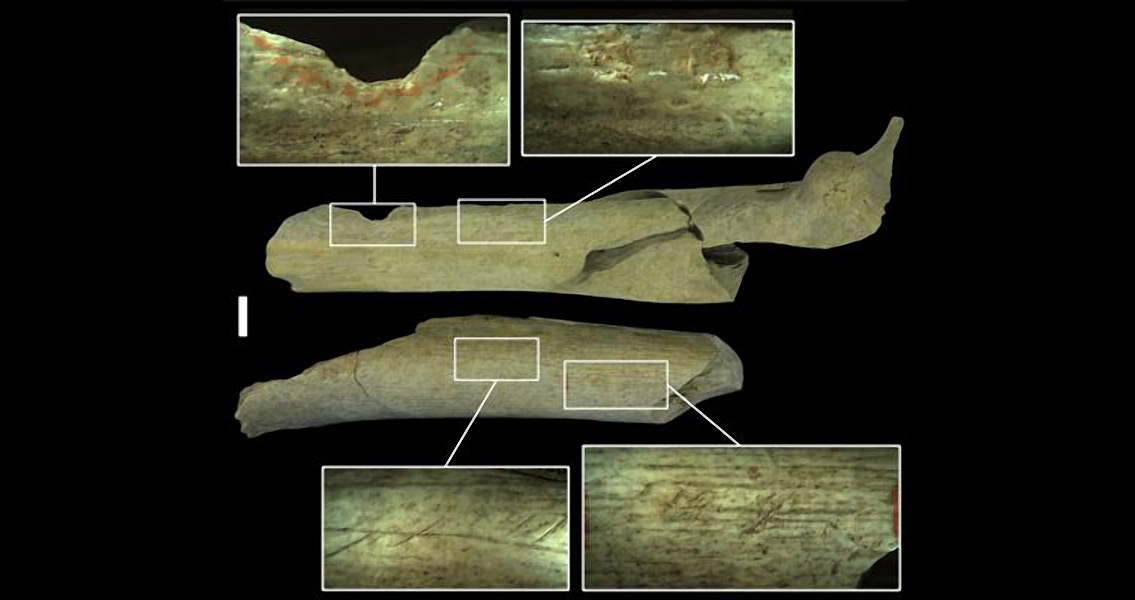
Phys.org late last year. Helen Rougier, an anthropologist from California State University Northridge, led the team studying the broken bones. Inhabited since the Paleolithic Era, the Goyet caves first came to the attention of archaeologists and anthropologists in the nineteenth century. According to the researchers, the proof that the cuts and fractures were due to cannibalism can be found in the bones of other animals close to the caves’ entrance. Horse and reindeer bones had been broken in the same way as the Neanderthals’. Discoveries in the last few years have shown Neanderthals were much more sophisticated than the primitive cavemen they are commonly portrayed as. Studies have revealed evidence that they practiced burial rituals and made an effort to treat the bodies of their dead with care. At the same time however, there has been mounting evidence that they also practiced cannibalism. Until this latest gruesome finding, cases of cannibalism had only been found at Neanderthal sites in southern Europe, such as the El Sidron and Zafarraya sites in Spain, and the Moula-Guercy and Les Pradelles sites in the south of France. The Goyet caves however, are located in the Ardennes Forest in Belgium. The Neanderthal diet has long been a source of interest for anthropologists. Last year, a study in the American Journal of Physical Anthropology claimed that the differences between Neanderthal and modern human anatomy could be explained by differences in diet. Neanderthals were shorter and stockier than humans, with significantly wider rib cages and larger pelvises. The study claimed that these differences were the result of the Neanderthals having to adapt to a high protein diet, especially during brutally cold ice ages. It is suggested in the American Journal of Physical Anthropology study that during the coldest periods of the last ice age, Neanderthals took between 74% and 85% of their caloric intake from animal fats. With the only prey available having been large game, the authors suggest the Neanderthals experienced evolutionary adaptations in the form of bigger livers and renal systems – such adaptations would have also required morphological changes to house the expanded organs. On the other hand, it would be wrong to assume Neandethals were simply carnivores. Another 2016 study suggested that the Neanderthal diet comprised 80% meat and 20% vegetables, based on the isotope composition in the collagen found in their bones. Further stressing just how important vegetables were in the diet of our extinct cousins, a later study determined that this ratio of meat and vegetables was the same even for Neanderthals inhabiting the comparatively barren Mammoth steppe, where plants would have been much harder to come by. The age of the supposedly cannibalised bones from the Goyet Caves, roughly 40,000 years old, is hugely significant. This was a period when the Neanderthals were heading towards extinction. Homo sapiens had arrived in Eurasia, likely creating increased competition for resources and possibly even coming into direct conflict with Neanderthals. Inhabiting Eurasia for tens of thousands of years, Neanderthals were likely as diverse in their behaviour as modern humans are. Findings like those from the Goyet caves add weight to the idea that in times of desperation, the Neanderthals could have been pushed towards cannibalism. ]]>

Categories
Breaking News

Terrifying 300 Million-Year-Old Sharks Were Filial Cannibals

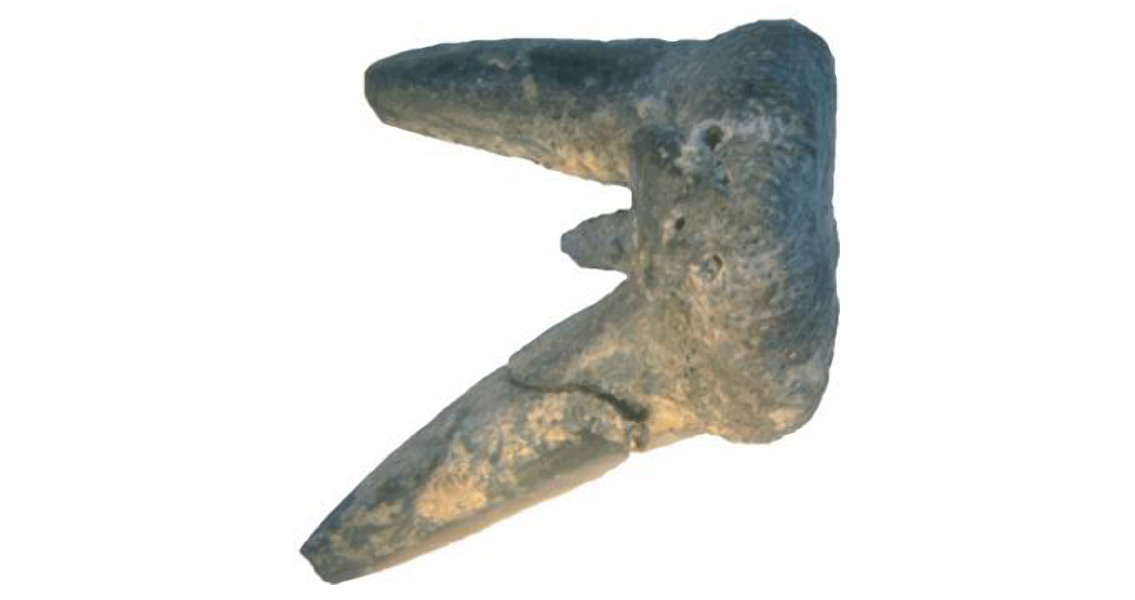
Paleontology. Image courtesy of Aodhán Ó Gogáin (Trinity College Dublin)]]>

Categories
Breaking News

New Evidence of Neanderthal Cannibalism Found in Belgium

Scientific Reports, has helped expand the knowledge of known Neanderthal behavior in relation to the dead in northern Europe. As more and more insights are gradually revealed about the behavior of the Neanderthals, humanity’s closest extinct relatives, it becomes apparent that they displayed significant variability in their actions and customs. This perhaps shouldn’t be surprising, that different groups of Neanderthals had different practices, just as is the case among different groups of humans. This diversity of practices is clearest in the ways the Neanderthals dealt with their dead. At some sites, there is evidence that they buried the deceased. At others, there is evidence of cannibalism, that they broke the bones and ate the meat of other Neanderthals for food. These cannibalistic practices have been discovered at sites in both France and on the Iberian Peninsula. Neanderthals lived between roughly 200,000 and 30,000 years ago in Eurasia. Their appearance was similar to modern humans, though they were shorter, stockier, and had angled cheek bones, prominent brows and wide noses. Evidence has been found that they used tools, controlled fire, and in some cases (Chapelle-aux-Saints in France, and Sima de las Palomas on the Iberian Peninsula for example) buried their dead. Until the latest study however, the paucity of remains discovered north of latitude 50º meant it had been difficult to gain insight into how Neanderthals in the northern latitudes treated their dead. A third of the Neanderthal remains discovered at the Troisième caverne had cut marks, and a plethora had been crushed to extract marrow. The Neanderthal remains had been treated in a similar manner to horse and reindeer bones at the site, suggesting that all three species had been prepared and consumed in similar ways. Other Neanderthal remains at the site showed signs of having been used as soft percussors to shape stone. It is the fourth time a site has been found with evidence Neanderthals used the bones of their deceased to shape stone tools, joining Krapina in Croatia, and Les Pradelles and La Quina in France. Whereas the previous sites only contained a few examples of bones being used on tools, five sets of remains at Goyet had been used as retouchers. Due to their remarkable state of preservation it has been possible to date the remains at Goyet to between 40,500 and 45,500 years old. It has also been possible to extract the mitochondrial DNA of the remains, revealing that the Neanderthals at the cave were most similar genetically to those found in Feldhofer (Germany), Vindija (Croatia) and El Sidrón (Asturias, Spain). Such genetic similarity over such large distances suggests that the Neanderthal population of Europe was quite small. Earlier studies of partial Neanderthal skeletons discovered at Feldhofer, Germany and Spy, Belgium, showed evidence that Neanderthals had interred their dead. This latest study only adds to the increasingly complicated image of the contrasts between the different groups of humanity’s extinct cousins. Image courtesy of Asier Gómez-Olivencia et al.]]>