Categories
Breaking News

17th century barracks discovered at Elizabeth Castle, Jersey

University of York has discovered new evidence confirming that there was an Army Barracks at Jersey’s Elizabeth Castle during the late 17th Century. The excavation also led the team to uncover a rare brass button, which is thought to have been part of an Army officer’s uniform.

The first major excavation of Elizabeth Castle, Jersey

Built on a rocky islet in St Aubin’s Bay, Elizabeth Castle has defended the shores of Jersey for more than 300 years. Archaeologically speaking, it is a complex site, and has never been excavated in this manner before. It was originally a defensive island fortress during the 16th Century, before falling to occupation by German soldiers during the Second World War. The dig has been conducted alongside Jersey Heritage and originally aimed to discover the location of barracks blocks, allowing historians to learn more about the people that used the building. An archives team from the University of York has worked closely with Jersey Archive to use data for the benefit of the archaeologists. They have since been able to identify four key areas where trenches could be created, which has not only framed the search for artefacts, but also detailed potential evidence of the original structure of the site. The excavation has lasted a week so far, with structural evidence of the barracks, including walls, a cobbled floor and a curious door key, coming to light. [caption id="attachment_8808" align="aligncenter" width="505"] The team also found a key at the site, thought to be contemporary to the site. Credit: University of York[/caption]  

A rare Tudor find: the brass Board of Ordnance button

The brass button comes from the uniform of an officer of the Board of Ordnance, dating to the 18th Century. As there would only have been one Board of Ordnance Officer based at the castle, this is a rare find. Dr Catriona Cooper, from the University of York’s Department of Archaeology, said: “The Board of Ordnance was a government body established in the Tudor period to act primarily as custodians to the areas required in defence of the country. “It is exciting to find this button, because there would have only been one officer that wore this uniform at Elizabeth Castle.  He would have had oversight of the castle’s defences and its army supplies, such as weaponry.” [caption id="attachment_8809" align="aligncenter" width="505"] The brass button is from the uniform of an officer of the Board of Ordnance. Credit: University of York[/caption]
Giant haul of findings from nearby hospital block

Archaeologists are also investigating an early 19th Century hospital block, utilising digital visualisation techniques, to produce a better understanding of the make-up of the building.  It is hoped that the completed work will assist Jersey Heritage to enhance the visitor experience to the site. As part of an ongoing partnership between Jersey Heritage and the University of York, the dig has been much more fruitful than the team had first imagined: “We have also uncovered a comb, tokens and coins, as well as lots of clay pipes ceramics and building materials.  The aim will be to open these finds up to the public and reveal more about the life at the hospital and barracks sites to allow for a clearer window into the past of this fascinating castle site.”]]>

Categories
Breaking News

Can A Brexit Precedent Be Found In Henry VIII's Reformation?

Act of Supremacy was passed by Parliament on 30th October, 1534. The Act had a clear aim: to assert the English monarch as the undisputed head of the Church of England, thus taking away the power of the Pope over English society. A number of factors motivated the decision to break with the Catholic Church. Martin Luther had published his Ninety Five Theses in 1517, accusing the Church of nepotism, usury, pluralism, bribery and other corruptions. Luther’s criticism caused ripples throughout Europe, capturing a growing discontent aimed at the hierarchy of the Vatican. The church had grown into something approaching a business, due to its ability to gain massive wealth, but it was riddled by complacency, corruption and poor administration. For the King, this was particularly disturbing. England’s pious population continued to pay vast sums to their local churches, but this wealth was going to the Vatican, not the crown. Of course, as most British school children likely know, Henry’s desire to break with the Vatican was also motivated by personal reasons. Desperate for a male heir, Henry wanted to annul his marriage to Catherine of Aragon. When the Pope stalled on agreeing to the divorce, out of fear of offending Catherine of Aragon’s relative: the Holy Roman Emperor Charles V, Henry opted to take matters into his own hands. The Act of Supremacy made Henry VIII “supreme head in earth of the Church of England.” It also repealed “usage, custom, foreign laws, foreign authority”. This is where the most obvious comparison with the Brexit referendum exists. Beyond the King’s desire for a divorce, the Reformation confronted issues of shared sovereignty between the English government and a continental power that was echoed in the dialogue of the Brexit referendum. As Henry VIII put it: “we thought that the clergy of our realm had been our subjects wholly, but now we have well perceived that they be but half our subjects; yea, and scarce our subjects; for all the prelates at their consecration make an oath to the Pope clean contrary to the oath that they make to us,” Hafeez challenges the popular notion that the Reformation led to a Golden Age in England. Instead, he paints an image of social upheaval, uprisings and rebellions in the wake of the adjustment the country needed to endure. Interestingly, the article by the financial analyst paints a largely equivocal image of the economic consequences of the Act of Supremacy by looking at economic markers from the period. Put simply, GDP barely changed in the century following the break with the Vatican, before plummeting during the English Civil War. Separating from the Vatican didn’t cause economic disaster for England, but neither did it trigger economic growth, despite the crown confiscating the enormous wealth of the church and becoming the new recipient of donations. How applicable Tudor England is to modern Britain is of course highly debatable. Nevertheless, Hafeez’s analysis sets out a precedent which could offer a point of insight to those trying to predict the aftermath of Britain leaving the European Union, showing that the consequences are likely to be complicated, and impossible to comprehend for quite some time.]]>

Categories
News

Teenage Queen Beheaded – Lady Jane Grey's Death

Categories
Breaking News

Navy Drove Fishing Globalisation in 16th Century England

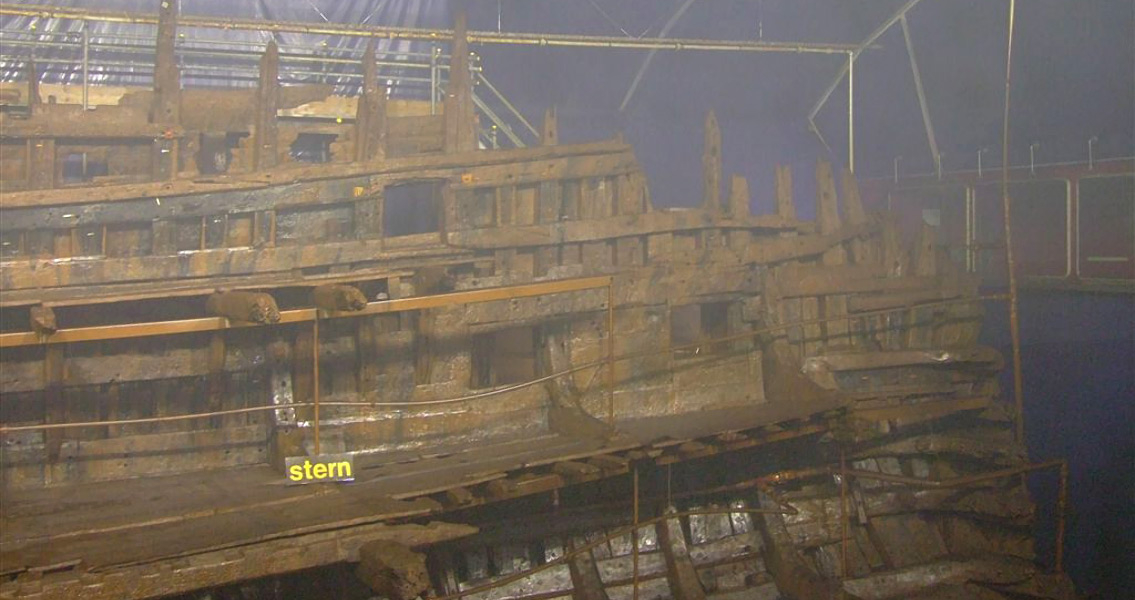
”The globalization of naval provisioning: ancient DNA and stable isotope analyses of stored cod from the wreck of the Mary Rose, AD 1545 ” Image courtesy of Wikimedia Commons user: Leslie James Chatfield]]>

Categories
Breaking News

Cattewater Wreck Researchers Look Into Dog DNA for Clues

Categories
News

Anniversary of the Battle of Bosworth

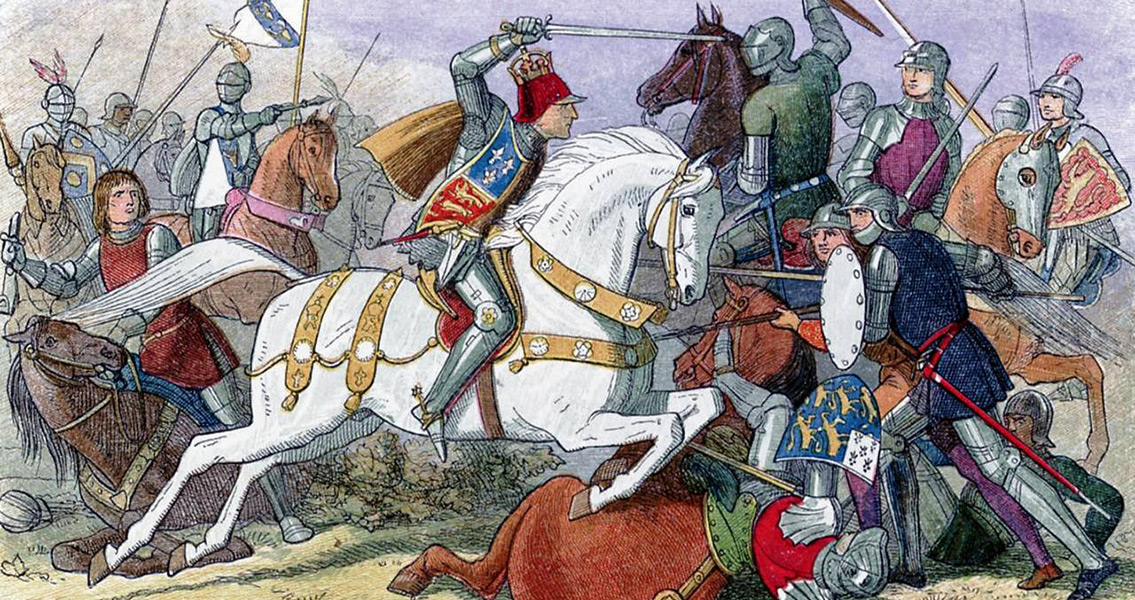
reinterment earlier this year. Accounts from the time claim that Richard was slain in the battle before his naked body was taken to Leicester to be buried. Since the discovery, detailed examination of Richard’s body has allowed forensic archaeologists to gain a better understanding of the events leading to his death. It has also helped form a better image of the man himself, dispelling some myths which originated in the aftermath of the battle and were probably a consequence of the victors trying to discredit their former enemy, and challenging the portrayal given in Shakespeare’s play, Richard III. The Wars of the Roses had started thirty years before, at a battle in St. Albans. Richard of York led a force of some 3,000 men against King Henry VI on 22nd May, 1455. A number of factors had contributed to the outbreak of the war: Henry’s descent into insanity, the perceived dangerous influence of his wife Margaret of Anjou, and a growing class of powerful magnates in the countryside who increasingly ignored the authority of the king. A sporadic war waged between the Houses of York and Lancaster which ultimately ended with a Yorkist victory, and Richard of York winning the right to inherit the throne on Henry’s death at the expense of his son Edward. Continued conflict over the rights to the throne meant that the York victory over Henry in 1460 was not decisive, and the Wars of the Roses would continue until the Battle of Bosworth Field. Richard III took the throne amid much controversy in July 1483. He had been named Lord Protector of the realm for his twelve year old nephew Edward V earlier in the year, following the death of this brother Edward IV. Before Edward V could be crowned, the marriage of his parents was declared invalid, making their child ineligible for the throne. As a result, Richard assumed the English crown with backing from the House of Lords, and rumours began to circulate that Edward V and his brother Richard of Shrewsbury had been killed on Richard III’s orders. Henry Tudor spent the weeks before August 22nd creating an army to attack Richard III. The first months of Richard’s reign had seen him alienate both Lancastrians and his fellow Yorkists, leading to a growing clamour for the Lancastrians to depose Richard. Knowing his forces would be heavily outnumbered by the king’s armies, Henry turned to the King of France, Charles VIII, and the powerful South Wales landowner, Rhys ap Thomas, to provide soldiers to bolster his forces. In addition, Henry contacted his stepfather Lord Stanley, who secretly donated finances to fund Henry’s cause. Henry’s forces landed at Milford Haven on August 1st, and began their march towards England, collecting the soldiers offered by Rhys ap Thomas along the way. Richard III underestimated the amount of support he had in Wales, and realising that the Welsh would not attack Henry’s army, set forth with his troops to intercept them. Meeting near Leicester on 22nd August, Henry had an army of only around 5,000, compared to Richard’s force of some 12000 men. Few first hand accounts of the battle remain, but it seems that the course of the fighting was swayed when Lord Stanley sent his troops into the battle in aid of Henry. Richard had not called on the powerful Stanley family to join in the battle and their substantial armies, although close to the fighting, had initially remained uninvolved. What caused Lord Stanley to send his troops in, aiding his stepson and betraying the king, is unclear. It proved decisive however, Richard’s armies were caught be surprise, and the king killed in the ambush. Henry was crowned Henry VII in the aftermath, and his marriage to Elizabeth of York the following year united the Lancastrian and Yorkist claims to the throne – ending the Wars of the Roses and signaling the start of one of England’s most famous dynasties. ]]>

Categories
News

The Death of Henry VIII

Categories
News

Tudor Wedding Present Rediscovered

BBC History Extra magazine: “The similaritiesbetween the carvings on the chest and the illuminations in the Book of Hours are striking. Three illuminated documents relating to the royal wedding all show the IM monogram (James and Margaret) tied together with a similar love knot, just as it is carved on the chest.” Indeed, the distinctive artwork became something of a trademark for the wedding. Alongside the couple’s initials is a knot made of thistles – the symbol of the Stewart family. This was a symbol of James’ loyalty to the Scottish throne, and a reminder for Margaret. The design was replicated beyond wedding just paraphernalia. It also decorated the floor tiles of Linlithgow Palace, the residence of Scottish royalty during the fifteenth and sixteenth centuries, and James’ gift to Margaret. James and Margaret’s marriage was one that would go on to be hugely significant in the history of the United Kingdom and represents something of a turning point in the relationship between England and Scotland. The marriage was agreed on the day of the signing of the Treaty of Perpetual Peace in 1502. The treaty was intended to stop the intermittent skirmishes between the two kingdoms. It laid out rules for the administration of the country’s borders, and put in place systems to resolve conflicts before they escalated. A century later the true significance of the marriage would become apparent. Until the seventeenth century, Margaret’s line in the Tudor succession had been excluded. However this began to change, as Elizabeth I’s reign came to an end it became increasingly difficult to find an acceptable successor. James VI, Margaret and James’ IV grandson, was ultimately selected as the most appropriate heir. This ‘Union of the Crowns’ marked the first time England, Scotland and Ireland were ruled by a single monarch. It also marked the end of the Tudor line, as Elizabeth proved to be the dynasty’s last monarch. In 1707, the transition to a single United Kingdom was complete, as the Act of the Union united the three countries under a single monarch The marriage that the oak chest commemorates came to symbolise the start of great changes in the United Kingdom. It was central to the unification of Scotland and England into the Kingdom of Great Britain, and facilitated the eventual closing of the Tudor Dynasty. Its discovery is particularly poignant as Scotland prepares to vote on whether it should be an independent country. As the future of the union is about to be decided, this oak chest is a reminder of the marriage that helped create the Union in the first place.]]>