
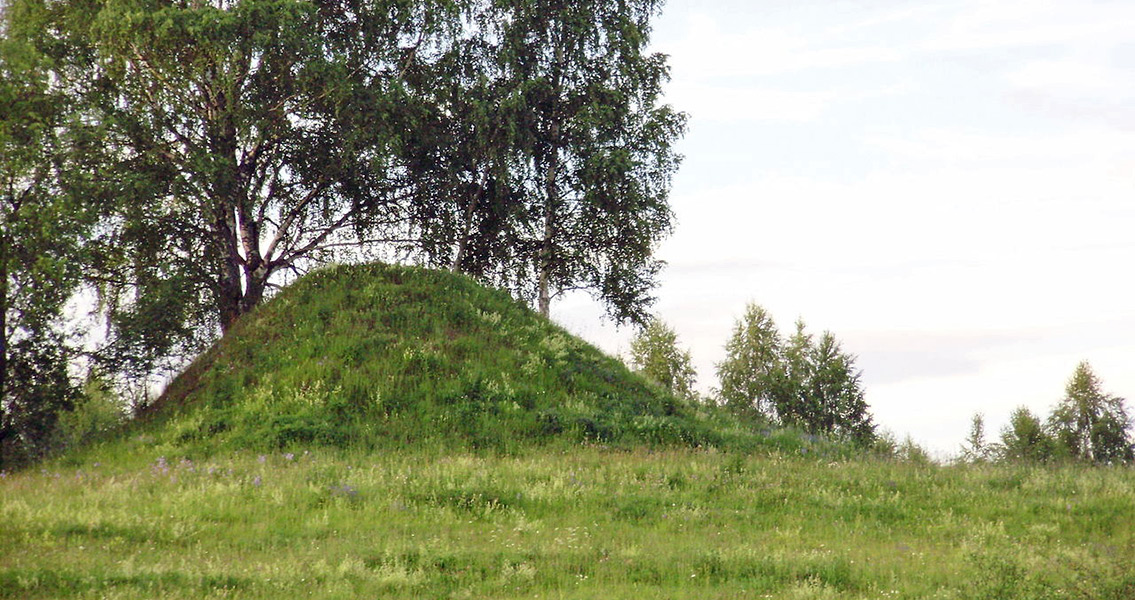
Scythian find, this time in Stavropol, also in southern Russia, which consisted of several vessels made from solid gold. The kurgan in which they were found was dated to the fourth-fifth century BCE, which is significantly earlier than all the other kurgans discovered so far. Kurgans are the only physical evidence of Scythian settlements and are therefore the main source of information about this civilisation. Earlier this month, ZME Science reported another kurgan find, of a Scythian woman warrior, a high-class member of the Sarmatian people. Scythian women fought alongside men, and this lady’s status was evidenced by over a hundred arrowheads, several knives, a sword, and a horse harness. The tomb also contained considerable amounts of gold and silver, further confirming that its occupant was a noblewoman. Image courtesy of Wikimedia Commons user: Derzsi Elekes Andor]]>

Digital Journal, however, pegs them as the work of the Scythians themselves. One of the bucket-like vessels features a depiction of two gryphons attacking a deer on the one side, and another two gryphons attacking a horse. The depictions are done with stunning detail, including the spots on the skin of the deer. Another vessel features a fighting scene in which you could even see the stitches on the participants’ clothes, their shoes, and the type of bow they hold. The central figure in this depiction is an elderly man, with wrinkles on his face, and it is this figure and the fact that the old man is attacking a much younger one that suggest the find may have historical implications as well. According to Belinski and his colleagues, the scene is very likely a depiction of the so-called “Bastard Wars” described by Herodotus. The Bastard Wars, the story goes, took place after the Scythians returned from a long war to find their wives had borne children to their slaves. So, the scene on the vessel could be a piece of evidence that these wars took place. On the other hand, as Belinski himself notes, it could be a depiction of the ‘Bastard Wars myth’, as he calls it. The vessel with the gryphons killing animals most probably depicts a scene from the Underworld, and both it and the one with the Bastard Wars scene are thought to have been used for ritual purposes by the high priest of the tribe, who was also usually the king, Belinski told MK.ru. Image courtesy of Wikimedia Commons user: Derzsi Elekes Andor]]>

nd half of the 3rd millennium B.C. have also been uncovered in the region of South Caucasus. This leads to theories that interactions between the nomadic tribes from the Eurasian steppes and the farming communities located in and around South Caucasus were present. It is these interactions that seem to have allowed certain individuals like this Bronze Age chief to gain enough influence to receive elaborate burials. The armchair that was discovered at the site also showcases the kind of power individuals like the chief had. Scientists believe that armchairs were used to demonstrate power in the Early Bronze Age and that it was put in the kurgan as a sign of the chief’s power. The kurgan was first uncovered in the year 2012 close to the Lagodekhi municipality, eastern Georgia. ]]>