Categories
Breaking News

History News of the Week – Viking Women, Cultural Exchange in the Bronze Age and a Discovery at Hadrian’s Wall

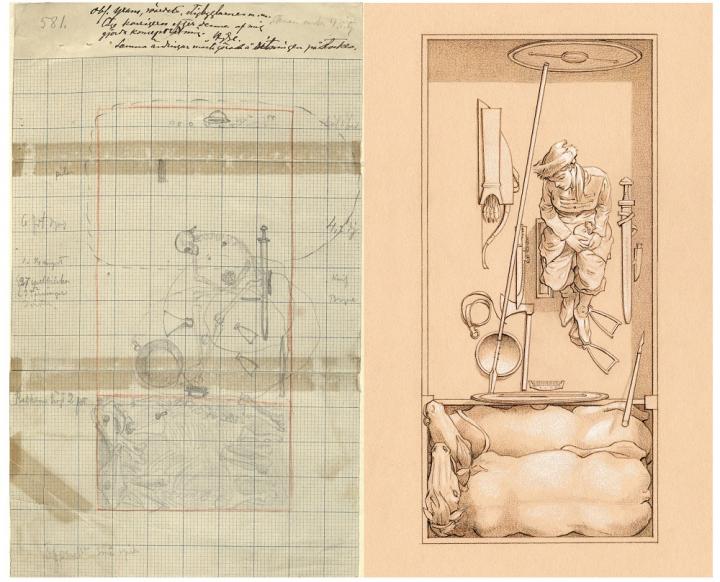
Viking Woman was a Warrior and a Leader Viking society was not as male dominated as one might expect, a new study claims. According to new research from the universities of Stockholm and Uppsala, Viking women took on leadership roles on the battlefield. Charlotte Hedenstierna-Jonson, who led the study, explained: “What we have studied was not a Valkyrie from the sagas but a real life military leader, that happens to be a woman”. At the heart of the research, published in the American Journal of Physical Anthropology, is the grave of a woman Viking warrior, complete with the remains of two horses and a selection of weapons. Significantly, the burial also contained a set of gaming pieces and a gaming board among the remains. “The gaming set indicates that she was an officer,” said Hedenstierna-Jonson. “Someone who worked with tactics and strategy and could lead troops in battle”. Buried in the Viking town of Birka during the mid-tenth century, isotope analysis has shown that the woman had an itinerant lifestyle, commonplace in the martial society that was prevalent throughout Europe between the eighth and tenth centuries. First discovered in the 1880s, it was long assumed that the Viking warrior in the burial had been a man. Thanks to new research techniques however, that assumption has been comprehensively put to bed, allowing the remains to present a fascinating new dimension to Viking culture. Anna Kjellström, who also participated in the study, said: “The morphology of some skeletal traits strongly suggests that she was a woman, but this has been the type specimen for a Viking warrior for over a century, [which was] why we needed to confirm the sex in any way we could.” The team turned to genetics to confirm the Viking woman’s sex, retrieving a molecular sex identification based on X and Y chromosomes. “This burial was excavated in the 1880s and has served as a model of a professional Viking warrior ever since. Especially, the grave-goods cemented an interpretation for over a century,” said Jan Storå, lead author of the study. “The utilisation of new techniques, methods, but also renewed critical perspectives, again, shows the research potential and scientific value of our museum collections”. Women drove Bronze and Stone Age Cultural Exchange A new study has shown the importance of female social mobility for cultural exchange in Bronze Age Europe. Findings published in the Proceedings of the National Academy of Sciences reveal a fascinating trend among Bronze Age families in the Lechtal, south of Augsburg in what is now Germany. While the men in these families had tended to stay in the region of their birth, many of the women came from outside the area, possibly from Bohemia or Central Germany. According to the findings, the pattern of female mobility was not a short-term trend, but one that can be observed over an 800-year period during the transition from the Neolithic to the Early Bronze Age. “Individual mobility was a major feature characterising the lives of people in Central Europe even in the 3rd and early 2nd millennium,” stated Philipp Stockhammer from the Institute of Pre- and Protohistoric Archaeology and Archaeology of the Roman Provinces of the Ludwig-Maximilians-Universität München, the leader of the collaborative research project. The researchers suggest in their study that this mobility was significant in the exchange of ideas and objects, something which increased significantly in the Bronze Age and in its wake encouraged the development of new technologies. For this study, the researchers examined the remains of 84 individuals using genetic and isotope analyses in conjunction with archaeological evaluations. The individuals were buried between 2500 and 1650 BCE in cemeteries that belonged to separate homesteads, and that contained between one and several dozen burials made over a period of several generations. “We see a great diversity of different female lineages, which would occur if over time many women relocated to the Lech Valley from somewhere else,” remarked Alissa Mittnik from the Max Planck Institute for the Science of Human History, a contributor to the study. Corina Knipper, from the Curt-Engelhorn-Centre for Archaeometry explained: “Based on analysis of strontium isotope ratios in molars, which allows us to draw conclusions about the origin of people, we were able to ascertain that the majority of women did not originate from the region.” The burials of the women did not differ from that of the native population, suggesting that the formerly foreign women were integrated into the local community. As well as shedding new light on the role female mobility played in cultural exchange in the Bronze Age, the new findings point to the immense scale of human mobility in general in the period. “It appears that at least part of what was previously believed to be migration by groups is based on an institutionalised form of individual mobility,” concluded Stockhammer. Roman Barracks Unearthed Near Hadrian’s Wall Archaeologists have unearthed a 2,000-year-old Roman Barracks near Hadrian’s wall, the Guardian reports. Over the course of the last two weeks a “treasure trove” of thousands of artefacts has been unearthed, including military and personal possessions from Roman soldiers and their families, according to the Guardian. Remarkably, the barracks itself actually predates Hadrian’s Wall, allowing the findings to provide unique insight into the military build-up in the area prior to the Wall’s construction. Cavalry lances, arrowheads and ballista bolts are among the weapons found at the site, alongside combs, bath clogs, hairpins, brooches and stylus pens. The barracks, which date from 105CE, were discovered under the fourth century fort of Vindolanda, south of Hadrian’s near Hexham in Northumberland. According to the Guardian, the artefacts survived because they were concealed beneath a concrete floor laid by the Romans about 30 years after the barracks was abandoned, shortly before 120CE. The concrete created oxygen-free conditions that helped preserve materials such as wood, leather and textiles. Featured Image: Reconstruction of the Grave in Birka – The drawing is a reconstruction of how the grave with the woman originally may have looked. Credit:The illustration is made by Þórhallur Þráinsson (© Neil Price).]]>
Categories
Breaking News

Sharing Rather Than Migration Behind Stone Age Revolution

Current Biology, the latest study suggests that migration was not a ‘universal driver’ for the spread of farming through Europe. Although archaeology shows that the technologies of the Neolithic Package did reach the Baltic region, the genetics of the populations there remained the same as those of the hunter-gatherers throughout the Neolithic. “Almost all ancient DNA research up to now has suggested that technologies such as agriculture spread through people migrating and settling in new areas” said Andrea Manica from the University of Cambridge, a senior author on the study. “However, in the Baltic, we find a very different picture, as there are no genetic traces of the farmers from the Levant and Anatolia who transmitted agriculture across the rest of Europe.” “The findings suggest that indigenous hunter-gatherers adopted Neolithic ways of life through trade and contact, rather than being settled by external communities. Migrations are not the only model for technology acquisition in European prehistory.” The team reached their conclusion by extracting ancient DNA from a number of remains discovered in Latvia and Ukraine dating to between 5,000 and 8,000 years old. The remains spanned the Neolithic period, and the transition from a hunter-gatherer way of life to one based on food production. Fascinatingly, the team’s results also shed new light on the spread of Indo-European languages. Although showing no influence from Levantine farmers, one of the Latvian genomes did show signs of an external influence which the scientists believe could be from the Pontic Steppe in the East. Lead author Eppie Jones, from Trinity College Dublin and the University of Cambridge, explained: “There are two major theories on the spread of Indo-European languages, the most widely spoken language family in the world. One is that they came from the Anatolia with the agriculturalists; another that they developed in the Steppes and spread at the start of the Bronze Age.” “That we see no farmer-related genetic input, yet we do find this Steppe-related component, suggests that at least the Balto-Slavic branch of the Indo-European language family originated in the Steppe grasslands of the East, which would bring later migrations of Bronze Age horse riders.” Combined with archaeological data, the new study suggests the arrival of the Neolithic Package to the Baltic region was a much more gradual process than elsewhere in Europe, facilitated by trade networks rather than rapid migration and interbreeding. Manica concluded: “It seems the hunter-gatherers of the Baltic likely acquired bits of the Neolithic package slowly over time through a ‘cultural diffusion’ of communication and trade, as there is no sign of the migratory wave that brought farming to the rest of Europe during this time. “The Baltic hunter-gatherer genome remains remarkably untouched until the great migrations of the Bronze Age sweep in from the East.”]]>

Categories
Breaking News

World's Oldest Axe Found in Australia

Australian Archaeology. Dating of the piece of polished axe suggests it was created shortly after the first humans arrived in Australia. No bigger than a thumbnail, the Stone Age axe fragment was found in the remote Kimberley region of Western Australia. Dated to between 45,000 and 49,000 years ago, the axe is at least ten millenia older than previous discoveries of ground-edge axes. “This is the earliest evidence of hafted axes in the world. Nowhere else in the world do you get axes at this date,” said Professor Sue O’Connor, an archaeologist from the Australian National University who worked on the project. Hafted axes are those axes which have a handle attached. “In Japan such axes appear about 35,000 years ago. But in most countries in the world they arrive with agriculture after 10,000 years ago.” O’Connor explained, in a ANU press release. The remarkable discovery points to the innovation of Australia’s earliest human inhabitants, showing they were capable of a greater technological sophistication than is often believed. Professor Peter Hiscock from the University of Sydney was responsible for analysing the fragments unearthed in Western Australia. “Since there are no known axes in Southeast Asia during the Ice Age, this discovery shows us that when humans arrived in Australia they began to experiment with new technologies, inventing ways to exploit the resources they encountered in the new Australian landscape,” Hiscock explained, in a press release from the University of Sydney. Analyses of the fragment have revealed it came from a hafted axe made from basalt; the fine grained rock shaped and polished by grinding it against a softer rock such as sandstone. The axe could have been useful for any number of tasks, from chopping down trees to stripping the bark off wood, even as a tool for shaping wood into spears. The fragment was initially excavated by O’Connor in the 1990s, among a host of other artefacts from Carpenter’s Gap, a large rock shelter known to be one of the first sites occupied by modern humans. In 2014, further study was carried out on the objects, including food scraps, tools and artwork, that had been extracted two decades earlier. It was then that Hiscock noticed the fragment of polished axe. Surprisingly, it seems that the axes developed in the region surrounding Carpenter’s Gap did not migrate with humans through the rest of Australia. “Axes were only made in the tropical north. These differences between northern Australia, where axes were always used, and southern Australia, where they were not, originated around the time of colonisation and persisted until the last few thousand years when axes began to be made in most southern parts of mainland Australia,” Prof. Hiscock explained. The dating of the axe fragment has shed fascinating new light on the development of Stone Age hunter-gatherer societies, and the chronology and geography of the development of certain tools. “Polished stone axes were crucial tools in hunter-gatherer societies and were once the defining characteristic of the Neolithic phase of human life. But when were axes invented? This question has been pursued for decades, since archaeologists discovered that in Australia axes were older than in many other places. Now we have a discovery that appears to answer the question,” said Hiscock. Image courtesy of ANU ]]>

Categories
Breaking News

An Ancient Village By a Stream Bridges The Stone Ages

Categories
Breaking News

Bee Domestication Traced to The Stone Age

Categories
Breaking News

Plague Emerged in the Bronze Age

Yersinia pestis, was common among humans much earlier than the first historical records of plague epidemics suggest. An analysis of DNA extracted from Bronze Age human teeth showed that Y. pestis affected people in Asia and Europe as far back as 4,800 years ago. However, it was not for another thousand years that the bacterium developed characteristics allowing it to cause bubonic plague, the disease typically associated with it. What led the scientists, from the Universities of Gothenburg and Copenhagen, to believe that the plague is much older than commonly thought was an earlier genomics study they did on people from the Bronze Age, EurekAlert reports. That study revealed that the period, between 3000 BCE and 1500 BCE, was very dynamic in terms of migratory trends. These trends were found to have had a substantial effect on the modern-day demographic make-up of Europe and Asia. The team’s interest was sparked by the reasons behind these migrations. One of the authors of the study, Morten Allentoft from the Centre of GeoGenetics at the University of Copenhagen, told EurekAlert that one of the reasons for migration could have been epidemics that drove people away from a certain area, or decimated the population in another area, creating conditions for its repopulation. The question they asked themselves was whether these epidemics may have been caused by pestilence. To find an answer, they studied 89 billion raw DNA sequences extracted from the teeth of 101 Bronze Age and early Iron Age individuals taken from archaeological digs and museums. In seven of the samples, dated to between 2794 BCE and 951 BCE, there was evidence of the Y. pestis bacterium. Further analysis suggested that the original pathogen that Y. pestis evolved from first emerged around 5,783 years ago. To compare, the first historical records of plague-like epidemics appear in the common era, first in the sixth century, with the so-called Plague of Justinian, and then, of course, in the Middle Ages, when the Black Death took the lives of as much as half the population of Europe. There have been suggestions that Y. pestis was responsible for the Plague of Athens from 2,500 years ago and the Antonine Plague, but no hard evidence in support of this suggestion has been presented so far. Interestingly, the DNA analysis showed that even though they could get infected by the pathogen, Bronze Age people did not get it from fleas, which are among the main vectors of plague transmission. The bacterium apparently only developed the gene that allowed it to survive in the gut of fleas later, in the Stone Age. One earlier study that New Historian recently reported, suggested that the plague is in fact older than humans, by tens of millions of years, and even as early as that a strain of it could be transmitted by fleas. For more information: “Early Divergent Strains of Yersinia pestis in Eurasia 5,000 Years Ago” ]]>

Categories
Breaking News

Stone Age Burial Mound Discovered in Siberia

Categories
Breaking News

49,000-Year-Old Milk-Based Paint Found in South Africa

“A Milk and Ochre Paint Mixture Used 49,000 Years Ago at Sibudu, South Africa” Image courtesy of Wikimedia Commons user: Gribeco ]]>

Categories
Breaking News

Democracy May Have Predated Ancient Greece

Current Anthropology. The authors note that this ancient form of democracy would have been very different from what we have come to associate with the term in the more recent periods of human history, but they suggest that this early egalitarian structure gave a substantial advantage to people who were good communicators and more persuasive than the rest of their community. The presence of this advantage led to the emergence of a new idea of leadership that no longer focused on physical abilities alone but also involved cognitive ones, such as linguistic skills and the “ability to form and influence coalitions”. The second driver of socio-political development besides leaders’ ability to persuade their followers was the followers’ to partake in decision-making, making it a consensual process. The study’s conclusions could have important implications with regard to our understanding of how political systems emerged and developed throughout human history. While it’s true that more complex systems developed much later, it is fascinating to suggest that even back in the early years after hominins split from their quadruped cousins, they had the capacity to form coalitions in order to accomplish a common goal. In fact, the authors note in their paper, it was this propensity for cooperation that made hominins better equipped for the formation of large and lasting coalitions. This helped them improve their survival chances by becoming better prepared to overcome predators and supply food for the community. The study questions the ideas that have over the last seven centuries dominated political and social sciences. One of these is the theory of Homo economicus, which posits that humans are driven by self-interest and the urge to maximise the benefits they can create or receive, a theory that has dominated biology and political sciences, as well as economics, the study authors point out. The other dominant theory, which conflicts with this one, is the theory of cultural hegemony, strong in social sciences and anthropology, which suggests that culture is what dominates a community and its members are but “passive internalisers” of this culture. For more information: “The Evolutionary Origins of Human Political Systems” Image courtesy of Wikimedia Commons user: Oyoyoy ]]>

Categories
Breaking News

5,500 Year Old Beaker With Fingerprint Found in Denmark

a study of beads and other items used for personal decoration. The reason remains unclear but whatever it was, it seems to have been eventually beaten by the benefits of farming and husbandry. Image courtesy of Wikimedia Commons user: Woodys ]]>