Categories
News

Edward VIII and Nazi Germany

The Sun newspaper has released video footage from the 1930s showing Queen Elizabeth II performing a Nazi salute. Saturday morning’s physical edition of the newspaper features a black and white photo of a young Elizabeth, along with her sister, mother and uncle; the future Edward VIII, on the cover. Elizabeth and her mother are both seen performing the deeply controversial gesture. On The Sun‘s website the full home movie filmed at the royal residence in Balmoral, from which the cover photo was taken, has been published. It shows Edward VIII encouraging the seven year old Elizabeth, and her sister Margaret, to perform the ‘Hitler’ salute as they frolic outside. The images are believed to originate from 1933 or 1934. The story and video have of course stirred up a lot of attention, and led to stern criticism being directed at The Sun from Buckingham Palace for having published it. Although there is no evidence that Queen Elizabeth is, or ever was, a Nazi symphathiser, the release of the home movie provides an interesting insight into perceptions of Hitler in the years leading up to the war. It is far from revelatory, for example, that Queen Elizabeth’s uncle Edward VIII agreed with some Nazi policies and disapproved of Britain’s war against them. Famed for abdicating the thrown in 1936, Edward VIII visited Nazi Germany and personally met Hitler in October 1937. Among their topics of discussion was Hitler’s plan for an international movement for peace, one which would have had Edward VIII as its figurehead. Edward VIII’s sympathies were not unusual for someone of his class and status at the time. Much of Europe, and particularly Germany, had descended into chaos in the aftermath of the First World War. The first years of the Nazi regime however, saw relative stability return to Germany. For aristocrats and royalty living in England the Nazis, at least from the outside, represented stability and a buffer from Communism – the political ideal which by definition stood against wealth and privilege. A July 1933 diary entry from the diplomat Robert Vansittart describes a party he and Edward VIII had both attended, in which the subject of Hitler’s rise to power came up. “The Prince of Wales (Edward VIII’s title at the time) was quite pro-Hitler and said it was no business of ours to interfere in Germany’s internal affairs either re- the Jews or anyone else, and added that dictators are very popular these days and we might want one in England.” Some historians have gone even further in their depictions of Edward VIII’s sympathies for the Nazis. In a book published earlier this year, the German historian Karina Urbach claims that Edward VIII was a severe anti-Semite who blamed the Jews for the outbreak of the war and hoped that Germany would ultimately beat Britain into submission. Her suggestions come as part of a broader study she undertook into the role European aristocrats played in keeping Hitler in power. The extent of Edward VIII’s sympathy for fascist ideology, or his relationship with Hitler, are impossible to truly know. What is clear however, is that his support for fascism was far from exceptional in 1930s Britain. The British Union of Fascists, led by Oswald Mosley, was a serious political force in Britain in the decade, until it was disbanded in May 1940. Up until 1934 it had enjoyed support from national newspapers, including the Daily Mail. At the time, and since, accusations have frequently been made that the BUF received support from Hitler’s Nazi party, although this has never been proved. Of course, as a seven year old, Queen Elizabeth would have had no idea about the meaning of the gesture she is seen performing in the video. Nevertheless, the release of the video raises important questions, not just about the extent of fascist sympathies in the royal family in the 1930s, but in British society as a whole. ]]>

Categories
News

Week of Mass Arrests in Nazi Germany

Categories
Breaking News

The Reichstag Fire and the Difficulties of Contemporary History

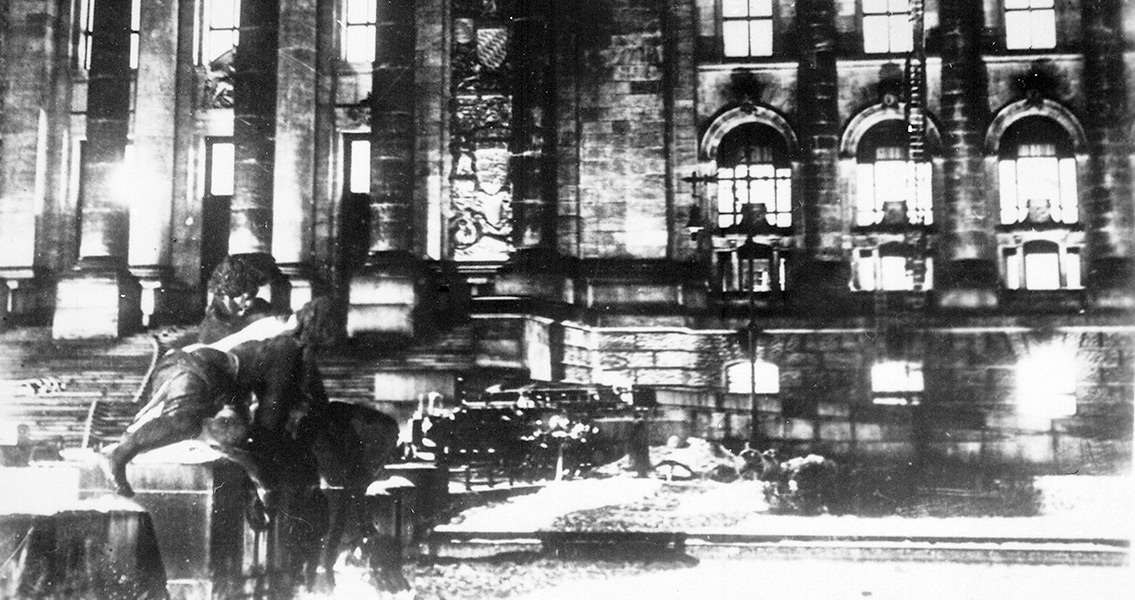
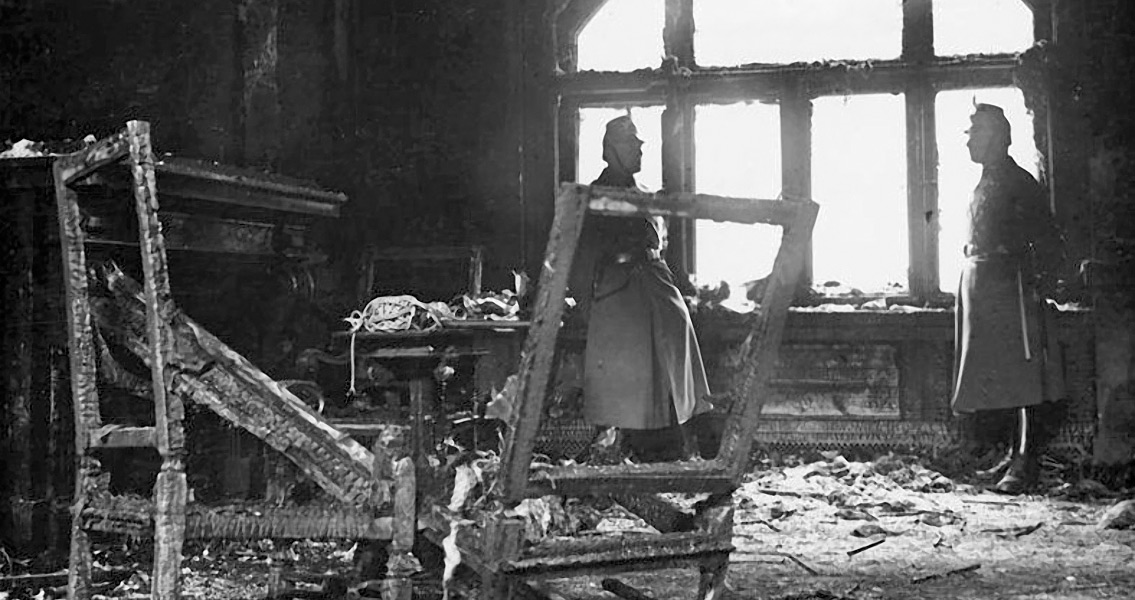
Central European History. “It tells us about the subterranean forces, especially of legal and political interest, that have shaped the master narrative; and it tells us about our attitudes toward different kinds of sources and authors.” Hett argues that the two conflicting arguments about who started the Reichstag fire – van der Lubbe acting alone, or the blaze being instigated by the Nazis – allow us to view major trends in the history of Germany. The version of the Reichstag fire in which the Nazis were the culprits was a narrative developed and presented by victims of Nazism, Hett explains. The theory that van der Lubbe was the sole culprit, on the other hand, began as a self-serving perpetrators’ story. “The critical moment in the development of the single-culprit narrative—and in the Reichstag fire controversy overall—came in late 1951 or early 1952 when the Lower Saxon interior ministry ordered Fritz Tobias to research the fire in an effort to defend Lower Saxon police official (and former Nazi political police detective)Walter Zirpins”, Hett writes. It is very difficult to use victim narratives as historical sources as they are often personal accounts of people in extreme situations. As a result, victim narratives have evoked discomfort for earlier historians; only recently have these stories been examined. “It was precisely such [victim narrative] sources that tended to tell of Nazi responsibility for the Reichstag fire,” Hett notes, explaining why the single-culprit narrative has been so pervasive. Researchers are still in the very early stages of an important process of determining which accepted narratives need to be re-examined. Through much of the postwar era, Hett notes, victims have repeatedly been lost in the historiography because historians discounted their testimony, favouring ‘objective’ sources. Contemporary history is a troublesome area in particular, because it is not removed from the present. Accounts of the recent past are often intertwined with current political interests. Hett, among others, has effectively shown that accepted accounts of the past require significant scrutiny. For more information: www.journals.cambridge.org Image courtesy of Wikimedia Commons user: DIREKTOR]]>

Categories
News

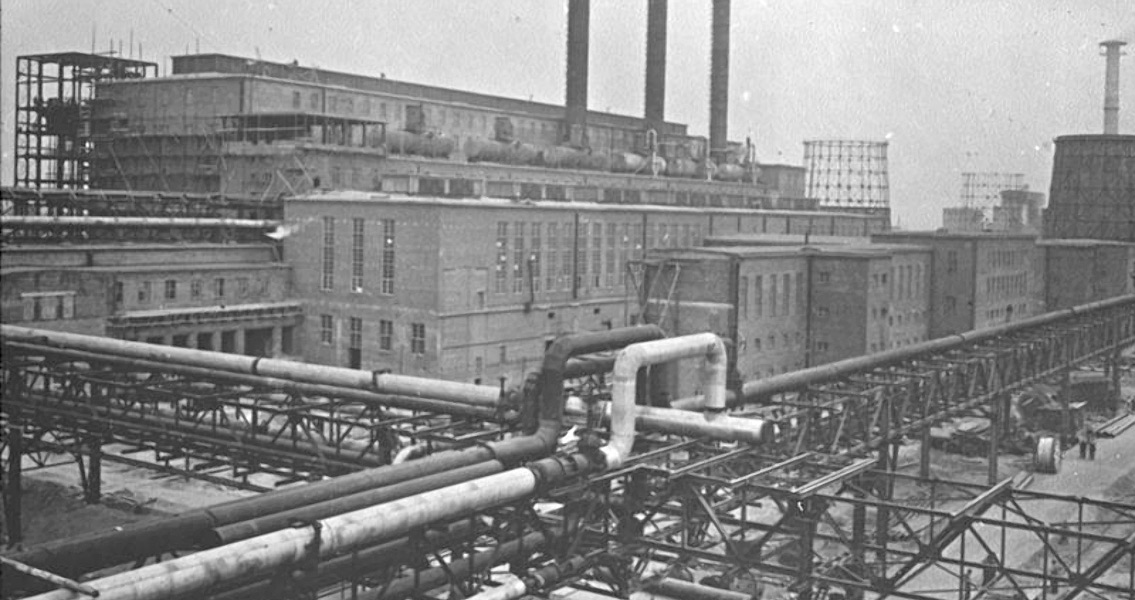
IG Farben Opens Factory at Auschwitz

Categories
Breaking News

Possible Nazi Lair Found in Argentina

Categories
News

The Anniversary of the Reichstag Fire

Categories
News

Long Live Freedom – Anniversary of the White Rose Arrests

Categories
Breaking News

Filmmaker Finds Nazi Atomic Bomb Research Bunker

Categories
Breaking News

New Documentary Estimates Hitler's Net Worth in the Billions

Hitler was not only a war-machine, but also a money-making machine as well. He had numerous financial schemes that made him money, including copyrighting his image, which earned him royalties for every stamp that was sold with his face on it. Most of these money-making schemes were running in the country unbeknownst to Germany’s tax authorities. Copies of Mein Kampf, which were given to newlyweds on their wedding day, are thought to have earned him the equivalent of at least $1 million a year in royalties. The makers of the documentary surmise that Hitler owed the German tax authority over $3 million in tax in today’s money. Shortly after his death his will was found by a German Jew, Herman Rothman, working in British Intelligence, and questions were raised about his fortune. Mr. Rothman, now in his 90s, told the makers of the documentary that the Counter Intelligence Unit that he was working with spotted a man dressed in civilian clothing whom they believed was a Nazi. They captured him and took his jacket, which contained a seven-page document detailing Hitler’s last will. In this will, Hitler blamed the Jews for starting the conflict, and from the second page onwards, it is seen how much of a shrewd investor he was. Earning money from different appearances, speeches, and royalty claims, he built himself a personal $6 billion empire. It is even said that his family members living today could claim a portion of those missing billions from his image rights alone, although it is yet to be seen if anyone will come forward. “The Hunt For Hitler’s Missing Millions” aired on Britain’s Channel 5.]]>